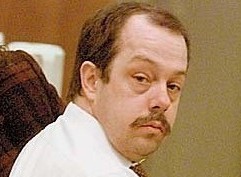
David Mark Hill
Murderer Russell Ellwood
Murderer · USA · 1991
Russell Ellwood was a former taxi driver. Authorities suspected him of killing…
20 victims
Russell Ellwood
Murderer · USA · 1991
Russell Ellwood was a former taxi driver. Authorities suspected him of killing…
20 victims
 Robert Martines Perez
Murderer · USA · 1994
Name: Robert Martines Perez · Other name used in proceedings: Robert Martinez P…
15 victims
Robert Martines Perez
Murderer · USA · 1994
Name: Robert Martines Perez · Other name used in proceedings: Robert Martinez P…
15 victims
 Billy Frank Vickers
Murderer · USA · 1993
Billy Frank Vickers Vickers was executed by lethal injection in Texas on Januar…
14 victims
Billy Frank Vickers
Murderer · USA · 1993
Billy Frank Vickers Vickers was executed by lethal injection in Texas on Januar…
14 victims
 Futoshi Matsunaga
Serial killer · Jap an · 1996
Futoshi Matsunaga ( 松永 太 , Matsunaga Futoshi , born April 28, 1961) was a Japan…
7 victims
Futoshi Matsunaga
Serial killer · Jap an · 1996
Futoshi Matsunaga ( 松永 太 , Matsunaga Futoshi , born April 28, 1961) was a Japan…
7 victims
 Donald Newbury
Murderer · USA · 2000
Donald Newbury (TDCJ Number 999403) was born on 05/18/1962. He was white, male,…
1 victim
Donald Newbury
Murderer · USA · 2000
Donald Newbury (TDCJ Number 999403) was born on 05/18/1962. He was white, male,…
1 victim
 Peter Lucas Moses
Murderer · USA · 2010
Peter Lucas Moses led a small sect called the Black Hebrews in Durham. Prosecut…
2 victims
Peter Lucas Moses
Murderer · USA · 2010
Peter Lucas Moses led a small sect called the Black Hebrews in Durham. Prosecut…
2 victims
 Amber Trudell
Murderer · USA · 2003
March 2005 — Amber Lynn Trudell’s first trial ended in a hung jury. · March 30,…
1 victim
Amber Trudell
Murderer · USA · 2003
March 2005 — Amber Lynn Trudell’s first trial ended in a hung jury. · March 30,…
1 victim
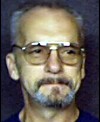 Dallas Ray Stevens
Murderer · USA · 1988
Dallas Ray Stevens was convicted in 1988 of aggravated murder in the slaying of…
1 victim
Dallas Ray Stevens
Murderer · USA · 1988
Dallas Ray Stevens was convicted in 1988 of aggravated murder in the slaying of…
1 victim
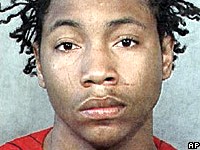 Ronell Wilson
Murderer · USA · 2003
Ronell Wilson was federally sentenced to death on January 30, 2007. Ronell Wils…
2 victims
Ronell Wilson
Murderer · USA · 2003
Ronell Wilson was federally sentenced to death on January 30, 2007. Ronell Wils…
2 victims
- Gender
- male
- Country
- USA
- Location
- Aiken County, South Carolina, USA
- Date of birth
- May 24, 1960
- Age at first offence
- 36
- Characteristics
- revenge, drug addict, history of mental illness
- Victim profile
- Jimmy Riddle, 52; Josie Curry, 35; and Michael Gregory, 30
- Method of murder
- Shooting
- Date(s) of murder
- September 16, 1996
- Years active
- 1996
- Date of arrest
- Next day (suicide attempt)
- Status
-
Executed
Executed by lethal injection in South Carolina on June 6, 2008
Case information
- Name: David Mark Hill
- Pronounced dead: 6:17 p.m. in the state’s death chamber in Columbia
- Execution method: lethal injection
- Execution date: June 6, 2008
- County of conviction: Aiken
- Judge: Marc H. Westbrook, Jr.
- Court (direct appeal citation): State v. Hill, 361 S.C. 297, 604 S.E.2d 696 (S.C. 2004)
- Court (post-conviction review citation): Hill v. State, 377 S.C. 462, 661 S.E.2d 92 (S.C. 2008) (PCR)
- SCDC ID: 00005070
- DOB: 05/24/60
- Race: White
- Inmate naming: Hill, David M.
Background
At the time of the murders, David Mark Hill was married and had three children: a three-year-old daughter who was a quadriplegic and twin two-year-old boys. DSS became involved with the family because of concern about the parents’ abuse of prescription drugs. The children were eventually removed from the home.
During the spring of 1996, Hill overdosed twice on antidepressants and muscle relaxers. Hill barricaded himself inside with a shotgun after social workers said they wanted him out of the house. He later spent several days in a mental hospital. The state ordered him to stay away from his family.
A doctor testified that Hill had sustained frontal lobe damage to his brain when he shot himself and was suffering from a degree of memory loss, but could understand the charges and could follow the proceedings if he paid attention.
Several experts testified that Hill was suffering from serious mental health problems at the time of the crime, and was apparently not taking his medication on the day of the shootings. A psychiatrist testified that Hill was suffering from three major mental disorders: post-traumatic stress disorder, panic disorder and major depressive disorder. The psychiatrist stated that traumatic events in Hill’s life contributed to these disorders, including Hill’s near-drowning as a teenager, guilt over causing a car accident when he was 18 that killed his sister, witnessing an explosion at his workplace, and stress of his daughter being left paraplegic in a car accident in 1995 (she died in 1998).
Hill made a number of suicide attempts in the months before the crime. In July 1996, police had been called to his home when he was threatening to kill himself with a shotgun. He was eventually talked out of it by his psychiatrist and taken for treatment for depression.
During a hearing held in August 2007 to establish whether Hill was competent to make a decision to drop his appeals, a psychiatrist testified that Hill suffered from severe depression and other mental disorders in the past, but that these were now in remission and he was not currently on medication for any mental illness. The psychiatrist also testified that although Hill had sustained brain damage and neurological impairments due to shooting himself in 1996, he had made a good recovery.
In deciding to forego his appeals, Hill stated that his religious beliefs are that "if you kill somebody, you shed somebody else’s blood, that your blood has to be shed or you have to die in order to be forgiven for that."
The offence
On September 16, 1996, Hill walked into the Aiken County Department of Social Services office in North Augusta and shot to death his family's case worker and two other employees after losing custody of his children.
Hill went to the DSS office after his wife asked for a divorce and a social worker accused him of molesting a child. He lost custody of his children and blamed state workers.
The people killed were:
- Jimmy Riddle, caseworker, 52
- Josie Curry, 35
- Michael Gregory, 30
At trial, defense counsel conceded Hill was guilty of the shootings and urged that the real issue was the penalty to be imposed.
Hill was convicted of three counts of murder, one count of attempted murder, kidnapping, second-degree burglary, and weapon charges.
What occurred inside the DSS office area
Sometime before 2:00 p.m., several DSS workers returned to work after a birthday luncheon. Annette Michael was walking towards her cubicle in the DSS office area when another worker, Josie Currie, approached with her hands up. Hill was behind Josie with a gun. Josie asked Annette where James Riddle’s office was. When Annette motioned with her hand, Hill told her to step in behind Josie. The three of them walked down the aisle to James’s cubicle. James was seated at his desk speaking on the telephone. Josie stepped into the cubicle and said, “This man would like to see you.” Hill fired a shot into the cubicle, hitting James in the head. Hill then pointed the gun over Annette’s shoulder and shot Josie in the head. Annette fell with Josie as a third shot was fired. Annette saw James fall over in his chair and she saw a hole in his forehead before she fainted on the floor. Another DSS worker, Michael Gregory, was found dead of a gunshot wound in the men’s restroom. Both Josie and James died within the next few hours. Annette was not injured.
Investigation
Police found Hill the next morning. At around 9:20 a.m., Hill was found lying on the railroad tracks behind the building with his gun nearby. He had a bullet hole through the roof of his mouth and an exit wound in the top of his skull. Although Hill was seriously injured, he was able to speak. After he was taken to the hospital, he was given Miranda warnings.
Hill admitted to the shootings. He said he first shot Michael Gregory in the restroom because Gregory had seen him. He shot James Riddle because Riddle was his caseworker. He shot Josie Currie “because she was black.”
Competency and waiver of appeals
Hill’s trial involved a competency determination. The test for determining competency to stand trial was whether Hill had sufficient present ability to consult with his lawyer with a reasonable degree of rational understanding and whether he had a rational as well as a factual understanding of the proceedings against him. The defendant bore the burden of proving incompetence by a preponderance of the evidence. The trial judge’s decision would be upheld if supported by any evidence.
At the competency hearing, Dr. Evans testified Hill had frontal lobe damage from the gunshot wound to his brain and some resulting memory loss after the trauma. Dr. Bellard testified Hill had difficulty with his memory during the time leading up to the crime but admitted “it is possible [appellant] does remember what happened during the crime.” Dr. Bellard further stated Hill understood the charges and could follow the proceedings if he paid attention. The State’s expert testified Hill was competent. The trial judge found Hill failed to prove by a preponderance of the evidence that his alleged memory loss rendered him incompetent.
After his convictions and sentences were affirmed, Hill filed an application for postconviction relief (PCR). Later, he advised the Supreme Court that he wished to withdraw his application and abandon any remaining appeals. The Supreme Court remanded for a competency evaluation. On remand, the Circuit Court found that Hill was competent to waive his appeals and that his decision to do so was made knowingly and voluntarily.
On review, the Supreme Court held that Hill was competent to waive further appellate review and knowingly and voluntarily decided to do so. The Supreme Court affirmed.
Trial
Charges and convictions
Hill was convicted of:
- three counts of murder
- attempted murder
- kidnapping
- second-degree burglary
- weapon charges
At the penalty phase, the jury found four aggravating circumstances:
- murder while in commission of a burglary
- kidnapping
- two or more persons murdered
- risk of death of two or more persons in a public place
The jury returned three death sentences.
Competency to stand trial (issue and holding)
Hill argued the trial judge erred in finding him competent because of memory loss surrounding the murders. The Supreme Court disagreed and held that the trial judge’s ruling was supported by evidence that Hill understood the charges and the proceedings.
Attempted murder conviction vacated
Hill was indicted for assault with intent to kill (AWIK) and “attempted murder” for shooting at Annette Michael, which he shot at but missed. Because both charges involved the same victim, the State elected to proceed on the attempted murder charge rather than AWIK. The indictment for AWIK was nol-prossed. Hill was convicted of attempted murder and sentenced to life.
Hill contended the trial court lacked subject matter jurisdiction of the attempted murder charge under State v. Sutton. The Supreme Court agreed, vacated the attempted murder conviction, and vacated the five-year sentence for possession of a firearm during the attempted murder.
Burglary conviction reversed
Hill argued the trial judge erred in denying a motion for directed verdict on the burglary charge because there was no evidence he entered without consent. The trial court denied the motion based on the DSS office area being “separately secured” from the public area.
The Supreme Court found the DSS office area did not qualify as a separate building for purposes of the burglary statute and reversed the denial of a directed verdict on the burglary charge.
Admission of statement about Josie Currie
Hill argued his statement that he killed Josie Currie “because she was black” should have been suppressed as an involuntary statement because police told him he was dying and because of his mental condition due to his brain injury. The Supreme Court disagreed.
The Supreme Court concluded:
- the arresting officers did not tell Hill he was dying (Agent McAlhany testified he thought Hill was dying but did not tell him; Agent Otterbacher did not recall telling Hill he was dying but did ask him if he believed in God and, if so, he needed to ask God’s forgiveness)
- the statement was given after Miranda warnings at the hospital
- a mental condition alone did not render a statement involuntary without coercive police conduct causally related to the confession
The Supreme Court held the trial judge properly admitted the statement.
Life-imprisonment work/education statute (penalty phase charge)
During penalty phase, defense counsel presented testimony including mental health experts and prison officials. Hill’s classification included maximum security lockdown. When the case was submitted, the jury returned with a question about “life sentence” and what the difference was between life in prison and super max. The trial judge replayed testimony and refused defense counsel’s request for an additional charge based on S.C.Code Ann. section 16-3-20(A).
The Supreme Court found no error in refusing the additional charge, holding the statute’s language expressed legislative intent that mandatory life imprisonment not be reduced and did not prohibit a person sentenced to life imprisonment from working or seeking education.
Voir dire limitation (penalty and jury selection issue)
Hill argued it was error for the trial judge to refuse defense counsel’s request to ask jurors whether they would give up their vote to go with the majority. The Supreme Court disagreed and held that while the scope and manner of voir dire were within the trial judge’s discretion, the limitation did not render the trial “fundamentally unfair” because the jurors selected were unbiased, impartial, and capable of following instructions on the law.
Trial outcome (direct appeal)
The Supreme Court:
- affirmed Hill’s murder convictions and three death sentences
- vacated the conviction for attempted murder
- reversed the conviction for burglary Final phrasing: “AFFIRMED IN PART; VACATED IN PART; REVERSED IN PART.”
Appeals
Direct appeal (State v. Hill)
The Supreme Court affirmed the murder convictions and three death sentences, vacated the attempted murder conviction, and reversed the burglary conviction.
Postconviction relief (Hill v. State) and waiver of remaining appeals
After the Supreme Court’s remand for competency, the Circuit Court found Hill competent to waive his appeals and found the decision was knowing and voluntary. The Supreme Court affirmed.
Sentencing
The jury returned three death sentences after finding four aggravating circumstances. Hill’s attempted murder conviction had resulted in a life sentence, but that conviction was later vacated on appeal.
Hill’s burglary conviction was reversed.
Outcome
David Mark Hill was executed by lethal injection on June 6, 2008. He was pronounced dead at 6:17 p.m.
His final words were read aloud:
"I sincerely apologize to the families of Josie Curry, Michael Gregory, and James Riddle. I am very sorry for the pain that my actions caused to them. Hopefully, my decision to have this sentence carried out, without delay, will help you understand the sincerity of my apology, and will provide you with some closure. To those of you who have expressed forgiveness to me, I thank you. For those of you who have been unable or unwilling to forgive me, I pray that today will provide you with the peace you deserve."
A legal representative read the statement from Hill after the attorney finished speaking.
Aftermath
Department of Corrections officials gave out a list of Hill’s last meal request.
Final meal
- Meatloaf
- Corn on the cob
- Garlic bread
- A beef burrito
- A Mexican pizza
- A taco
- Cake
- Ice cream
- Garden salad with tomatoes and ranch dressing
- Pepsi
Other details
Hill’s trial and appeal record described:
- a three-year-old daughter who was a quadriplegic
- twin two-year-old boys
- DSS involvement due to concern about parents’ abuse of prescription drugs
- that the defendant’s memory loss surrounding the murders did not render him incompetent to stand trial
- that attempted murder was not a recognized offense in South Carolina and therefore the attempted murder conviction was vacated
- that the statement admitting the killing of Josie Currie “because she was black” was admitted and held not involuntary
- that Hill was the first person put to death in South Carolina since the U.S. Supreme Court affirmed the constitutionality of a three-drug lethal-injection cocktail used in dozens of states
- that Hill was the 279th person put to death in South Carolina
- that relatives of the victims sat outside the death chamber and showed no visible reaction to the execution and declined to comment
- that death penalty protesters held a vigil outside the prison where the death chamber is housed
Spotted an error, or have more information about this case?