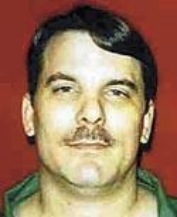
David Clayton Hill
Murderer Brian Kevin Rosenfeld
Murderer · USA · 1985
Brian Kevin Rosenfeld Brian Kevin Rosenfeld was sentenced to three concurrent l…
23 victims
Brian Kevin Rosenfeld
Murderer · USA · 1985
Brian Kevin Rosenfeld Brian Kevin Rosenfeld was sentenced to three concurrent l…
23 victims
 Russell Ellwood
Murderer · USA · 1991
Russell Ellwood was a former taxi driver. Authorities suspected him of killing…
20 victims
Russell Ellwood
Murderer · USA · 1991
Russell Ellwood was a former taxi driver. Authorities suspected him of killing…
20 victims
 Robert Martines Perez
Murderer · USA · 1994
Name: Robert Martines Perez · Other name used in proceedings: Robert Martinez P…
15 victims
Robert Martines Perez
Murderer · USA · 1994
Name: Robert Martines Perez · Other name used in proceedings: Robert Martinez P…
15 victims
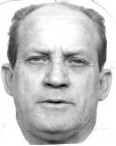 Billy Frank Vickers
Murderer · USA · 1993
Billy Frank Vickers Vickers was executed by lethal injection in Texas on Januar…
14 victims
Billy Frank Vickers
Murderer · USA · 1993
Billy Frank Vickers Vickers was executed by lethal injection in Texas on Januar…
14 victims
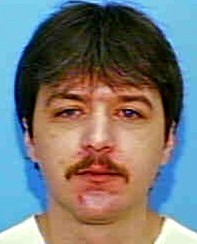 Herman Dale Ashworth
Murderer · USA · 1996
Herman Dale Ashworth was convicted of aggravated murder and aggravated robbery…
1 victim
Herman Dale Ashworth
Murderer · USA · 1996
Herman Dale Ashworth was convicted of aggravated murder and aggravated robbery…
1 victim
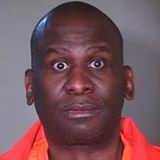 Eric John King
Murderer · USA · 1989
Eric John King was convicted of two first-degree murder counts and armed robber…
2 victims
Eric John King
Murderer · USA · 1989
Eric John King was convicted of two first-degree murder counts and armed robber…
2 victims
 Daniel Dougherty
Murderer · USA · 1985
Daniel Dougherty Daniel Dougherty lived with a girlfriend at the time of the fi…
2 victims
Daniel Dougherty
Murderer · USA · 1985
Daniel Dougherty Daniel Dougherty lived with a girlfriend at the time of the fi…
2 victims
 William Zuern
Murderer · USA · 1983
William G. Zuern was executed by lethal injection in Ohio on June 8, 2004. He w…
2 victims
William Zuern
Murderer · USA · 1983
William G. Zuern was executed by lethal injection in Ohio on June 8, 2004. He w…
2 victims
 Joseph Paul Franklin
Serial killer · USA · 1977
Joseph Paul Franklin (April 13, 1950 – November 20, 2013) was an American seria…
15 victims
Joseph Paul Franklin
Serial killer · USA · 1977
Joseph Paul Franklin (April 13, 1950 – November 20, 2013) was an American seria…
15 victims
- Gender
- male
- Country
- USA
- Location
- Georgetown County, South Carolina, USA
- Date of birth
- J une 9, 1964
- Age at first offence
- 30
- Characteristics
- to avoid arrest
- Victim profile
- Spencer Guerry, 37 ( Deputy Police Chief of Georgetown )
- Method of murder
- Shooting
- Date(s) of murder
- March 7, 1994
- Years active
- 1994
- Date of arrest
- Same day (surrenders)
- Status
-
Executed
Executed by lethal injection in South Carolina on March 19, 2004
Timeline
- June 9, 1964 — David Clayton Hill was born.
- March 7, 1994 — Spencer Guerry was shot after he stopped the car David Hill was driving.
- March 19, 2004 — David Clayton Hill was executed by lethal injection in South Carolina.
- February 20 — The State Supreme Court issued the warrant setting March 19 as the execution date.
- March 4 — A U.S. District Court granted a stay of execution.
- March 16 — The 4th District Court of Appeals upheld the stay of execution.
- Friday — The U.S. Supreme Court vacated the stay to allow the sentence to go forward.
- 4:26 p.m. Friday — Gov. Mark Sanford issued a statement denying a request for him to step in.
- 6:04 p.m. Friday — David Clayton Hill took what appeared to be his last breath.
- 6:01 p.m. — The curtain opened with five people standing by Hill’s side.
- 6:17 p.m. — A medical examiner walked in, placed a stethoscope to Hill’s heart, and Hill was pronounced dead.
- about 5:20 p.m. — Hill was escorted about 50 feet from his holding cell to the death chamber.
- about 5:45 p.m. — Seven of the 11 witnesses were driven from the front office of the prison to the small Capital Punishment Facility.
- five minutes later — The three media witnesses were allowed in the room.
- 13 minutes — A silence fell over the building as the witnesses stayed focused on Hill.
- November 1995 — Hill received the death penalty for shooting and killing 37-year-old Georgetown Assistant Police Chief Maj. Spencer Guerry in March 1994.
- 1995 — Hill was convicted of killing Guerry; his defense at trial was that someone had been hiding in his backseat and shot Officer Guerry.
Background
David Clayton Hill was born on June 9, 1964 and was raised in Georgetown, South Carolina.
Hill was scheduled to receive a lethal injection on March 19, but his execution date was affected by last-ditch legal proceedings and stays.
Hill was described as having worked in restaurants up and down the beach for years and as someone who knew good food and wine. He asked for a bottle of Dom Perignon as his last meal, but his request was denied. Hill did not apologize or confess before he was put to death.
The offence
On March 7, 1994, Spencer Guerry, a 37-year-old Deputy Police Chief of Georgetown on the South Carolina coast, was shot after he stopped the car David Hill was driving.
The car pulled over in the parking lot of a car wash. Hill was driving a silver Honda Prelude with expired Colorado license plates. Hill did not have a valid driver’s license and had marijuana in the car.
Officer Guerry took Hill’s Colorado identification card and car registration and called the information in to the dispatcher. As he was walking back to Hill’s car, he was shot once through the cheek. Despite being shot in the face, he managed to radio for help. A tape recording of his call revealed that he muttered a few words only, including "...shot me''.
Guerry died two days later, becoming the first police officer to die in the line of duty in Georgetown for almost a century.
Guerry was a fifteen-year police veteran and the father of two young boys and the husband of an elementary school teacher. His name was engraved at the National Law Enforcement Memorial in Washington, DC, on panel 44, E -19. A plaque bearing C. Spencer Guerry’s name was displayed at the South Carolina Criminal Justice Hall of Fame in Columbia.
Investigation
Hill’s identification card and registration were found in Guerry’s shirt pocket.
After the shooting, Hill drove to his house, picked up his girlfriend and some of his belongings, and then drove to his mother’s mobile home. He told his mother he was in trouble and asked if they could borrow her car. His mother refused but offered to drive. Hill’s mother and girlfriend followed him down a dirt road where Hill drove his car into a ditch. They then returned to his mother’s mobile home and Hill asked his girlfriend to report his car stolen. She refused. Hill left the mobile home for a while; when the police arrived searching for him, he later returned.
After returning, Hill took a shower, washed his clothes, and poured Clorox on his hands. He then called the police and was arrested.
The record described Hill’s attempts to manufacture and destroy evidence.
Arrest
Hill called the police and was arrested after several attempts to manufacture and destroy evidence.
Trial
Hill’s defense at trial was that someone had been hiding in his backseat and shot Officer Guerry.
Several witnesses testified that Hill was the only person in the Honda.
At trial the following year, it took the jury 45 minutes to find Hill guilty and 80 minutes to sentence him to death.
The jury did not believe Hill’s account that a disgraced former state police officer, Johnny Cribb, had shot Guerry. Hills, one of Hill’s defense attorneys, presented an opening statement that “a fallen angel,” a disgraced former state police officer fired for drunken driving and turned to drug-dealing, had been in Hill’s car and had forced Hill to drive. Hills also stated that when Guerry bent down to look inside the car, Cribb shot him “to avoid being implicated in the drug deal,” and that Cribb’s story was that it was “preposterous.”
Cribb was said to have died in 1999. When Cribb’s defense story was raised at Hill’s trial, the Georgetown County Sheriff’s Office investigated and found phone records that showed the phone at Cribb’s house was in use at the time of Guerry’s shooting. Cribb was fired after he crashed a State Law Enforcement Division car into another car, and he was said to have been speeding and driving under the influence, with three women in the other car badly hurt.
Cribb was said to have been convicted of driving under the influence and sentenced to three years in prison for felony DUI, but that he never served. The case was said to have been overturned for improper handling of blood evidence.
It was also said that Hill and Cribb knew each other because Cribb had once arrested Hill when Cribb was a Georgetown County sheriff’s deputy.
Hill was described as maintaining his story during appeals. His defense attorneys pursued issues including the trial judge’s denial of a delay for a tape expert to testify about garbled transmission of Guerry’s last words. Hill’s attorneys said the garbled transmission could have been “they shot me,” while others argued it also could have sounded like “David shot me,” and some thought Guerry was trying to call “six nine one,” the call numbers of city dispatch.
Hill would not say where the murder weapon was, and it was not found despite an intense search. The gun was later found in 1999 shoved into the dirt under a propane gas tank. Ballistics tests confirmed it was the gun that killed Guerry, but no fingerprints could be detected on it.
Solicitor Ralph Wilson prosecuted the case against Hill and attacked the defense story at trial, including holes that Wilson described in the story about the line of fire and the way the bullet entered Guerry’s face and why Cribb would have let Hill go, giving him his gun back after the shooting. Wilson also called attention to the fact that the murder weapon was not found during the initial search and that Hill would not say where it was.
Hill’s counsel also described that Hill was examined while under truth serum, and one doctor statement was quoted as: “He was either telling the truth or believed he was telling the truth,” which Hills recalled.
Hills said: “You go with the defense the defendant gives you,” and he also quoted a statement from Wilson in closing arguments as: “You weren't going back to jail and [Guerry] was the only thing standing between you and jail.”
Hill replied that he first told his story a month before Blankenship was murdered and had never mentioned it before then because “I didn't know who to trust.”
Hill’s defense attorneys described other legal efforts including requesting that tape evidence could have made a difference in raising reasonable doubt.
The record also included that Hill’s final statement at execution was: “Read Philippians 1:9-23.”
Sentencing
Hill received the death penalty for shooting and killing 37-year-old Georgetown Assistant Police Chief Maj. Spencer Guerry in March 1994.
The jury deliberated for 45 minutes to find Hill guilty and 80 minutes to sentence him to death.
Hill’s death sentence was described as having been handed down in October 1995, and the warrant setting March 19 as the execution date was issued on February 20.
Appeals
Hill appealed through state and federal courts, including a direct appeal and a habeas proceeding cited as State v. Hill , 501 S.E.2d 122 (S.C.,1998) (Direct Appeal) and Hill v. Ozmint , 339 F.3d 187 (C.A.4 2003) (Habeas).
Hill also sought a stay of execution based on lethal injection being cruel and unusual punishment. Motions were filed in U.S. District and Circuit Courts. The U.S. District Court granted the stay on March 4 and the 4th District Court of Appeals upheld the stay on March 16.
The attorney general appealed to the U.S. Supreme Court, and the U.S. Supreme Court did not issue a ruling until about 2 p.m. Friday. The U.S.
There were further last-minute efforts, including a request for Gov. Mark Sanford to intervene, which was denied.
Federal District Judge David Norton issued an order stopping the March 19 execution, agreeing with arguments about the state’s lack of methods to ensure doses of three drugs used in the procedure were calculated properly. The ruling referenced that the state used a smaller amount of one drug than the federal government and other states and that prison officials did not require a medical professional to oversee the execution. The order quoted: “It would indeed be odd to deny a temporary injunction to an inmate who will suffer loss of life under possibly cruel and unusual circumstances on the ground that the state is entitled to finality,” Norton wrote.
The federal judge’s order halted the execution until the U.S. Supreme Court considered an Alabama case.
The 4th U.S. Circuit Court of Appeals upheld a stay of execution while the U.S. Supreme Court considered the Alabama case, stating the defendant made no allegation like that and referencing an affidavit where a doctor said Hill’s arm and veins were suitable. The report quoted McMaster as saying: “But this defendant makes no allegation like that,” and included: “There's an affidavit where the doctor says his arm and veins are perfectly suitable. ... This is an abuse of the process.”
In the final appeal described, the U.S. Supreme Court voted 5-4 to allow Hill’s execution to continue, and the state Supreme Court denied an emergency appeal Friday. The state Attorney General Henry McMaster said: “It's over,” and said: “The only cruel and unusual punishment in this whole thing is the wait the Guerry family has had to endure over all these years,” McMaster said.
Gov. Mark Sanford denied a request for reprieve after reviewing the matter with legal counsel, saying: “I have reviewed this matter with my legal counsel and can find no reason to intervene and overturn the findings of an exhaustive judicial process.”
Outcome
David Clayton Hill was executed by lethal injection in South Carolina on March 19, 2004.
Hill was moved to Broad River Correctional Institution on Friday morning in preparation for the execution.
The execution took place at 6:17 p.m. when Hill was pronounced dead after a medical examiner placed a stethoscope to Hill’s heart.
Aftermath
Hill’s request for a final meal of a bottle of Dom Perignon champagne was denied. Prison spokesman John Barkley said: “All he asked for was a bottle of Dom Perignon champagne, but that is contraband, so he didn’t get it,” and “Hill's last meal was whatever prisoners had for supper,” was described as the result.
Hill’s reticence at the end was described, and “Final Words: None” was included.
At the execution, a muffled voice recited the Lord’s Prayer and the 23rd Psalm. The trial statement and his final statement were included as: “Read Philippians 1:9-23.”
The portion of Philippians read was quoted as:
“Now I want you to know, brothers, that what has happened to me has really served to advance the gospel. As a result, it has become clear throughout the whole palace guard and to everyone else that I am in chains for Christ … For to me, this life is Christ and to die is gain. If I am to go on living in the body, this will mean fruitful labor for me. Yet what shall I choose? I do not know! I am torn between the two: I desire to depart and be with Christ, which is better by far.”
Mrs. Guerry said she made her decision about being a witness when she arrived at the capital punishment facility. She said: “When I walked in the witness room door is when I decided. I did it for Spencer,” and also said: “I didn’t expect one,” in response to whether she expected an apology or remorse. She also said: “I may be a little naive, because I thought when I first saw him, I expected him to look different because he took my husband and sons’ father away. He looks like you or I. That was very emotional,” and: “I did it for Spencer,” and: “I know I made the right decision, I do.”
Solicitor Greg Hembree said: “It would be appropriate to express some type of remorse … but he chose not to do that and I think that is a comment on his nature,” and: “This was clearly a case that warranted the death penalty. Anyone who chooses to kill a police officer in the line of duty … will face the possibility of the death penalty. If the jury does hand down a death penalty, we will work with the attorney general’s office to see that sentence is carried out,” and he also said: “It would be appropriate to express some form of remorse,” and “He chose not to do that, and I think that is a comment on his nature.” Former Solicitor Ralph Wilson was quoted as saying: “If we're going to put police officers on the street to protect us, and not have the most serious penalties when you kill a police officer, we're fighting a losing battle,” and “You'd have open season on law enforcement.”
Georgetown Police Chief Dan Furr said: “I was on the scene when Spencer was killed, it was very different,” and: “I miss him tremendously today. I think of him often,” and: “I was struck today by the very humane action in which Mr. Hill died,” and: “I think it's important that the punishment was carried out.”
Protesters opposed to the death penalty marched along the edge of prison property; one protester was Margaret Abbott, who said: “David is young man who has matured since he went to prison. His mother died and he wasn’t able to go to the funeral. His mother didn’t get a chance to have her arms around him for years, but if they execute him tonight, she will have her arms around him because I know where he will go,” she said.
A dedication ceremony for the C. Spencer Guerry Law Enforcement Center was described, including statements by Sally Guerry: “We're here to celebrate the life of a wonderful man,” and “Few people see their dreams realized after their death.”
Sally Guerry’s sons Ryan and James chose not to attend an appellate hearing so they could qualify to play soccer after school; Ryan was 11 and James was 14 at that time. Later, it was stated Ryan would be 21 the following week and James was 18.
Hill’s attorney Jerome Nickerson was quoted saying: “He was a really decent human being. He's an interesting, thoughtful individual who really cares about other people.”
Additional details about Father Andrew were included, including direct quotations and descriptions of the preparation process and allegations about sedatives and consciousness, as well as quotations including: “I was one of his two appointed witnesses and was with him throughout the preparation process of the last day of his life.” and: “God Bless you.” and: “Read Philippians 1: 9-23” and: “You wouldn't do a dog this way,” and: “He was either telling the truth or believed he was telling the truth,” and: “It would indeed be odd to deny a temporary injunction to an inmate who will suffer loss of life under possibly cruel and unusual circumstances on the ground that the state is entitled to finality,” and: “your own damn food.” and: “Read Philippians 1: 9-23.”
Spotted an error, or have more information about this case?