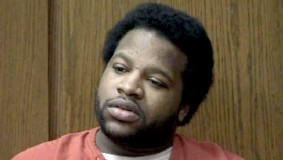
Peter Lucas Moses
Murderer Joshua Wayne Andrews
Murderer · USA · 2000
Joshua Wayne Andrews was a serial killer accused of killing several people in V…
5 victims
Joshua Wayne Andrews
Murderer · USA · 2000
Joshua Wayne Andrews was a serial killer accused of killing several people in V…
5 victims
 Leon Davis Jr.
Murderer · USA · 2007
Leon Davis Jr. was sentenced to death on April 29, 2011, for the execution-styl…
5 victims
Leon Davis Jr.
Murderer · USA · 2007
Leon Davis Jr. was sentenced to death on April 29, 2011, for the execution-styl…
5 victims
 Raymond Lee Oyler
Murderer · USA · 2006
Raymond Lee Oyler was convicted for starting the 2006 Esperanza fire in Riversi…
5 victims
Raymond Lee Oyler
Murderer · USA · 2006
Raymond Lee Oyler was convicted for starting the 2006 Esperanza fire in Riversi…
5 victims
 Terry Lee Hankins
Murderer · USA · 2000
Terry Lee Hankins was convicted by a jury of capital murder and was sentenced t…
5 victims
Terry Lee Hankins
Murderer · USA · 2000
Terry Lee Hankins was convicted by a jury of capital murder and was sentenced t…
5 victims
 Anthony Garcia
Murderer · USA · 2008
Anthony Garcia was a former doctor who was found guilty on all counts including…
4 victims
Anthony Garcia
Murderer · USA · 2008
Anthony Garcia was a former doctor who was found guilty on all counts including…
4 victims
 Brian Gene Nichols
Murderer · USA · 2005
Brian Gene Nichols was born December 10, 1971. He was known for his escape and…
4 victims
Brian Gene Nichols
Murderer · USA · 2005
Brian Gene Nichols was born December 10, 1971. He was known for his escape and…
4 victims
 Cynthia Sommer
Justice miscarriage · USA · 2002
Cynthia Sommer was convicted of first-degree murder with the “special circumsta…
0 victims
Cynthia Sommer
Justice miscarriage · USA · 2002
Cynthia Sommer was convicted of first-degree murder with the “special circumsta…
0 victims
 Charles Finney
Murderer · USA · 1991
01/16/91 — Sandra Sutherland’s body was discovered on the bed of her apartment…
1 victim
Charles Finney
Murderer · USA · 1991
01/16/91 — Sandra Sutherland’s body was discovered on the bed of her apartment…
1 victim
 Wilbur Lee Jennings
Serial killer · USA · 1981
Wilbur Lee Jennings was a serial killer who was convicted of killing four women…
4 victims
Wilbur Lee Jennings
Serial killer · USA · 1981
Wilbur Lee Jennings was a serial killer who was convicted of killing four women…
4 victims
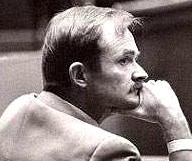 Randy Kraft
Serial killer · USA · 1972
Defendant: Randy Kraft Randy Kraft was sentenced to death on November 29, 1989.…
16 victims
Randy Kraft
Serial killer · USA · 1972
Defendant: Randy Kraft Randy Kraft was sentenced to death on November 29, 1989.…
16 victims
- Gender
- male
- Country
- USA
- Location
- Durham, North Carolina, USA
- Date of birth
- 1983
- Age at first offence
- 27
- Characteristics
- rape?
- Victim profile
- Jadon Higganbothan, 4 / Antoinetta Yvonne McKoy, 28
- Method of murder
- Shooting
- Date(s) of murder
- October 2010 / December 21, 2010
- Years active
- 2010
- Date of arrest
- June 2011
- Status
-
Life imprisonment
Pleads guilty; sentenced to two consecutive life terms without possibility of parole on July 5, 2013
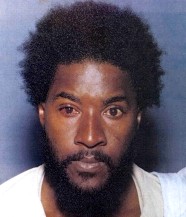
Case record: Peter Lucas Moses
Background
Peter Lucas Moses led a small sect called the Black Hebrews in Durham. Prosecutors described the group as a “religious” group of women and children that called him “Lord,” and said it feared him. Women who lived with Moses counted themselves as his “wives or common-law wives” and often referred to him as “Lord.” Court testimony indicated that the group believed a race war was coming that would leave blacks dominant and supreme.
Moses had a history of mental illness and depression, and his lawyer said he had been in the mental health system since he attempted suicide at age 10. He was later committed to psychiatric facilities, where he was diagnosed with bi-polar disorder and depression. The hearing exposed competing descriptions of Moses: his family and defense attorney portrayed him as a victim of Durham’s mental health and court systems, while Yvonne McKoy, the mother of Antoinetta Yvonne McKoy, described him as a killer who ordered her daughter killed.
Moses was on medication during the July 5, 2013 sentencing hearing. His attorney said Moses’ personality was “very different” after medications were administered during incarceration.
The offence
Killing of Jadon Higganbothan
In October 2010, court testimony indicated that Moses shot Jadon Higganbothan, a 4-year-old boy living in the house with his mother. Prosecutors said Moses shot the boy because he thought the child was gay after the child touched the buttocks of one of Moses’ children. Prosecutors also said Moses feared Jadon might be gay because his father had left Vania Sisk.
A witness account presented in court said that sometime in October 2010, Moses became angry and started walking around the house with a gun that belonged to Sisk after Smith told Moses that Jadon had hit another child’s bottom. Prosecutors said Moses then ordered two women to set up computers and speakers in the garage. The witness testimony said music with the Lord’s Prayer in Hebrew played, Moses took the boy into the garage, and a gunshot sounded.
Prosecutors said the witness told them women helped clean up Jadon’s bloodied body and put it in a suitcase in Moses’ master bedroom. Prosecutors also said Moses later complained about a smell and told them to get the body out because it was beginning to smell. Another account said Moses stashed the body in a suitcase in the attic and ditched the suitcase when it began to stink.
Killing of Antoinetta Yvonne McKoy
In December 2010, Antoinetta Yvonne McKoy was killed in Durham. Moses’ former high school sweetheart, she had come to Durham to live with him. The narrative described her as reported missing by her family shortly after her death in December 2010. Prosecutors said Moses ordered her killed two months after the killing of Jadon, after he learned she couldn’t have children and wanted to leave the group.
Prosecutors described that McKoy kept a diary. Court testimony said that after she found out she could not have children, she worried that “Lord” might kill her, and wrote in several entries that “Lord” might kill her.
On the day she died, prosecutors said McKoy ran to a neighbor’s house and asked to use a cellphone to call her mother in Washington. The neighbor told investigators that she did not call police because she thought McKoy was mentally troubled and had run away from a group home. Prosecutors said the other women came out of the house, wrestled McKoy to the ground, and dragged her back inside.
Prosecutors said Moses beat McKoy repeatedly and tried to strangle her with an extension cord. A witness described that McKoy begged for her life. Prosecutors said that Sisk shot and killed McKoy after Moses’ followers said “you cannot let her go.” Prosecutors also said Sisk shot McKoy several times while religious music played in the bathroom and that the women turned on the same music in the bathroom. Investigators also described that McKoy had been beaten and nearly strangled with an electrical cord.
After McKoy’s death, prosecutors said the group kept her body in a large trash bin inside the house. Another account said it was taped up inside black garbage bags placed in a garbage bin. Prosecutors said that Jadon and McKoy’s bodies were buried in a shallow grave alongside the boy’s, at an Ashe Street house where Moses’ parents lived for a time. Another account stated that later the bodies were buried in the backyard of a house at 2622 Ashe St., where Moses’ mother lived until early that year.
Prosecutors described conflicting accounts given by the suspects about what happened to McKoy: one woman said she didn’t know what happened, another said McKoy planned to move in but didn’t, and Moses said McKoy got mad about money and left.
Investigation
Durham investigators began looking into Moses after a woman who had lived with him and other women, but left in early 2011, told them about the violence. Prosecutors said the case came to police’s attention in February when a young woman escaped from a house at 2109 Pear Tree Lane, where she had lived with McKoy, Jadon, eight other children and three women charged in connection with the slayings.
Investigators said the officers initially went to the house but found nothing suspicious. After learning that McKoy had been reported missing, officers returned. Prosecutors said women denied that Moses lived there, but officers found him hiding in a bathroom cabinet.
Police said they had a confidential informant in the case. A later account stated that police were investigating the Black Hebrews after two members—one a 5-year-old boy—disappeared, and said suspects had gone on the lam. Court documents showed that police believed the missing boy’s mother, Vania Sisk, and a man named Peter Moses Jr. were directly involved in the killings, but neither have been officially charged.
Police found physical evidence at the Pear Tree Lane home, according to prosecutors: .22-caliber shell casings and a projectile and blood in the garage and master bathroom. Prosecutors also said they found a .22-caliber gun on the roof of a Colorado townhouse where the group moved in February.
Investigators interviewed a neighbor about McKoy’s escape attempt. The neighbor said she did not call police because she thought McKoy might be mentally disturbed.
Arrest and pretrial
Prosecutors said Moses was arrested in February 2011 on unrelated charges and released on bail. At a court hearing in July 2011, prosecutors said they would seek the death penalty against him.
Trial and related proceedings
Court hearings and charges
At a court hearing on July 8, 2011, prosecutors said Peter Lucas Moses, 27, faced first-degree murder charges in the deaths of Jadon Higganbothan, 4, and Antoinetta Yvonne McKoy, 28. Prosecutors said they would seek the death penalty against him. Defense attorneys did not speak in his behalf at the hearing.
The hearing described the group’s arrangement, including that the women would periodically occupy the master suite with Moses. The women and their children lived together in the same house with room arrangements described in testimony.
Prosecutors said living with the women were Sisk’s four children and Lavada Harris’s five children, and that Moses was the father of all the children except for Jadon. Prosecutors also said the children were homeschooled. Prosecutors said other children had been placed in foster homes by Social Services and told authorities they feared Moses would do to them what he did to Jadon, and that “The children are fearful of Pete Moses Jr.”
Prosecutors described that Moses killed Jadon because he thought the child was gay and killed McKoy after she learned she couldn’t have children and wanted to leave the group.
Other charged participants
The July 8, 2011 proceedings included charges against other women. Prosecutors said Sisk, Lavada Harris and Smith faced first-degree murder charges in McKoy’s death and as accessories in Jadon’s death. Police said two of the women were pregnant. Prosecutors said Sheilda Harris, P. Leonard Moses and Sheila Moses were also charged as accessories in McKoy’s death. At the hearing, Sheilda Harris, P. Leonard Moses and Sheila Moses were granted a $500,000 secured bond.
Defense attorney Mani Dexter said the prosecutor’s case against Sheila Moses was based on one person’s word and that Sheila Moses was trying to get custody of her children back from Social Services.
Sentencing
Moses pleaded guilty to two counts of first-degree murder to avoid a trial and the possibility of the death penalty, which prosecutors had held out as a possibility. The guilty plea occurred a year before the July 5, 2013 sentencing hearing.
On July 5, 2013, the county’s chief resident Superior Court judge, Orlando Hudson, sentenced Peter Lucas Moses to two consecutive life terms without possibility of parole. The record described that Moses lifted up his cuffed hands in a half-wave toward his mother as a bailiff led him out of an emotionally charged Durham County courtroom.
Hudson stated:
“These are some of the worst cases I’ve ever seen as a judge,”
At the sentencing hearing, Yvonne McKoy traveled to Durham from Washington and spoke to the judge and to Moses. She asked “Why, why, why?” and said:
“He took something very dear and precious from me,”
“She was a good girl, a church girl, a God-fearing girl.”
McKoy told the court:
“There is not a day I don’t think about her,”
“She is resting in God’s arms now. That is the only thing that gives me closure.”
She also said:
“There will come a time when I can forgive you, but I just haven’t gotten to that stage now. … If I don’t forgive you, God can’t forgive me, and I can’t see my child again. … This is like a nightmare.”
Moses looked at McKoy as she wrapped up her thoughts and said:
“I am sorry for what happened to your daughter,” he said quietly.
Appeals
No appeal information was provided.
Outcome
Moses’ plea and sentencing resulted in two consecutive life terms without possibility of parole.
Other participants received prison sentences:
- Vania Rae Sisk was sentenced to a minimum of 30 years in prison for her role in the deaths of her son and McKoy.
- LaRhonda Renee Smith was sentenced to at least 24 years in prison for her role in the deaths.
- Lavada Quinzetta Harris pleaded guilty to being an accessory after the fact of murder and was sentenced to at least 12 years in prison.
- Moses’ brother, P. Leonard Moses, also pleaded guilty to being an accessory after the fact of murder and was sentenced to at least five years behind bars.
Aftermath
At the end of the sentencing hearing, two mothers searched for answers. Moses’ mother and siblings wondered whether a justice system that takes mental illness into account when weighing the severity of sentences or a person’s fitness to stand trial had adequately reviewed Moses, whose character had been altered without medication.
Yvonne McKoy said she was still numb and could not believe her daughter was gone, and said:
“I’m just grateful to God that justice has been served and God is going to do what God is going to do,”
Timeline
- October 2010 — Jadon Higganbothan, 4, was shot in Durham.
- December 2010 — Antoinetta Yvonne McKoy was killed in Durham; her family reported her missing.
- February 2011 — A young woman escaped from 2109 Pear Tree Lane, where Moses lived with three women and eight children; she alerted investigators to the violence.
- June 2011 — The bodies were found.
- July 2011 — Murder charges were filed.
- June 2012 — Moses pleaded guilty.
- July 2013 — Moses received two consecutive life terms without parole.
Other details
- The women who lived with Moses “counted themselves as wives or common-law wives” and often referred to him as “Lord.”
- A judge described the case as among the worst he had seen.
- The record stated that though Antoinetta McKoy had been reported missing by her family and Jadon had been reported missing by his father, it was not until June 2011 that the bodies were found.
- Moses’ family and defense attorney portrayed him as suffering from bi-polar disorder and having stopped taking his medication after a brush with the law led to an outstanding arrest warrant and the halt of his disability checks.
- Lisa Miles, the lawyer representing Moses, said: “These crimes occurred at a time that Mr. Moses lost his Medicaid benefits,” and “His illness made him do something monstrous. His character will make him atone for that.”
- Investigators said that when a woman escaped, she told police two people had died at the house.
- The narrative described a party where Moses showed McKoy’s body to several relatives, including his mother Sheilda Evelyn Harris, his brother P. Leonard Moses, and his sister Sheila Falisha Moses.
- The record described that plumber-led police discovery occurred in June, and that remains were found in the backyard of a house where Moses’ mother had lived.
Spotted an error, or have more information about this case?