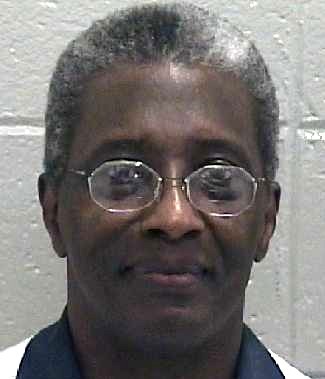
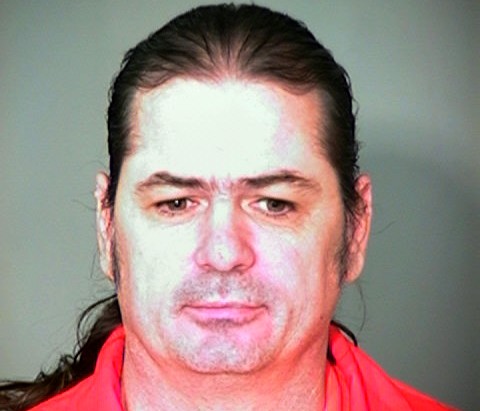
Brandon Astor Jones
Murderer Ervil LeBaron
Murderer · USA · 1972
Ervil Morrell LeBaron (1925 to August 16, 1981) was the leader of a polygamous…
35 victims
Ervil LeBaron
Murderer · USA · 1972
Ervil Morrell LeBaron (1925 to August 16, 1981) was the leader of a polygamous…
35 victims
 Brian Kevin Rosenfeld
Murderer · USA · 1985
Brian Kevin Rosenfeld Brian Kevin Rosenfeld was sentenced to three concurrent l…
23 victims
Brian Kevin Rosenfeld
Murderer · USA · 1985
Brian Kevin Rosenfeld Brian Kevin Rosenfeld was sentenced to three concurrent l…
23 victims
 Marvin Gray
Murderer · USA · 1975
Marvin Gray was convicted killer who claimed responsibility for 23 slayings and…
23 victims
Marvin Gray
Murderer · USA · 1975
Marvin Gray was convicted killer who claimed responsibility for 23 slayings and…
23 victims
 Yahweh ben Yahweh
Murderer · USA · 1980
Yahweh ben Yahweh was born and legally named Hulon Mitchell Jr. (October 27, 19…
23 victims
Yahweh ben Yahweh
Murderer · USA · 1980
Yahweh ben Yahweh was born and legally named Hulon Mitchell Jr. (October 27, 19…
23 victims
 Jacquelyn Greco
Murderer · USA · 1979
Jacquelyn Greco (also known as Jackie; formerly Jacquelyn Gaimari) — defendant;…
1 victim
Jacquelyn Greco
Murderer · USA · 1979
Jacquelyn Greco (also known as Jackie; formerly Jacquelyn Gaimari) — defendant;…
1 victim
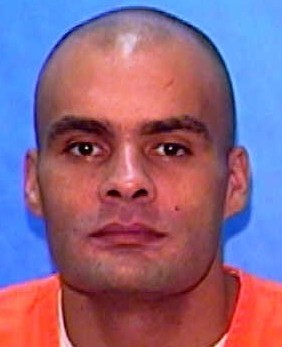 Michael Shellito
Murderer · USA · 1994
Michael Shellito was tried in the Fourth Judicial Circuit, Duval County, in Cas…
1 victim
Michael Shellito
Murderer · USA · 1994
Michael Shellito was tried in the Fourth Judicial Circuit, Duval County, in Cas…
1 victim
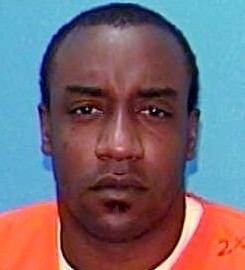 Luther Douglas
Murderer · USA · 1999
Luther Douglas was sentenced to death on June 14, 2002. On the evening of 12/25…
1 victim
Luther Douglas
Murderer · USA · 1999
Luther Douglas was sentenced to death on June 14, 2002. On the evening of 12/25…
1 victim
 Andrew Mickel
Murderer · USA · 2002
Andrew “Andy” Mickel was convicted of one count of first-degree murder in April…
1 victim
Andrew Mickel
Murderer · USA · 2002
Andrew “Andy” Mickel was convicted of one count of first-degree murder in April…
1 victim
 Francesco Mangione
Murderer · Australia · 2002
Francesco Mangione was convicted of the murder of Denis Giunta. Francesco Mangi…
1 victim
Francesco Mangione
Murderer · Australia · 2002
Francesco Mangione was convicted of the murder of Denis Giunta. Francesco Mangi…
1 victim
 Christopher Solomon
Homicide · USA · 1997
Christopher Julian Solomon (TDCJ Number 999311) was born on 01/30/1980. He was…
1 victim
Christopher Solomon
Homicide · USA · 1997
Christopher Julian Solomon (TDCJ Number 999311) was born on 01/30/1980. He was…
1 victim
- Gender
- male
- Country
- USA
- Location
- Cobb County, Georgia, USA
- Date of birth
- 1951
- Age at first offence
- 28
- Characteristics
- robbery, torture, armed robbery, burglary
- Victim profile
- Roger Tackett, 29 (service station manager)
- Method of murder
- Shooting
- Date(s) of murder
- June 17, 1979
- Years active
- 1979
- Date of arrest
- Same day
- Status
-
Sentenced to death
Sentenced to death on October 17, 1979
Case record: Brandon Astor Jones
Parties and identifiers
Brandon Astor Jones, also known as Wilbur May, was convicted of murder and sentenced to die in 1979.
Van Roosevelt Solomon was Jones’s co-defendant and was also sentenced to death; he was executed on Feb. 20, 1985.
The victim was Roger Tackett, the station manager of a Tenneco convenience store, who was 29 years old.
Timeline
- June 16, 1979 — Roger Tackett arrived at the store at 11:20 p.m. to close it for the night and remained to complete some paperwork after other employees left.
- June 17, 1979 — Officer Kendall heard shots at approximately 1:45 a.m.; Jones and Van Roosevelt Solomon were arrested after the officer drove a stranded motorist to the Tenneco parking lot and investigated suspicious activity. The murder occurred on June 17, 1979.
- July 16, 1979 — Jones was indicted for malice murder.
- October 17, 1979 — Jones was sentenced to death in October 1979.
- 1989 — Jones’s death sentence was vacated by a federal district court; a U.S. District Court judge reversed the sentence ruling it was unfairly imposed considering the prosecutor's Bible quoting.
- September 8 to 23, 1997 — A re-sentencing trial was held.
- October 10, 1997 — Jones filed a motion for new trial.
- June 9, 1999 — Jones amended his motion for new trial.
- January 11, 2000 — The trial court denied the motion for new trial.
- April 21, 2000 — The case was docketed to this Court.
- July 18, 2000 — Oral argument was held.
- November 20, 2000 — The case was decided.
- December 14, 2000 — Reconsideration was denied.
- September 1996 — The Department of Corrections transferred Jones off death row and into the general prison population.
- 1997 — Jones was sentenced to death in a retrial.
Background
The victim, Roger Tackett, managed a Tenneco convenience store.
In “Without War,” which Jones described as a “roman á clef,” he wrote about the brutality involved in tracking runaway slaves in the pre-Civil War South.
According to a Web site devoted to Jones, he was a writer who had articles published around the world.
International supporters testified during the 1997 retrial that Jones had been rehabilitated.
During the re-sentencing trial, the jury recommended a death sentence after finding beyond a reasonable doubt that Jones committed the offense of murder while engaged in the commission of armed robbery and burglary and that the murder was outrageously or wantonly vile, horrible or inhuman in that it involved torture to the victim before death.
The offence
Jones was convicted of murder for the June 17, 1979 murder of Roger Tackett.
The evidence at Jones’s re-sentencing trial established that Tackett had been shot five times from behind, once in the jaw, once behind the left ear, once in the thumb, and twice in the right hip.
The medical examiner determined that the fatal shot was the “loose contact” shot behind the left ear since that bullet penetrated the brain; this shot was probably the final shot and was fired while the victim was lying on the ground.
Crime scene photographs also showed a possible bullet hole in a shelf on the wall, indicating a fifth shot may have been fired in the storeroom.
Two .38 caliber revolvers were found in an open box next to where Officer Kendall had first encountered the defendants: a large Smith and Wesson contained two spent shells, and a smaller Colt contained four spent shells.
Four .38 caliber bullets were recovered at the scene or in the victim’s body; the ballistics expert determined that all were probably fired by the Colt.
The store’s cash drawer was found moved from its original place inside the store and wrapped in a plastic bag.
Inside the van, which belonged to Solomon, the police discovered burglary tools, holsters that fit the revolvers, and .38 caliber bullets.
Investigation
Officer Kendall of the Cobb County police department drove a stranded motorist to the Tenneco parking lot so the motorist could use a pay phone.
Officer Kendall observed a car (Tackett’s) parked in front of the store with the driver’s-side door open; the lights were still on inside the store.
Since the Tenneco store was in his regular patrol area and Officer Kendall knew it usually closed at midnight, he walked to the store and saw through the front window Jones stick his head out of the storeroom door at the back of the store, look around (apparently without seeing the officer), and then close the storeroom door.
Officer Kendall entered through the unlocked front door and heard three shots, a pause, and then a fourth shot.
Officer Kendall drew his weapon and shouted “police, come on out” without a response, then approached the storeroom door, opened it, and found Jones and co-defendant Van Roosevelt Solomon standing just inside the door.
Officer Kendall ordered both defendants into the main store area, searched them, and handcuffed Jones.
Officer Kendall placed Solomon in his patrol car since he only had one set of handcuffs and called for assistance on the radio, informing both defendants of their rights under Miranda v. Arizona.
A private security officer, Alex Woolyard, heard Officer Kendall’s request for assistance on a police scanner and arrived first.
Woolyard loaned Officer Kendall a set of handcuffs to restrain Solomon and watched the defendants while Officer Kendall investigated a van parked nearby.
Woolyard spoke with Jones and determined that the car parked in front of the store did not belong to them and that the defendants had arrived in the van.
Upon continued questioning by Woolyard, Jones stated that they had come to burglarize the store and found a man who was “bad hurt” in the back of the store.
After handcuffing Jones to a metal pole, Woolyard and Officer Kendall entered the store and discovered that the storeroom door had locked when it shut as the defendants exited.
They used a crowbar to break open the door and found Tackett’s body lying face-down at one end of the narrow storeroom.
Officer Kendall had not seen the victim when he first encountered the defendants in the storeroom since he did not enter the storeroom at that time.
The evidence further included atomic absorption test results: an atomic absorption test conducted on swabs of the defendants’ hands indicated that both men had recently fired a gun or handled a recently-fired gun.
Arrest
Jones and Van Roosevelt Solomon were arrested after Officer Kendall entered the store, discovered the defendants in the storeroom door area, handcuffed Jones, placed Solomon in the patrol car, and informed both defendants of their Miranda rights.
Trial
Court and judge
The appeal involved a re-sentencing verdict arising from Cobb Superior Court.
The case involved Judge Nix at the re-sentencing trial.
Re-sentencing and verdict
Jones had been convicted of murder and sentenced to die in 1979.
In 1989, his death sentence was vacated by a federal district court.
A re-sentencing trial was held in 1997, and the jury recommended a death sentence.
The jury found beyond a reasonable doubt that Jones committed the offense of murder while engaged in the commission of armed robbery and burglary.
The jury also found that the murder was outrageously or wantonly vile, horrible or inhuman in that it involved torture to the victim before death.
After the jury deliberated about ten hours, it sent a note to the trial judge stating that they were at an “impasse,” that the vote was 11-1 for a death sentence, and that “one juror is opposed to the death penalty under any circumstances.”
After a modified Allen charge, the jury returned with a death sentence three hours later and was polled as to its verdict.
Jury notes and related rulings
During deliberations, the jury sent a note asking, “Is a life sentence considered life without parole or will parole be considered?”
The trial court responded that this “is not a question for your deliberations.”
During its deliberations, the jury sent another note to the trial court stating, “Please define: Intended that deadly force be used by another to accomplish the criminal enterprise.”
After discussion with both parties, the trial court responded to the note by telling the jury they had the complete written charge before them and that no additional explanation would be given.
Jones specifically stated that he had no objection to this response, waiving his claim on appeal that the trial court committed error in this instance.
Sentencing
Jones was sentenced to death in a retrial.
The jury recommended death after its findings regarding armed robbery and burglary and that the murder involved torture to the victim before death.
Appeals
Grounds raised and court’s determinations
Jones did not raise an Eighth Amendment challenge to the method of execution, electrocution, imposed against him; for those reasons, the court affirmed.
Jones argued that sentencing him to death after two decades on death row was an affront to human dignity, characterizing “waiting for execution” as intolerably cruel; the claim was rejected.
Jones made a speedy trial claim regarding an eight-year delay after his sentence was vacated; the court rejected the claim on three grounds:
- There was no evidence Jones asserted his right to a speedy trial before trial.
- Much of the delay was attributable to Jones’s actions, including frequently refusing to cooperate with appointed counsel and repeatedly seeking to have them replaced, and appealing denial of a plea in bar and seeking a separate interim review, which required considerable time to litigate.
- One of the superior court judges assigned to the case was appointed to this Court, and two others recused themselves on defense motions—one because she had years earlier worked on Jones’s case as an assistant district attorney and one because she had a sister in the district attorney’s office—so the delay could not fairly be attributed to the prosecution; Jones also failed to show prejudice since his murder conviction was unaffected by the federal courts and he was required to serve at least a life sentence, and several mitigation witnesses testified they did not become acquainted with him until they read articles he had written in the mid-1990s.
The court also found no evidence supporting Jones’s assertion that his jury was aware he had previously been sentenced to death.
Jones argued the trial court erred by responding to the jury’s life-sentence parole question; the response was held not to be error.
Jones claimed the prosecutor erred by commenting on Jones’s right to remain silent when arguing Jones’s lack of remorse during closing argument; the court held it was not improper in the penalty phase to argue the defendant’s lack of remorse when lawful evidence supports the argument and that such comments did not amount to improper reference to failure to testify.
The court held:
- It was not improper to urge that mercy was not appropriate and to argue Jones’s future dangerousness.
- The argument about Jones’s autopsy expert’s conclusions being affected by her failure to utilize the original Polaroid photographs of the autopsy was a reasonable inference.
- It found no error in the State’s closing argument or any prosecutorial misconduct.
- It found no error in victim-impact evidence or cross-examination questions posed to Jones’s mitigation witnesses.
- There was no reversible error due to the victim’s daughter identifying a photograph of the victim in life since Jones did not object and there was no emotional display.
Jones argued that the trial court should have declared a mistrial when the jury announced its impasse and that the charge was coercive; the court held it was not required to accept a jury’s declaration of deadlock, that a trial court did not err by requiring the jury to continue deliberating in these circumstances, that the modified Allen charge was not improper, and that the three hours from the charge to the verdict indicated a lack of coercion. It also held the trial court was not required to single out the holdout juror for additional questions during polling or inform the jury during its charge of the consequences of a deadlock; it found the verdict was not coerced.
Jones claimed error in the trial court’s handling of a scrivener’s error with one statutory aggravating circumstance discovered when the jury returned; the court held Jones did not object so any argument regarding an alleged invalid verdict form was waived, and that it was not improper to send the jury back to correct errors on the verdict form. It also found that the statutory aggravating circumstances found by the jury were not mutually supporting.
Jones challenged the admission of a 1978 robbery conviction in Chicago as non-statutory aggravating evidence, arguing ineffective assistance of counsel and failure to properly waive his right to a jury before the 1978 bench trial; the court held there was no evidence counsel in 1978 was ineffective and that Jones had provided a written waiver of a jury and a transcript of the colloquy in which he waived a jury in the presence of counsel; it held the 1978 conviction was valid and properly admitted.
Jones sought to introduce a certified copy of co-defendant Solomon’s conviction for the malice murder of Tackett; the State objected and the trial court sustained the objection. The court held no error because Solomon’s conviction would not tend to lessen Jones’s culpability or constitute mitigating evidence pertaining to Jones’s character, prior record, or the circumstances of the offense.
The jury was informed of Solomon’s role in the murder through witness testimony to the extent possible since only Jones, Solomon, and the victim were in the storeroom.
The trial court properly excluded a certified copy of Solomon’s 1960 armed robbery conviction for the same reasons.
An unsworn letter written by a person who did not appear at trial asking for mercy for Jones was ruled inadmissible hearsay.
Jones claimed that five prospective jurors were erroneously excused for cause due to their opposition to the death penalty; the court held these prospective jurors stated unequivocally they could not vote to impose a death sentence regardless of the evidence, so it found no error.
Jones claimed error in the refusal to excuse for cause a prospective juror who believed in an eye for an eye and was leaning to a death sentence; the court found the juror also stated he could fairly consider both life and death, his mind was not made up, and he would have to hear the evidence before deciding punishment.
Jones claimed the atomic absorption test on his hands was scientifically unreliable; the court held the chemist who performed the test testified about procedures and result after being properly qualified as an expert; the witness was subject to cross-examination and Jones did not present evidence that others considered the test unreliable. The court noted the atomic absorption test had been widely used by the Crime Lab since 1975 and concluded its admission was not error.
Jones claimed racism in seeking the death penalty; the court stated the claim had already been found to be without merit on interim review.
Jones claimed the selection of a white jury foreperson was discriminatory due to instruction to select a foreperson from among themselves, “races tend to block-vote,” and whites being a majority of the jury; the court held the argument was waived because Jones did not object to the instruction and also found there was no state action because jurors selected the foreperson themselves; it found no error.
Jones argued that the wooden trim in the courtroom patterned on a cross motif was prejudicial; the court concluded it was not prejudicial.
Jones claimed the trial court erred by failing to give a charge on voluntariness of Jones’s statements to Alex Woolyard; the court held Georgia did not require such a charge absent a request and also that admissibility was determined before trial.
Jones argued for cumulative error; the court held Georgia does not recognize the cumulative error rule.
Jones argued his death sentence was the result of impermissible passion, prejudice, or other arbitrary factor and that it was excessive or disproportionate; the court held the death sentence was not imposed as a result of impermissible factors, and it was not excessive or disproportionate to penalties in similar cases, noting that two juries had recommended death for Tackett’s murder and that the co-defendant was also sentenced to death for the same murder. It stated similar cases listed in the appendix supported imposition of the death penalty because they involved murder during commission of an armed robbery or burglary.
Dissent
FLETCHER, Presiding Justice, dissented to division 4 of the majority opinion and to the imposition of the death penalty.
FLETCHER stated:
During closing argument, the state argued that Jones's failure to apologize to Roger Tackett's family was "the kind of conduct that deserves the death penalty."
The impermissible inference from this argument was that Jones had a moral and legal obligation to confess to the murder by apologizing to the victim's family in order to avoid the death penalty.
This type of argument is fundamentally unfair because "[e]ven after he has been found guilty, a defendant is under no obligation to confess, and he has a right to urge his possible innocence to the jury as a factor in mitigation of penalty."
"Acceptance of the [s]tate's argument would place an accused in the paradoxical position of saying I am sorry for a crime of which I am not guilty."
The state's argument in this case forced Jones into an "intolerable dilemma" of having to choose between his Fifth Amendment right against self-incrimination and a sentence of death.
I acknowledge that this Court has held that it is permissible for the state to argue the defendant's lack of remorse in certain circumstances when there is lawful evidence to support the argument. Here, there is no specific evidence of lack of remorse.
We have never held that the defendant's failure to apologize and confess is lawful evidence of a lack of remorse or that such failure permits the state to argue that a lack of remorse supports the imposition of the death penalty.
Furthermore, the majority's reliance on Hammond v. State, is misplaced. Hammond addressed only the specific comment made by the prosecutor in that case and does not stand for the general proposition that arguments regarding a lack of remorse can never constitute a comment on the failure to testify.
The impropriety of the state's argument was compounded by its contention that the power of forgiveness belonged exclusively to Roger Tackett's family members, and that Jones had not sought this forgiveness by apologizing for the murder.
A logical but impermissible inference for the jury to draw was that it had no power to dispense mercy to Jones, contrary to OCGA 17-10-2 (c), which provides, in pertinent part, that at the conclusion of the penalty phase, "the jury shall retire to determine . . . whether to recommend mercy for the defendant."
Furthermore, "mercy for the individual defendant is, by itself, a valid reason for a jury to decline to impose a death sentence -- a jury can withhold the death penalty for any reason or no reason at all."
Because the state's argument violated Jones's Fifth Amendment right against self-incrimination, and was so fundamentally unfair as to deny Jones due process, I would reverse and remand for a new sentencing hearing.
FLETCHER stated:
I am authorized to state that Justice Hunstein and Judge Perry Brannen, Jr., join in this dissent.
Other details
Jones’s death sentence vacated by the federal district court in 1989 was related to the prosecutor’s Bible quoting.
Notes about procedure and case handling included:
- The re-sentencing trial took place from September 8 to 23, 1997.
- After the vacation of his death sentence in 1989, Jones appealed the denial of a plea in bar, Jones v. State, 260 Ga. 794 (401 SE2d 1) (1991), and sought an interim review, Jones v. State, 263 Ga. 904 (440 SE2d 161) (1994).
- Jones filed a motion for new trial on October 10, 1997, and amended it on June 9, 1999.
- The trial court denied the motion for new trial on January 11, 2000, and the case was docketed to this Court on April 21, 2000.
- Oral argument was on July 18, 2000.
- DECIDED NOVEMBER 20, 2000 -- RECONSIDERATION DENIED DECEMBER 14, 2000.
Counsel listed for appellant included Kenneth T. Israel, Ray B. Gary, Jr., Mitchell D. Durham, Clive A. Stafford-Smith, and Albertelli & Israel.
APPENDIX cases listed included: Cromartie v. State, 270 Ga. 780 (514 SE2d 205) (1999); Whatley v. State, 270 Ga. 296 (509 SE2d 45) (1998); Bishop v. State, 268 Ga. 286 (486 SE2d 887) (1997); Jones v. State, 267 Ga. 592 (481 SE2d 821) (1997); McClain v. State, 267 Ga. 378 (477 SE2d 814) (1996); Greene v. State, 266 Ga. 439 (469 SE2d 129) (1996); Mobley v. State, 265 Ga. 292 (455 SE2d 61) (1995); Meders v. State, 261 Ga. 806 (411 SE2d 491) (1992); Gibson v. State, 261 Ga. 313 (404 SE2d 781) (1991); Ferrell v. State, 261 Ga. 115 (401 SE2d 741) (1991); Stripling v. State, 261 Ga. 1 (401 SE2d 500) (1991); Lee v. State, 258 Ga. 82 (365 SE2d 99) (1988); Ford v. State, 257 Ga. 461 (360 SE2d 258) (1987); Cargill v. State, 255 Ga. 616 (340 SE2d 891) (1986); Ingram v. State, 253 Ga. 622 (323 SE2d 801) (1984); Spivey v. State, 253 Ga. 187 (319 SE2d 420) (1984); Mincey v. State, 251 Ga. 255 (304 SE2d 882) (1983); Wilson v. State, 250 Ga. 630 (300 SE2d 640) (1983); Solomon v. State, 247 Ga. 27 (277 SE2d 1) (1981).
Jones remained awaiting a new sentencing trial after his death sentence was reversed in 1989, and a decision was pending in the Georgia Supreme Court on an application for certificate of probable cause to appeal.
A scrivener’s error with one statutory aggravating circumstance arose when the jury returned its verdict, and the trial court sent the jury back to complete the form without commenting on the verdict itself.
Spotted an error, or have more information about this case?