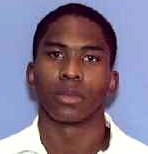
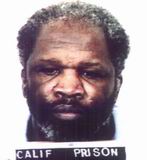
Christopher Solomon
Homicide Jack Kevorkian
Homicide · USA · 1990
Jack Kevorkian (born May 26, 1928) was a controversial American pathologist. He…
130 victims
Jack Kevorkian
Homicide · USA · 1990
Jack Kevorkian (born May 26, 1928) was a controversial American pathologist. He…
130 victims
 David Koresh
Homicide · USA · 1993
David Koresh (born Vernon Wayne Howell; August 17, 1959 – April 19, 1993) led t…
79 victims
David Koresh
Homicide · USA · 1993
David Koresh (born Vernon Wayne Howell; August 17, 1959 – April 19, 1993) led t…
79 victims
 Todd Hall
Homicide · USA · 1996
Todd Hall was described by neighbors as "mentally slow" and was said to have su…
9 victims
Todd Hall
Homicide · USA · 1996
Todd Hall was described by neighbors as "mentally slow" and was said to have su…
9 victims
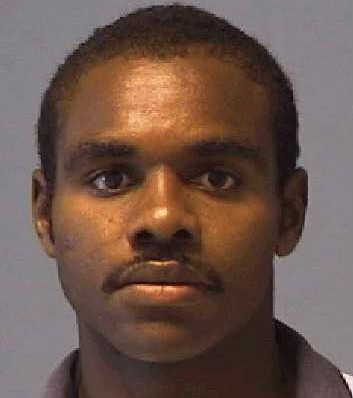 Clinton Bankston
Homicide · USA · 1987
15 August 1987 — Ann Morris (63), her sister Sally Nicholson (59), and Sally’s…
5 victims
Clinton Bankston
Homicide · USA · 1987
15 August 1987 — Ann Morris (63), her sister Sally Nicholson (59), and Sally’s…
5 victims
 Joshua Jenkins
Homicide · USA · 1996
Joshua Jenkins was a 15-year-old American killer who killed five members of his…
5 victims
Joshua Jenkins
Homicide · USA · 1996
Joshua Jenkins was a 15-year-old American killer who killed five members of his…
5 victims
 Robin Ligus
Serial killer · United Kingdom · 1994
Robin Stanislaw Ligus was a father-of-three who was serving a life term for the…
3 victims
Robin Ligus
Serial killer · United Kingdom · 1994
Robin Stanislaw Ligus was a father-of-three who was serving a life term for the…
3 victims
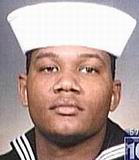 William Oliver Reese
Murderer · Japan · 2006
William Oliver Reese William Oliver Reese was a US Navy airman assigned to the…
1 victim
William Oliver Reese
Murderer · Japan · 2006
William Oliver Reese William Oliver Reese was a US Navy airman assigned to the…
1 victim
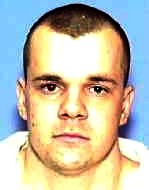 Jeffery Lee Wood
Murderer? · USA · 1996
Jeffery Lee Wood (TDCJ Number 999256) was born on 08/19/73 and was 24 when he w…
1 victim
Jeffery Lee Wood
Murderer? · USA · 1996
Jeffery Lee Wood (TDCJ Number 999256) was born on 08/19/73 and was 24 when he w…
1 victim
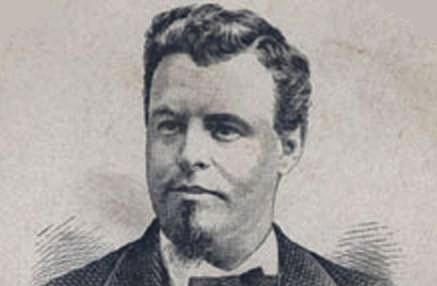 Rev. Herbert Hayden
Murderer · USA · 1878
Rev. Herbert H. Hayden was a married father and a minister of a Methodist churc…
1 victim
Rev. Herbert Hayden
Murderer · USA · 1878
Rev. Herbert H. Hayden was a married father and a minister of a Methodist churc…
1 victim
 Jamie Davis
Murderer · USA · 2010
Jamie Carole Davis was a Lakeland woman who was accused of fatally shooting ano…
1 victim
Jamie Davis
Murderer · USA · 2010
Jamie Carole Davis was a Lakeland woman who was accused of fatally shooting ano…
1 victim
- Gender
- male
- Country
- USA
- Location
- Bowie County, Texas, USA
- Date of birth
- January 30, 1980
- Age at first offence
- 17
- Characteristics
- juvenile (17), robbery
- Victim profile
- Jason Erie
- Method of murder
- Shooting (.25 caliber handgun)
- Date(s) of murder
- September 19, 1997
- Years active
- 1997
- Date of arrest
- —
- Status
-
Life imprisonment
Sentenced to death on June 4, 1999; commuted to life in prison in 2005
Case details
Christopher Julian Solomon (TDCJ Number 999311) was born on 01/30/1980. He was received in custody on 09/19/1997 at age 17. His education level was recorded as 10. He was described as Black male with black hair.
At sentencing, the age recorded for the offence was 19 and the education level entry corresponded to 06/04/1999. His recorded height was 5' 9" and his weight was 157. His recorded eye color was Brown. He was listed as being from Native County, Native State, and Native. His prior occupation was Orange California Laborer. His prior prison record was None.
Victim
The victim was Jason Erie, identified as a white male. Jason Erie's brother was Jerry Erie, Jr. Jason Erie had a father, a wife, and two children. Jerry Erie, Jr. identified photographs depicting the victim's wedding, the victim in his sailor's uniform, the victim's children, and scenes of the victim swimming with his children.
The offence
On 09/19/1997, during the nighttime in Texarkana, Christopher Solomon and two co-defendants robbed and fatally shot an adult white male.
The victim was attending to a disabled vehicle when Solomon stopped his vehicle. One of Solomon's co-defendants approached the victim with a 25-caliber handgun. The group attempted to rob the victim of money and jewelry, but the victim resisted. The victim was shot 1 time in the head. Solomon and his co-defendants fled the scene in their vehicle.
The co-defendants named in the appellate opinion included Murphy, Julius Woods, and Marie Race.
Investigation and evidence presented at trial
Three witnesses were relevant to resolving Solomon's complaint about the corroboration of accomplice witness testimony: Javarrow Young, Virginia Marie Wood, and Christina Davis.
According to Young, Wood, and Davis, Solomon, Julius Murphy, Young, Wood, and Davis attended a party at Murphy's mother's home on the afternoon of September 17, 1997. Young testified that Solomon engaged him in a conversation about a robbery. Murphy was present but did not talk.
Young testified that Solomon later showed him a pistol from the glove compartment of Wood's car, passed the gun around to several others including Young and Murphy, and then the gun was returned to Solomon, who pocketed it.
Young testified that two vehicles traveled together to visit out-of-town friends. One vehicle was a truck driven by Young's girlfriend and contained passengers Young, Young's daughter, and a friend named Phil. The other vehicle was a car driven by Solomon and contained passengers Murphy, Wood, and Davis.
Upon returning from the out-of-town trip, the two vehicles stopped at a gas station. Young testified that Solomon conversed with him. Solomon told Young he had seen a man with car trouble on the side of the road and that the man had waved, indicating he needed assistance. Solomon told Young that he was going to "jack him"—which Young interpreted as Solomon going to rob the man on the road. Young testified that he declined to get involved and told Solomon "to do what they got to do, and go."
Wood and Davis saw Solomon engage in a conversation but did not hear what transpired. Young testified that he saw Solomon's car stop by the victim's car on the side of the road. Young testified that he drove his truck to a different gas station and waited.
Young testified that when Solomon's car failed to appear after twenty to thirty minutes, Young drove his truck towards town and saw the victim lying on the ground. Young testified that he flagged down a passing ambulance and directed it to the scene. Later, he talked to police.
According to Wood and Davis, Solomon drove Wood's car, Wood sat in the front passenger seat, Murphy sat behind Solomon, and Davis sat behind Wood. Murphy and Davis were not getting along because they had been fighting earlier on the trip.
Solomon pointed to the side of the road to Erie, who was apparently having car trouble. Solomon gave Erie's car a "jump," and Erie paid Solomon five dollars.
Davis testified that as Erie headed away, Solomon told Murphy that Erie had a lot of money in his wallet and said something to the effect of "we should jack him." Davis testified that at first Murphy resisted but Solomon goaded Murphy until he agreed. Murphy then said, "Okay, give me the gun. I'll do it."
Wood testified that Solomon told her to take the gun out. Wood removed the gun from the glove compartment, and Murphy grabbed the gun. Wood testified that after Erie paid Solomon five dollars, Murphy told her to hand him the gun and she complied.
Wood testified that she heard Solomon tell Murphy he should shoot and kill the man because "that's how I got caught the last time." Davis was not listening to the conversation but heard the last phrase "that's how I got caught the last time." Davis testified that she grabbed Murphy and told him not to go, but Murphy pushed her away and exited the car. Davis put her head down and heard a gun fire. Wood saw Murphy shoot the victim and take his wallet.
Wood testified that after the incident with Erie, Solomon and Murphy bragged about the bullet shell remaining inside the gun's chamber. Wood testified that Solomon coldly bragged that he was going to keep the five dollars given by Erie as a souvenir.
Wood and Davis testified that Davis ran from the car and contacted police sometime after the incident with Erie. Solomon, Murphy, and Wood were subsequently charged with capital murder.
Trial
Solomon did not testify. Wood, Davis, and Young testified as witnesses for the prosecution.
The jury charge included an accomplice as a matter of law instruction for Wood and an accomplice as a matter of fact instruction for Davis.
Direct appeal issues and appellate analysis
Sufficiency of the evidence and accomplice corroboration (Point of error two)
Solomon complained that the State presented insufficient evidence to corroborate accomplice witness testimony.
The appellate discussion explained the accomplice-witness rule: A conviction cannot be had upon the testimony of an accomplice unless corroborated by other evidence tending to connect the defendant with the offense committed; and the corroboration is not sufficient if it merely shows the commission of the offense.
In the appellate analysis, the court overruled the point of error, stating that Solomon's argument erroneously assumed Davis to be an accomplice. The court held that mere presence during the commission of a crime was not enough to make someone an accomplice. It further stated that even if the accomplice instruction for Davis was considered, the jury would have been free to believe Davis was not an accomplice. The appellate court concluded Davis's testimony linked Solomon to the crime, including that Solomon formed the idea of robbing Erie and goaded Murphy into committing the robbery, and that Solomon commanded Wood to hand the gun to Murphy.
The appellate court also addressed Young's testimony, stating that credibility attacks on a witness did not defeat the corroborating effect of the witness's testimony.
Future dangerousness (Point of error eight)
Solomon contended that the evidence was legally insufficient to support the jury's answer to the "future dangerousness" special issue.
The appellate court applied a sufficiency standard: evidence in the light most favorable to the verdict to determine whether any rational trier of fact could have found beyond a reasonable doubt that there was a probability Solomon would commit criminal acts of violence constituting a continuing threat to society.
The appellate court discussed factors that may be considered, including circumstances of the capital offense, calculated nature of the acts, forethought and deliberateness, prior criminal record, age and personal circumstances, whether under duress or domination, psychiatric evidence, and character evidence. It stated the facts of the offense alone could be sufficient to show future dangerousness and relied on Wood's testimony that Solomon told Murphy to kill the victim because "that's how I got caught the last time." The appellate court concluded the statement and other testimony supported future dangerousness, including Davis's testimony that Solomon goaded Murphy and Young's testimony that Solomon formed intent to rob Erie before stopping alongside the victim's car. The appellate court also noted evidence that Solomon bragged about the chambered shell and kept the five dollars as a souvenir, and that lack of remorse supported future dangerousness.
The appellate court stated that the State showed prior offenses: in 1996, Solomon shot at a house because a friend would not sell embalming fluid for him; in 1997, he shot at another person; and in June 1997, Solomon and another person committed a carjacking and threatened to kill the car's owner if he called police. The appellate court stated Solomon was charged with aggravated robbery for that incident and was on bond for that offense when he committed the offence before the court, characterizing it as an escalating pattern of violence and citing committing the offense while on bond as showing disrespect for the law.
The appellate court stated the evidence showed Solomon acted as a leader giving orders concerning the robbery and murder. It also stated the State presented testimony from a neuropsychologist that Solomon posed a danger of future violence.
Point of error eight was overruled.
Lay witness opinion (Point of error four)
Solomon argued the trial court erred in permitting a lay witness to give an opinion on the ultimate issue.
During Davis's testimony, the following colloquy occurred:
[PROSECUTOR]: Christina, let me just ask you this question. You were in the car that night. Who was the person in that car responsible for Mr. Erie getting robbed, in your opinion? [DAVIS]: In my opinion? [PROSECUTOR]: Yes. [DAVIS]: Chris. [DEFENSE COUNSEL]: That calls for a legal conclusion. Object to that. Invading the province of the jury. THE COURT: Overruled. [PROSECUTOR]: The defendant was? [DAVIS]: Yes. To me, it was.
The appellate court held that even if it assumed error, admission of the opinion was harmless, stating the jury had already heard the facts underlying Davis's conclusion and the opinion added little or no weight.
Point of error four was overruled.
Plea agreement with Wood (Point of error five)
Solomon contended prosecutorial misconduct related to Wood's testimony. Wood testified she entered into a plea agreement with the State in which she would plead guilty to aggravated robbery, be sentenced to twenty years in prison, and truthfully testify at Solomon's trial.
Solomon filed a motion to supplement the record with a docket sheet he claimed showed Wood had yet to plead or be sentenced. Solomon suggested Wood and the State had made a secret "sweetheart" deal. The State responded that concluding its agreement with Wood would eliminate incentive for cooperation if Solomon's conviction were overturned and a new trial became necessary.
The appellate court denied the motion to supplement the record and overruled point of error five, stating Rule 34.5(c)(1) could not be used to create a new appellate record.
Photographs at punishment stage (Point of error nine)
Solomon contended the trial court erred in admitting photographs at the punishment stage. Jerry Erie, Jr. testified for three pages and explained that the victim had a father, wife, and two children. Jerry identified photographs depicting the victim's wedding, the victim in his sailor's uniform, the victim's children, and scenes of the victim swimming with his children.
The appellate court agreed the photographs were relevant only as victim impact evidence and reviewed the law on victim impact evidence and Texas Rule of Evidence 403. The appellate court concluded the trial court did not abuse its discretion in determining the probative value was not substantially outweighed by danger of unfair prejudice.
Point of error nine was overruled.
Independent impulse instruction (Point of error one)
Solomon argued the trial court erred by failing to submit an instruction on "independent impulse" in a conspiracy liability context. The trial court gave instructions tracking Texas Penal Code §7.02(b) language in the guilt-innocence charge, including capital murder instructions referencing that Julius Jerome Murphy intentionally caused the death of an individual, Jason Erie, by shooting him with a firearm, and that the said Christopher Solomon acted with intent to promote the robbery by encouraging, soliciting, directing, aiding, or attempting to aid Murphy.
The appellate court held the holding in Mayfield was no longer viable in light of Giesberg and overruled point of error one.
Accomplice testimony corroboration (Point of error three)
Solomon contended the judge erred in failing to submit an instruction in both guilt and punishment phases that accomplices could not corroborate each other's testimony. The appellate court stated Wood was the only accomplice and that while the trial court submitted an instruction about Davis being an accomplice as a matter of fact, submission was erroneous because the issue was not raised by evidence. The appellate court concluded the evidence did not raise an issue regarding accomplices corroborating each other and overruled point of error three.
Lesser-included offense of robbery (Point of error six)
Solomon argued the court erred in refusing to submit the lesser-included offense of robbery. The appellate court held robbery was contained within proof for murder in the course of a robbery, satisfying the first prong. It found the second prong was not met because there was no evidence directly germane to a lesser-included offense for the jury to consider.
The appellate court stated there was uncontradicted testimony that Jason Erie was shot and killed and that Murphy intentionally shot and robbed the victim. It stated uncontradicted testimony showed Solomon told Murphy to kill the victim because "that is how I got caught the last time." The appellate court held Solomon pointed to no evidence raising robbery through any of the three possible ways to raise it in this case, and there was no evidence indicating that a murder did not occur, that the victim's death was not in furtherance of a conspiracy to commit robbery, or that the death was not anticipated.
Point of error six was overruled.
Anti-parties instruction (Point of error seven)
Solomon claimed the trial court erred by failing to submit an anti-parties instruction in the punishment jury charge. Solomon conceded the "anti-parties" special issue found in Article 37.071 §2(b)(2) was submitted, but argued the trial court should have sua sponte submitted an additional instruction telling the jury to ignore the parties instructions in the guilt jury charge.
The appellate court overruled point of error seven, citing a prior decision decided adversely to Solomon's position.
Sentencing
The appellate opinion stated Solomon was convicted in June 1999 of a capital murder committed on September 19, 1997. It stated that pursuant to the jury's answers to the special issues set forth in Texas Code of Criminal Procedure art. 37.071 §§2(b) and 2(e), the trial judge sentenced Solomon to death.
Appeals
Solomon's direct appeal was automatic to the Court of Criminal Appeals of Texas under standard appellate procedure. The appellate court stated it would affirm the judgment and overruled all raised points of error described in the opinion.
The appellate court opinion was delivered on June 20, 2001 and published.
Outcome
The Court of Criminal Appeals of Texas affirmed the judgment of the trial court after overruling the raised points of error, resulting in affirmance of Solomon's conviction and death sentence. The status field indicated that his death sentence was commuted to life in prison in 2005.
Other details
Jury charge instructions referenced a conspiracy liability theory under Texas Penal Code §7.02(b), including language that if, in an attempt to carry out a conspiracy to commit one felony, another felony was committed by one of the conspirators, all conspirators would be guilty of the felony actually committed, though without intent to commit it, if the offense was committed in furtherance of the unlawful purpose and was one that should have been anticipated as a result of carrying out the conspiracy.
The jury charge included instructions regarding capital murder, murder, robbery, and attempted robbery as felonies.
Spotted an error, or have more information about this case?