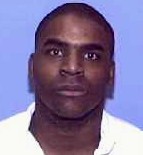
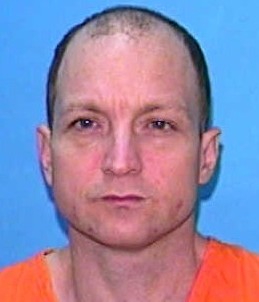
Quintin Phillippe Jones
Murderer Russell Ellwood
Murderer · USA · 1991
Russell Ellwood was a former taxi driver. Authorities suspected him of killing…
20 victims
Russell Ellwood
Murderer · USA · 1991
Russell Ellwood was a former taxi driver. Authorities suspected him of killing…
20 victims
 Robert Martines Perez
Murderer · USA · 1994
Name: Robert Martines Perez · Other name used in proceedings: Robert Martinez P…
15 victims
Robert Martines Perez
Murderer · USA · 1994
Name: Robert Martines Perez · Other name used in proceedings: Robert Martinez P…
15 victims
 Billy Frank Vickers
Murderer · USA · 1993
Billy Frank Vickers Vickers was executed by lethal injection in Texas on Januar…
14 victims
Billy Frank Vickers
Murderer · USA · 1993
Billy Frank Vickers Vickers was executed by lethal injection in Texas on Januar…
14 victims
 Victor Tony Jones
Murderer · USA · 1990
Name: Victor Tony Jones · Date of birth: 05/01/61 · Court: Eleventh Judicial Ci…
2 victims
Victor Tony Jones
Murderer · USA · 1990
Name: Victor Tony Jones · Date of birth: 05/01/61 · Court: Eleventh Judicial Ci…
2 victims
 Charlotte Bryant
Murderer · United Kingdom · 1935
Charlotte Bryant, also known as Charlotte McHugh, was born in Londonderry in 19…
1 victim
Charlotte Bryant
Murderer · United Kingdom · 1935
Charlotte Bryant, also known as Charlotte McHugh, was born in Londonderry in 19…
1 victim
 Ronnie Thornton
Murderer · USA · 1991
Ronnie Thornton was sentenced to death on January 11, 1993. His convictions wer…
1 victim
Ronnie Thornton
Murderer · USA · 1991
Ronnie Thornton was sentenced to death on January 11, 1993. His convictions wer…
1 victim
- Gender
- male
- Country
- USA
- Location
- Tarrant County, Texas, USA
- Date of birth
- J uly 15, 1979
- Age at first offence
- 20
- Characteristics
- robbery, drugs
- Victim profile
- Berthena Bryant, 83 (his great-aunt)
- Method of murder
- Beating with a baseball bat
- Date(s) of murder
- September 11, 1999
- Years active
- 1999
- Date of arrest
- Same day
- Status
-
Sentenced to death
Sentenced to death on March 16, 2001
Case details
Name: Quintin Phillippe Jones TDCJ number: 999379 Date of birth: 7/15/1979 Race: Black Gender: Male Hair color: Black Height: 5 ft 7 in Weight: 160 Eye color: Brown Native county: Tarrant, Texas Prior occupation: laborer (Tarrant) Prior prison record: None Age at the offense: 20 Date of offense: 9/11/1999 County: Tarrant Date received: 3/16/2001 Age when received: 21 Education level: 9 Co-defendants: None
The offence
On 9/11/1999, Jones murdered his 83-year-old aunt with a baseball bat. He struck her numerous times over the head. He took property from her residence.
The victim was Jones’s 83-year-old great-aunt, Berthena Bryant.
Jones was convicted of capital murder under Tex. Penal Code Ann. §19.03(a).
Investigation
Neighbors discovered Bryant’s body in her home the next morning after 9/10/1999 when Bryant told her sister, Mattie Long, that she had refused Jones’s request for a loan earlier in the day. Long testified that Bryant seemed uneasy about her conversation with Jones.
A bloody, broken baseball bat was recovered at the scene. Bryant’s car was located a half mile from her house. Bryant’s purse and wallet were found in the car.
The medical examiner, Dan Konzelman, testified to the existence of defensive bruising on Bryant’s wrists and arms. Konzelman described Bryant’s various abrasions, bruises, and fractures, including a broken collarbone and shoulder blade, two fractured ribs, and a fracture at the base of the skull.
Jones was arrested for outstanding traffic warrants and for possession of a controlled substance on the same day that Bryant’s body was discovered.
While in custody, Jones was questioned twice about Bryant’s murder by Detective Ann Gates. The first interview took place on the day Jones was arrested. Gates read Jones his Miranda warnings when she noticed he had no reaction to the news of Bryant’s death. Jones gave a statement denying any involvement and claiming an alibi.
The next day, after being informed of his rights again, Jones accompanied Gates to various locations in an effort to corroborate his alibi. That same day he took a polygraph examination. When his alibi information did not check out and the polygraph indicated deception, Gates interviewed him a second time. Gates read him his Miranda rights again. Jones agreed to waive them and gave a second written statement (the “Gates statement”).
In the Gates statement, Jones stated that he had “another personality” named James who lived in his head. He stated that James had started living in his head since age ten or eleven when he was molested by his brother and cousin. Jones stated that James went to Bryant’s house to steal money. After Bryant let him in and James could not find her purse, Jones stated that James lost his temper and started hitting Bryant with a bat she kept by the door. He stated that James found Bryant’s purse and left in Bryant’s car. Jones stated there was $30.00 in Bryant’s purse.
Jones stated he then went to a friend’s house and bought drugs with the money. He later left Bryant’s car in a parking lot.
Jones did not object to the admission of the Gates statement.
Arrest and search issues
Arrest warrant and probable cause
Jones argued that the trial court erred by admitting evidence seized during his arrest pursuant to an allegedly illegal arrest warrant. He argued that Judge Larry Reed, who issued the capias pro fine traffic warrants upon which Jones’s arrest was based, did not have probable cause because he lacked personal knowledge that the fines were not paid.
Article 45.045 provides for issuance of a capias pro fine for a defendant’s arrest “if the defendant is not in custody when the judgment is rendered or if the defendant fails to satisfy the judgment according to its terms.”
Judge Larry Reed testified that he signed capias pro fine warrants for Jones due to failure to pay fines imposed for various traffic offenses. He explained that he reviewed the file in each case, and each file contained a complaint and judgment. Each judgment stated Jones was found guilty of the offense, set forth the fine amount, and provided the due date.
Reed testified that after reviewing each judgment to verify dates and numbers, if the file contained no notation, receipt, or documentation from the clerk stating that the fine had been paid, he would determine the amount of the increased fine and issue the capias pro fine. Reed testified he had been a municipal judge for over four years and had worked as a city attorney for fourteen years prior to that. He testified he reviewed approximately 600 to 800 files a week for failure to appear or failure to satisfy the judgment in traffic offense cases and that this was the standard procedure in all such cases.
The trial court did not abuse its discretion in concluding that probable cause existed to issue the arrest warrant.
Search of the Hyundai
Jones argued the trial court erred in admitting evidence obtained as a result of an allegedly illegal search of the Hyundai in which he was a passenger immediately before his arrest. He argued the search was not made pursuant to a lawful arrest or a valid need for officer safety.
The trial court found Jones’s arrest under warrant was legal. The court held that regardless of whether the search was justified by a need for officer safety, Jones failed to establish he had a legitimate, reasonable expectation of privacy in the car.
Paula Freeman was driving the Hyundai, and Jones was hiding on the floorboard in the backseat when Officer Serra approached the car at a gas station. Jones suggested he had standing based on the fact that he had previously received traffic tickets while driving the Hyundai, but offered no evidence he had permission to drive the car on those instances, had any continued permission to drive it, or had any possessory interest in it. The fact that he had driven the car on previous occasions did not establish continued permission, ownership or a possessory interest, or otherwise a reasonable expectation of privacy.
Search of Freeman’s house
Jones argued the search of his residence was illegal because it was conducted pursuant to consent from a third party who he claimed lacked authority to allow a search of Jones’s personal effects.
Paula Freeman owned the house searched. Freeman testified at the suppression hearing that Jones was her boyfriend and that he had lived with her off-and-on for a couple of years. Freeman testified that on the day after Bryant’s murder, she agreed to let the officers search the house, and she knew officers were searching for Jones’s clothes and shoes. Specifically, she testified officers were looking for clothes matching a description she herself gave them of the clothes Jones wore on the night of Ms. Bryant’s murder. Freeman stated that she understood items would be seized if found. Freeman testified she did Jones’s laundry at her house and that she sometimes wore Jones’s clothes.
Officers seized some of Jones’s clothing and a photograph of Jones and Red Roosa.
The court held a third person may validly consent when he has “equal control and equal use of the property searched,” and that “common authority derives from the mutual use of the property, not the ownership or lack thereof.” Freeman shared mutual use of her house with Jones such that she had authority to grant consent to a search of the entire house.
The court held Jones did not dispute Freeman’s authority to consent to the search of her house, and officers did not need Freeman’s consent to seize evidence of a crime found within the scope of a lawful search.
Trial
Conviction and sentencing
Jones was convicted in February 2001 of capital murder under Tex. Penal Code Ann. §19.03(a).
Pursuant to the jury’s answers to the special issues under Texas Code of Criminal Procedure Article 37.071, §§ 2(b) and 2(e), the trial judge sentenced Jones to death under Art. 37.071 §2(g).
Direct appeal to the Texas Court of Criminal Appeals was automatic under Art. 37.071 §2(h).
In the Court of Criminal Appeals of Texas, No. 74,060, Quintin Phillippe Jones, Appellant v. The State of Texas, Cochran, J. delivered the opinion joined by Meyers, Price, Hervey and Holcomb, JJ. The Keller, P.J. joined by Keasler, J. filed a concurring opinion. Womack, J. joined by Johnson, J. filed a dissenting opinion.
The judgment of the trial court was affirmed. Cochran, J. delivered: November 5, 2003 and the opinion was published.
Miranda violation at punishment stage
Jones raised a first point of error claiming the trial court erred by admitting into evidence at punishment a written confession taken in connection with an extraneous offense. Jones claimed the statement was taken in violation of Miranda v. Arizona because he was not informed of his rights until the written statement was prepared pursuant to his oral statements and he was about to sign it. The appellate court agreed.
Evidence at guilt-innocence stage: Bryant’s murder
The appellate court summarized evidence of Bryant’s murder and Jones’s custody questioning by Detective Ann Gates, including the Gates statement described above.
Extraneous murders: Akin statement
Jones’s complaint on appeal also concerned statements Jones made to Texas Ranger Lane Akin nine or ten days later implicating himself in two extraneous murders introduced at punishment.
Texas Ranger Richard Johnson testified that he investigated the homicides of Marc Sanders and Clark Peoples. Sanders’ and Peoples’ bodies were both found in the Trinity River in Wise County in the first week of June, 1999.
Based on a lead from Jones’s sister Keisha Jones, Johnson and Akin obtained a search warrant for Jones’s residence, executed in the early morning hours of September 22, 1999.
Akin left during that search to meet with Jones at the Tarrant County Jail with a Tarrant County Sheriff’s deputy in the early hours of the morning. Akin informed Jones he was investigating the murders of Sanders and Peoples. Jones admitted knowing the victims but denied involvement.
Akin asked Jones what he would say if “they” (meaning Akin and investigators) told him that they had already talked to Jones’s good friend Ricky “Red” Roosa, and that Red had told them Jones was the “bad guy,” primarily responsible for the murders. Jones then orally admitted involvement in the two murders.
As Jones confessed and described details, Akin wrote down “verbatim” what Jones said on a statement form, asking questions and transcribing answers. The entire interview lasted about an hour-and-a-half.
After Jones finished his story, Akin got up, sat down next to Jones, and went over the legal rights appearing at the top of the written form. Akin and Jones read the statement together. Jones corrected mistakes, initialed revisions, and signed at the bottom.
The “Akin statement” was described as appearing in the appendix to the opinion.
Constitutional analysis and ruling
The appellate court held the Akin statement was obtained in violation of Miranda and should not have been admitted at the punishment phase. It analyzed the State’s arguments based on Oregon v. Elstad, Dowthitt v. State, and Allridge v. State, and concluded the waiver was not constitutionally valid under the circumstances.
The appellate court stated Jones was clearly in custody for Miranda purposes when he gave the Akin statement because he was incarcerated under suspicion for capital murder and was transported in the early hours of the morning to a small interview room to meet two officers who informed him they were investigating the Sanders and Peoples murders. The court described the interview environment as a classic police “interrogation” environment.
Harmless error ruling
The appellate court held the constitutional error was harmless beyond a reasonable doubt.
It stated that although it assessed probable weight a juror would place on the improperly admitted statement, it found Jones’s participation in the Sanders and Peoples murders was established by other sources independent of the Akin statement, including testimony from John Williams, Keisha Jones, the defense expert Dr. Finn, and the State’s expert Dr. Price.
John Williams testimony
John Williams testified that Jones had dated Williams’s mother, Paula Freeman, since Williams was nine years old and that Jones had lived with them for several years. Williams testified that one day while his mother was at work, Jones told him to go to a friend’s house because Jones might “do something bad that he would have to go to jail for.”
Williams and his little brother went to a neighbor’s house a block away. When Williams returned, Jones and Ricky “Red” Roosa were gone but there were dark brownish spots on the carpets and walls that appeared to be blood.
A criminologist for the DPS Crime Lab testified that tests confirmed human blood on walls, carpet, and under the cushions in the couch at Jones’s residence.
David Walker of the Wise County Sheriff’s Department testified that they had few leads after several months investigating the Peoples and Sanders murders. The first lead came when Keisha Jones told her probation officer, after Jones’s arrest, that Jones “knew something” about Peoples and Sanders. Walker began preparing an arrest warrant for Ricky “Red” Roosa, and Rangers Akin and Johnson obtained a search warrant for Jones’s residence.
Paula Freeman testimony (defense)
Paula Freeman testified for the defense. She stated she and Jones lived together about three or four years. She stated all wrongdoing was Red’s fault and Jones was heavily influenced by Red. She stated Jones was trying to stay away from the gang and out of trouble and would not have done anything if not for Red’s influence. She testified Jones was affectionate with her children and described him as “a really good person [who] [j]ust went the wrong way,” and asked the jury to spare his life.
On cross-examination, Freeman testified she found blood stains on the walls and carpet of her house. She stated that when she came home and saw stains, she called Jones who told her he had been in a fight with his friend. She testified that the next time she saw Jones, he wanted money to leave town.
Keisha Jones testimony (defense and cross)
Keisha Jones was called by the defense. On cross-examination, Keisha stated Jones had talked to her “somewhat” about the Sanders and Peoples murders, and that she talked to her probation officer and Rangers Akin and Johnson about what he said.
Keisha testified Jones told her that he was talking to Peoples in the living room when Red came from behind and hit Peoples with a barbell. Red then threatened Jones that if he did not help “finish what he started,” he would hurt Freeman and her son.
Keisha admitted she did not mention Red’s threat when she gave her statement to police but did when she testified before the grand jury.
Keisha testified that although she told the rangers that Sanders was forced to sit on the couch and watch Peoples’s murder, she later learned from Freeman that Sanders had remained in the car and Jones went out and got him after Peoples was killed.
Keisha testified she was mistaken when she told the rangers that Jones’s and Red’s motive was robbery, jewelry, and crack. She explained Jones and Red took these things after the murders but that it was not Jones’s original intent.
Finally, on cross-examination, the State established that Jones told Keisha Sanders and Peoples arrived at Jones’s house in a car and that Jones and Red placed Sanders’s and Peoples’s bodies in a car after the murders.
The appellate court noted Keisha’s testimony mirrored, to a large extent, Jones’s written statement to Akin and was fully admissible. It also stated Jones did not dispute at trial or on appeal that he participated in the murder of Sanders and Peoples.
Experts Dr. Finn and Dr. Price
The defense called psychologist Dr. Raymond Finn, who interviewed and evaluated Jones. Finn acknowledged Jones’s participation in Sanders and Peoples murders and agreed Jones’s behavior in those murders was manipulative “to some extent.”
The State called clinical and forensic psychologist Dr. Randall Price, who discussed a psychopath’s view of right and wrong and Jones’s failure to accept responsibility. Price pointed to Jones blaming alter ego James for Bryant’s death and blaming Red for Sanders and Peoples’s deaths.
Price testified Jones did a “double denial of responsibility” when he told Price that “James wouldn’t have killed his aunt if Red hadn’t made him help kill Sanders and Peoples.”
Price also testified Jones told him Jones chose to go along with Red because of a desire to get drugs, but that it was Red’s idea to kill Sanders and Peoples. Price testified Jones admitted he felt worse about killing Sanders because Jones and Sanders were childhood friends.
Quoted content from the Akin statement
The appellate court reproduced parts of the Akin statement. When little Boo [Clark Peoples] walked in, Red, Ricky, hit him, little Boo, with a barbell. He hit him more than three times. Little Boo was hollering. He fell to the floor. Red told me grab him and hold him. I held little Boo down while Red choked him with his hands. Red started hitting little Boo harder and harder. Red was hyped from this shit. Red told me to bring a belt to tie little Boo. I took a braided leather belt out of my pants. Red tied little Boo with the belt. Red told me to help move little Boo out of sight. We moved little Boo into the back room. ... Marc [Sanders] came in the house and Red hit him in the head with the barbell. Red was mad because it took Marc a long time to give up. Red kept on hitting Marc until he fell. Red took the barbell a[nd] pushed it down against Marc's neck. He told me to bring something to tie Marc up with. I brought him a white extension chord [sic]. We tied him up.
The appellate court stated that after both men were dead, Jones helped Red put their bodies into Peoples’ car and Red told Jones where to drive the car to dispose of the bodies in a river.
Closing arguments references to Akin statement
The appellate court described that the State referred to the Akin statement twice in closing arguments. It included the first prosecutor’s statement about voluntariness and Miranda warnings and also the second prosecutor’s point about the defense argument on surprise.
The first prosecutor stated:
“The issue of voluntariness is before you again. The issue of voluntariness of the defendant's statement, and I want to address that head-on with you.... I put together here every piece of evidence that will show you how many times the defendant was specifically given Miranda warnings.... And no fewer than one, two, three, four, five, six, seven times from September 11 to September 21 st did the defendant have someone go over his adult warnings with him. I imagine he was qualified, at that point, to give them to somebody else. I would imagine he knew them by heart by then. But let's say one or two or three of you decide that you don't like the way Ranger Akin took the statement. For those of you who decide that, you know that [appellant] admitted everything to Keisha. And you have her testimony on that issue, too. So that one shouldn't hang you up at all. Whether you come down on the side that, yes, it was a knowing waiver, he had six, seven opportunities to hear those before he talked to the Ranger; or, no, it wasn't voluntary, and you want to go off on what Keisha had to say.”
The second prosecutor stated:
“And counsel for the defense says, well, it was a surprise to this defendant that Red or Ricky Roosa, was going to kill Clark Peoples. Well, you know in his statement, and I ask you to look at his statement, because what he says is Ricky Roosa asked me, do you know anyone with money. And that's where it begins.”
The appellate court discussed the error under Chapman analysis and concluded harmlessness.
Other appellate issues during trial
Jones raised multiple additional points of error, which were overruled by the appellate court. These included:
- Juror discharge/mistrial: During guilt-innocence, juror David Guminski reported recognizing Ed Sanders (father of Mark Sanders) as a former coworker and testified about uneasiness and possible empathy. The trial court denied a mistrial, allowed additional questioning, and ultimately excused Guminski as an alternative request; the appellate court overruled the point because Jones did not adequately brief mistrial and was estopped after proposing discharge as an alternative.
- Definition of “criminal acts of violence” for prospective juror instruction: The trial court sustained an objection and instructed that “The jury will be looking at acts of violence and inasmuch as a threat involves conduct, it could be an act of violence depending on what the jury decides.” The appellate court held the instruction consistent with the issue.
- Writs of attachment/continuance/quash panel: Jones complained about mail-in juror cards and sought writs of attachment, a continuance, and quashing of the panel; the appellate court overruled these points.
- Challenge for cause based on threat-of-violence being “criminal acts of violence”: Venireperson Ginny Smith testified “murder or . . . a violent crime [such as] rape and stabbing” and that a threat to kill would be enough. The appellate court overruled.
- Challenge for cause related to property crimes: Venireperson William Perkey indicated theft could be a criminal act of violence; the appellate court overruled.
- Challenge for cause based on “continuing threat” special issue: Venireperson Hollis Woolsey testified he would answer negative if physically incapacitated but then agreed he would listen to all evidence; the appellate court overruled.
- Economic excuse outside presence: Summoned venireperson Sean Cerone submitted a letter requesting to be excused for January 11, 2001 and suggested other dates; the appellate court held the trial court did not abuse discretion in concluding it was not an “economic reason” and overruled.
- Constitutionality of Texas death penalty statute: The appellate court overruled Jones’s challenges under the Eighth and Fourteenth Amendments.
- Mitigation instruction “mixed signals” argument: The appellate court overruled.
- Burden of proof due process argument: The appellate court held Apprendi inapplicable to Article 37.071 and overruled.
Sentencing
Jones was convicted of capital murder and, based on jury answers to special issues under Texas Code of Criminal Procedure Article 37.071, §§ 2(b) and 2(e), the trial judge sentenced him to death. The sentence was imposed on March 16, 2001.
Outcome
The Court of Criminal Appeals of Texas affirmed the trial court’s judgment.
It overruled all points of error raised on direct appeal.
The opinion was delivered November 5, 2003 by Cochran, J. and published.
Other details
Victim details
- Victim name: Berthena Bryant
- Victim description: 83-year-old great-aunt of Jones
- Victim injury evidence included: defensive bruising on wrists and arms; abrasions, bruises, fractures including broken collarbone and shoulder blade, two fractured ribs, and a fracture at base of skull.
Juvenile and punishment-stage evidence summarized
At punishment, the appellate court described evidence of juvenile offenses, gang membership, and witnesses including teachers and a police officer with gang unit experience.
It stated Jones was convicted of several offenses as a juvenile, including:
- assault of two teachers
- possession of a handgun
- assault on another student by setting fire to her hair
One teacher assaulted, Mark Turner, described Jones’s resistance:
“[appellant was] just going crazy, just punching and biting and snarling . . . like the Tasmanian Devil.”
It stated five male teachers and a police officer restrained and handcuffed Jones, and Jones was not allowed to return to the school.
The appellate court also stated substantial evidence showed Jones’s membership in the Hoova Crips gang, and that photographs of his gang-related tattoos were admitted. It described a Fort Worth police officer’s testimony that nearly all tattoos referred to the Five Deuces Crips gang or the Hoova Crips gang.
Dissociative mental disorder / alter ego
The appellate court summarized that Jones claimed he had another personality named James in his head, formed since age ten or eleven after molestation by his brother and cousin. The defense witnesses including Keisha Jones, Paula Freeman, and Dr. Finn testified about the presence of James. The appellate court stated the jury knew of Jones’s involvement in the Sanders and Peoples murders through multiple sources unrelated to the Akin statement, and it noted Jones minimized his role and blamed Red as the primary actor and actual killer in the double murders.

Spotted an error, or have more information about this case?