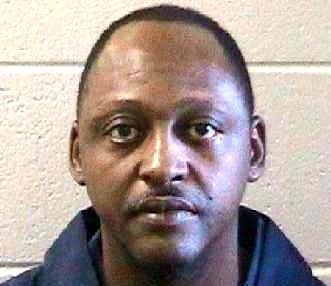
Ronnie Thornton
Murderer Brian Kevin Rosenfeld
Murderer · USA · 1985
Brian Kevin Rosenfeld Brian Kevin Rosenfeld was sentenced to three concurrent l…
23 victims
Brian Kevin Rosenfeld
Murderer · USA · 1985
Brian Kevin Rosenfeld Brian Kevin Rosenfeld was sentenced to three concurrent l…
23 victims
 Russell Ellwood
Murderer · USA · 1991
Russell Ellwood was a former taxi driver. Authorities suspected him of killing…
20 victims
Russell Ellwood
Murderer · USA · 1991
Russell Ellwood was a former taxi driver. Authorities suspected him of killing…
20 victims
 Robert Martines Perez
Murderer · USA · 1994
Name: Robert Martines Perez · Other name used in proceedings: Robert Martinez P…
15 victims
Robert Martines Perez
Murderer · USA · 1994
Name: Robert Martines Perez · Other name used in proceedings: Robert Martinez P…
15 victims
 Billy Frank Vickers
Murderer · USA · 1993
Billy Frank Vickers Vickers was executed by lethal injection in Texas on Januar…
14 victims
Billy Frank Vickers
Murderer · USA · 1993
Billy Frank Vickers Vickers was executed by lethal injection in Texas on Januar…
14 victims
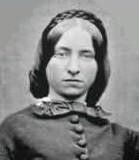 Madeleine Smith
Murderer? · United Kingdom · 1857
Madeleine Smith received a verdict of "not proven" on July 9, 1857. She died on…
1 victim
Madeleine Smith
Murderer? · United Kingdom · 1857
Madeleine Smith received a verdict of "not proven" on July 9, 1857. She died on…
1 victim
 Tiffany Hall
Murderer · USA · 2006
Tiffany Hall was 24 when she was charged in September 2006. She later entered a…
5 victims
Tiffany Hall
Murderer · USA · 2006
Tiffany Hall was 24 when she was charged in September 2006. She later entered a…
5 victims
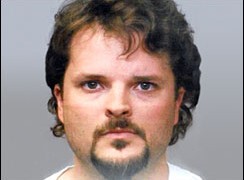 Christopher Vaughn
Mass murderer · USA · 2007
Christopher Vaughn was sentenced to four consecutive life terms on November 26,…
4 victims
Christopher Vaughn
Mass murderer · USA · 2007
Christopher Vaughn was sentenced to four consecutive life terms on November 26,…
4 victims
 Antoinette Scieri
Serial killer · France · 1924
Antoinette Scieri was born in Italy and emigrated to France as a child. In the…
12 victims
Antoinette Scieri
Serial killer · France · 1924
Antoinette Scieri was born in Italy and emigrated to France as a child. In the…
12 victims
 Andrew Thomas
Murderer · USA · 1997
Andrew Thomas and his co-defendant, Anthony Bond, were indicted for the felony…
1 victim
Andrew Thomas
Murderer · USA · 1997
Andrew Thomas and his co-defendant, Anthony Bond, were indicted for the felony…
1 victim
 Martsay Bolder
Murderer · USA · 1973
Martsay Bolder was executed by lethal injection in Missouri on January 27, 1993…
2 victims
Martsay Bolder
Murderer · USA · 1973
Martsay Bolder was executed by lethal injection in Missouri on January 27, 1993…
2 victims
- Gender
- male
- Country
- USA
- Location
- Douglas County, Georgia, USA
- Date of birth
- 1965
- Age at first offence
- 26
- Characteristics
- —
- Victim profile
- Artealia Lavant (his girlfriend's 2-year-old daughter)
- Method of murder
- Beating
- Date(s) of murder
- May 7, 1991
- Years active
- 1991
- Date of arrest
- Next day
- Status
-
Sentenced to death
Resentenced to life in prison in 1997 after a death sentence on January 11, 1993; convictions were reversed in May 1994 by the Supreme Court of Georgia
Case record: Ronnie Thornton
STATUS and procedural posture
Ronnie Thornton was sentenced to death on January 11, 1993. His convictions were reversed in May 1994 by the Supreme Court of Georgia because the prosecutor used videotaped testimony instead of calling the children to testify. A retrial had not been held yet. Thornton was transferred off death row in September 1997 and was resentenced to life in prison in 1997.
Background
Ronnie Thornton was 32. He lived with Shirley Lavant and her three young children, Cyquieta, Cynthia, and Artealia Lavant. Thornton was frequently unemployed and was the primary caretaker of the children while Lavant worked.
Thornton was frequently unemployed, and Thornton was the primary caretaker of the children while Lavant worked.
Shirley Lavant began living with Thornton while in the process of divorcing the children’s father. Lavant testified that she repeatedly noticed bruising and other injuries sustained by the children, but that Thornton had always explained that they had fallen or otherwise hurt themselves while playing.
Lavant’s sister-in-law, Jean Wallace, testified that on several occasions prior to Artealia’s death she noticed that the child was bruised, swollen and extremely withdrawn. Wallace confronted Lavant, and Lavant stated that Artealia had injured herself playing. Wallace repeatedly contacted Cobb County DFCS seeking an investigation, but none was made.
Lavant was originally charged with Artealia’s murder, but these charges were dismissed. Lavant was permitted to plead guilty to two counts of cruelty to children. Lavant pleaded guilty to cruelty to children and received a four-year sentence.
The offence
Thornton was convicted of:
- malice murder of Artealia Lavant
- three counts of felony murder of Artealia Lavant, with underlying felonies being two counts of cruelty to children and one count of aggravated battery
- one count of cruelty to children as to Cynthia Lavant
Victim and family details
Artealia Lavant was 2 years old at the time of her death. Cynthia Lavant was 4 years old at the time of Artealia’s death. Cyquieta was a young child living in the same household.
Investigation
The record described that doctors determined that Artealia and her siblings had been repeatedly abused.
After Artealia’s death, hospital personnel noticed that both Artealia and Cynthia were covered in bruises and notified the Department of Family and Children’s Services (DFCS).
When questioned by a nursing assistant about her bruises, Cynthia stated: “Ron did it.” The nursing assistant did not know who “Ron” was and wrote down Cynthia’s statement. Later that day, Cynthia gave the same answer to a DFCS employee who questioned her about her bruises. The record indicated there was nothing showing anyone present influenced Cynthia’s statements.
Autopsy and medical findings for Artealia
The autopsy performed on Artealia Lavant revealed numerous fresh and old injuries, particularly to her head and face. The child was substantially underweight, and bruises covered her abdomen, chest and back. There was also an older injury to one arm indicating that the tissues had been repeatedly grabbed and rotated.
The doctor who performed the autopsy opined that significant head injuries were the cause of Artealia’s death. There was no presence of food in the child’s throat or windpipe, and there was no indication that she died as a result of choking.
Medical findings for Cynthia
An examination of Cynthia Lavant revealed, in addition to numerous external bruises, untreated older fractures of her upper arm, wrist bone and ribs. The examining physician testified that it would take a significant amount of force to fracture the ribs in this manner.
Arrest / investigation statements to law enforcement
Thornton made statements to members of the Douglas County Sheriff’s Department.
First statement (routine investigation; no custody found)
Thornton’s initial statement was made during the routine investigation of Artealia’s death. He indicated that he heard the child coughing and believed she was choking on food. He performed CPR, artificial respiration and attempted to dislodge any objects in her throat with his fingers, but he was unable to revive her. The trial court concluded Thornton was not in custody at the time of this statement, and Miranda warnings were not necessary.
Second statement (after Miranda waiver; challenged as “veiled threats”)
Thornton’s second statement was made after a waiver of his Miranda rights. The record did not support Thornton’s contention that it was the product of “veiled threats.” The record showed the statement, which was videotaped, was made without the “hope of benefit” or “fear of injury.”
The opinion quoted the relevant framing of the law regarding voluntary statements and Miranda:
[U]nwarned statements that are otherwise voluntary within the meaning of the Fifth Amendment must nevertheless be excluded from evidence under Miranda. Thus, in the individual case, Miranda's preventive medicine provides a remedy even to the defendant who has suffered no identifiable constitutional harm. Oregon v. Elstad, 470 U. S. 298, 307 (105 SC 1285, 84 LE2d 222) (1984).
Trial
Courts and judge
The trial occurred in Douglas Superior Court before Judge Emerson.
Charges and jury recommendations
The jury recommended the death penalty for each of the four counts of murder. The jury found that each murder had been committed during the course of an aggravated battery, OCGA 17-10-30 (b) (2). The jury also found that each murder was wantonly vile, horrible or inhuman in that it involved torture to the victim and depravity of mind, OCGA 17-10-30 (b) (7).
Sentences imposed at trial
The trial court imposed four death sentences for the murder convictions and imposed a twenty-year consecutive sentence for the offense of cruelty to children.
Evidence and witness statements
Cynthia’s out-of-court statement
The opinion described that Cynthia told a nursing assistant about her bruises that “Ron did it,” and later gave the same answer to a DFCS employee. The court addressed admissibility under the Child Hearsay Act and found Cynthia’s statement to a nurse’s aide admissible because Cynthia was the actual victim of the abuse being related, she was available to testify, and the defense attorney expressly declined the trial court’s offer to call the child.
Chuckie Colon videotaped statement (Child Hearsay Act issue)
Over Thornton’s objection, the trial court admitted in evidence the videotaped statement of Chuckie Colon, a twelve-year-old relation of the Lavants. Chuckie stated that on two separate occasions he saw Thornton physically abuse Artealia and Cynthia Lavant. The videotape was made by Jean Wallace and another Lavant relation eight months after one alleged incident and five months after the other.
In the videotape Chuckie described watching Thornton slap and strike both victims; jerk their arms; pick up and drop Artealia; and throw Artealia on her bed.
After the jury viewed the videotape, Chuckie took the stand and testified he was telling the truth when the videotape was made.
The Supreme Court of Georgia concluded Chuckie’s videotaped statement was not admissible under the Child Hearsay Act, reasoning that the Act excepted from the hearsay rule only such statements as were made by the actual victim of the event being related. The court also rejected an argument that Chuckie’s videotape was admissible under the Child Hearsay Act because Chuckie was a victim of mental abuse by Thornton.
The court also concluded that Chuckie’s videotape was not admissible as a prior consistent statement because no in-court testimony was elicited by the state with which the videotape could be consistent and the veracity of which could be attacked.
Other videotaped child interviews (Cyquieta and Cynthia)
The trial court also admitted videotaped interviews between a sheriff’s deputy and Cynthia and Cyquieta Lavant under the Child Hearsay Act.
- Cyquieta’s videotaped statements: the court found these inadmissible under the Child Hearsay Act because they were observations of the abuse of another rather than statements of abuse suffered by the declarant. The opinion described Cyquieta’s statements, including that when she left for school on the morning of Artealia’s death, Artealia was not sick, and that “once in a while” Thornton would pick Artealia up by one arm; Cyquieta also stated that at one point Artealia’s arm was swollen and her mother “suspect[ed] it was Ron by picking her up by the arm.”
- Cynthia’s videotaped statement: the opinion found that Cynthia’s statement that Thornton inflicted bruises on her face was admissible to the extent Cynthia described abuse inflicted upon herself. The court found Cynthia’s other videotaped statement—that Thornton had hit both Artealia and Cyquieta—was inadmissible.
The Supreme Court of Georgia held the conviction must be reversed due to the erroneous admission of evidence described above and stated it would consider other enumerations of error that potentially could reoccur if the state chose to retry the appellant.
Other trial rulings addressed on appeal
The opinion addressed multiple claimed errors. Key items included:
- There was no requirement in OCGA 24-3-16 for pre-trial notice of intention to introduce child hearsay statements; the trial court had notified the defense three days prior to trial that there was nothing exculpatory in videotaped interviews with Chuckie Colon and Cynthia Lavant and had ordered the state to allow defense counsel to view the videotaped interview with Cyquieta Lavant. Thornton viewed the tapes during proffers outside the jury’s presence and did not move for a continuance. The court found no due process violation.
- The court addressed that Thornton failed to make certain hearsay objections to Officer Zachery’s testimony and therefore could not raise the issue for the first time on appeal. It also addressed that Thornton stated he had no objection to playing the tape-recording of Shirley’s 911 call and no objection to playing the videotaped interview Deputy Ashcraft conducted with Shirley Lavant; those issues were not preserved.
- The opinion addressed allegations of prosecutorial misconduct in closing argument during the guilt-innocence phase, including statements about not rebutting evidence that Artealia was “beaten to death,” burden of proof arguments, and other remarks. The court concluded that in the circumstances presented, the alleged misconduct did not change the outcome.
- The opinion addressed alleged errors in the jury charge following the guilt-innocence phase, including the trial court’s charge related to unlawful injury, the reasonable doubt instruction, conflicts in evidence, similar transactions and cruelty to children, and the aggravated battery instruction. The court rejected claims of fatal variance and found no reversible error.
- The jury verdicts: the jury found Thornton guilty of one count of malice murder and three counts of felony murder for Artealia’s death. Because there was but a single victim, the appellant could be sentenced on but one conviction. The Supreme Court of Georgia rejected the contention that a new sentencing trial must be ordered because the jury imposed four death sentences, explaining that the three death sentences imposed for the felony murder convictions were void under Malcolm, while the remaining death sentence remained valid as presented in the analysis.
- On sentencing-phase evidence: the court addressed notice issues regarding non-statutory aggravating circumstances, including inadequate notice regarding allegations of drug use and sales; the opinion held that notice of unproven criminal charges must be described with enough particularity.
- The opinion discussed the jury’s request for clarification during deliberations about “life in the penitentiary” and the trial court’s response, concluding no error under the circumstances described.
- The opinion discussed evidentiary and procedural claims including admission of photographs of Artealia after autopsy incisions, admission of expert testimony to a “suspicion” of child abuse, denial of motions regarding interviews with children, voir dire claims, denial of change of venue, speedy trial claims, juror excusal claims, and challenges to the indictment based on grand jury participation by Thomas Furr.
- The opinion described that the trial court did not abuse its discretion in denying severance of Cynthia Lavant’s cruelty-to-children charge from the charges involving Artealia Lavant, given the offenses occurred over the same period of time and involved Thornton’s continuing conduct as caretaker and disciplinarian.
Final appellate holding on reversal
The Supreme Court of Georgia concluded that due to erroneous admission of videotaped child statements described in the opinion, the conviction was reversed.
Sentencing / appeals
Supreme Court of Georgia decision
The Supreme Court of Georgia reversed Thornton’s convictions in May 1994 because the prosecutor used videotaped testimony instead of calling the children to testify.
The opinion concluded:
- Conviction required reversal due to erroneous admission of evidence as detailed above.
- It also discussed issues that potentially could reoccur if the state chose to retry the appellant.
- The opinion included citations and reasoning addressing the admissibility under the Child Hearsay Act and related constitutional and evidentiary issues.
Identification of case
The opinion referenced:
- THORNTON v. THE STATE. S94P0668.
- (264 Ga. 563) (449 SE2d 98) (1994)
- Sears, Justice.
- DECIDED OCTOBER 31, 1994.
Aftermath
After the Supreme Court reversal, no retrial had been held yet as of the procedural status described. Thornton was transferred off death row in September 1997. He was resentenced to life in prison in 1997.
Shirley Lavant pleaded guilty to cruelty to children and received a four-year sentence.
Spotted an error, or have more information about this case?