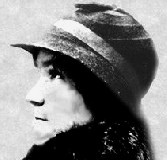
Charlotte Bryant
Murderer Florence Ransom
Murderer · United Kingdom · 1940
Florence Ransom was a middle-aged woman who was described as physically beautif…
3 victims
Florence Ransom
Murderer · United Kingdom · 1940
Florence Ransom was a middle-aged woman who was described as physically beautif…
3 victims
 Dorothea Waddingham
Murderer · United Kingdom · 1935
Dorothea Waddingham (also referred to as Dorothea Nancy Waddingham) was born in…
2 victims
Dorothea Waddingham
Murderer · United Kingdom · 1935
Dorothea Waddingham (also referred to as Dorothea Nancy Waddingham) was born in…
2 victims
 Elizabeth Jones
Murderer · United Kingdom · 1944
Elizabeth Jones was born in Neath, Wales, in 1926. At the age of thirteen, she…
1 victim
Elizabeth Jones
Murderer · United Kingdom · 1944
Elizabeth Jones was born in Neath, Wales, in 1926. At the age of thirteen, she…
1 victim
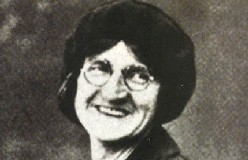 Ethel Major
Murderer · United Kingdom · 1934
Ethel Major was executed by hanging at Hull Prison on December 19, 1934 for the…
1 victim
Ethel Major
Murderer · United Kingdom · 1934
Ethel Major was executed by hanging at Hull Prison on December 19, 1934 for the…
1 victim
 Jeannie Donald
Murderer · United Kingdom · 1934
Jeannie Donald was tried in July 1934 for the murder of Helen Priestly. Helen P…
1 victim
Jeannie Donald
Murderer · United Kingdom · 1934
Jeannie Donald was tried in July 1934 for the murder of Helen Priestly. Helen P…
1 victim
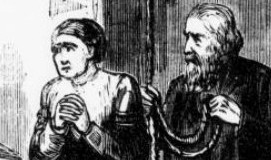 Margaret Waters
Murderer · United Kingdom · 1866
Margaret Waters was an English murderess who was hanged by executioner William…
19 victims
Margaret Waters
Murderer · United Kingdom · 1866
Margaret Waters was an English murderess who was hanged by executioner William…
19 victims
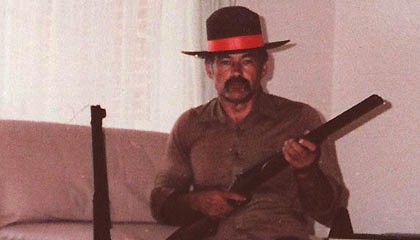 Ivan Milat
Serial killer · Australia · 1989
Ivan Milat was convicted of seven murders and received multiple life sentences.…
7 victims
Ivan Milat
Serial killer · Australia · 1989
Ivan Milat was convicted of seven murders and received multiple life sentences.…
7 victims
 Arthur Shawcross
Serial killer · USA · 1972
Arthur Shawcross (born June 6, 1945) was an American serial killer, also known…
13 victims
Arthur Shawcross
Serial killer · USA · 1972
Arthur Shawcross (born June 6, 1945) was an American serial killer, also known…
13 victims
 George Franklin Page
Homicide · USA · 1995
George Franklin Page was male, white, and aged 63. He served 16 years in the mi…
1 victim
George Franklin Page
Homicide · USA · 1995
George Franklin Page was male, white, and aged 63. He served 16 years in the mi…
1 victim
 Steven Nelson
Murderer · USA · 2011
Steven Lawayne Nelson was convicted of capital murder for killing the pastor Cl…
1 victim
Steven Nelson
Murderer · USA · 2011
Steven Lawayne Nelson was convicted of capital murder for killing the pastor Cl…
1 victim
 Richard Lee Adams
Murderer · USA · 1998
The District Court of Appeal of the State of Florida opinion 5D00-1685 Richard…
1 victim
Richard Lee Adams
Murderer · USA · 1998
The District Court of Appeal of the State of Florida opinion 5D00-1685 Richard…
1 victim
- Gender
- female
- Country
- United Kingdom
- Location
- Dorset, England, United Kingdom
- Date of birth
- 1904
- Age at first offence
- 31
- Characteristics
- parricide, poisoner
- Victim profile
- Frederick Bryant, 39 (her husband)
- Method of murder
- Poisoning (arsenic)
- Date(s) of murder
- December 22, 1935
- Years active
- 1935
- Date of arrest
- February 10, 1936
- Status
-
Executed
Executed by hanging at Exeter Prison on July 15, 1936
Case overview
Charlotte Bryant, also known as Charlotte McHugh, was born in Londonderry in 1904. She was illiterate and was described as promiscuous. She met Frederick Bryant in Ireland during the early 1920s while he was serving in the British Army. They later moved to Somerset and married, with Frederick aged 25 and Charlotte aged 19. Over the next few years, Charlotte had five children.
Background
After moving to Somerset, Charlotte and Frederick lived in a tied cottage in Over Compton, east of Yeovil, where Fred obtained a job as a farm labourer. Charlotte was described as neglecting her family while she sought extra-marital pleasures. It was also described that Frederick did not object when Charlotte brought men to the house to share her bed.
One of Charlotte’s lovers was Leonard Parsons, described as a horse-dealer of gypsy origin and a married man with four children. Parsons began lodging in the Bryant house sometime in 1933. He did not lodge on a regular basis because his occupation required him to travel. Charlotte became involved with Parsons and decided she would rather have him as her husband. Early in 1934 Frederick was sacked, possibly due to gossip about Charlotte. The couple then moved to Coombe, near Sherbourne, in Dorset.
Charlotte was described as being known locally by nicknames including “Killarney Kate”, “Compton Bess” and “Black Bess”. It was also stated that Frederick ignored Charlotte’s “goings on”.
Charlotte and Parsons were described as sharing the marital bed, while Frederick sometimes slept on the sofa. Frederick later ordered Parsons to leave, after which Charlotte left with two children for two days before returning.
A widow named Lucy Malvina Ostler later became a friend of Charlotte and suggested that she and her children move in with the Bryants. Lucy moved into the Bryant household, and she witnessed Frederick’s final attack on the night of December 21, 1935.
The offence
Frederick Bryant was taken ill multiple times in 1935. In May 1935 Frederick was taken ill with stomach pains. A doctor diagnosed gastro-enteritis and said he would recover within a few days; he recovered.
Frederick was taken ill again on 11 December 1935, recovering within a few days. On 22 December 1935 he was taken violently ill and died. After his body was examined, four grains of arsenic was discovered.
During police searches of the house, a tin containing arsenical weedkiller was found among rubbish at the back of the Bryant house. Traces of arsenic were found on shelves in the house and in one of Charlotte’s coat pockets. Traces of arsenic were also described as being found in the corpse.
A second account in the case narrative stated that the autopsy revealed significant traces of arsenic in Frederick’s system and that Home Office pathologist Dr. Roche Lynch found 4.09 grains of arsenic in the body. It also stated that traces of arsenic were reported to Dorset Constabulary and that among the samples sent to the Home Office laboratory, 32 contained arsenic. The second account also stated that Frederick died in the afternoon of 23 December 1935 after being admitted to a local hospital in Sherborne.
Investigation and evidence
After Frederick died, Charlotte was suspected and was arrested. It was stated that police moved Charlotte and the children out of the home while they searched for evidence.
A local druggist told authorities that he had sold a tin of arsenic to a woman who signed the required poison register with a cross. A lineup of women that included Lucy and Charlotte was presented, and the druggist could not make an identification. Lucy Ostler told police that she saw a tin of poison in the Bryant home, that her description matched the tin sold by the chemist, and that she saw the tin a second time when she was cleaning out the ashes beneath a steam heater. Lucy said she threw the tin in the yard, and it was quickly recovered. An analysis found it contained traces of arsenic.
The investigation also included forensic analysis. Dr. Roche Lynch testified that ashes beneath the boiler contained an “abnormally large” amount of arsenic—149 parts per million. The expected level in ash was about 45 parts per million. Another account described that Dr. Roche Lynch presented evidence that the ashes from the boiler contained 149 parts per million of arsenic whereas ashes normally contained around 45 parts per million, and it also stated that arsenic could be dissolved in Oxo and not be spotted by a person drinking it.
A burnt tin that had contained an arsenic-based weed killer was among the items recovered.
Arrest
Charlotte was arrested on 10 February 1936 and charged with the murder of her husband, Frederick Bryant. It was stated that she was in a workhouse at Sturminster Newton at the time of her arrest. She made statements when arrested, including: “I haven't got poison from anywhere and that people know. I don't see how they can say I poisoned my husband” and also: “Nobody can say I poisoned him”.
Trial
Court and presiding judge
Charlotte’s trial was opened at Dorset Assizes, Dorchester, in front of Mr Justice Macnaghten. The trial was also described as being before Mr. Justice MacKinnon, with the trial beginning on Wednesday 27 May 1936 and lasting four days.
Prosecutors and defence
The prosecution case was led by the Solicitor-General, Sir Terrence O'Connor. Charlotte was defended by the barrister Mr. J.D. Casswell KC.
Trial events and witnesses
Charlotte was described as seemingly unable to follow the proceedings at first. She protested that she had been on very good terms with her husband, but witnesses refuted this.
A witness named Mr. Tuck testified that he had met Charlotte returning from the hospital immediately after Frederick’s demise. Charlotte’s comment to Mr. Tuck, an insurance agent with whom Charlotte had tried to insure her husband’s life, was: “Nobody can say I poisoned him”.
Lucy Malvina Ostler testified for the prosecution. On the night Frederick died, Lucy testified that Charlotte had made him an Oxo drink and that shortly after Frederick became prostrate with stomach pains followed by vomiting. Lucy also testified that she explained to Charlotte what an inquest was and alleged that Charlotte had told her that she hated Frederick and only stayed with him because of the children. Lucy described a tin of weed killer and stated that Charlotte said she would have to get rid of it. Lucy also testified about burnt clothing in the boiler and the remains of the tin amongst the ashes which Lucy had thrown into the yard where the police discovered it.
Charlotte’s two eldest children gave evidence. Their evidence included testimony about strange sleeping arrangements in the Bryant home, and another portion of the narrative stated that Charlotte had asked Ernest, her older son, to dispose of some blue bottles in late December. Her daughter Lily testified that she had seen Parsons with a blue bottle whose contents had fizzed when poured onto a stone in front of Charlotte.
Leonard Parsons was traced and brought in to testify for the Crown. He recalled seeing Charlotte with poison that she said was weedkiller. He also gave evidence about intercourse on numerous occasions.
Charlotte took the stand in her own defence and pointed the finger of blame on Lucy Ostler. She claimed she had gone to bed at 7 p.m. on December 21 and said Lucy had been the one to care for Frederick during his last night on Earth. She denied knowing about poison or possessing any weed killer, and she said she was pleased when Parsons left and that she had lost interest in him. She also demonstrated that an old coat in which traces of arsenic had been found did not fit her at all.
The judge’s summing up included advice to consider whether Frederick Bryant was poisoned with arsenic and if so whether that arsenic had been administered by Charlotte. The judge also noted that Charlotte had been present on each occasion Frederick had been ill, and that two bouts of sickness had occurred before Lucy Ostler came into the household.
Verdict and sentencing
On Saturday 30 May 1936 Charlotte was found guilty. She was sentenced to hang.
When asked if she had anything to say before sentence was passed, she replied: “I am not guilty.”
Mr Justice Macnaghten placed the “black cap” upon his wig and then passed the sentence. The sentence included being taken hence to the prison in which she had been last confined and from there to a place of execution where she was to be hanged by her neck until she was dead, and her body was to be buried in the precincts of the prison in which she was last confined. The customary rider added was: “and may the Lord have mercy upon your soul”.
After hearing her sentence Charlotte broke down and was led sobbing from the dock.
Appeals
After the trial, Mr. Caswell received a letter from a Professor Bone who had read about the case in his Sunday paper. The letter stated that far from 149 parts per million of arsenic that Dr. Roche had found in the ashes being on the low side for ashes and not unusually high, the statement corrected that the normal arsenic content of British household coal was never less than 140 parts per million and often reached levels of 1,000 parts per million. A signed statement was provided to this effect.
Charlotte’s appeal was heard on 29 June at the Appeal Court in London. The appeal court refused to hear the evidence of Professor Bone and concluded that even if the jury had been correctly advised by Dr. Roche the outcome would have been the same. Thus her appeal was denied and her sentence stood.
A further narrative stated that it would have been unprecedented for the Court of Appeal to admit new evidence and that Professor Bone’s statement concerned a correction of flawed evidence already given at the original trial.
Aftermath
Time in the condemned cell and prison events
Charlotte spent almost six weeks in the condemned cell. It was stated that her once raven hair turned completely white due to stress. She decided against seeing her children because she felt it would be too much for them to bear.
She was visited regularly by Father Barney, a Catholic priest, who prayed with her and had a small altar set up in her cell. She began to learn to read and write with the help of female warders and was able to dictate a telegram to the King asking for clemency. She also wrote a letter with the message: “It is all fault ............ I'm here. I listened to the tales I was told. But I have not got long now and I will be out of all my troubles. God bless my children”. The Home Office obliterated the name in this note, leaving the blank.
Sir Stafford Cripps applied to the Home Secretary to declare a mis-trial and order a new one on grounds of flawed evidence. Questions were also raised in the House of Parliament and petitions were raised. It was stated that a practice existed that poisoners should not be reprieved and that this was followed in Charlotte’s case.
On the Tuesday before her execution, the Home Secretary, Sir John Simon, declined on the advice of officials to grant a reprieve or a new trial.
Execution arrangements and conduct
Charlotte was sent to Exeter jail in neighbouring Devon to await execution. She was led to the gallows at 8.00 a.m. on Wednesday 15 July 1936 by Tom Pierrepoint assisted by Thomas Phillips. Albert Pierrepoint may also have assisted his uncle at this execution.
It was stated that a man called George Bryant (no relation) had been hanged the previous day at Wandsworth. Charlotte’s execution was described as an entirely secret affair with no reporters present, though she was attended by a Catholic priest, Father Barney. Father Barney later described her last moments as “truly edifying.” He also stated: “She met her end with Christian fortitude.” He reported that she never confessed to the murder. In accordance with her sentence, after autopsy her body was buried in the grounds of the prison, probably at lunchtime, that same day.
Charlotte left a sum of 5 shillings and eight pence halfpenny (about 29p) to her children, who were taken into the care of Dorset County Council.
Other details
Frederick Bryant was described as having been 25 when Charlotte was 19 at the time of their marriage. In the narrative of the offences, Frederick was described as 39 years old when taken ill in May 1935.
Charlotte’s first meeting with Frederick occurred during the early 1920s in Ireland when he served in the British Army, and their marriage followed when they moved to Somerset.
A narrative included multiple contextual statements about arsenic poisoning, including that poisons registers had to be signed when arsenic weed killers and rat poisons were purchased from chemist’s shops, and that arsenic’s effects were described as cumulative. It also mentioned the English chemist James Marsh developing a reliable test for arsenic in 1836. The narrative also referred to Mary Ann Cotton using arsenic to poison victims in the 1860s and early 1870s. These contextual statements were presented alongside the account of Charlotte’s case.

Spotted an error, or have more information about this case?