
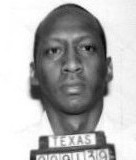
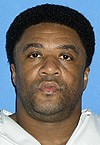
Larry Joe Johnson
Murderer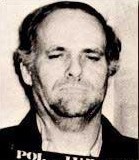 Ervil LeBaron
Murderer · USA · 1972
Ervil Morrell LeBaron (1925 to August 16, 1981) was the leader of a polygamous…
35 victims
Ervil LeBaron
Murderer · USA · 1972
Ervil Morrell LeBaron (1925 to August 16, 1981) was the leader of a polygamous…
35 victims
 Brian Kevin Rosenfeld
Murderer · USA · 1985
Brian Kevin Rosenfeld Brian Kevin Rosenfeld was sentenced to three concurrent l…
23 victims
Brian Kevin Rosenfeld
Murderer · USA · 1985
Brian Kevin Rosenfeld Brian Kevin Rosenfeld was sentenced to three concurrent l…
23 victims
 Marvin Gray
Murderer · USA · 1975
Marvin Gray was convicted killer who claimed responsibility for 23 slayings and…
23 victims
Marvin Gray
Murderer · USA · 1975
Marvin Gray was convicted killer who claimed responsibility for 23 slayings and…
23 victims
 Yahweh ben Yahweh
Murderer · USA · 1980
Yahweh ben Yahweh was born and legally named Hulon Mitchell Jr. (October 27, 19…
23 victims
Yahweh ben Yahweh
Murderer · USA · 1980
Yahweh ben Yahweh was born and legally named Hulon Mitchell Jr. (October 27, 19…
23 victims
 Michael King
Murderer · USA · 2008
Michael King abducted Denise Amber Lee in the U.S. state of Florida on January…
1 victim
Michael King
Murderer · USA · 2008
Michael King abducted Denise Amber Lee in the U.S. state of Florida on January…
1 victim
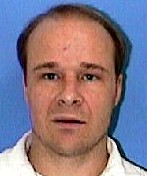 Rick Allan Rhodes
Murderer · USA · 1991
Rick Allan Rhodes was born on 05/10/64. He was a white male with blonde hair. H…
2 victims
Rick Allan Rhodes
Murderer · USA · 1991
Rick Allan Rhodes was born on 05/10/64. He was a white male with blonde hair. H…
2 victims
 Jeffrey Wayne Gorton
Murderer · USA · 1986
Jeffrey Wayne Gorton Jeffrey Wayne Gorton was sentenced to 40-80 years in priso…
2 victims
Jeffrey Wayne Gorton
Murderer · USA · 1986
Jeffrey Wayne Gorton Jeffrey Wayne Gorton was sentenced to 40-80 years in priso…
2 victims
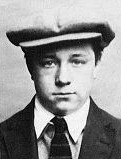 Harold Jones
Homicide · United Kingdom · 1921
Harold Jones was a 15-year-old shop worker at the time of the offences. In Febr…
2 victims
Harold Jones
Homicide · United Kingdom · 1921
Harold Jones was a 15-year-old shop worker at the time of the offences. In Febr…
2 victims
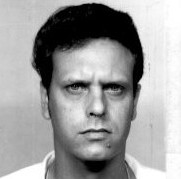 David Wayne Spence
Murderer · USA · 1982
David Wayne Spence was executed by lethal injection in Texas on April 3, 1997.…
3 victims
David Wayne Spence
Murderer · USA · 1982
David Wayne Spence was executed by lethal injection in Texas on April 3, 1997.…
3 victims
- Gender
- male
- Country
- USA
- Location
- Madison County, Florida, USA
- Date of birth
- 1944
- Age at first offence
- 35
- Characteristics
- robbery, abuse
- Victim profile
- James Hadden, 67 ( service station attendant )
- Method of murder
- Shooting
- Date(s) of murder
- March 16, 1979
- Years active
- 1979
- Date of arrest
- Same day
- Status
-
Executed
Executed by electrocution in Florida on May 8, 1993
Case identification
Larry Joe Johnson
Status and outcome
Larry Joe Johnson was executed by electrocution in Florida on May 8, 1993.
Timeline
- March 16, 1979 — James Hadden was killed with a sawed-off 12 gauge shotgun during a robbery at a Shell service station in Lee, Florida.
- December 13, 1979 — Larry Joe Johnson was found guilty of murder in the first degree for the death of JAMES MAXWELL HADDEN under Count I of the indictment; he was also found guilty of robbery with a firearm of JAMES MAXWELL HADDEN under Count II of the indictment.
- December 17, 1979 — A separate sentencing proceeding was held in connection with Johnson’s convictions.
- January 31, 1980 — The trial court signed written findings in support of the death sentence.
- November 17, 1983 — The Florida Supreme Court affirmed both convictions and sentences.
- January 16, 1984 — The Florida Supreme Court denied rehearing.
- January 23, 1985 — The Circuit Court for the Third Judicial Circuit of Florida denied without hearing Johnson’s Rule 3.850 motion for post-conviction relief.
- January 28, 1985 — The Florida Supreme Court affirmed the denial and denied Johnson’s petition for a writ of habeas corpus.
- January 29, 1985 — The United States District Court for the Northern District of Florida denied the writ but granted a certificate of probable cause.
- December 2, 1985 — The United States Court of Appeals for the Eleventh Circuit affirmed the denial of the district court’s decision regarding Johnson’s habeas corpus relief.
- January 29, 1988 — A second death warrant was signed.
- February 24, 1988 — The Florida Supreme Court denied relief and refused to grant a stay of execution in Johnson v. Dugger, 520 So. 2d 565.
- March 7, 1988 — Johnson v. Dugger, 522 So. 2d 356.
- January 7, 1993 — A third death warrant was signed.
- January 21, 1993 — Johnson filed an Application for Stay of Execution and a Rule 60(b) Motion for Relief from Judgment in the United States District Court for the Northern District of Florida.
- January 25, 1993 — Johnson filed a Petition for Extraordinary Relief and for a Writ of Habeas Corpus with the Florida Supreme Court.
- January 29, 1993 — The Florida Supreme Court denied Johnson’s petition, but the next day the Governor issued a stay of execution of indefinite duration.
- April 15, 1993 — The Governor signed Johnson’s fourth death warrant.
- April 28, 1993 — Johnson filed a petition for writ of certiorari in the United States Supreme Court; he also filed in the Florida Supreme Court a Motion to Recall the Mandate and for Stay of Execution and an Emergency Application for Stay of Execution Pending the Filing and Disposition of a Petition for Writ of Certiorari.
- April 30, 1993 — The Florida Supreme Court denied all relief.
- May 3, 1993 — The United States Supreme Court denied Johnson’s petition for a writ of certiorari and his application for a stay of execution.
- May 4, 1993 — The district court granted Johnson’s third petition, vacated his death sentence, and stayed the execution.
- May 5, 1993 — Respondent filed a Notice of Appeal and a Motion to Vacate Stay of Execution and Writ of Habeas Corpus.
- May 7, 1993 — The United States Court of Appeals for the Eleventh Circuit reversed the district court’s order granting the writ of habeas corpus, dismissed the cross-appeal, vacated the stay of execution, and instructed dismissal of Johnson’s petition; the Clerk was instructed to issue the mandate at 4:00 p.m. on Friday, May 7, 1993.
- May 8, 1993 — Johnson was executed by electrocution in Florida.
Background
Johnson was a Florida death row inmate.
A veterans group claim stated that Johnson was suffering from post-traumatic stress syndrome.
The offence
Victim
JAMES MAXWELL HADDEN, a Shell service station attendant.
Offence conduct
Johnson was charged with robbing and fatally shooting James Maxwell Hadden on March 16, 1979.
Johnson and Patty Burks, a seventeen year old girl who had accompanied Johnson for two weeks on a trip from Kentucky to Florida, decided earlier in the day to leave Florida and go to Minnesota where Burks had relatives.
As they drove west on Interstate 10, Johnson stopped at a Shell service station in Lee, Florida, and told Burks to go inside to buy some cigarettes.
While Burks was inside, Johnson entered carrying a sawed-off 12 gauge shotgun and told Hadden, the attendant, to open the cash register. At Johnson’s direction, Burks removed the money and started out the door.
Burks saw Johnson shoot Hadden. Johnson told Burks, in the car afterward, that the attendant had a gun, and “it was us or him.” Johnson also told Burks that “dead witnesses don’t talk”.
After the shooting, Johnson and Burks drove to Burks’ hometown of Beaver Dam, Kentucky. While Johnson waited down the road in his car, Burks telephoned her mother from a friend’s home and told her about the shooting. Police arrived, arrested Johnson, and confiscated the gun and shells from his car.
Fingerprints taken from the service station and testimony by a firearms expert were consistent with Burks’ testimony.
In the trial court’s written findings in support of the death sentence:
- Johnson and his seventeen year-old female companion, both residents of the State of Kentucky, left that state approximately two weeks before the date of the homicide, which occurred on March 16, 1979, and traveled by automobile to Orange Park, Florida.
- The Defendant took with him a “sawed-off pump shotgun”, the stock of which had been replaced by a pistol grip.
- They stayed at Orange Park for approximately two weeks and decided to travel to the State of Minnesota via Kentucky.
- During this trip they traveled westwardly on Interstate 10 through Madison County, Florida.
- They stopped at a rest area sometime before reaching the intersection of I-10 and State Road 255, at which time the “sawed-off shotgun” was removed from a suitcase in the vehicle in which they were traveling.
- Upon reaching the SR-255 exit, Johnson stopped at a Shell service station located just off of I-10; the companion was instructed to go in and buy some cigarettes.
- After a brief conversation between the girl and the station operator concerning cigarettes, Johnson demanded money from the station operator.
- The female companion removed all of the cash, approximately $135.00, from the cash register.
- Before reaching the exit door, the companion turned to see Johnson fire a single shot which hit the station operator in the head and apparently killed him instantly.
- The companion testified that the service station operator had no weapon of any type.
- Johnson and his companion proceeded to travel in his motor vehicle, ultimately arriving in the State of Kentucky.
- When outside of Johnson’s presence, the young girl reported the murder to her mother and ultimately the police were called.
- Johnson was subsequently arrested the same day (two days after the murder) and he had in his possession the same “sawed-off shotgun” as well as other incriminating evidence.
The trial court’s findings also stated that shortly after the homicide took place, Johnson remarked to his companion that “dead witnesses don’t talk”.
Investigation and arrest
Trial
Charges and verdicts
Johnson was found guilty of:
- murder in the first degree for the death of JAMES MAXWELL HADDEN under Count I of the indictment charging premediated [sic] murder.
- robbery with a firearm of JAMES MAXWELL HADDEN under Count II of the indictment.
Trial evidence in guilt phase
The state’s case in the guilt phase was based primarily on the testimony of Patty Burks, who accompanied Johnson for two weeks on a trip from Kentucky to Florida.
The trial court’s written findings described that the Defendant demanded money and that Burks removed approximately $135.00 from the cash register.
A firearms expert’s testimony and fingerprints taken from the service station supported Burks’ testimony.
Penalty phase
In the penalty phase:
- The state supported its request for the death penalty with evidence that Johnson was on parole for second degree assault at the time of the killing.
- Johnson introduced mitigating evidence through testimony by family members and testimony and documentary evidence from psychologists that Johnson’s actions resulted from “post-traumatic stress disorder” (PTSD), an emotional disorder resulting from his experiences in Vietnam.
- The state countered with psychiatric testimony that Johnson was not suffering from PTSD.
The jury recommended death for the murder and a consecutive life sentence for the robbery.
The trial court adopted the jury’s recommendation.
Written findings in support of death sentence
The trial court stated it had considered aggravating circumstances enumerated under Section 921.141(5), Subsections (a) thru (h), Florida Statutes 1978.
The court did not consider Subsection (i), Florida Statutes 1979, because the later statute was effective after the date of the commission of the crime, although before the date of commencement of the trial.
Aggravating circumstances found
- The capital felony was committed while Johnson was under sentence of imprisonment; evidence included a prior conviction of assault in the second degree, service of part of a five year sentence, and parole at all material times for that offense.
- The capital felony was previously convicted of a felony involving the use of or threat of violence to the person of another; evidence included the prior conviction of assault in the second degree, showing Johnson shot his wife with a firearm.
- The court found the circumstances arose out of the same factual situation and were probably duplicative; Aggravating Circumstances (5)(a) and (5)(b) were considered as only one aggravating circumstance.
- The court found there was no basis for finding that Johnson knowingly created a great risk to many persons.
- The capital felony was committed while Johnson was engaged in the commission of a robbery; the court found evidence was overwhelming.
- The court found the capital felony was committed for pecuniary gain; pecuniary gain arose from the robbery money taken.
- Because the underlying facts supported both (5)(d) and (5)(f), the court considered them duplicative and as one aggravating circumstance.
- The capital felony was committed for the purpose of avoiding or preventing a lawful arrest and to hinder the enforcement of laws; the court’s description relied on the rural location, that the operator was the only person on premises other than Johnson and his companion, and that there could have been no other reason for killing the decedent other than to leave no witnesses to the crime.
- The court found (5)(e) and (5)(g) were duplicative and considered them as one aggravating circumstance.
- The court found the capital felony did not fit within the definition of “especially heinous, atrocious, or cruel” as defined by the Supreme Court of Florida under Aggravating Circumstance (5)(h).
Mitigating circumstances found
The trial court wrote that it found:
- No credible evidence supported Mitigating Circumstance (6)(b).
- There was absolutely no credible evidence supporting Mitigating Circumstance (6)(c), that the victim was a participant or consented.
- There was no credible evidence supporting Mitigating Circumstance (6)(d), that Johnson was an accomplice in another person’s capital felony or that his participation was relatively minor.
- There was no credible evidence supporting Mitigating Circumstance (6)(e), that Johnson acted under extreme duress or substantial domination of another person; the court stated there was no contention he was an unwilling participant.
- Mitigating Circumstance (6)(g) was not applicable because Johnson’s age at the time of the crime was 33 years and was not found to be a mitigating factor.
- Regarding Mitigating Circumstance (6)(f), the court found Johnson could appreciate the criminality of his conduct and that there was no basis to conclude Johnson’s capacity to conform his conduct to the requirements of law was substantially impaired.
The trial court described conflicting testimony from experts, including testimony from one clinical psychologist, Dr. Charles R. Figley, that Johnson at the time he pulled the trigger did so from “implusive [sic] behavior” with a direct casual [sic] relationship to his experience in Vietnam, and that this witness had written a book consistent with the theory and admitted he was one of the few people who had done any work in the area.
The trial court also described another clinical psychologist, Dr. McMahon, whose opinion suggested Johnson suffered from organic brain damage and was of border-line intelligence, with dispute by two psychiatrists.
The trial court stated it concluded that no mental or psychological factors were sufficiently significant to support any mitigating circumstance, adding that Johnson planned the robbery, executed the plan, and killed the operator because “dead witnesses don’t talk”.
Method and weapon description
The trial court stated that the shotgun used to kill Hadden was owned by Johnson for a substantial period of time prior to the homicide and was found in his possession two days after the homicide was committed.
The trial court stated that a visual examination showed the barrel had been sawed off and the stock had been replaced with a pistol grip, and that such a shotgun had only one practical purpose—the use for which it was in fact made.
Sentencing
The trial court imposed the death sentence.
The jury rendered an advisory sentence of death, and the death sentence was imposed.
The trial court found:
- “A. No mitigating circumstances.”
- “B. Three aggravating circumstances consisting of: (1). A combination of statutory Aggravating Circumstances (5)(a) and (5)(b); (2). A combination of the statutory Aggravating Circumstances (5)(d) and (5)(f); (3). A combination of the statutory Aggravating Circumstances (5)(e) and (5)(g).”
- The aggravating circumstances warranted imposition of the death sentence and there were no mitigating circumstances to outweigh the aggravating circumstances.
The trial court placed the greatest weight upon the facts supporting Aggravating Circumstance (5)(d) and stated that even if evidence adduced supported Mitigating Circumstances (6)(b), (6)(e), and (6)(f) as a matter of law, the court would have concluded the death sentence would have nevertheless been appropriate.
The trial court concluded the killing was “senseless” and that the death sentence was clearly warranted.
The trial court wrote that it concluded Johnson was not acting under extreme duress or under substantial domination of another person and stated it believed Johnson fully appreciated the criminality of his conduct and had no intention of conforming his conduct to the requirements of law.
The trial court signed these findings on the 31st day of January, 1980.
Appeals
United States Court of Appeals for the Eleventh Circuit (direct habeas issues)
The United States Court of Appeals for the Eleventh Circuit described Johnson as a Florida inmate sentenced to death and to a consecutive life sentence for robbing and murdering a service station operator.
The court stated Johnson appealed the district court’s denial of his motion for habeas corpus relief, contending his conviction and/or sentence were invalid on six constitutional grounds, and the court affirmed.
The court addressed:
- Whether the Madison County Sheriff’s dual role violated due process; the court rejected Johnson’s first argument and held he made no showing of actual prejudice.
- Johnson’s absence during a portion of the sentencing phase occurred at the request of his own lawyer because one of the psychologists called by the defense asked that he not be present while she testified; the court declined to consider the issue because Johnson waived it by failing to comply with Florida’s procedural rule requiring assertion of such a claim on direct appeal.
- Whether the trial judge erroneously assumed the court could not consider non-statutory mitigating circumstances; the court held adequate consideration was indicated and rejected the claim.
- Whether prosecutorial closing arguments required a new sentencing proceeding; the court found some improper remarks but held the sentencing proceeding was not rendered fundamentally unfair, and affirmed.
- Whether the trial court erred in failing to find extreme mental or emotional disturbance as a mitigating circumstance; the court rejected Johnson’s argument.
- Whether the trial judge erred by taking into account his demeanor during trial and pretrial proceedings; the court held no reversible error occurred and affirmed.
The Eleventh Circuit concluded “AFFIRMED.”
Eleventh Circuit (third federal habeas petition procedural posture)
In a later Eleventh Circuit decision dated May 7, 1993, the court reviewed a third federal petition after the Governor signed a fourth death warrant.
The district court had granted the writ and stayed Johnson’s execution, but the Eleventh Circuit reversed.
The Eleventh Circuit’s decision stated that it:
- REVERSED the district court’s order granting the writ of habeas corpus,
- DISMISSED the cross-appeal,
- VACATED the stay of execution, and
- instructed the district court to dismiss Johnson’s petition.
The Clerk was instructed to issue the mandate at 4:00 p.m. on Friday, May 7, 1993.
Florida Supreme Court docketed proceedings and denials
The Florida Supreme Court docket references included:
- Docket #71824 — Larry Joe Johnson, Petitioner, vs. Richard L. Dugger, Respondent, 520 So. 2d 565; February 24, 1988.
- Docket #72046 — Larry Joe Johnson, Appellant, vs. State of Florida, Appellee, 522 So. 2d 356; March 7, 1988.
- Docket #81121 — Larry Joe Johnson, Petitioner, vs. Harry K. Singletary, etc., Respondent, 618 So. 2d 731; April 30, 1993.
Aftermath
Johnson was executed by electrocution in Florida on May 8, 1993.
He was pronounced dead at 10:07 P.M.
Spotted an error, or have more information about this case?