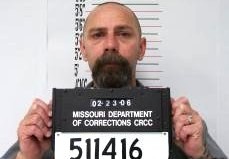
Doyle Kelley
Murderer Brian Kevin Rosenfeld
Murderer · USA · 1985
Brian Kevin Rosenfeld Brian Kevin Rosenfeld was sentenced to three concurrent l…
23 victims
Brian Kevin Rosenfeld
Murderer · USA · 1985
Brian Kevin Rosenfeld Brian Kevin Rosenfeld was sentenced to three concurrent l…
23 victims
 Yahweh ben Yahweh
Murderer · USA · 1980
Yahweh ben Yahweh was born and legally named Hulon Mitchell Jr. (October 27, 19…
23 victims
Yahweh ben Yahweh
Murderer · USA · 1980
Yahweh ben Yahweh was born and legally named Hulon Mitchell Jr. (October 27, 19…
23 victims
 Russell Ellwood
Murderer · USA · 1991
Russell Ellwood was a former taxi driver. Authorities suspected him of killing…
20 victims
Russell Ellwood
Murderer · USA · 1991
Russell Ellwood was a former taxi driver. Authorities suspected him of killing…
20 victims
 Robert Martines Perez
Murderer · USA · 1994
Name: Robert Martines Perez · Other name used in proceedings: Robert Martinez P…
15 victims
Robert Martines Perez
Murderer · USA · 1994
Name: Robert Martines Perez · Other name used in proceedings: Robert Martinez P…
15 victims
 Timothy Boham
Murderer · USA · 2006
Timothy Boham also known as Marcus Allen (born May 27, 1981) was a former adult…
1 victim
Timothy Boham
Murderer · USA · 2006
Timothy Boham also known as Marcus Allen (born May 27, 1981) was a former adult…
1 victim
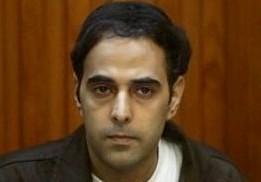 Yigal Amir
Murderer · Israel · 1995
Yigal Amir (born May 23, 1970) was the Israeli assassin of the Prime Minister o…
1 victim
Yigal Amir
Murderer · Israel · 1995
Yigal Amir (born May 23, 1970) was the Israeli assassin of the Prime Minister o…
1 victim
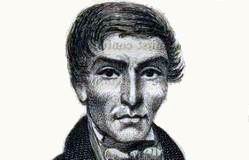 William Hare
Serial killer · United Kingdom · 1827
William Hare and Brendan “Dynes” Burke committed serial murders in Edinburgh, S…
17 victims
William Hare
Serial killer · United Kingdom · 1827
William Hare and Brendan “Dynes” Burke committed serial murders in Edinburgh, S…
17 victims
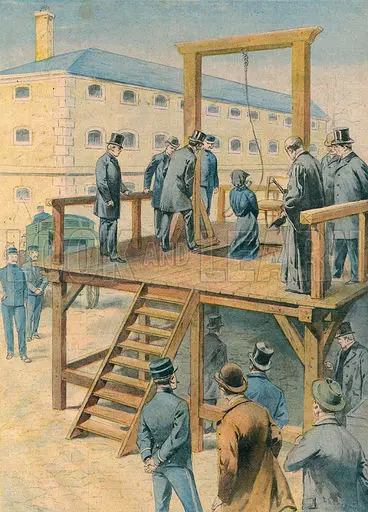 Mary Mabel Rogers
Murderer · USA · 1902
Mary Mabel Rogers (1883 – December 8, 1905) was the last woman legally executed…
1 victim
Mary Mabel Rogers
Murderer · USA · 1902
Mary Mabel Rogers (1883 – December 8, 1905) was the last woman legally executed…
1 victim
- Gender
- male
- Country
- USA
- Location
- Joplin, Missouri, USA
- Date of birth
- February 7, 1959
- Age at first offence
- 31
- Characteristics
- parricide
- Victim profile
- Diana Kelley (his wife) / Christy Kelley (his wife)
- Method of murder
- Ligature strangulation - Drowning in the bathtub
- Date(s) of murder
- September 25, 1990 / April 25, 1993
- Years active
- 1990–1993
- Date of arrest
- —
- Status
-
Life imprisonment
Sentenced to life imprisonment without parole, 1994; murder conviction for the death of Christy Kelley was reversed and remanded while the conviction for the death of Diana Kelley was affirmed
Case record: State of Missouri v. Doyle Kelley
Parties
Doyle Kelley was the defendant and appellant.
Timeline
- September 25, 1990 — Doyle Kelley called Diana Kelley’s mother twice asking for Diana.
- September 26, 1990 — The body of Diana Kelley was found in her car on a Joplin, Missouri, parking lot.
- Two days after Diana’s death — Debra Stout testified that Doyle Kelley smashed Diana’s gold chain and “St. Christopher” medal in the basement with a hammer.
- March 1993 — Doyle Kelley and Christy Kelley separated.
- April 24, 1993 — Doyle Kelley and Christy Kelley arranged to meet to exchange items of property; witnesses saw them on the parking lot of Christy Kelley’s apartment in the afternoon.
- April 25, 1993 — Christy Kelley’s family contacted the Joplin police department, requesting a check because Christy Kelley was overdue to pick up her daughter.
- August 25, 1993 — The body of Diana Kelley was exhumed.
- Early June 1994 (approximately three days) — Lonnie Bell was in the same area of the Jasper County jail as Doyle Kelley.
- July 1995 — Bell signed an unverified statement in which he purportedly recanted his trial testimony.
- 17/07/1997 — Handdown date of the appellate opinion.
- 8-8-97 — The court ruled on the Motion for Rehearing or Transfer by opinion.
- Postconviction filing (Rule 29.15) — While the direct appeal was pending, Doyle Kelley filed a motion to vacate the judgment and sentence under Rule 29.15.
- 1994 — For each first degree murder conviction, the trial court sentenced Defendant to life imprisonment without parole.
Background
Doyle Kelley was married to Diana Kelley at the time of Diana’s death. He filed a missing person report about Diana before her body was found. Doyle Kelley was then Diana’s husband at the time of her death.
Doyle Kelley was married to Christy Kelley. In March 1993, Doyle Kelley and Christy Kelley separated. Doyle Kelley and Christy Kelley arranged to meet on April 24, 1993, to exchange items of property.
The offence
Diana Kelley — first degree murder
On the morning of September 26, 1990, the body of Diana Kelley was found in her car on a Joplin, Missouri, parking lot.
The court later held that the judgment of conviction for the murder of Diana Kelley was affirmed.
Christy Kelley — first degree murder
On the evening of April 25, 1993, after Christy Kelley’s family contacted the Joplin police department, officers forcibly entered Christy Kelley’s apartment and found her body floating face down in the bathtub.
The court reversed the judgment stemming from Doyle Kelley’s conviction for the murder of Christy Kelley and remanded that case for further proceedings.
Investigation
Diana Kelley
Dr. James Habermann conducted the initial autopsy of Diana Kelley’s body. Dr. Habermann noted several small areas of hemorrhage on Diana Kelley’s face and neck. Dr. Habermann found that Diana Kelley died of respiratory failure, and he could not detect if she died of strangulation.
Diana Kelley’s mother, Virginia Stepp (Mrs. Stepp), confirmed that Doyle Kelley called twice on the night of September 25 asking for Diana Kelley. Mrs. Stepp said Diana Kelley was afraid of Doyle Kelley and had been living at Mrs. Stepp’s home for two weeks before her death. Mrs. Stepp said she saw Doyle Kelley at his home between 6:30 and 6:45 a.m. on September 26.
Debra Stout, a friend of Diana Kelley, testified that Diana Kelley visited Stout’s home on the evening before her death, around 5:00 p.m. During that visit, Stout saw that Diana Kelley was wearing a gold chain and a St. Christopher medal.
Two days after Diana Kelley’s death, Stout testified that while visiting in Doyle Kelley’s home, Doyle Kelley took Diana’s gold chain and St. Christopher medal to the basement and “smashed it, I believe with a hammer.”
Stout was asked if Doyle Kelley had an explanation about where he had gotten the jewelry. Stout testified:
“Defendant said it had been given to him by the police or someone at the mortuary.”
Policemen testified that the chain and medal were not at the murder scene when they investigated.
Mrs. Stepp testified that she was present when mortuary employees gave Diana’s jewelry to Doyle Kelley. At the time, Mrs. Stepp selected a ring to put on Diana’s hand, but she did not see a St. Christopher medal among the items given to Doyle Kelley.
During his testimony, Doyle Kelley admitted that a few days after Diana’s death, he had her St. Christopher medal, that he smashed the medal, and then threw it away. Doyle Kelley claimed that someone at the mortuary had given him this item of jewelry.
On August 25, 1993, the body of Diana Kelley was exhumed. Dr. Jill Gould conducted autopsies of both Diana and Christy. Dr. Gould found that the ligament from Diana Kelley’s hyoid bone had been pulled apart and discovered a bruise on the back of Diana Kelley’s esophagus. Dr. Gould concluded that Diana Kelley’s death was caused by soft ligature strangulation.
Christy Kelley
Dr. Darrell Swank performed an autopsy on Christy Kelley’s body. Among other findings, Dr. Swank stated that Christy Kelley had a deep laceration on her forehead caused by blunt force trauma, vomitus in her nose and mouth, and edema in her lungs. Dr. Swank concluded that Christy Kelley’s death was caused by drowning.
During Dr. Jill Gould’s autopsy of Christy Kelley’s body, she found several bruises in various locations. Dr. Gould suggested that these bruises were caused by blunt impact from multiple directions, which would have been inconsistent with a fall in the bathtub. Dr. Gould confirmed Dr. Swank’s finding that drowning was the cause of Christy Kelley’s death.
Arrest
No separate arrest facts were provided in the case record.
Trial
Convictions and sentencing
A jury convicted Doyle Kelley of first degree murder in the death of Diana Kelley and first degree murder in the death of Christy Kelley.
For each conviction, the trial court sentenced Doyle Kelley to life imprisonment without parole.
Evidence and key disputes
Joinder and severance issues (Points I, II, III)
Doyle Kelley challenged joinder of two first degree murder charges and argued for severance.
The court found joinder proper and held that Doyle Kelley did not satisfy the burden under Section 545.885.2 or Rule 24.07 to establish substantial prejudice from trying both murder counts together. The court held there was no abuse of discretion in denying the motion to sever.
Hearsay objections to Christy Kelley’s statements (Points IV and V)
Doyle Kelley contended that the trial court erred in allowing Kathy Weston and Dana Proffitt to testify about statements made by Christy Kelley to them individually.
The court quoted challenged testimony.
Kathy Weston testimony included these excerpts (as quoted in the appellate opinion):
“Q. [by the State] Ms. Weston I'd like to refer you back to March the 9th of 1993. Was that the date that--the receipt of the second batch of roses?
A. Yes, it was.
Q. Did you have a conversation with Christy Kelley either that day or the following?
A. It was the day following the morning--she walked into work that day. She walked in and explained--or exclaimed, well there won't be any more roses. And I asked her why, and she said they had an argument.
Q. When you say "they" who do you mean?
A. Doyle and Christy had an argument that night.
Q. The defendant and the victim?
A. Yes, the defendant.
Q. Okay.
A. She said they discussed her marriage, she said she didn't want to be married any longer, that she didn't love him anymore, and she wanted to remain friends.
Q. Did she indicate whether the defendant had responded to that in any fashion?
A. Yes. She told me that he said if he couldn't have her, no one would.”
Dana Proffitt testimony related these excerpts (as quoted in the appellate opinion):
“Q. [to Proffitt] In the course of this conversation with Christy Kelley, did she relate to you a conversation she had with the defendant?
A. Yes.
Q. What did she tell you?
A. She told me that he had found out she was seeing Mike.
Q. Mike is who, if you know?
A. Mike Hulette. It was a guy she was seeing, had been going out with a few times.
Q. And what did she say happened in their conversation next?
A. In the course of their conversation she said Doyle was very upset over her seeing Mike and he told her he'd just as soon see her dead as with anyone else.”
The State conceded the quoted statements by Christy to Weston and Proffitt were hearsay and included multiple hearsay.
The appellate court held the statements were not admissible under the state of mind exception to the hearsay rule and that their admission constituted prejudicial error. The court reversed the conviction for the death of Christy Kelley and remanded for further proceedings based on this error.
Diana Kelley’s fear statement (Point VI)
Mrs. Stepp testified that Diana expressed fear of Doyle Kelley about two weeks before Diana’s death. The appellate opinion states this testimony:
“Q. [to Stepp] During the time that Diana lived with you, did she express any fear of the defendant?
A. Yes. On the first day that she moved back, and she did.”
The court found no plain error because there was evidence that Doyle Kelley admitted to Bell that he killed Diana, and the jury could have viewed the evidence concerning the St. Christopher medal as particularly damaging to Doyle Kelley. Point VI was denied.
Bell testimony and suppression motion (Point VIII)
Lonnie Bell testified that while both were inmates in the Jasper County jail awaiting trial, Doyle Kelley admitted killing both Diana and Christy by strangling them.
Doyle Kelley moved to suppress Bell’s testimony, alleging Bell acted as an agent of the prosecution. The trial court overruled the motion. The appellate court found no error in overruling the motion and admitting Bell’s testimony.
At the suppression hearing, Lt. Terry Moback testified Bell was transferred into the same “pod” with Doyle Kelley because a cell was needed for an incoming prisoner. Moback denied he or anyone instructed Bell to seek information from Doyle Kelley.
Dick Godsey, an employee of the Jasper County prosecuting attorney’s office, testified Bell initiated contact with the prosecutor’s office and offered to provide information he had already obtained from Doyle Kelley, and that no effort was made to enlist Bell before he contacted the prosecutor.
Bell testified he was not instructed to collect evidence from Doyle Kelley and that no one suggested he collect evidence.
Michael Church testified for Doyle Kelley and claimed he saw Bell with two individuals who arrived in a police car before he was moved to Doyle Kelley’s pod. Church also claimed Bell indicated he would give perjured testimony at Doyle Kelley’s preliminary hearing.
The trial judge made this finding:
“The Court is unable to find any evidence that this witness is an agent of the government or an agent of the police or an agent of the prosecuting attorney's office.”
The appellate court also addressed Doyle Kelley’s reference to Bell’s later July 1995 unverified recantation statement claiming “law enforcement personnel” planted Bell to obtain statements from Doyle Kelley. The appellate court stated this evidence was never before the trial court and had to be disregarded.
Bell testimony about threats and failure to declare mistrial (Point X)
The appellate opinion quoted Bell testimony about threats against him during direct and cross-examination.
Bell direct examination included these excerpts (as quoted):
“Q. [by Prosecutor] Sir, let me ask you this. You are in prison now?
A. Yes, sir.
Q. Is there a prison terminology for someone who testifies against some one else?
A. Excuse me?
Q. What do you guys call somebody in prison who testifies?
A. They have been calling me dead. That's what they have been calling me.
Q. So you're [sic] being here and you're [sic] talking to us is dangerous for you, isn't it?
Q. Do you have some special living arrangements because of your willingness to testify?
A. Yes, they have got me on a protective custody unit.
Q. What's that mean?
A. It means that somebody is trying to kill me and that the Department of Corrections just don't want that to happen at that institution.”
Defense cross-examination included these excerpts (as quoted):
“Q. [by defense counsel] Mr. Bell, let me get this straight. You're not here today telling the jury, are you, that somebody in particular is out to get you over you testifying in this, are you? You don't know of anybody in particular out to get you, do you?
A. Well, after the first time I testified here in this court, I went back to prison and I had gotten--
Q. Mr. Bell, it's a pretty easy question. Isn't it-- [Prosecutor objected that counsel was not letting the witness finish; trial judge directed witness to answer the question]
A. When I got back to prison, I asked for protective custody because I was going to be a witness--or I had already came to an arraignment or preliminary hearing. When I got back to prison, they--inmates had come up to me and told me they had gotten letters from an individual who was in the county jail and that they was supposed to do something to me to keep me from testifying in this trial.
Q. But you don't know who that was, do you, from the Jasper County Jail?
A. Yes, I know who it was.”
On redirect, the prosecutor elicited:
“[T]here was two of them. They were Scotty Sours and Mike Church.”
The appellate court reviewed this point only for plain error and denied it, finding no manifest injustice or miscarriage of justice.
Exculpatory evidence offered to inculpate another person (Point XIV)
Doyle Kelley challenged the trial court’s exclusion of evidence he claimed inculpated Richard Blackwood in the murder of Diana Kelley.
The record revealed Doyle Kelley made eight offers of proof regarding Blackwood. The trial court ruled the offers of proof regarding Blackwood were inadmissible.
The appellate court stated the parameters for admitting exculpatory evidence that inculpates another person and held that none of the proffered evidence directly connected Blackwood with Diana Kelley’s murder. The court described Doyle Kelley’s strongest attempt as testimony of witness Phillips, who claimed Blackwood called him to inform him of Diana’s murder between 8:00 a.m. and 8:30 a.m. on the morning her body was found. The court also described that another witness testified Blackwood informed a group of people at Lil’s Cafe of Diana’s murder between 10:00 a.m. and 11:00 a.m. and made phone calls then. The appellate court held this did not directly connect Blackwood with the cause of death and found no abuse of discretion rejecting the evidence. Point XIV was denied.
Sentencing
The trial court sentenced Doyle Kelley to life imprisonment without parole for each first degree murder conviction (for Diana Kelley and for Christy Kelley).
Appeals
Direct appeal — No. 19988
The court affirmed the judgment of conviction for the murder of Diana Kelley.
Postconviction appeal — No. 20892
While the direct appeal was pending, Doyle Kelley filed a motion to vacate the judgment and sentence under Rule 29.15.
The motion court denied relief after an evidentiary hearing.
On appeal No. 20892:
- The court affirmed the portion of the judgment denying postconviction relief for the murder of Diana Kelley.
- The court held No. 20892 was moot as to the denial of postconviction relief for the murder of Christy Kelley.
The appeals were consolidated, and analyzed separately.
Ineffective assistance of counsel claims (Points VII, XI, XII)
- Point VII — Doyle Kelley argued counsel was ineffective for not objecting to Mrs. Stepp’s testimony that Diana expressed fear of Doyle Kelley. The appellate court denied the claim, agreeing with the motion court that failure to object did not affect the outcome.
- Point XI — Doyle Kelley argued trial counsel was ineffective for not objecting to Bell’s testimony about being threatened. The appellate court denied, relying on its prior finding under Point X that no manifest injustice occurred on direct appeal.
- Point XII — Doyle Kelley alleged ineffective assistance based on counsel’s failure to call inmates to testify they could not and did not have conversations with Bell in which Doyle Kelley allegedly admitted guilt. The appellate court denied. It discussed depositions from two inmates, Dan Carver and Louis Crandall, and held their testimony would have been an attempt to impeach Bell rather than provide a viable defense. It also held the motion court’s decision was not clearly erroneous.
Jurisdiction claim based on alleged perjury (Point IX)
Doyle Kelley argued the trial court lacked jurisdiction to sentence him because the conviction was based on Bell’s perjured testimony.
The appellate court denied the claim, stating fatal to Doyle Kelley’s reliance on DeClue was that paragraph 8 of the amended motion contained no allegation that the prosecution knew Bell was perjuring himself.
The appellate court also described that an evidentiary hearing occurred, that Bell did not testify at the postconviction hearing, and that the motion court relied on credibility determinations.
Outcome
The court:
- affirmed the conviction for the murder of Diana Kelley, and
- reversed the conviction for the murder of Christy Kelley and remanded for further proceedings.
It affirmed denial of postconviction relief regarding Diana Kelley and held postconviction relief for Christy Kelley was moot.
Other details
Counsel for Appellant was Frederick A. Duchardt. Counsel for Respondent was David R. Truman, Assistant Attorney General. Opinion author was Kenneth W. Shrum, Judge. Opinion vote was AFFIRMED IN PART, REVERSED IN PART, AND REMANDED. Crow, J., and Montgomery, C.J., concur.
The appellate opinion included information about a motion for rehearing or transfer:
- The State argued that holdings in State v. Ivory and State v. Basile conflicted with the appellate court’s decision.
- The appellate court denied the State’s motion for rehearing or transfer to the supreme court.
- It also denied Doyle Kelley’s motion for rehearing or transfer to the supreme court without further comment.
- A separate opinion was listed as None.
Spotted an error, or have more information about this case?