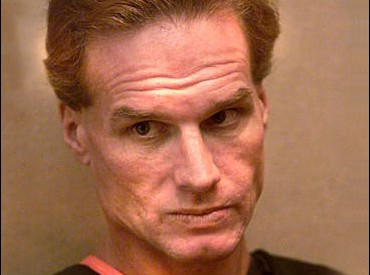
Gary Lee Sampson
Murderer Russell Ellwood
Murderer · USA · 1991
Russell Ellwood was a former taxi driver. Authorities suspected him of killing…
20 victims
Russell Ellwood
Murderer · USA · 1991
Russell Ellwood was a former taxi driver. Authorities suspected him of killing…
20 victims
 Robert Martines Perez
Murderer · USA · 1994
Name: Robert Martines Perez · Other name used in proceedings: Robert Martinez P…
15 victims
Robert Martines Perez
Murderer · USA · 1994
Name: Robert Martines Perez · Other name used in proceedings: Robert Martinez P…
15 victims
 Billy Frank Vickers
Murderer · USA · 1993
Billy Frank Vickers Vickers was executed by lethal injection in Texas on Januar…
14 victims
Billy Frank Vickers
Murderer · USA · 1993
Billy Frank Vickers Vickers was executed by lethal injection in Texas on Januar…
14 victims
 Richard Allen Williams
Murderer? · USA · 1992
Boone County Prosecutor Kevin Crane dismissed the charges in August 2003 after…
10 victims
Richard Allen Williams
Murderer? · USA · 1992
Boone County Prosecutor Kevin Crane dismissed the charges in August 2003 after…
10 victims
 Patty Michelle White
Murderer · USA · 2011
Patty Michelle White killed her former roommate, Michele O'Dowd, and later plea…
1 victim
Patty Michelle White
Murderer · USA · 2011
Patty Michelle White killed her former roommate, Michele O'Dowd, and later plea…
1 victim
 Sarah Pender
Murderer · USA · 2000
Sarah Jo Pender (also referred to as Sarah Pender; later used the name Ashley T…
2 victims
Sarah Pender
Murderer · USA · 2000
Sarah Jo Pender (also referred to as Sarah Pender; later used the name Ashley T…
2 victims
 Gesche Gottfried
Serial killer · Germany · 1813
Gesche Gottfried was born Gesche Margarethe Timm (6 March 1785 - 21 April 1831)…
15 victims
Gesche Gottfried
Serial killer · Germany · 1813
Gesche Gottfried was born Gesche Margarethe Timm (6 March 1785 - 21 April 1831)…
15 victims
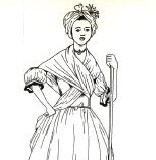 Susanna Cox
Murderer · USA · 1809
Susanna Cox (1785–1809) was a young domestic servant in Berks County, Pennsylva…
1 victim
Susanna Cox
Murderer · USA · 1809
Susanna Cox (1785–1809) was a young domestic servant in Berks County, Pennsylva…
1 victim
- Gender
- male
- Country
- USA
- Location
- Massachusetts/New Hampshire, USA
- Date of birth
- 1959
- Age at first offence
- 42
- Characteristics
- carjacking, escape
- Victim profile
- Philip McCloskey, 69 / Jonathan Rizzo, 19 / Robert Whitney, 58 (helpless people)
- Method of murder
- St abbing with knife / Strangulation
- Date(s) of murder
- July 24-30, 2001
- Years active
- 2001
- Date of arrest
- J uly 31, 2001 (surrenders)
- Status
-
Sentenced to death
Sentenced to death in Massachusetts on December 23, 2003
Overview
Gary Lee Sampson (born 1959) was a convicted murderer in Massachusetts, United States. He was raised in Abington, Massachusetts.
Timeline
- 1974 — Sampson was arrested on a breaking and entering charge in Abington.
- 1976 — Sampson was charged with trying to steal gasoline and with motor vehicle offenses.
- 1978 — Sampson was acquitted of a charge that he raped a 15-year-old girl in Weymouth.
- 1979 — Sampson was charged with trespassing and drug possession in Abington.
- 1980 — Sampson was charged with armed robbery and stealing a car in Abington; he served time in the Plymouth County jail.
- 1981 — Sampson briefly escaped from the jail by sawing through a gate.
- 1982 — Sampson received a three-year suspended sentence for breaking into a gas station in Tamworth, New Hampshire; he was convicted of violating probation.
- 1984 — Sampson pleaded guilty to burglarizing a home in Tamworth, New Hampshire, and was sentenced to up to seven years; he escaped from prison and was sentenced to one to three years.
- 1987 — Sampson was convicted of parole violation and sentenced to nearly four years.
- 1996 — Sampson was fined $60 for speeding in New Hampshire.
- 1997 — Sampson was fined $500 for possession of marijuana.
- 1997 — Sampson pleaded guilty to assault and making threats in New Hampshire; he also pleaded guilty to making threats and served about five months.
- 1997 — Sampson was fined $100 for transporting alcohol.
- 1998 — Sampson was convicted of threatening a woman in New Hampshire and sentenced to a year in jail with six months deferred and two years probation.
- 1999 — Sampson was accused of violating probation by not showing up for an arraignment on burglary charges in New Hampshire.
- 1999 — Newark, New Jersey police charged him with probation violation and said he was using several aliases, including women’s names.
- July 23, 2001 — Sampson called the FBI office in Boston from a pay phone in Abington to surrender for bank robberies in North Carolina; an FBI clerk inadvertently disconnected the call, and no one showed up to arrest Sampson.
- July 24, 2001 — Former Quincy resident Philip McCloskey, 69, was stabbed to death in a secluded area of Marshfield after buying flowers for a friend; Sampson later told police he was hitchhiking in Weymouth when McCloskey picked him up.
- July 26, 2001 — McCloskey’s body was found in woods between Main Street and Old Main Street Extension in Marshfield.
- July 27, 2001 — Jonathan Rizzo, 19, of Kingston encountered Sampson on the Plymouth waterfront after leaving work at 9 p.m. and gave him a ride.
- July 28, 2001 — Sampson headed for New Hampshire, where his family had once lived; Rizzo’s family filed a missing-person report with police.
- July 30, 2001 — Robert Whitney, 58, a former city councilor in Concord, New Hampshire, was found strangled in a cottage on Lake Winnipesaukee in Meredith, New Hampshire; Rizzo’s car was parked outside.
- July 31, 2001 — Rizzo’s body was found tied to a tree behind the Abington Ale House; in Vermont, William Gregory, 41, picked up Sampson on the side of a road; Sampson put a knife to his throat, but Gregory escaped by skidding the car onto the shoulder and jumping from the car while it was still in drive; Sampson ditched the car, broke into a ski chalet and called 911; Sampson surrendered to police without a fight.
- September 2003 — Sampson pleaded guilty in federal court in Boston to the carjacking murders of McCloskey and Rizzo, capital offenses under federal law.
- Sept. 9, 2003 — Sampson pleaded guilty to the carjacking murders of McCloskey and Rizzo.
- Nov. 5–6, 2003 — After six weeks of jury selection, testimony began in the punishment phase of the trial.
- Nov. 10–13, 2003 — Witnesses told of casual encounters with Sampson in Marshfield, Bourne, and Plymouth in the days between the McCloskey and Rizzo murders.
- Nov. 17–20, 2003 — In a taped interview with a Vermont state trooper, Sampson said his three victims would still be alive if FBI agents had not bungled his attempt to turn himself in.
- Dec. 23, 2003 — Sampson was sentenced to death in Massachusetts.
- As of July 2006 — Sampson remained on death row.
- August 30, 2010 — Taunton Daily Gazette published material about Gary Sampson’s criminal record, his three-day rampage in 2001, his 2003 trial in U.S. District Court in Boston, and subsequent developments.
Background
Sampson had a criminal record some 25 years long. Before his conviction for murder, he had served eight years imprisonment for robbing banks.
The offence
In July 2001, Sampson carjacked and murdered three people.
Philip McCloskey
Philip McCloskey was aged 69 and was from Taunton, Massachusetts. He was stabbed to death after buying flowers for a friend in a secluded area of Marshfield. Sampson later told police that, after McCloskey picked him up hitchhiking, he forced him at knifepoint to drive to a secluded area, where he tied him up with his belt and stabbed him 24 times.
McCloskey’s body was found in woods between Main Street and Old Main Street Extension in Marshfield.
Jonathan Rizzo
Jonathan Rizzo was aged 19 and was from Kingston, Massachusetts. He encountered Sampson on the Plymouth waterfront after leaving work at 9 p.m. and gave him a ride. Sampson later forced Rizzo to a secluded area, tied him to a tree, gagged him, and killed him. Sampson also admitted he forced the college freshman to drive him to Abington, where he walked him into the woods, tied him to a tree, and stabbed him 15 times.
Rizzo’s family filed a missing-person report with police. Rizzo’s car was parked outside when Robert Whitney was found strangled. Rizzo’s body was found tied to a tree behind the Abington Ale House.
Robert Whitney
Robert Whitney was aged 58 and was a former city councilor in Concord, New Hampshire. He was found strangled in a cottage on Lake Winnipesaukee in Meredith, New Hampshire. Sampson confessed that after Rizzo gave him a ride and Sampson stole Rizzo’s Jetta and drove it to New Hampshire, he strangled Whitney on July 30, 2001.
Friends and family organized a massive search for Rizzo. Whitney’s death occurred in the same week as the other murders.
Investigation
Sampson told police details of the killings involving the three victims, describing being picked up hitchhiking, forcing victims at knifepoint, driving to secluded areas, and stabbing them.
Telephone records confirmed that Sampson called the FBI. As a fugitive facing charges in North Carolina, Sampson could have been taken into custody; the call was accidentally disconnected by an FBI clerk, and no action was taken.
In a taped interview with a Vermont state trooper, Sampson said his three victims would still be alive if FBI agents had not bungled his attempt to turn himself in.
Plymouth County jail officers testified that Sampson threatened to harm anyone who caused him problems in prison.
Arrest and surrender
Sampson surrendered in Vermont after breaking into a ski chalet and calling 911. He surrendered to police without a fight.
William Gregory, 41, picked up Sampson on the side of a road in Vermont; Sampson put a knife to his throat, but Gregory escaped by skidding the car onto the shoulder and jumping from the car while it was still in drive. Sampson ditched the car, broke into a ski chalet, and called 911.
Sampson later confessed and pleaded guilty.
Trial
Sampson was tried in U.S. District Court in Boston, Massachusetts.
Plea
Sampson pleaded guilty to the carjacking murders of McCloskey and Rizzo in September 2003.
During the punishment phase, prosecutors portrayed Sampson as a ruthless, calculating killer who preyed on Good Samaritans.
During deliberations, the jury considered the crimes in graphic detail during the sentencing phase. Jurors deliberated for ten hours after hearing six weeks of evidence.
A jury of nine women and three men unanimously rejected Sampson’s claim that he was mentally ill when he killed Jonathan Rizzo, 19, of Kingston, and Philip McCloskey, 69, of Taunton.
Jurors reported on the verdict forms that none of them believed Sampson was significantly impaired at the time of the slayings or suffered from mental illness. Only five jurors concluded that Sampson had accepted responsibility for his crimes, and none of them believed he was remorseful.
Jurors agreed that the murders were especially cruel and heinous because of the physical abuse Sampson had inflicted on his victims; both were stabbed repeatedly and their throats slashed.
Trial participants named in the record
U.S. Attorney Michael J. Sullivan spoke about the sentence in a press conference.
Assistant US Attorney Frank Gaziano prosecuted the case along with George Vien and John Wortmann.
Sampson’s lawyer was David Ruhnke.
The judge was U.S. District Judge Mark L. Wolf.
Jury forewoman was Mary E. Dever.
Attorney general John D. Ashcroft was mentioned in context of criticism of the federal death penalty.
Quotes
Mary E. Dever said:
"There was no question, no doubt about it, said jury forewoman Mary E. Dever, who lives south of Boston. "We all, individually, concluded the same thing."
"I can sleep at night with the decision we've made. The only thing that will cause any problems with sleep will be trying to get out of my head the pain the [victims] must have felt when their lives were being taken."
US Attorney Michael J. Sullivan said:
"A sentence of death is the only appropriate punishment for the crimes that Mr. Sampson has committed."
When asked what broader message the death sentence sends, Sullivan said:
"There is no political message here. This message really is about the lives of Philip McCloskey and Jonathan Rizzo."
Sampson’s lawyer David Ruhnke said:
"I respect the verdict, but I disagree with it. These are terrible crimes; the victims have suffered terribly,"
"Those are very difficult circumstances for any jury to look beyond."
Judge Mark L. Wolf told jurors:
"I will impose that sentence not only because the law requires it but because of my respect for each of you."
Sentencing
Sampson was sentenced to death in Massachusetts on December 23, 2003.
Sampson’s sentencing phase was under federal law. Massachusetts abolished capital punishment in 1984. The last time the state used the penalty was in 1973.
The federal death penalty law and its expansion to allow prosecutors to seek the death penalty for carjacking resulting in murder were discussed.
Sampson was said to be the first defendant in Massachusetts sentenced to die under the federal death penalty law. The last time a state court sentenced someone to die was in 1973.
Appeals
Sampson’s lawyer David Ruhnke said he would appeal.
The decision was expected to take years, and it was expected that it could be six or seven years before Sampson exhausts all his appeals.
As of July 2006, Sampson remained on death row.
Outcome
Sampson was on death row following his December 23, 2003 death sentence.
Aftermath
Relatives’ reactions
Mary Rizzo said she wanted to publicly thank the jurors:
"I just want to publicly thank the jurors. Every single night I've prayed for them and I will continue to pray that the horrible pictures of Jonathan, Philip, and Mr. Whitney will go out of their heads and they'll remember the beautiful pictures."
Jonathan Rizzo’s father Michael said:
"We're very happy about this verdict -- there's no question about that -- but we're not going out and celebrating anything here. . . . Our son is still dead, and we will live with that for the rest of our lives,"
Scott McCloskey said:
"I will never forgive him, ... As far as I'm concerned, Gary Sampson is an evil man. And as far as the death penalty goes, he deserves it and I will be there when it happens."
Another account of Scott McCloskey included:
"It's all about him. He didn't show any remorse for my father or Jonathan or Mr. Whitney. But when it came down to him thinking that he was going to be sentenced to death, now he's sad."
McCloskey’s son, Scott, said:
"It’s been a very long, hard couple of years,"
"It’s not over, still. I feel like the boulder on my shoulder has been chipped down to a rock."
Book and autobiography
Sampson worked with a writer and evangelical minister, Deborah Murphy, on an autobiography.
The working title was: "The DNA of a Killer: Society's Child, Gary Lee Sampson."
Deborah Murphy said:
"Gary wants a book written before he gets executed because he wants to tell his story, his side, the true version of everything that happened,"
"He noticed certain signs of depression that led to alcohol and drugs and that's how you get into big trouble. He hopes telling his story can help young people. . . . He's trying to spare lives."
Mary Rizzo criticized the idea of a book:
"The idea that Gary Sampson wants to help other children makes me nauseous,"
Scott McCloskey said:
"A biography about a murderer, that's usually the case, right?"
Sampson wrote in a three-page typed letter and the record included:
"At times the anguish is overwhelming,"
"many of the 'why questions' weigh excruciatingly heavy and our [sic] indelible upon my soul and have to [sic] earthly obtainable answers."
"I can understand how they feel,"
"In my actions and in my deeds I strive to show remorse."
"abject drudgery,"
"comfort and faith" in "God and the religious instruction I am receiving."
"At times the anguish is overwhelming," he wrote in the letter, mailed in response to a query from The Boston Globe. Still, Sampson has told Murphy that he hopes the death penalty will be overturned.
Deborah Murphy said:
"Jesus said turn the other cheek,"
"And my own personal, emotional feeling is two wrongs don't make a right."
On prison life, a prison spokesman, Trey Adams, described Sampson’s cell and confinement as being 23 hours a day.
Murphy said Sampson would not receive proceeds because of the Son of Sam law that prohibits convicted murderers from profiting from their crimes.
Trey Adams said:
"Sampson is confined to his cell 23 hours day."
Sampson was described as watching nature shows on a 12-inch black and white television, with a gray cell and a single fluorescent bulb, and equipment including a toilet, shower, writing table, sink, and bed, with a single 6-inch-wide window looking out onto the prison grounds.
Protests and state law
Death penalty opponents criticized the sentence, saying federal officials had ignored the will of Massachusetts voters.
Protesters outside the courtroom were holding "No Death Penalty in Massachusetts" signs, and one girl said the Federal government had "stepped all over a State which has consistently refused the death penalty."
State lawmakers defeated attempts to reinstate the state death penalty.
Carol Rose, executive director of the American Civil Liberties Union of Massachusetts, said:
"The decision to try Sampson in federal court "was made by a handful of federal officials who have sought to impose the death penalty in states like Massachusetts that historically have declined to impose this punishment,"
Other details
Sampson was also described as a drifter and as having no emotion during the trial and sentencing proceedings.
The record discussed that the only choices in the punishment phase were death by lethal injection and life in prison without parole.
It was described that Massachusetts had no-where to execute Sampson and that U.S. District Judge Mark L. Wolf ordered Sampson to be imprisoned in a federal penitentiary in Indiana and ordered an execution in New Hampshire. New Hampshire officials were described as caught off guard, with a lethal injection bed not installed and a gallows turned into an office.
Spotted an error, or have more information about this case?