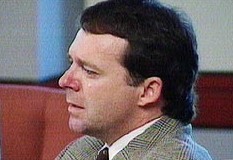
Royle Kipp
Murderer Russell Ellwood
Murderer · USA · 1991
Russell Ellwood was a former taxi driver. Authorities suspected him of killing…
20 victims
Russell Ellwood
Murderer · USA · 1991
Russell Ellwood was a former taxi driver. Authorities suspected him of killing…
20 victims
 Robert Martines Perez
Murderer · USA · 1994
Name: Robert Martines Perez · Other name used in proceedings: Robert Martinez P…
15 victims
Robert Martines Perez
Murderer · USA · 1994
Name: Robert Martines Perez · Other name used in proceedings: Robert Martinez P…
15 victims
 Billy Frank Vickers
Murderer · USA · 1993
Billy Frank Vickers Vickers was executed by lethal injection in Texas on Januar…
14 victims
Billy Frank Vickers
Murderer · USA · 1993
Billy Frank Vickers Vickers was executed by lethal injection in Texas on Januar…
14 victims
 Michael DeLozier
Murderer · USA · 1995
Michael DeLozier was convicted of two counts of first-degree murder in Oklahoma…
2 victims
Michael DeLozier
Murderer · USA · 1995
Michael DeLozier was convicted of two counts of first-degree murder in Oklahoma…
2 victims
 Neville Heath
Murderer · United Kingdom · 1946
Neville George Clevely Heath (1917–46) was born in Essex, England, and later li…
2 victims
Neville Heath
Murderer · United Kingdom · 1946
Neville George Clevely Heath (1917–46) was born in Essex, England, and later li…
2 victims
 Shawn Bentler
Mass murderer · USA · 2006
Shawn Bentler (born 1983 or 1984) was a convicted murderer from Bonaparte, Iowa…
5 victims
Shawn Bentler
Mass murderer · USA · 2006
Shawn Bentler (born 1983 or 1984) was a convicted murderer from Bonaparte, Iowa…
5 victims
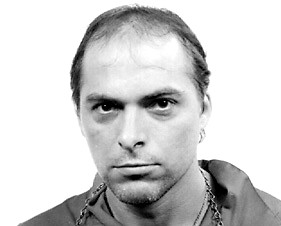 John Matthew Stephenson
Murderer · USA · 1996
John Matthew Stephenson was sentenced to death on June 17, 1997. He was on deat…
3 victims
John Matthew Stephenson
Murderer · USA · 1996
John Matthew Stephenson was sentenced to death on June 17, 1997. He was on deat…
3 victims
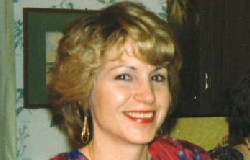 Piper Rountree
Murderer · USA · 2004
Piper Rountree was convicted of first-degree murder for the shooting death of h…
1 victim
Piper Rountree
Murderer · USA · 2004
Piper Rountree was convicted of first-degree murder for the shooting death of h…
1 victim
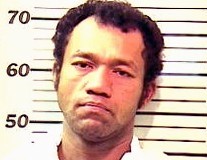 Lam Luong
Mass murderer · USA · 2008
Lam Luong was a Vietnamese refugee who was sentenced to death in Alabama for th…
4 victims
Lam Luong
Mass murderer · USA · 2008
Lam Luong was a Vietnamese refugee who was sentenced to death in Alabama for th…
4 victims
- Gender
- male
- Country
- USA
- Location
- Collier County, Florida, USA
- Date of birth
- 1956
- Age at first offence
- 44
- Characteristics
- former mental patient, rape, domestic violence, jealousy, drug addict, police officer
- Victim profile
- Sandy Kipp, 35 (his wife) and sheriff's deputy Jeff Klein, 35 (her lover)
- Method of murder
- Shooting
- Date(s) of murder
- May 20, 2000
- Years active
- 2000
- Date of arrest
- —
- Status
-
Sentenced to death
Sentenced to death in 2002
Case record: Royle Kipp
Background
Royle Kipp joined the Collier County Sheriff's Office in 1981 when he was just 23. Over the next 17 years, he rose steadily in rank from a road deputy to the lieutenant.
With his first wife, Nancy, whom he married in 1982, he fathered two sons. In 1989, Nancy Kipp told a judge her husband was violent and made threats against her. The couple divorced in 1990.
The following year, Kipp married Sandra Kipp, described as a petite blond customer service representative at the local hospital. After several years, Sandra gave birth to a daughter, Danielle.
The acrimony from Kipp's divorce followed the couple. Nancy Kipp filed a complaint against her ex-husband in 1992, alleging he threatened her and her new boyfriend.
Sandra Kipp and Roy Kipp had problems that included her reporting his heavy drinking and demeaning comments to medical professionals. After her death, Sandra Kipp's doctor told police that she had complained to him over the course of five years about her husband's heavy drinking and demeaning comments.
By 1998, Kipp had risen to the upper ranks of the sheriff's office, commanding a police substation. Jeffrey Klein was one of his co-workers.
In 1998, a random drug test brought Kipp's career to an end. He tested positive for marijuana and opted to retire and preserve his pension rather than be fired. A year later, the state revoked his law enforcement certification, ending any hope Kipp held of one day returning to police work.
Through another retired cop, Kipp got a job with an elevator company. His supervisor at the company, aware of Kipp's history, told him that if he caught him drinking or using drugs, he would be fired. The job was in Sarasota and Kipp had to live in the city, away from his family and in a company apartment with other workers.
As Sandra continued complaining to her family and even one of her husband's co-workers about his heavy drinking and bad temper, officers tried to help their former co-worker stop drinking. Klein and several other officers tried to help their former co-worker stop drinking; they visited Kipp and “nudged” him to get help without much success.
Sandra told her sister she did not love her husband anymore and began taking steps to free herself from the marriage. She enrolled in college courses in hopes of getting a better job and being more independent.
Kipp ridiculed her attempts. According to her parents, he was “fond of telling people "he got her from a trailer park and that she would be nothing without him."
By May, Sandra was quietly making plans to move out of the house and into her own apartment. Roy Kipp became convinced that she was cheating on him.
Prosecutors acknowledged only that Jeff Klein and Sandra Kipp were friends, but forensic tests from the crime scene indicated that at least on the night of their deaths, they were lovers.
Kipp asked one of her sisters, Wendy Poston, if she had met her new boyfriend, and he told Poston “that if he ever caught Sandy with another man, he would kill her.”
The offence
Sandy Kipp and her boyfriend, sheriff's deputy Jeff Klein, were slain in her new apartment May 20, 2000.
At trial, the jury found Kipp guilty of two counts of first-degree murder and one count of burglary.
The prosecution's theory presented the murders as motivated by jealousy and planned. Prosecutor Marshall Bower told the panel that Kipp was "a controlling, obsessive husband" who turned violent when he realized his wife was leaving him for another man. Bower said: “He couldn't stand it.”
Kipp testified that he was shocked when he discovered the lovers in a compromising position and fired at Klein after the deputy pulled a gun. He also testified that his wife was killed accidentally when she ran in front of him.
The defence suggested officers removed Klein's weapon to make Kipp look more culpable. With the verdict, jurors rejected that conspiracy theory and endorsed the prosecutor's claim that the murders were plotted and the motive was jealousy.
Investigation
A portable phone in dial mode was recovered just inches from Sandy Kipp's body.
The screened door to the lanai was cut and the phone lines into the apartment were cut.
Seminal evidence was presented at trial. DNA tests on Sandra Kipp's body revealed semen consistent with Klein's genetic profile.
The prosecutors drew on testimony from Kipp's friend and co-worker, Peter Lewkowicz, who said Kipp confessed to him hours after the shooting. Lewkowicz testified that Kipp said: “I waxed 'em.”
Lewkowicz testified Kipp had suspected his wife of cheating with Klein for months and that Kipp pledged to “(screw) him up" if he ever got confirmation of the affair.
Lewkowicz testified that Sandra Kipp told her husband she was moving out the week before the shootings. In Lewkowicz's account, Kipp tracked his wife to her new apartment, peered through a window and saw the pair together. Lewkowicz said he "lost it" and shot Klein repeatedly before turning the gun on his wife who was screaming and threatening to call police.
For the arrest and subsequent case timeline, officers acted on calls and tips linked to Kipp.
The murder weapon, a 9 mm pistol, in the case had never been recovered. Kipp's off-duty weapon, a .40-caliber gun, was found in a fanny pack in his locked truck, but his service pistol, a 9 mm gun, was unaccounted for by either the defence or prosecution.
During jury selection, Orlando asked potential jurors questions suggesting police tampered with crime scene evidence to protect Klein. Defence lawyers also claimed the phone lines were cut earlier in the day by a cable company employee installing television lines.
Arrest
From information provided by Lewkowicz, police tracked Kipp to the Sarasota apartment where he lived during the week.
When Kipp left the apartment at about 7 a.m., Sarasota police arrested him.
Detectives said Kipp seemed very upset and was visibly shaking in the police station. He asked for a lawyer, but made several incriminating statements.
He said he “was going to make it easy and turn himself in.” He also told officers, “I should not have stopped, I should have just kept going, the only reason I'm here is because I stopped.”
According to his lawyer, Kipp fell into a deep depression after the shooting and was suffering from post-traumatic stress disorder. He was treated with anti-depressants and kept on suicide watch.
A psychiatrist testified for the defence that Kipp was unfit to stand trial, but Judge Monaco found him competent.
Trial
The case was tried in Charlotte County because of extensive media coverage in Collier County.
At trial on March 7, 2002, the jury consisted of six men and six women. The panel deliberated less than three hours before finding Kipp guilty.
As the court clerk read the verdict, Kipp sat at the defense table with his hands in his lap. He showed no emotion.
After the verdict, the victims' families stood in the Punta Gorda courthouse lobby hugging and crying.
Kipp's sentencing phase was scheduled for March 14 to decide whether to sentence him to death or life in prison without the possibility of parole.
During the trial, Kipp portrayed himself as a loving husband who had no idea his wife was being unfaithful until he stumbled upon her with a lover. On direct examination, he testified he fired his gun only after Klein pointed a weapon at him and said: “As soon as I saw the gun, I reacted immediately ... and I shot him.” He also testified that Klein never fired.
On cross-examination, Kipp appeared to stumble about memory. He said he could not remember talking to Lewkowicz after the shootings, nor other incriminating conversations with his brother, his sister-in law, nor his wife's best friend.
Bower confronted him with the memory inconsistency and said: “Let me get this straight, you can remember the traumatic events of what happened in that apartment, but you can't remember a conversation several hours hours later.”
Kipp answered: “That's correct,” Kipp answered.
Bower ridiculed that account as “preposterous.” Bower also said: “Sandy and Jeff are both gone because of that selfish man,” Bower said.
The defence included arguments aimed at a heat of passion theory and a lesser charge such as manslaughter.
Public defenders Robert Jacobs II and Michael Orlando indicated they would argue a heat of passion defence and attempt to get jurors to convict Kipp of a lesser charge because his actions came immediately after allegedly discovering his wife's adultery.
Jacobs said: “We would assert it mitigates the charge to heat of passion,” Jacobs told the Naples Daily News.
Jacobs also said that a sexual relationship between Klein and Kipp “is extremely important to our case.”
Orlando and the defence also seized on the missing murder weapon and suggested that some of the bullets fired may have come from one of two weapons Klein possessed.
Sentencing
At the March 7, 2002 verdict, the jury was to reconvene March 14 to decide whether to sentence Kipp to death or life in prison without the possibility of parole.
Kipp was sentenced to death in 2002.
Appeals
No appeals details were provided in the available text.
Outcome
A jury convicted former Florida sheriff's officer Roy Kipp of murdering his wife and her lover. The jury found him guilty of two counts of first-degree murder and one count of burglary.
Aftermath
Sandy Kipp was described as 35. Jeff Klein was described as 35.
Danielle Kipp was described as 8-year-old at the time of the killings. She later told investigators about her father's actions.
Danielle Kipp told investigators her father called an aunt and asked to borrow a car, explaining that deputies would recognize his truck.
The text described Kipp's confession to another retired cop named Roy Kipp, and it described a call made in which the voice said: “I shot two people.”
It also described a later confession statement quoted as: “I shot two people,” and another statement quoted as: “went crazy...and ended up shooting them both,” and it described calling 911 immediately after hanging up.
Other details
Kipp's first wife was Nancy Kipp. She filed a complaint in 1992 alleging threats against her and her new boyfriend.
Kipp married Sandra Kipp in 1991. Sandra gave birth to a daughter, Danielle.
The divorce was finalized in 1990 and the marriage to Sandra occurred after that.
The retirement and certification issues occurred after he tested positive for marijuana.
On the weekend of May 19 and May 20, 2000:
- Roy Kipp's estranged wife, Sandra Kipp, told her sister Bobbie Rogers she had moved her belongings to a temporary apartment about five miles from the couple's home.
- Roy Kipp begged her to stay, and she left anyway, refusing even to tell him where the new apartment was; she told her sister, “If he shows up, she said, I won't let him in.”
- Danielle Kipp remained with her father.
- Danielle spent Saturday playing in the neighborhood and visiting briefly with her mother.
- Roy Kipp put Danielle to bed that evening.
- A call from Kipp's number to Sandra's new apartment occurred at 10:11 p.m. based on caller ID logs.
- Neighbors heard loud noises around 15 minutes later that they believed were fireworks, and no one called police at that time.
- Before 11:30 p.m., Kipp woke his daughter and drove her to his brother's house.
- Bill Kipp told police his brother asked him to watch Danielle but said little else.
- It was not until almost 1:30 a.m. that the sheriff's department heard anything about a shooting.
- Former Naples Police Officer Pete Lewkowicz called 911 to report the troubling call he had received from Kipp.
- Deputies drove to Sandra Kipp's apartment and found Sandra sprawled on the stoop outside her front door.
- Sandra was wearing a pink neglige and had a single gunshot in her back.
- The portable phone was inches from Sandra's hand, turned on and dial mode.
- Inside the apartment, officers found the body of Jeff Klein, who was lying in the doorway of the guest bedroom, shot eight times, including twice in the head.
- His uniform shirt was hanging in the master bedroom closet.
During witness testimony:
- Lewkowicz testified Kipp confessed hours after the shooting and said he had shot Klein and his wife.
- Lewkowicz described the window and the sequence leading to repeated shots and then shooting Sandy.
- Kipp testified his wife ran in front of him and was killed accidentally.
During the prosecution and closing arguments:
- Bower described Kipp as "a controlling, obsessive husband."
During the defence's statements:
- Jacobs said a sexual relationship between Klein and Kipp “is extremely important to our case.”
- Jacobs told the Naples Daily News that: “We would assert it mitigates the charge to heat of passion,”
Jurisdiction and trial scheduling included:
- Judge Daniel Monaco granted a defense request to hold the trial 50 miles north in Charlotte County.
Spotted an error, or have more information about this case?