Martin Kipp
Murderer Brian Kevin Rosenfeld
Murderer · USA · 1985
Brian Kevin Rosenfeld Brian Kevin Rosenfeld was sentenced to three concurrent l…
23 victims
Brian Kevin Rosenfeld
Murderer · USA · 1985
Brian Kevin Rosenfeld Brian Kevin Rosenfeld was sentenced to three concurrent l…
23 victims
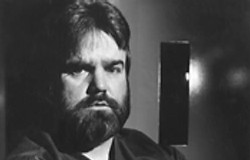 Marvin Gray
Murderer · USA · 1975
Marvin Gray was convicted killer who claimed responsibility for 23 slayings and…
23 victims
Marvin Gray
Murderer · USA · 1975
Marvin Gray was convicted killer who claimed responsibility for 23 slayings and…
23 victims
 Yahweh ben Yahweh
Murderer · USA · 1980
Yahweh ben Yahweh was born and legally named Hulon Mitchell Jr. (October 27, 19…
23 victims
Yahweh ben Yahweh
Murderer · USA · 1980
Yahweh ben Yahweh was born and legally named Hulon Mitchell Jr. (October 27, 19…
23 victims
 Russell Ellwood
Murderer · USA · 1991
Russell Ellwood was a former taxi driver. Authorities suspected him of killing…
20 victims
Russell Ellwood
Murderer · USA · 1991
Russell Ellwood was a former taxi driver. Authorities suspected him of killing…
20 victims
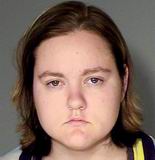 Heather Horst
Murderer · USA · 2013
Heather Horst was a member of the Minnesota Air National Guard and served in Sa…
1 victim
Heather Horst
Murderer · USA · 2013
Heather Horst was a member of the Minnesota Air National Guard and served in Sa…
1 victim
 Larry Keith Robison
Mass murderer · USA · 1982
August 10, 1982 (4:30 p.m.) — Junett Bryant arrived at the home of her adult so…
5 victims
Larry Keith Robison
Mass murderer · USA · 1982
August 10, 1982 (4:30 p.m.) — Junett Bryant arrived at the home of her adult so…
5 victims
 Charles Douglas Raby
Murderer · USA · 1992
October 15, 1992 — Charles Douglas Raby was convicted of killing Edna Franklin;…
1 victim
Charles Douglas Raby
Murderer · USA · 1992
October 15, 1992 — Charles Douglas Raby was convicted of killing Edna Franklin;…
1 victim
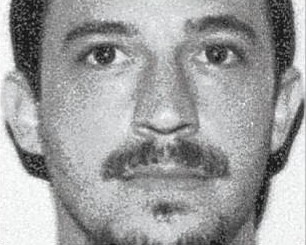 Douglas McArthur Buchanan
Mass murderer · USA · 1987
Douglas McArthur Buchanan Jr. was convicted in Virginia of capital murder for k…
4 victims
Douglas McArthur Buchanan
Mass murderer · USA · 1987
Douglas McArthur Buchanan Jr. was convicted in Virginia of capital murder for k…
4 victims
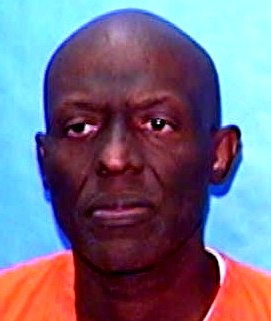 Harry Franklin Phillips
Murderer · USA · 1982
Harry Franklin Phillips Phillips was resentenced to death on 04/20/94, after an…
1 victim
Harry Franklin Phillips
Murderer · USA · 1982
Harry Franklin Phillips Phillips was resentenced to death on 04/20/94, after an…
1 victim
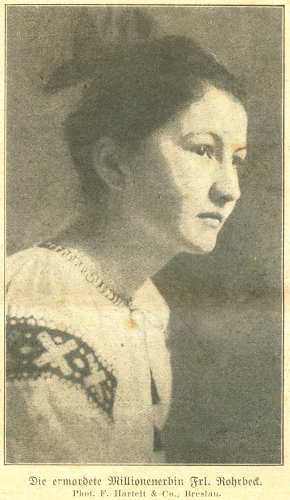 Peter Grupen
Murderer · Germany · 1921
Peter Grupen was Ursula Schade’s stepfather and Dorothea Rohrbeck’s step uncle.…
2 victims
Peter Grupen
Murderer · Germany · 1921
Peter Grupen was Ursula Schade’s stepfather and Dorothea Rohrbeck’s step uncle.…
2 victims
- Gender
- male
- Country
- USA
- Location
- Los Angeles/Orange Counties, California, USA
- Date of birth
- 1952
- Age at first offence
- 31
- Characteristics
- serial rapist, rape, rape?, alcohol, drug addict
- Victim profile
- Tiffany Frizzell , 19 / Antaya Howard, 19
- Method of murder
- Strangulation
- Date(s) of murder
- September 16, 1983 / December 29, 1984
- Years active
- 1983–1984
- Date of arrest
- —
- Status
-
Sentenced to death
Sentenced to death on September 17, 1987
Case identification
Martin Kipp
Timeline
- September 17, 1987 — Martin Kipp was sentenced to death.
- September 17, 1983 — Tiffany Frizzell’s body was found in her Long Beach motel room.
- December 29, 1983 — Antaya Howard drove to a bar in Huntington Beach called the Bee Hive after 10 p.m.
- January 3, 1984 — Howard’s car was ticketed for illegal parking.
- January 6, 1984 — Martin Kipp surrendered to the Laguna Beach Police Department on traffic warrants.
- January 10, 1984 — Huntington Beach police officers interviewed Kipp about Howard.
- December 30, 1983 — Martin Kipp was convicted in the slaying of Antaya Yvette Howard of Huntington Beach.
- June 13, 1981 — June M. met Martin Kipp in a Long Beach bar.
- August 1983 — Loveda N. met Martin Kipp in a bar.
- October 10, 1983 — Kipp insisted Loveda have sex with him while they were staying at a motel in Coos Bay, Oregon.
- December 29, 1984 — Kipp struck again shortly after Christmas 1984 (Antaya Howard went missing after buying cigarettes).
- January 3, 1985 — Antaya Howard’s car was found in Huntington Beach; her body was inside beneath a blanket.
- August 15, 1987 — A jury convicted Martin Kipp of one count of first degree murder and he was sentenced to die in the gas chamber at San Quentin.
- September 19, 1987 — Superior Court Judge Donald A. McCartin formally sentenced Kipp to death in Santa Ana.
Background
Martin James Kipp was 30 at the time of sentencing. He had been convicted in the Dec. 30, 1983 slaying of Antaya Yvette Howard of Huntington Beach, a former basketball star at Marina High School and one of Britton’s three children. His sentence was death.
Martin Kipp was described as a full-blooded Blackfoot Indian. He was the son of a prostitute who abandoned him at the age of twenty-two months. He was adopted by relatives and raised by an alcoholic “father” who frequently beat Martin in public. After his guardian’s death, Kipp left the reservation for a stint in the Marine Corps and was briefly stationed in Japan, where he won divisional honors in boxing. Reassigned to the base at El Toro, California, Kipp played with a rock band in his leisure time.
Kipp had been accused in June 1981 of abducting and raping a woman he met at a tavern in Long Beach. He went AWOL instead of facing the charges, but was captured in Idaho and returned to California for trial. He was convicted of rape and sentenced to three years in prison, serving an actual nineteen months before his release in 1983. Early release was granted in part because Kipp had himself become a rape victim in prison. He was registered with Southern California authorities as a convicted sex offender when his violent urges surfaced again.
The offence
Slaying of Antaya Yvette Howard (Huntington Beach; December 1983)
Antaya Howard, age 19, owned an orange Datsun automobile and was found dead in her automobile. She had been beaten and strangled, and the condition of her corpse and her clothing suggested that this had occurred during an actual or attempted forcible rape. When last seen alive, Howard had been with defendant, and his fingerprints were found inside her automobile.
On the evening of December 29, after 10 p.m., Howard drove to a bar in Huntington Beach called the Bee Hive. Defendant was staying temporarily at the Huntington Beach apartment of Kenton Wheeler, who had known defendant since childhood. Defendant left Wheeler’s apartment around 10 p.m. wearing a sweater he had borrowed from Wheeler, and he went to the Bee Hive. The bartender recognized Howard and defendant as previous customers, but she had not seen them together before. At the Bee Hive, defendant sat at the bar next to Howard; they talked and drank beer. Around 1:15 a.m., defendant and Howard left the Bee Hive together, returning around 1:45. Both were showing the effects of alcohol or some other intoxicating substance, but neither appeared extremely high, and defendant seemed less impaired than Howard. Defendant and Howard each wanted another beer, but the bartender refused to serve them because they had missed the last call for drinks before the 2 a.m. closing time. Defendant and Howard departed again.
Defendant and Howard were next seen at Charlie’s Chili, an all-night restaurant in Newport Beach. Between 2 and 4 a.m., defendant and Howard drank a bottle of champagne in the company of a man with sandy hair. Howard had locked her keys in her car, but she managed to open the car using a butter knife borrowed from a restaurant employee. The sandy-haired man left by himself in his own car. A restaurant customer testified that defendant and Howard left in Howard’s car, with defendant driving. A restaurant employee testified that defendant and Howard walked toward the beach after leaving the restaurant. Howard did not return home that night and was never seen alive again.
Defendant had not returned to Wheeler’s apartment at 6 a.m. on December 30 when Wheeler left for work. A woman noticed a car parked in an alley behind her Huntington Beach house on or around 7 a.m. on December 30; this car eventually proved to be Howard’s. When Wheeler returned to his apartment at 4:30 p.m. on December 30, he found defendant in the shower. The sweater defendant had borrowed was soiled and stained on the front and arms, and the room in which defendant had slept held a very strong and sour body odor. Defendant told Wheeler he did not know why the room smelled so bad. Defendant moved out and took a room in a hotel, where he stayed only one night.
On January 3, 1984, a parking control officer ticketed Howard’s car for illegal parking. It was still parked in the same Huntington Beach alley where it had been observed on December 30. On the next day, the woman who had first noted the car’s presence observed that it was emitting a strong odor. She notified the police, who found Howard’s body covered by a blanket on the floor behind the front seat. Her blouse had been pulled back and was missing a button. Her bra was still clasped but was twisted and above her breasts. Her jeans and panties were around her ankles. There was mud and dirt on the knees, the left side, and the back of the jeans, and also on the upper left part of Howard’s body.
The autopsy surgeon testified that the cause of Howard’s death was asphyxiation due to strangulation, with blunt force injury to the head as a contributing factor. The surgeon found abrasions “in the left forehead and also over the left eyebrow area, and also in the left thigh area,” and noted bruises “over the left eyebrow, over the left eyelid, left cheek area, the left leg” and “in the back of the head and in the back of the body.” Howard’s skull was not fractured, but she had suffered a subarachnoid hemorrhage that could have been fatal had she not died first of strangulation. No semen or sperm was found on or in the body, but decomposition could have made semen and sperm undetectable.
Defendant’s fingerprints were found in Howard’s car on the left and right car door windows and on an empty beer can on the front passenger seat floorboard.
Murder and attempted rape links presented at trial (Frizzell; September 1983)
The prosecution introduced evidence that defendant had raped and killed another young woman, Tiffany Frizzell, three months before Howard met her death. Frizzell was 19 years old. Her body had been found on the bed in her Long Beach motel room on September 17, 1983. The belt used to strangle her was around her neck. The only clothing on the body was a blouse pulled over Frizzell’s face. The body was covered by a bedspread, but the bedding was otherwise undisturbed. Defendant’s fingerprint was found on a telephone in the room. Semen and sperm were found in Frizzell’s vagina and external genital area.
On September 19, 1983, a canvas bag containing clothing and other personal property belonging to Frizzell was found in some bushes at a Long Beach residence. Loveda N. testified that she had seen the same canvas bag, containing many of the same objects, in defendant’s van. One of the objects found in the bag was a book in which Frizzell had written her name and which bore defendant’s fingerprints. On October 13, 1983, defendant pawned a radio that had belonged to Frizzell.
Investigation
In the minds of homicide investigators, there was nothing to initially connect the crimes. Los Angeles and Orange Counties accounted for several hundred murder victims every year, and strangulation was a common mode of death. There were dissimilarities: Tiffany Frizzell was white, Antaya Howard black; Frizzell had been killed in her motel room, while Howard had been abducted from the street and abandoned in her car. Aside from cause of death, there was no pattern visible to overworked investigators.
Working from a matchbook found beside Antaya Howard’s body, officers checked out an all-night restaurant in Newport Beach, where witnesses recalled the victim talking to a man identified as Martin Kipp. A scan of Kipp’s record put detectives on alert. They visited his Long Beach address and discovered he had been evicted by the paying tenants, who returned the evening of December 30 to find Kipp sleeping in a closet, clothing torn, deep scratches on his face. Initially, the tenants accepted Kipp’s explanation that he had suffered a “hard night,” but his continual, mooching of food and liquor led them to show him the gate in early January.
The coincidence of dates was damning. A check of fingerprints on file matched Kipp with latent prints recovered from Antaya Howard’s car.
Arrest and custody
Coincidentally arrested in Laguna Beach on outstanding traffic warrants, Kipp was remanded to Orange County authorities for booking on a charge of rape and murder. Once in custody, Kipp faced a second murder charge filed in the case of Tiffany Frizzell, with police keeping mum on the nature of their evidence.
Delays kept Martin out of court until the latter part of 1987.
On January 6, 1984, defendant surrendered to the Laguna Beach Police Department on traffic warrants.
On January 10, 1984, Huntington Beach police officers interviewed defendant about Howard. Defendant claimed he did not know Howard and was unable to explain the presence of his fingerprints in her car.
Trial
Procedural posture and verdicts (California Supreme Court)
This appeal came from a judgment of death and came to the Supreme Court of California automatically under Pen. Code, § 1239, subd. (b). A jury convicted defendant of one count of first degree murder (§ 187) with the special circumstance that the murder was committed during an attempted rape (§ 190.2, subd. (a)(17)(iii)). The same jury convicted defendant of one count of attempted rape by force (§§ 261, subd. (a)(2), 664), and returned a penalty verdict of death for the first degree murder with a special circumstance.
The trial court denied the automatic motion to modify penalty (§ 190.4, subd. (e)) and pronounced a sentence of death for the murder and a sentence of three years in state prison for the attempted rape.
The Supreme Court stated it would affirm the judgment.
Prosecution’s guilt phase case-in-chief
In December 1983, Antaya Howard was living with her parents at their home in Huntington Beach. She owned an orange Datsun automobile. The prosecution introduced the Bee Hive and Charlie’s Chili events, the sightings of Howard and defendant together, and the subsequent discovery of Howard’s body.
The prosecution introduced the autopsy testimony about asphyxiation due to strangulation, blunt force injury to the head as a contributing factor, abrasions and bruises, and the subarachnoid hemorrhage. It also introduced evidence that defendant’s fingerprints were found in Howard’s car on door windows and an empty beer can on the front passenger seat floorboard.
The prosecution introduced evidence that in September 1983, defendant raped and killed Tiffany Frizzell, with the body found on September 17, 1983; the belt used to strangle her; the blouse over Frizzell’s face; bedspread covering; fingerprint on a telephone in the room; and semen and sperm found in Frizzell’s vagina and external genital area.
The prosecution also introduced evidence that on September 19, 1983, a canvas bag with Frizzell’s belongings was found in bushes; Loveda N. testified about the bag being in defendant’s van; a book bearing defendant’s fingerprints was included; and on October 13, 1983 defendant pawned a radio that belonged to Frizzell.
Defense case at the guilt phase
The only defense witness was a toxicologist who testified to the presence of cocaine or a cocaine metabolite in blood taken from Howard’s body after her death.
Penalty phase evidence
The prosecution introduced evidence that defendant had assaulted June M. and Loveda N.
June M. met defendant in a Long Beach bar around 11 p.m. on June 13, 1981, when she was 23 years old. Defendant invited June to view his truck, which was parked nearby. When she was seated in the front passenger seat, ostensibly to listen to the stereo, defendant started the truck and drove to a residential area. June tried to open the passenger door but was unable to do so because the door and window handles were missing. Defendant ignored her demands to be taken back to the bar. Defendant pushed her into the back of the truck and ripped off her clothes. June M. screamed, and defendant put his hand over her mouth. When June bit defendant’s hand, he began to strangle her. Defendant raped June. Eventually her body went limp, and she thought she was going to die. Defendant got up and demanded that June orally copulate him. June said she could not breathe and needed air. When defendant opened the passenger door, she managed to escape. For this assault on June M., defendant pleaded guilty to one count of forcible rape and received a state prison sentence.
Loveda N. met defendant in a bar in August 1983. They began living and traveling together in defendant’s van. During this time, defendant physically abused Loveda, slapping or punching her in the face. Around October 10, 1983, while they stayed at a motel in Coos Bay, Oregon, defendant insisted that Loveda have sex with him and began removing her clothes. When Loveda resisted, defendant hit her and choked her with his hands. Feeling she was about to pass out, Loveda told defendant she would have sex with him if he allowed her to use the bathroom first. Once inside the bathroom, she locked the door, jumped out the window, and ran to the office of the motel manager, who summoned the police. Because defendant threatened to harm Loveda’s three-year-old son, she declined to press charges.
Defense penalty phase evidence
The defense case at the penalty phase was primarily presented through testimony of Daniel Foster, a clinical psychologist. Foster interviewed defendant twice and administered psychological tests, including the Minnesota Multiphase Personality Inventory. Foster reviewed many depositions and reports and interviewed defendant’s family and childhood friends in Browning, Montana.
Foster testified that defendant’s mother was a Native American woman named Little Sister Still Smoking. The birth certificate listed defendant’s father as “unknown.” Foster stated defendant was “a small baby, six pounds.” Foster testified that for the first 20 months of his life, defendant lived with his mother and maternal grandmother, who were both alcoholics. They lived in an area of the Blackfoot Reservation known as “little Chicago” because it was inhabited by Native Americans who had returned to the reservation after unsuccessful attempts to settle in urban areas. Foster testified that it was the poorest area of the reservation and alcoholism was endemic.
Foster testified that defendant’s mother had several children, probably each by a different man because “for a quart of whiskey she would sleep with anybody.” Foster stated that defendant and his sisters were taken from his mother when social workers found them under a pile of rags in an abandoned shack during very cold weather, and that the children were undernourished and suffered from impetigo, skin lice, and mites.
Foster testified that defendant was placed in the home of John and Mildred Kipp, who eventually adopted defendant when he was 12 years old. Foster testified that John Kipp was a very strong man with high standards. Foster stated that John Kipp did not physically abuse defendant, but was harsh and “extremely demanding.” Foster testified that defendant earned his father’s approval by boxing and for several years was undefeated in boxing matches. Foster stated that when defendant was 15 years old, John Kipp started drinking heavily, as much as 3 quarts of whiskey in a day, and displayed a terrible temper when intoxicated. Foster testified that John Kipp once struck defendant in public, a major humiliation in Blackfoot culture, but defendant bore it stoically. Foster testified that around this time John and Mildred Kipp separated.
Foster testified that defendant at this time was a passenger in a pickup truck that rolled over, killing defendant’s 11-year-old cousin. Foster testified that defendant began to lose boxing matches and eventually abandoned the sport, turning instead to alcohol and sex. Foster testified that John Kipp kept defendant supplied with money. Foster testified that John Kipp died when defendant was 19 years old, leaving defendant a half-interest in the ranch, which was heavily mortgaged. Foster testified that defendant joined the Marine Corps, advanced quickly to the rank of lance corporal, and later appeared to succumb to boredom and disillusionment after being stationed in Okinawa and assigned clerical duties. Foster testified that defendant turned to drugs, sex, and petty crime. Foster testified that eventually defendant was discharged from the service and imprisoned for the rape of June M. Foster testified that in prison defendant learned to play bass guitar and became involved in heavy metal music. Foster testified that after release, defendant attempted to live out a fantasy of being a heavy metal rock star, supporting himself with money he received from his half-interest in John Kipp’s ranch.
Foster testified that defendant displayed characteristics common to adult children of alcoholic parents: he was isolated, had no grasp of what normal behavior was, had difficulty following a project from beginning to end, often lied when it would have been just as easy to tell the truth, was highly self-critical, had difficulty maintaining an intimate relationship, and was extremely impulsive.
Character witnesses
Scott Whiting testified that he knew defendant for approximately two months immediately before defendant’s arrest on the charges in this case. Whiting testified that defendant had a high tolerance for cocaine. Ken Wheeler testified that he and defendant grew up together, living on adjoining farms and attending the same schools. Wheeler testified that defendant was his best friend, that defendant had been a “good kid” and “well disciplined,” that defendant had been “an inspiration athletically,” and that defendant “just had a glow about him.” Wheeler testified that defendant joined the Marines because he wanted to be like his father John Kipp, whom Wheeler described as a “war hero.” Wheeler testified that drug use in the Marines was heavy at that time and that defendant seemed changed after discharge.
Sentencing
A sentence of death was pronounced for the murder and a sentence of three years in state prison was pronounced for the attempted rape. The trial court denied the automatic motion to modify penalty.
Kipp was sentenced to death on September 17, 1987 by Superior Court Judge Donald A. McCartin, in Santa Ana.
The gas chamber at San Quentin was mentioned as the place of the death sentence after conviction on August 15, 1987.
Appeals
The Supreme Court of California handled the appeal automatically under Pen. Code, § 1239, subd. (b) and stated it would affirm the judgment.
Outcome
The Supreme Court affirmed the judgment.
Aftermath / reactions
Maxine Britton had tried before to come to the courtroom to face Martin James Kipp, the man who killed her 19-year-old daughter. At his preliminary hearing, she blacked out. She testified briefly at his trial and became so shaken that a deputy district attorney had to help her from the courtroom. When Judge Donald A. McCartin formally sentenced Kipp to death, Britton was present in court and broke into loud sobs when deputy marshals led Kipp into the courtroom. She cried throughout the 45-minute proceeding. Afterward, Britton was in such distress that her mother, Mary Washington, and her daughter, Consuella Elliott, had to help her out. Britton said: “Maybe my baby can rest now,”
Kipp’s attorney Michael A. Horan cautioned Britton and her family in court that his final statement Friday would bother them. Horan then told the court the good things he had come to learn about Kipp by representing him. Horan said: “He hates the Martin Kipp who is accused of these crimes,” and “But he understood that Martin Kipp as best he could.”
Britton later said facing Kipp when she testified was one of the hardest moments of her life. She said: “He looked at me like I was a piece of stone,” and “I think that's what hurt me more than anything else. He was sitting there twiddling a pencil, like 'Hurry up so I can get back to my cell.'”
Other details
Additional case context and charges mentioned
At sentencing, Kipp was to face a trial in the Sept. 17, 1983 slaying of Tiffany Frizzell, 19, of Puget Sound, Wash., at a Long Beach motel. If convicted and given a death sentence in Los Angeles County, he would be only the second inmate of the 189 on Death Row at San Quentin Prison to have received death sentences in two counties. At this writing, he had not been tried for the murder of Tiffany Frizzell.
McCartin permitted Orange County prosecutors to use evidence from the Frizzell slaying in the Howard case.
Jurors also listened to testimony from two of Kipp’s victims in previous sexual assaults during the penalty phase.
In April 1987, Kipp’s bride was arrested on conspiracy charges after she approached an undercover officer with plans to break Martin out of the Orange County jail. She pled guilty, escaped with probation, and was conditioned that she refrain from visiting her husband.
Kipp will now face a trial in the Sept. 17, 1983 slaying of Tiffany Frizzell.
Spotted an error, or have more information about this case?