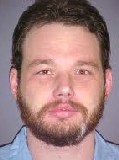
Michael DeLozier
Murderer Brian Kevin Rosenfeld
Murderer · USA · 1985
Brian Kevin Rosenfeld Brian Kevin Rosenfeld was sentenced to three concurrent l…
23 victims
Brian Kevin Rosenfeld
Murderer · USA · 1985
Brian Kevin Rosenfeld Brian Kevin Rosenfeld was sentenced to three concurrent l…
23 victims
 Russell Ellwood
Murderer · USA · 1991
Russell Ellwood was a former taxi driver. Authorities suspected him of killing…
20 victims
Russell Ellwood
Murderer · USA · 1991
Russell Ellwood was a former taxi driver. Authorities suspected him of killing…
20 victims
 Robert Martines Perez
Murderer · USA · 1994
Name: Robert Martines Perez · Other name used in proceedings: Robert Martinez P…
15 victims
Robert Martines Perez
Murderer · USA · 1994
Name: Robert Martines Perez · Other name used in proceedings: Robert Martinez P…
15 victims
 Billy Frank Vickers
Murderer · USA · 1993
Billy Frank Vickers Vickers was executed by lethal injection in Texas on Januar…
14 victims
Billy Frank Vickers
Murderer · USA · 1993
Billy Frank Vickers Vickers was executed by lethal injection in Texas on Januar…
14 victims
 Audrey Hingston
Homicide · United Kingdom · 2003
Audrey Hingston stabbed her husband Eric Hingston to death at their flat. Eric…
1 victim
Audrey Hingston
Homicide · United Kingdom · 2003
Audrey Hingston stabbed her husband Eric Hingston to death at their flat. Eric…
1 victim
 Tony Tyrone Dixon
Homicide · USA · 1994
Tony Tyrone Dixon Tony Tyrone Dixon was sentenced to death on March 8, 1995. Th…
1 victim
Tony Tyrone Dixon
Homicide · USA · 1994
Tony Tyrone Dixon Tony Tyrone Dixon was sentenced to death on March 8, 1995. Th…
1 victim
 James Aren Duckett
Murderer · USA · 1987
Name: James Aren Duckett · Date of birth: 09/04/57 · Court: Supreme Court of Fl…
1 victim
James Aren Duckett
Murderer · USA · 1987
Name: James Aren Duckett · Date of birth: 09/04/57 · Court: Supreme Court of Fl…
1 victim
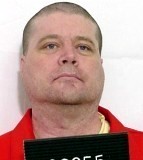 Shawn Windsor
Murderer · USA · 2003
Shawn Windsor (DOB 11-29-63) was sentenced to death on November 17, 2006. Shawn…
2 victims
Shawn Windsor
Murderer · USA · 2003
Shawn Windsor (DOB 11-29-63) was sentenced to death on November 17, 2006. Shawn…
2 victims
- Gender
- male
- Country
- USA
- Location
- McCurtain County, Oklahoma, USA
- Date of birth
- August 5, 1976
- Age at first offence
- 19
- Characteristics
- armed robbery, arson, drugs, abuse, torture
- Victim profile
- Orville Lewis Bullard, 60, and Paul Steven Morgan, 54 (campers)
- Method of murder
- Shooting
- Date(s) of murder
- September 24, 1995
- Years active
- 1995
- Date of arrest
- —
- Status
-
Executed
Executed by lethal injection in Oklahoma on July 9, 2009
Case record: Michael DeLozier
Overview
Michael DeLozier was convicted of two counts of first-degree murder in Oklahoma and was sentenced to death. He was executed by lethal injection in Oklahoma on July 9, 2009.
Timeline
- September 23, 1995 — DeLozier, the Madison brothers, James Oliver, and others happened upon the Morgan campsite and engaged in conversation for a few minutes.
- September 24, 1995 — Orville Lewis Bullard and Paul Steven Morgan were killed.
- June 29, 2009 — The five-member state Pardon and Parole Board denied clemency for DeLozier in a unanimous ruling.
- July 9, 2009 — DeLozier was executed by lethal injection at the Oklahoma State Penitentiary; he was pronounced dead at 6:10 p.m.
- August 31, 2000 — DeLozier filed an application for relief under 28 U.S.C. § 2254 in the United States District Court for the Eastern District of Oklahoma.
- April 29, 2009 — Attorney General W. A. Drew Edmondson asked the Oklahoma Court of Criminal Appeals to set an execution date for DeLozier.
- May 14, 2009 — The Oklahoma Court of Criminal Appeals set July 9 as DeLozier’s execution date.
- 1997 — The Oklahoma Court of Criminal Appeals affirmed DeLozier’s conviction and sentence in DeLozier v. State, 991 P.2d 22.
- September 15, 1997 — DeLozier, through his new attorney, Lee Ann Jones Peters, filed an appellate brief with the OCCA asserting, among other things, ineffective assistance of counsel and filed an application for an evidentiary hearing to supplement the record.
- December 11, 1998 — DeLozier filed an application for postconviction relief with the OCCA.
People
- Michael DeLozier (defendant)
- Orville Lewis Bullard (victim, age 60)
- Paul Steven Morgan (victim, age 54)
- Steven Morgan (referenced as the victim Paul Steven Morgan)
- Phyllis Setzer (Morgan’s wife; wrote a letter to the state Pardon and Parole Board)
- Joe Bullard (Bullard’s son)
- Glenney Dale Madison (co-defendant; convicted of first-degree murder and serving a life prison sentence)
- Nathaniel Brandon Madison (co-defendant; pleaded guilty to conspiracy to commit murder and testified against DeLozier)
- James Oliver (referenced as being with DeLozier and others)
- George Vance (witness; driving the vehicle that frightened the trio and then observed Morgan)
- Willard Driesel (district judge)
- Lane, Judge (Oklahoma Court of Criminal Appeals opinion author; “Affirmed”)
- Judges in the OCCA panel — Lane, J.; Strubhar, V.P.J., Johnson, J., and Chapel, P.J., Lumpkin, J. (concur in results)
- Oklahoma Attorney General W. A. Drew Edmondson (requested execution date; press releases)
- Dale Watson, Ph.D. (mentioned in habeas discussion regarding a neuropsychological assessment)
- Dr. Jeri Fritz (clinical psychologist whose report was discussed in postconviction proceedings)
- Robert Perrine (trial counsel referenced in the opinion and habeas discussion)
- Agent Birchfield (OSBI Agent Dale Birchfield referenced in evidence discussion)
- Agent Birchfield/OSBI Agent Birchfield (testimony described including rehabilitation of Nathaniel Madison’s account)
- OSBI Agent Chris Dill (testimony described regarding recovery of the shotgun)
- Dr. Ronald F. Distefano (forensic pathologist and medical examiner)
- Lester Blake (Oklahoma State Fire Marshal agent)
- Sheriff Richard McPeak (testified in habeas discussion regarding visibility in the jail “bean hole”)
- Rodney Broades (jail inmate involved in alleged jail threats/arguments referenced in proceedings)
- Michael Mussett (jail inmate; testified about DeLozier’s alleged statements)
- Tony Loving (cellmate; testified in evidentiary hearing discussion)
- Michelle Tate (DeLozier’s sister; testified and was referenced in accounts)
- Damon Tate (Michelle’s husband; referenced in witness accounts)
- Paradise Wooten (witness for the defense; testified at trial)
- Bubba Oliver (Paradise Wooten’s brother; referenced in defense case discussion)
- Shawn Smith (referenced arriving at the Tate bus and elsewhere)
- Tim Madison (owner referenced for recovery of the shotgun)
- Tim (referenced as the owner of the shotgun; “recovered from the home of Tim Madison”)
- Willard Driesel (trial judge referenced)
- James H. Payne (Chief Judge in the federal habeas discussion)
- Hartz, Circuit Judge (federal appellate discussion author)
Background
Steven Morgan and Orville Lewis Bullard were camping in a converted step-van on the bank of the Glover River in northern McCurtain County. About 600 yards from their campsite was a “Tate bus,” a bus also converted for camping. DeLozier, Glenney Dale Madison, Nathaniel Brandon Madison, and others were staying at the bus.
DeLozier was 32 at the time of execution and was 19 at the time of the killings. He admitted killing the two men and apologized to the victims’ families in a statement released on his behalf before execution.
DeLozier’s attorneys asked for a stay of execution and a new evidentiary hearing. They argued that a medical expert had new evidence showing years of methamphetamine abuse by DeLozier affected his brain and that his trial attorney never presented that information to the jury that sentenced him to death. The court denied the request.
The offence
DeLozier, the Madison brothers, and others happened upon the Morgan campsite sometime on Saturday, September 23, 1995. They engaged in conversation for a few minutes, and DeLozier spotted a generator he thought would bring about $700 if stolen. After returning to the Tate bus, DeLozier mentioned stealing the generator, and several of the group, including DeLozier, talked about killing Morgan and Bullard and stealing everything they had.
That night, DeLozier carried a single-shot shotgun, Glenney Madison carried a .22 caliber rifle, and Nathaniel Madison set off for the Morgan site. When DeLozier stepped into the camper, he fired a single shot toward the rear with the shotgun. Glenney Madison stepped into the camper and fired a shot from the .22 rifle. The group then stood near Morgan’s pickup where Glenney Madison fired several shots into the front of the camper. Nathaniel Madison shouted several times for the camper’s occupants to come out, saying nothing would happen to them. After several minutes, Morgan stepped from the camper. DeLozier shot him once in the chest with the shotgun. DeLozier and Glenney Madison approached Morgan, and DeLozier took the rifle from Glenney and fired it once into Morgan’s face.
The three loaded the generator and many other items from the campsite, some of which were taken from the camper, into Morgan’s pickup and took the stolen items back to the Tate bus. On the final trip back to the Morgan camper, the trio encountered headlights coming from the Morgan campsite, and all three bailed out from the pickup and left it sitting in the road. George Vance was driving the vehicle which frightened the trio. Morgan was found lying on his back outside the camper in front of the door. His body had been burned. Morgan’s camper had been burned with the body of Bullard still lying in his bed. Morgan’s pickup had also been burned.
The OCCA included additional recitation of evidence that DeLozier murdered two individuals inside the camper, and that Madison fired several shots into the camper with the .22 after Morgan’s death. It also stated that DeLozier and the others went to the Morgan campsite with the intent to steal the generator and other property, and that DeLozier and the others had visited the Morgan campsite earlier, making them suspects in any theft.
Investigation
The Oklahoma State Bureau of Investigation (OSBI) agents described the scene and the evidence. Dr. Ronald F. Distefano testified regarding the victims’ charred remains and evidence of gunshot wounds. Lester Blake testified to his opinion that the fire at the Morgan camp had been intentionally set with a match and ignitable liquid, describing an accelerant pour pattern and the fire-following liquid from Morgan’s body to the camper.
Arrest
Nathaniel Madison was arrested early the next morning after a sequence of events described in the federal habeas discussion. The narratives also referenced that DeLozier was with others and later wandered through the mountains for three days before they were arrested.
Trial
Charges and jury findings
DeLozier was charged with two counts of First Degree Malice Murder in violation of 21 O.S.1991, § 701.7, in McCurtain County District Court Case No. CRF-95-258. The State filed Bills of Particulars for both counts alleging four aggravating circumstances for count one and three aggravating circumstances for count two.
A jury trial was held before the Honorable Willard Driesel, District Judge. The jury found DeLozier guilty of both counts of first-degree murder and found in both counts that DeLozier knowingly created a great risk of death to more than one person and that there existed the probability that DeLozier would commit criminal acts of violence that would constitute a continuing threat to society: 21 O.S.1991, § 701.12(2) & (7). As to count one, the jury also found that the murder was committed for the purpose of avoiding or preventing a lawful arrest or prosecution: 21 O.S.1991, § 701.12(5).
The jury recommended DeLozier be sentenced to death for both counts, and the trial court sentenced accordingly.
Jury selection
The trial court used an anonymous numbering system in “labeling” each juror, and juror numbers were used instead of juror names. DeLozier argued on appeal that he was denied a fair and impartial jury and asserted jurors should have been removed for cause because they indicated an inability to fairly consider penalties of life or life without parole. The OCCA addressed these arguments, including challenges relating to jurors 14, 18, 41, and 49.
Guilt phase evidence
Nathaniel Madison
Nathaniel Madison testified about the “Tate bus,” the group’s conduct, and the shooting sequence. He testified that after conversation and agreement to steal a generator, he observed the victims and later described the shootings and theft. His testimony included that DeLozier suggested killing the men and taking everything they had, that they carried a shotgun and a .22 caliber rifle, that shots were fired inside the camper, and that Morgan was shot and killed. He also described loading goods into Morgan’s pickup and returning to the Tate bus.
In cross-examination, DeLozier’s trial counsel pursued possible inconsistencies. Nathaniel admitted possible inaccuracies and admitted it was possible he had lied during his second interview. He admitted he was capable of lying under oath. Perrine also elicited that in return for testifying, Nathaniel would be charged with conspiracy to commit murder rather than murder in the first degree, with punishment of ten years’ imprisonment and ten years’ probation.
Law-enforcement and expert witnesses
OSBI Agent Chris Dill confirmed the shotgun used in the crime had been recovered from the home of Tim Madison. OSBI Agent Dale Birchfield described the murder scene and the surrounding area, including the distance to the Tate bus (about 300 to 400 yards). He also recounted what Nathaniel had told him during Nathaniel’s second OSBI interview, including that DeLozier shot Morgan first in the chest with a shotgun and then in the face with a .22. On cross-examination, Birchfield admitted the OSBI investigation showed that the Madisons, not DeLozier, had taken the two murder weapons from the Tate bus as they fled.
Dr. Ronald F. Distefano testified that Morgan’s body was charred but there was evidence he had been shot, describing x-rays and a gunshot wound in the head. He testified similarly regarding Bullard, describing x-ray evidence, shotgun pellets, a plastic wad of a shotgun shell recovered from the body, and evidence of a bullet wound in the head.
Lester Blake testified to his opinion regarding intentionally set fire using a match and ignitable liquid and described the accelerant pour pattern and explosions inside the camper.
George Vance
George Vance did not testify; the parties stipulated to what he would have said:
[H]e was ... traveling in his pickup truck [when] he came upon a campsite by the Glover River and observed a white male on his back on the ground in front of a camper located at the camp. This white male was clothed in undershorts and a shirt and was holding a pair of blue jeans to his chest. [He] then attempted to leave the camp area and spun his tires doing so[.] [As he] left the camp [he] met a ... pickup, which was abandoned by its drivers[.][He] moved this vehicle which was blocking the roadway and left the area. [He] saw no fires at any time that evening.
R. Vol. 9 at 810.
Michael Mussett
Michael Mussett testified that during an argument DeLozier yelled to Rodney Broades:
“I've already killed two men, mother fucker; I won't hesitate to kill you.”
Id. at 726.
Mussett explained his position in the jail and described visibility through a “bean hole,” and he reported the incident to officials the following day.
After Mussett’s testimony, Perrine requested that the jury be permitted to visit the jail. The court denied the request. Perrine later moved for permission to call a witness to rebut Mussett’s testimony, and the court granted the request, but the witness was never called.
Defense evidence
Paradise Wooten
Paradise Wooten testified that she had been with DeLozier, the Madisons, and her brother, Bubba Oliver, at the Tate bus the night of the murders. She testified that they talked about stealing stuff from the Morgan camp and killing Morgan and Bullard, and that they smoked marijuana. She testified that she and Bubba were asleep when DeLozier and the Madisons returned from the Morgan camp. She testified that DeLozier returned by himself and that he said, “Let's go, the game rangers are down there.”
R. Vol. 10 at 854.
She testified that after traveling about 50 yards from the campsite, she saw a light near the river and later heard three or four gun shots and then a blast. She testified that she, Bubba, and DeLozier wandered through the mountains for three days before they were arrested. She testified she did not recall seeing any blood on his clothes or evidence he had been near a fire, and that he had not acted as if he had killed somebody.
DeLozier’s testimony
DeLozier testified about his age (19) and background. He admitted prior guilty pleas to felony charges of killing one police dog and injuring another. He described going to the Tate bus to avoid appearing for court proceedings regarding the felony charges pending at the time. He testified that he used methamphetamine that weekend and that he suggested stealing the generator. He testified that Bo suggested they kill Morgan and Bullard and take everything; DeLozier testified he did not respond because he did not think Bo was serious. He testified that they carried a shotgun and a .22 rifle only for protection.
He described unloading camping equipment into Morgan’s pickup at the Morgan camp, with keys in the truck and the generator thrown into the back. He described Michelle Tate, Damon Tate, and Shawn Smith arriving and then leaving. He testified that the Madisons wanted to go back for another load and he joined them, and that on the way back they fled due to oncoming headlights. He testified he went back to the Tate bus about ten minutes later, woke Paradise and Bubba, and explained he thought he had seen a game warden. He testified that as they left in the opposite direction from the Morgan camp, they heard an explosion and saw an orange glow along the river and heard “pops like gunshots.”
R. Vol. 10 at 920.
On cross-examination, he testified he had never threatened to kill fellow inmate Broades and that Mussett was lying.
Rebuttal
The State called Phyllis Morgan Setzer in rebuttal. She testified she and her husband had gone camping hundreds of times and had never loaded their things the night before. She testified that on the day they were set to leave, they would have lunch and then load everything into the truck, and that on the weekend they planned to drive to meet Morgan and Bullard for a fish fry and pack up after that. She testified that many items recovered from the Tate bus were items that remained permanently in the camper at the Morgan camp and would not have been taken home.
Penalty phase evidence and aggravating circumstances
The murder information listed four aggravating circumstances supporting the death penalty:
- The defendants, and each of them, created a risk of death to more than one person.
- The murders were especially heinous, atrocious or cruel.
- The murders were committed for the purpose of preventing a lawful arrest or prosecution.
- The existence of a probability that the defendants would commit criminal acts of violence that would constitute a continuing threat to society.
During the penalty phase, the State presented no additional evidence supporting the aggravating circumstances and limited its presentation to victim-impact witnesses, including Joe Bullard and Phyllis Morgan Setzer.
The defense presented mitigating evidence through DeLozier’s mother, Terry Gilbert; DeLozier’s aunt, Yolanda Bell; and DeLozier’s sister, Michelle Tate.
Terry Gilbert testified that DeLozier’s biological father left him when he was very young and that when DeLozier was three, they moved in with his stepfather Johnny Gilbert, who beat him “from the very beginning,” and that the beatings became “really bad” when DeLozier turned 12 or 13. She testified that her stepfather threw him up against a wall if he failed to mow the lawn and called him names, including “shit for brains.” She testified they eventually stopped attending church because Johnny got jealous and followed them home. She testified that DeLozier became cold and withdrawn due to abuse and began using drugs, and that without drugs he was not a bad person.
Yolanda Bell testified that DeLozier’s family life was so bad that he ran away from home and lived with her in Texas. She testified that she knew him as a loving, affectionate boy.
Michelle Tate testified that DeLozier was regularly abused by his stepfather and that her brother intervened so Johnny would not hit her, telling:
“Johnny wouldn't ever hit me because [Mr. DeLozier] would always jump in and let him beat on him instead.”
R. Vol. 10 at 1068.
Michelle Tate testified that DeLozier began using drugs heavily after leaving home and stole from others to support his habit. She answered “Who wouldn't want to forget? You get cut for getting a cookie out of a cookie jar.”
R. Vol. 10 at 1070.
The court struck the second aggravator with respect to Bullard’s murder due to insufficient evidence that the killing was especially heinous, atrocious, or cruel. The jury sentenced DeLozier to death on both counts.
Sentencing
The trial court sentenced DeLozier to death for both counts. The OCCA affirmed the judgment and sentence.
Appeals
Direct appeal (OCCA)
On appeal, DeLozier raised numerous propositions of error including jury selection issues, sufficiency of evidence, admissibility of prior consistent statements, admission of color photographs, prosecutorial comment and misconduct, and challenges to aggravating circumstances and jury instructions. The OCCA addressed each proposition and affirmed the conviction and death sentence.
The OCCA’s opinion included discussion of:
- Corroboration requirements for accomplice testimony.
- Admission of Nathaniel Madison’s prior consistent statements to OSBI Agent Birchfield.
- Admission of State’s Exhibits 15, 16, and 32 color photographs.
- Challenge regarding the prosecutor’s questioning and claims of prosecutorial violation of the right to remain silent.
- Challenges to jury instructions.
- Challenges to victim impact evidence.
- Claims of ineffective assistance of counsel under Strickland v. Washington, including allegations about juror removal, witness investigation, impeachment strategy, and mitigation investigation.
- A remand for an evidentiary hearing regarding claims that trial counsel failed to investigate and present evidence to disprove DeLozier’s alleged jail confession and related circumstances.
- Mandatory sentence review under Oklahoma law, including whether the death sentence was imposed under the influence of passion, prejudice or any other arbitrary factor and whether evidence supported the aggravating circumstances.
The OCCA affirmed the district court’s judgment and sentence.
Federal habeas
After affirmance, DeLozier sought federal habeas relief. The United States District Court for the Eastern District of Oklahoma denied relief but granted a certificate of appealability. DeLozier appealed. The Court of Appeals affirmed the denial of § 2254 relief.
The habeas discussion included:
- Claims regarding voir dire, prior convictions, failure to call witnesses Michelle Tate and Bubba Oliver, cross-examination and impeachment decisions, and ineffective assistance in investigations regarding Mussett’s testimony.
- Claims regarding reference to pretrial silence.
- Claims about mitigation evidence investigation and presentation; some were treated as procedurally barred.
- Claims about ineffective assistance of appellate counsel for failing to raise certain issues on direct appeal.
- An assertion that cumulative error rendered counsel ineffective; the court found no properly preserved error to accumulate.
Clemency and Supreme Court denial
DeLozier sought a stay of execution and a new evidentiary hearing, and the court denied the request. The United States Supreme Court denied DeLozier’s final appeal. The Pardon and Parole Board denied clemency in a unanimous ruling on June 29, 2009.
Outcome
DeLozier was executed by lethal injection in Oklahoma on July 9, 2009. He was pronounced dead at 6:10 p.m. at the Oklahoma State Penitentiary. He offered no last words before receiving the lethal injection.
Last meal and execution witnesses
DeLozier’s last meal was a T-bone steak, french fries and a large salad. Last meals were limited to $15 and had to be available for purchase in the McAlester area.
Two of DeLozier’s attorneys, his wife from the Netherlands whom he married while in prison, and two female in-laws witnessed the execution. Fourteen members of the victims’ families witnessed the execution from behind one-way glass.
Aftermath
DeLozier’s attorneys released a statement on his behalf in which he admitted killing the two men and apologized to the victims’ families.
He wrote:
“I cannot wait to finish paying this debt I owe so I can apologize to the souls of Mr. Morgan and Mr. Bullard and ask them to forgive me for my taking their lives,”
and: “To the families of my victims all I can say is I’m sorry for the pain I’ve caused you. I hope my death will bring you some peace.”
The victims’ families released a statement thanking prosecutors for their work. The statement read:
“We have waited nearly 14 years for this day,”
“We feel that justice has finally been served.”
Co-defendants
- Glenney Dale Madison was convicted of first-degree murder and was serving a life prison sentence.
- Nathaniel Brandon Madison pleaded guilty to conspiracy to commit murder, received a 10-year sentence, testified against DeLozier, and was released from prison in 2000.
Spotted an error, or have more information about this case?