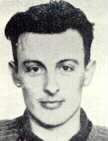
Werner Boost
Serial killer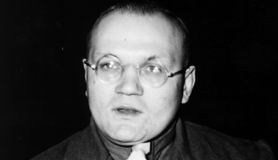 Rudolf Pleil
Serial killer · Germany · 1946
Rudolf Pleil was convicted in connection with manslaughter in the axe killing o…
25 victims
Rudolf Pleil
Serial killer · Germany · 1946
Rudolf Pleil was convicted in connection with manslaughter in the axe killing o…
25 victims
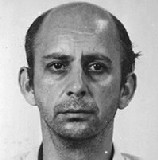 Joachim Kroll
Serial killer · Germany · 1955
Joachim Kroll was sentenced to 9 terms of life-imprisonment on April 8, 1982. H…
13 victims
Joachim Kroll
Serial killer · Germany · 1955
Joachim Kroll was sentenced to 9 terms of life-imprisonment on April 8, 1982. H…
13 victims
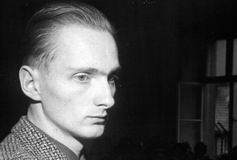 Heinrich Pommerencke
Serial killer · Germany · 1959
Heinrich Pommerencke grew up in the German village of Bentwich and lived as a l…
4 victims
Heinrich Pommerencke
Serial killer · Germany · 1959
Heinrich Pommerencke grew up in the German village of Bentwich and lived as a l…
4 victims
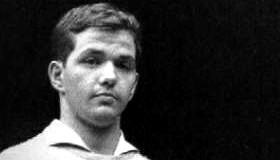 Jürgen Bartsch
Serial killer · Germany · 1962
Jürgen Bartsch was born out of wedlock in post-war Germany. He lost his mother…
4 victims
Jürgen Bartsch
Serial killer · Germany · 1962
Jürgen Bartsch was born out of wedlock in post-war Germany. He lost his mother…
4 victims
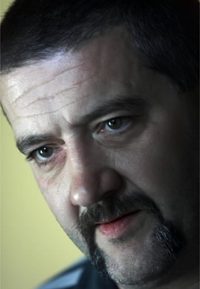 Mark Brandon Read
Murderer? · Australia · 1979
Mark Brandon “Chopper” Read (born 17 November 1954) was an Australian ex-convic…
19 victims
Mark Brandon Read
Murderer? · Australia · 1979
Mark Brandon “Chopper” Read (born 17 November 1954) was an Australian ex-convic…
19 victims
 Lyle & Erik Menendez
Murderers · USA · 1989
Joseph Lyle Menendez (born January 10, 1968) and Erik Galen Menendez (born Nove…
2 victims
Lyle & Erik Menendez
Murderers · USA · 1989
Joseph Lyle Menendez (born January 10, 1968) and Erik Galen Menendez (born Nove…
2 victims
 Roger Gillett
Murderer · USA · 2004
Roger Gillett Sentenced to death on November 3, 2007; convictions and sentences…
2 victims
Roger Gillett
Murderer · USA · 2004
Roger Gillett Sentenced to death on November 3, 2007; convictions and sentences…
2 victims
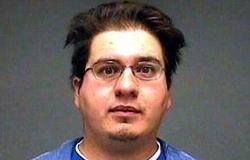 Efren Saldivar
Serial killer · USA · 1989
Efren Saldivar (born 30 September 1969) was an American serial killer who murde…
50 victims
Efren Saldivar
Serial killer · USA · 1989
Efren Saldivar (born 30 September 1969) was an American serial killer who murde…
50 victims
 Elaine Parent
Murderer · USA · 1990
Elaine Antoinette Parent (August 4, 1942–April 6, 2002) was an American crimina…
1 victim
Elaine Parent
Murderer · USA · 1990
Elaine Antoinette Parent (August 4, 1942–April 6, 2002) was an American crimina…
1 victim
 Waneta Ethel Hoyt
Murderer · USA · 1965
Waneta Ethel (Nixon) Hoyt was born in Richford, New York, and died in prison on…
5 victims
Waneta Ethel Hoyt
Murderer · USA · 1965
Waneta Ethel (Nixon) Hoyt was born in Richford, New York, and died in prison on…
5 victims
- Gender
- male
- Country
- Germany
- Location
- Düsseldorf, North Rhine-Westphalia, Germany
- Date of birth
- May 6, 1928
- Age at first offence
- 25
- Characteristics
- rape, rapist, kidnapping
- Victim profile
- Bernd Servé / Friedheim Behre, 26, and his girlfriend Thea Kümann / Fraulein Wissing, 20, and her companion, Peter Falkenberg
- Method of murder
- Shooting - Drowning - Poisoning (cyanide)
- Date(s) of murder
- 1953 - 1956
- Years active
- 1953–1956
- Date of arrest
- June 6, 1956
- Status
-
Life imprisonment
Sentenced to life in prison in 1959
Case details
Werner Boost was a German offender who carried out attacks on lovers’ lanes and committed robberies, rapes, and killings of couples. The case involved drugging victims, shooting, bludgeoning, poisoning with cyanide, and attempts to destroy evidence by burning bodies.
Timeline
- 17 January 1953 — A lawyer named Bernd Serve was sitting with a young male companion in his stationary car on a quiet road leading out of Dusseldorf; two masked figures appeared, one bludgeoning the nineteen-year-old with the butt of his gun, and the other shooting Dr Serve through the head.
- November 1955 — The “Doubles murder” was discovered after Friedheim Behre, a twenty-six-year-old baker, and his girlfriend Thea had been missing for four weeks; villagers from Kalkum, just beyond Dusseldorf, found two battered bodies trapped in their car in a water-filled gravel pit.
- 7 February 1956 — A second “doubles murder” occurred; a twenty-year-old secretary and her companion Peter Falkenberg were reported missing, and police found their extensively bloodstained car the following day.
- 9 February 1956 — The day after that, two bodies later identified as the missing couple were found badly burnt in the smouldering remains of a haystack.
- May 1956 — An abortive attempt at a “double murder” took place in woods near Dusseldorf; a young woman alerted passersby with screams for help and the two attackers fled.
- June 6, 1956 — A forester near Dusseldorf observed an armed man spying on a couple from the trees; he tackled the voyeur and held him for police, who soon identified the prisoner as Werner Boost.
- 1959 — Werner Boost was brought to trial and sentenced to life imprisonment.
Background
Werner Boost was described as a child of post-war Germany who began stealing at age six. He spent several years in a home for delinquents near Magdeburg. He was released for military service near the end of World War II. In 1951, he was incarcerated for stealing scrap metal from cemetery vaults.
The account described darker passions behind his larcenous exterior. Boost acquired a friend, Franz Lohrbach. Franz Lohrbach later told police that Werner “hypnotized” him and compelled him to participate in heinous crimes against his will. At first, Boost and Lohrbach were described as chums who went out target shooting.
The narrative described that Boost managed to concoct a drug to render victims senseless, then stole from the men and raped their companions, “forcing” Lohrbach to participate.
The narrative also stated that old investigations were reopened in connection with a series of murders around Helmstedt, in Lower Saxony, during 1945. It was stated that Boost had been living in the area when several refugees were shot and killed while attempting to cross the border between Russian and British zones of occupation.
The narrative said the case dragged on for years and produced one of the longest indictments in German history.
It was also stated that Boost’s career included stealing and later dishonest activity around guiding parties of East Germans safely, if illegally, over the border into the West. Only in the light of subsequent revelations were a number of unsolved homicides around the border area at the same time laid to Boost’s account.
The offence
Boost was described as committing “lover’s-lane slayer” attacks on couples and as robbing victims.
Robbery and killing of Dr Serve (Dusseldorf)
In the attack on Dr. Serve, described in the narrative as a Dusseldorf businessman, Boost drew a gun and killed the doctor while ordering his sidekick to eliminate the boy. Lohrbach panicked and only knocked out the witness.
Ballistics details were included about the bullet trajectory in the car attack involving Dr Serve:
“Later remarked by ballistics experts that the bullet had taken an unusual trajectory, entering the body below the left jaw and leaving through the right temple, seemingly fired from below the victim as he sat in the driver's seat of the car.”
The narrative further described that Police had a description of their suspects by the time Boost struck again, shooting a young man to death and injecting his date with cyanide. Their bodies were discovered in the ashes of a straw pile, torched in an attempt to wipe out evidence.
“Doubles murders” and the “Dusseldorf Doubles Killer”
The narrative described a “Dusseldorf Doubles Killer” pattern involving couples and stated that the crime was discovered in November 1955.
A further “doubles murder” was described on 7 February 1956, involving a twenty-year-old secretary and her companion, Peter Falkenberg, with police finding their extensively bloodstained car the following day. The next day, the two bodies were found badly burnt in the smouldering remains of a haystack. Both victims had been bludgeoned, and Falkenberg had been shot through the head from the same odd angle observed in the case of Dr. Serve.
An additional abortive “double murder” attempt was described as occurring in May in woods near Dusseldorf. The narrative stated that the young woman alerted passersby with her screams for help and that the two attackers fled.
Third attack and drowning in a pond
A third attack was described as occurring after the Dr Serve murder. Boost chose another courting couple for his third attack, clubbing both unconscious in their car, then sinking the car in a nearby pond and watching them drown.
Investigation and evidence
The narrative said that Police had a description of their suspects by the time Boost struck again after the Dr. Serve killing.
It also described Ballistics tests revealing that Werner’s pistol killed Serve.
For the evidence and the arrest, the narrative stated that on June 6, 1956, a forester near Dusseldorf observed an armed man spying on a couple from the trees. He tackled the voyeur and held him for police, who soon identified the prisoner as Werner Boost.
The narrative also described that in custody, Boost stubbornly denied the lover's lane attacks and said he merely hoped to frighten off the latest couple because public displays of affection made him “see red.” It included a further statement attributed to Boost:
“These sex horrors are the curse of Germany.”
The narrative stated that when news of Boost’s arrest was published, Lohrbach voluntarily surrendered and launched into a marathon confession.
The confession included an explanation of a plan on the night of Dr. Serve’s murder, describing experimentation with a plan to gas victims using toy balloons and cyanide. The narrative stated that the plan was described as using toy balloons and cyanide-filled mechanisms as part of the plan to gas victims.
The narrative also said that Lorbach’s statement to police implicated Werner Boost and described the “hypnotised” compulsion and fear of death to gain compliance.
Arrest
On June 6, 1956, a forester near Dusseldorf observed an armed man spying on a couple from the trees.
Boost surrendered to the ranger without a struggle because, he said, he had been committing no offence. He denied any part in the recent series of attacks and murders and challenged police to prove otherwise.
Trial and sentencing
Werner Boost was eventually brought to trial in 1959. He was sentenced to life imprisonment, which was described as the maximum allowable in postwar German law.
The narrative also stated that for his contribution, Franz Lorbach was put away for six years.
Appeals
No appeals information was included in the provided record.
Outcome
Werner Boost was sentenced to life imprisonment in 1959.
Aftermath
The narrative described that the case dragged on for years, producing one of the longest indictments in German history.
It also included that only in the light of subsequent revelations were unsolved homicides around the border area at the same time laid to Boost’s account.
Other details
The record included additional descriptive material:
- It identified Franz Lohrbach as Boost’s friend who later told police that Werner “hypnotized” him into complicity on pain of his life.
- It described Lorbach exposing a “bizarre fantasy world” and mentioned drugs and poisons with which Boost dreamed he would find the perfect method of murder.
- It stated that Lorbach described one plan to float cyanide-filled balloons into prospective victims’ cars.
- It described a “string of non-fatal rapes and assaults against courting couples who, for reasons best known to himself, Boost considered immoral and degenerate.”
- It included that Boost was eventually brought to trial in 1959 and sentenced to life imprisonment.
- It recorded that Boost’s victims were counted as 5 (but probably more) in the narrative.
- It included the statement: “Boost had transferred his crooked career to Dusseldorf, where he served a prison sentence for plundering metal fittings from graves.”
- It described an “illegitimate son of an East German peasant woman.”
- It included claims about a “dishonest pfennig” used to guide parties of East Germans safely, if illegally, over the border into the West.
- It listed included metadata fields: “SEX: M” “RACE: W” “TYPE: T” “MOTIVE: Sad.” “MO: Lover's-lane slayer of couples” “DISPOSITION: Life sentence, 1959.”
Spotted an error, or have more information about this case?