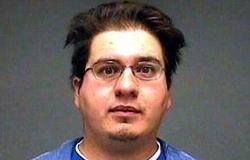
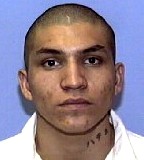
Efren Saldivar
Serial killer Glen Edward Rogers
Serial killer · USA · 1993
Glen Edward Rogers was a spree killer whose cross-country rampage in 1994-95 le…
70 victims
Glen Edward Rogers
Serial killer · USA · 1993
Glen Edward Rogers was a spree killer whose cross-country rampage in 1994-95 le…
70 victims
 Michael Swango
Serial killer · USA · 1981
Michael Swango (Joseph Michael Swango) was a physician and American serial kill…
60 victims
Michael Swango
Serial killer · USA · 1981
Michael Swango (Joseph Michael Swango) was a physician and American serial kill…
60 victims
 Gary Ridgway
Serial killer · USA · 1982
Gary Leon Ridgway Ridgway was born 18-February-1949 in Salt Lake City, UT. He w…
49 victims
Gary Ridgway
Serial killer · USA · 1982
Gary Leon Ridgway Ridgway was born 18-February-1949 in Salt Lake City, UT. He w…
49 victims
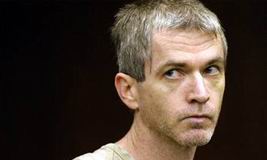 Charles Cullen
Serial killer · USA · 1984
Charles Cullen (born February 22, 1960) was a former nurse and the most prolifi…
45 victims
Charles Cullen
Serial killer · USA · 1984
Charles Cullen (born February 22, 1960) was a former nurse and the most prolifi…
45 victims
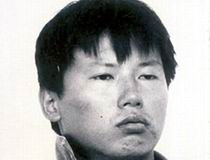 Charles Ng
Serial killer · USA · 1983
Charles Chi-Tat Ng (Chinese: 吳志達/吴志达; born December 24, 1960) was a Chinese-Ame…
25 victims
Charles Ng
Serial killer · USA · 1983
Charles Chi-Tat Ng (Chinese: 吳志達/吴志达; born December 24, 1960) was a Chinese-Ame…
25 victims
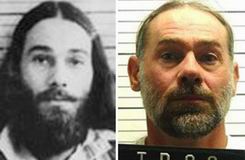 Leonard Edward Smith
Murderer · USA · 1984
Leonard Edward Smith was sentenced to life in prison and was also sentenced to…
2 victims
Leonard Edward Smith
Murderer · USA · 1984
Leonard Edward Smith was sentenced to life in prison and was also sentenced to…
2 victims
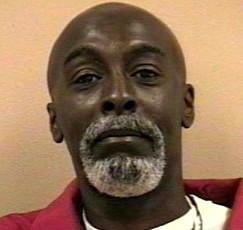 James Edward Thomas
Murderer · USA · 1986
James Edward Thomas moved into the Sir Walter Tourist Home in Raleigh, North Ca…
1 victim
James Edward Thomas
Murderer · USA · 1986
James Edward Thomas moved into the Sir Walter Tourist Home in Raleigh, North Ca…
1 victim
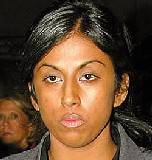 Kelly Forbes
Murderer · USA · 2007
Kelly Forbes, 29, married Michael Forbes, 50, after knowing each other for abou…
1 victim
Kelly Forbes
Murderer · USA · 2007
Kelly Forbes, 29, married Michael Forbes, 50, after knowing each other for abou…
1 victim
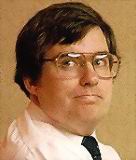 Mark William Hofmann
Murderer · USA · 1985
Mark William Hofmann (born December 7, 1954) was an American counterfeiter, for…
2 victims
Mark William Hofmann
Murderer · USA · 1985
Mark William Hofmann (born December 7, 1954) was an American counterfeiter, for…
2 victims
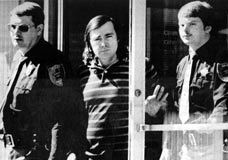 Randall Lee Smith
Murderer · USA · 1981
Randall Lee Smith (1954 – 10 May 2008) was from Pearisburg, Virginia. He was 54…
2 victims
Randall Lee Smith
Murderer · USA · 1981
Randall Lee Smith (1954 – 10 May 2008) was from Pearisburg, Virginia. He was 54…
2 victims
- Gender
- male
- Country
- USA
- Location
- Glendale, Los Angeles County, California, USA
- Date of birth
- September 30, 1969
- Age at first offence
- 20
- Characteristics
- angel of death, rape?, drugs
- Victim profile
- Salbi Asatryan, 75 / Eleanora Schlegel, 77 / Jose Alfaro, 82 / Luina Schidlowski, 87 / Balbino Castro, 87 / Myrtle Brower, 84 (patients)
- Method of murder
- Lethal injections of the muscle relaxants Pavulon or succinylcholine chloride, and/or decreasing their oxygen intake if they were on ventilators
- Date(s) of murder
- 1989 - 1997
- Years active
- 1989–1997
- Date of arrest
- January 10, 2001
- Status
-
Life imprisonment
Pleaded guilty to six counts of murder and received six consecutive life sentences without the possibility of parole on March 12, 2002
Case overview
Efren Saldivar (born 30 September 1969) was an American serial killer who murdered patients while working as a respiratory therapist.
He was described as an “Angel of Death.”
Background
Saldivar was born in Brownsville, Texas.
He graduated from the College of Medical and Dental Careers in North Hollywood in 1988.
He obtained work as a respiratory therapist employed by the Glendale Adventist Medical Center, working the night shift when there were fewer staff on duty.
The offence
Saldivar killed patients by injecting a paralytic drug which led to respiratory and/or cardiac arrest. These drugs could have included Morphine and Suxamethonium chloride, as they were found in his locker with fresh and used syringes.
Pancuronium (brand name Pavulon) was used in six murders. The drug was used to stop a patient's respiration when they were about to be put on a medical ventilator.
Saldivar was careful in selecting victims, choosing those who were unconscious and close to death. This led to no easily detectable rise in the rate or distribution of patient deaths when he was on duty, as many patients simply died sooner than they would have without his intervention.
He told police that he followed criteria for whom to kill: the victims had to be unconscious, had to have a “Do not resuscitate” order, and had to look like they were ready to die.
He allegedly told police that the killings began in 1989, six months after he started working at the hospital, and stopped in August 1997 when he heard that one of his co-workers had seen morphine in his locker.
After initial indications and a confession to fifty murders that he later retracted, his medical employment was ended on March 13, 1998.
Investigation
A two-month internal investigation revealed nothing suspicious after the hospital first heard rumors about hastened patient deaths in April 1997.
A criminal investigation was launched after police received an anonymous phone call on March 3 from a person saying Saldivar “helped a patient die fast.”
Investigators reviewed the deaths of 171 patients who died while Saldivar was working at the hospital.
Fifty-four cases were eliminated because bodies had been cremated.
Of the remainder, 20 deaths were determined to have been suspicious and the bodies were exhumed.
Toxicological tests revealed the presence of the drug Pavulon in the remains of six victims.
Arrest
On March 11, 1998, Saldivar was called in for questioning.
At 3:30 P.M. that afternoon, Will Currie phoned the house in Tujunga where Saldivar had lived since he was a baby and where his parents still kept chickens out back.
Saldivar answered and wanted to come in immediately.
He was placed under arrest at 11:25 p.m.
On the next morning, a search of Saldivar's home found 101 pornographic videos, but no Pavulon or other killing drugs.
There were no incriminating drugs found in the hospital locker either, though Currie found a printout of a lung test.
Saldivar was released after 48 hours due to lack of corroborating evidence.
On January 10, 2001, police rearrested Saldivar and charged him with the deaths of six hospital patients.
Evidence and exhumations
In searching for evidence strong enough to obtain a court conviction, police exhumed the remains of patients who had died while Saldivar had been on duty and been buried rather than cremated.
The marker sought was unusually high levels of Pavulon in the cadaver, since Pavulon remained identifiable for many months unlike succinylcholine chloride and morphine.
After twenty exhumations, six cadavers had evidence of a lethal concentration of Pavulon.
Exhumation days began at 6 a.m. with groundskeepers erecting tents for privacy at that day's cemetery, while a lab worker took soil samples in case a defense attorney argued chemicals seeped in.
By 7:45, a van took the casket to the coroner's office. Detectives discovered rosemary by the entrance and they stuffed handfuls into their masks to counteract the stench inside.
They removed tissues including liver, bladder, thigh muscle, and more.
By 11:30 a.m., the bodies had been sewn up and put back into the caskets for reburial.
They began in April and examined the first four bodies in six days, then exhumed one a week through the summer of 1999.
The drive for the first batch of samples was made to Lawrence Livermore National Laboratory outside Oakland.
During one drive, a highway patrolman spotted their unmarked car going 100 mph up Interstate 5. The patrolman pulled them over. Currie explained they had frozen body parts in the trunk and needed to get them to the lab before they melted. The patrolman asked for identification, then let them go.
Forensic testing
Brian Andresen delivered preliminary testing results.
Succinylcholine chloride broke down too quickly to be detected.
Investigators focused on Pavulon.
After six weeks of preliminary testing, there was no evidence of Pavulon.
The first unusual finding came from tissue from Balbino Castro, 87, who had gotten Pavulon nine days before death as part of regular medical care.
For Pavulon testing, laboratory work continued and Andresen presented further “hits” on three patients on Aug. 21: Castro, Asatryan, and Schidlowski. Pavulon was found in their lungs, kidney, bladder, chest fluid, pericardial fluid, heart tissue, liver and brain.
In the weeks after, Andresen reported three more hits on Jose Alfaro, 82, Eleanora Schlegel, and Myrtle Brower, 84.
By then, the number of positive cases was six.
Charges
On January 10, 2001, District Attorney Steve Cooley announced that a former Glendale Adventist Medical Center respiratory therapist had been charged with murdering six elderly patients who died in 1996 and 1997.
The criminal complaint alleged that all six victims were poisoned, a special circumstance under California law.
The complaint also alleged a second special circumstance of multiple murder.
Besides the six murder counts, Saldivar was charged with receiving stolen property identified as a drug called Versed, which generally was used to induce sleep in patients.
The case had been under investigation by Glendale police since February 1998.
In March 1998, Saldivar had been questioned by police but released pending completion of the investigation.
Victims identified in the complaint
The victims named were:
- Jose Alfaro, 82: admitted on Jan. 2, 1997, died two days later.
- Salbi Asatryan, 75: admitted on Dec. 27, 1996, died three days later.
- Myrtle Brower, 84: admitted Aug. 18, 1997, died 10 days later.
- Balbino Castro, 87: admitted Aug. 6, 1997, died nine days later.
- Luina Schidlowski, 87: admitted Jan. 20, 1997, died two days later.
- Eleanora Schlegel, 77: admitted Dec. 30, 1996, died three days later.
Trial
On March 12, 2002, Saldivar pleaded guilty to those six counts of murder.
Sentencing
On March 12, 2002, Saldivar received six consecutive life sentences without the possibility of parole.
He had pleaded guilty after striking a deal with prosecutors to avoid the death penalty.
Appeals
No appeal information was provided.
Outcome
Saldivar pleaded guilty to six counts of murder and received six consecutive life sentences without the possibility of parole on March 12, 2002.
Aftermath
At news conferences after the arrest, Steve Cooley and Chief Siverling said they saw no need for more exhumations, or for any investigation of earlier deaths, whether at Glendale Adventist or other hospitals.
There was no public outcry, no great demand to learn how many more lives he had taken, and a limited number of lawsuits followed.
Glendale Adventist had begun offering settlements even before the arrest, and some families accepted.
A judge ruled that some families had waited too long, past the statute of limitations.
One family, the family of Salbi Asatryan, accepted a $60,000 settlement.
Another family, that of Jose Alfaro, settled for an undisclosed amount.
Seven lawsuits were filed against the hospital, and four were dismissed.
Saldivar was terminated on March 13, 1998, after his medical employment ended following his confession.
On March 13, 1998, after his confession surfaced in the press on March 25, 1998, he was fired from the hospital and his license was revoked.
After his first release, a judge suspended his state RT’s license.
Saldivar later worked for Budget Rent a Car, cleaning and gassing cars, and he delivered pizza.
He also worked as a customer service agent with TeleChat, a telephone dating service in Spanish and English.
Employees described him as polite and cooperative, and he held the job through the end of 1999.
He later told his boss that he had omitted a detail about his past when applying for the job.
A weeping Carmen Lozano called him to say “Efren, we miss you.”
Saldivar wrote Ed Journet from prison that he was managing well behind bars, with one complaint that the rats came out at night.
Eddie said: “He's comfortable. It's relaxed,” and that he reached the top in the prison pecking order.
Timeline
- March 3, 1998 — Police received an anonymous phone call saying Saldivar “helped a patient die fast.”
- March 12, 1999 — The investigation reached a point where 20 bodies were selected for exhumation.
- March 12, 2002 — Saldivar pleaded guilty to six counts of murder and received six consecutive life sentences without the possibility of parole.
- March 13, 1998 — Saldivar’s medical employment ended.
- March 25, 1998 — Saldivar’s confession surfaced in the press.
- April 1997 — The hospital first heard rumors about hastened patient deaths.
- August 1997 — Saldivar told police the killings stopped.
- January 10, 2001 — Police rearrested Saldivar and charged him with murdering six hospital patients.
- Late November (year not specified) — Cooley asked MacKenzie to take a look at the case.
- Aug. 21 (year not specified) — Andresen reported “hits” on three patients: Castro, Asatryan, and Schidlowski.
- January 2, 1997 — Jose Alfaro was admitted.
- Dec. 27, 1996 — Salbi Asatryan was admitted.
- Aug. 18, 1997 — Myrtle Brower was admitted.
- Aug. 6, 1997 — Balbino Castro was admitted.
- Jan. 20, 1997 — Luina Schidlowski was admitted.
- Dec. 30, 1996 — Eleanora Schlegel was admitted.
Other details
Confession and related statements (verbatim quotations)
Efren Saldivar:
- “To clear me up.”
- “What he told me is that a--a anonymous call came in saying that I'm walking around injecting people for the purpose of killing them. Like an Angel of Death kind of thing.”
- “No.”
- “This is my reservation--there's been a lot of times where I've not actually done it, but, that's why I know it's gonna say, yeah, that I'm lying.”
- “Oh, God. All right. I'll start with the very first time...”
- “I was 19 years old. Fresh out of school... At about 11 o'clock, one of the ICU nurses tells me that there's a patient on life support that was assigned to me.”
- “spread out to the whole body.”
- “The family was 'saying their goodbyes,' and the doctors were planning to turn off the breathing machine.”
- “But when he peeked through the curtains, it 'was still on. . . . I see the patient doing, like, you know, mild breathing motions. . . . And I told the nurse. She goes, 'Oh, we can't have that.' . . . She says, 'The patient's going to die.' '”
- “I go in there. I get both tubes and I connect them.”
- “The patient basically suffocated.”
- “Oh, geez, in the nine years ... and it's not just me--the nurses do it too.”
- “I'd have to say at least 100.”
- “Last week.”
- “OK. Oh, yes. Yes. Yes. Yes. Yes. Maybe. Yes. Yes.”
- “What if, hypothetically . . . what would happen to me if, say, I tried something in the past and I found that it was such a wrong thing that I never did it again?”
- “Gave him something--something to paralyze him.”
- “It was Pavulon... I went in ... and just shot it in.”
- “Right.”
- “It was lights off and quiet.”
- “P-A-V-U-L-O-N.”
- “It makes little difference whether you helped out two patients or 20 or 100.”
- “Are there more than two?”
- “No.”
- “I took credit for a lot more.”
- “Approximately when?”
- “Six, seven years ago.”
- “No. No. No. No. No. Less than 50.”
- “Like I said, I took a lot of credit for stuff that I didn't do.”
- “I need to break here.”
- “What do you want to do?”
- “Take care of my stuff and turn myself in?”
- “Thank you.”
- “I'm going to shame them.”
- “I'm going to be some guy's girlfriend, thinking ahead to prison.”
- “I've already said enough.”
- “I think that's enough to lock me away.”
- “I have a strict criteria. Not like those other ones--those other angels. My criteria was strict. They had to be unresponsive. . . .”
- “Testing, testing.”
- “It's not ethical or humane.”
- “Only when I was only at my wits' end on the staffing, I'd look on the board. 'Who do we gotta get rid of?' ”
- “It was not for personal pleasure. It was not a rush. It was not--it wasn't any of your typical ideas.”
- “Can we barter?”
- “I want--I want to make my phone calls.”
- “ 'Cause I want to call work. . . . People are out there standing. 'Where's Efren?' ”
- “I understand.”
- “The motivation is so flippant.”
- “I don't know if you ever shoplifted a piece of gum or something. You don't plan it.”
- “After that moment, you don't think about it for the rest of the day, or ever.”
- “It was a gradual thing...”
- “I know it's over a hundred.”
- “And that was back in '94.”
- “It has to be less than five.”
- “I lost count after 60.”
- “I made a conscious effort not to remember.”
- “I'm not denying anything.”
- “I'm truly sorry and I ask for forgiveness although I don't expect any.”
- “I know there is nothing I can say,”
- “that can sooth their anger or bring relief to their anxiety.”
Tom Malinowski:
- Tom Malinowski led the internal investigation by Adventist Health.
Officer William Currie:
- “He talked about his anger at seeing patients kept alive as opposed to the guilt he would feel at the failure to provide life-saving care.”
A polygraph examiner asked Saldivar whether he considered himself an “angel of death,” and Saldivar replied:
- “Yes.”
Deputy District Attorney Al Mackenzie:
- “If you're going to do surgery, you're going to put the person on an artificial breathing device,” Mackenzie said.
- “If you give the person the drug Pavulon and don't create an artificial means to breathe, they die.”
Larry Schlegel:
- “It still seems so unreal,” said Larry Schlegel.
Eddie:
- “He's comfortable. It's relaxed,”
- “When it comes to the pecking order, he's now reached the top.”
Named officials and individuals mentioned
Efren Saldivar’s confession was taken in part during questioning involving Will Currie and a polygraph examiner identified as Ervin Youngblood.
A detective named John McKillop supervised his investigation as sergeant of robbery-homicide.
Investigator Tony Futia was involved.
Brian Kelberg headed the medico-legal unit of the Los Angeles County district attorney’s office.
District Attorney Steve Cooley announced charges.
Deputy District Attorney Al MacKenzie handled the case.
Chief Siverling led the Glendale police scene and had a camera present in the caravan during the Jan. 9, 2001 arrest-related questioning sequence.
A witness named Ursula Anderson was referenced as having worked graveyard shifts with Saldivar.
A co-worker reported a “magic syringe” rumor: Bob Baker.
Technical director John Bechthold of the hospital’s respiratory department was mentioned.
Toxicology was performed by Dr. Brian D. Andresen of Lawrence Livermore National Laboratory, with review by Dr. Graham Jones.
Henry Lee was referenced.
A judge suspended state RT’s license and later gave sentencing (no judge name was included in the provided sentencing portion).
People and relationships
Saldivar’s brother was named Eddie.
Saldivar’s friend from the construction job was named Edward Journet.
Saldivar also had a 4-year-old nephew referenced as part of his considerations about what the nephew would think.
A caller tipster was named Grant Brossus, described as having “lady friend” leads toward Ursula Anderson.
A detective identified as Will Currie was previously Saldivar’s partner in Glendale police operations.
Spotted an error, or have more information about this case?