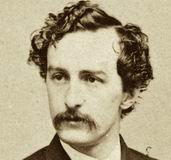
John Wilkes Booth
Assassin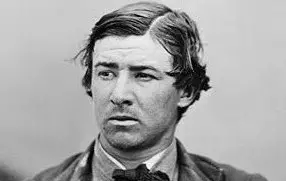 David Herold
Assassin · USA · 1865
David Edgar Herold (16 June 1842 – 7 July 1865) conspired with John Wilkes Boot…
1 victim
David Herold
Assassin · USA · 1865
David Edgar Herold (16 June 1842 – 7 July 1865) conspired with John Wilkes Boot…
1 victim
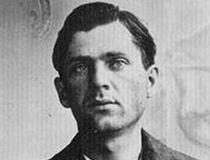 Leon Frank Czolgosz
Assassin · USA · 1901
Leon Frank Czołgosz (1873 – October 29, 1901) was the assassin of U.S. Presiden…
1 victim
Leon Frank Czolgosz
Assassin · USA · 1901
Leon Frank Czołgosz (1873 – October 29, 1901) was the assassin of U.S. Presiden…
1 victim
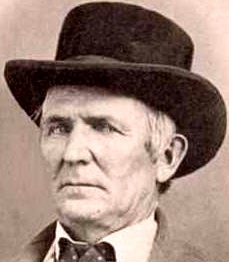 John Doyle Lee
Murderer · USA · 1857
Name: John Doyle Lee Lifespan: September 12, 1812 - March 23, 1877 Legal outcom…
120 victims
John Doyle Lee
Murderer · USA · 1857
Name: John Doyle Lee Lifespan: September 12, 1812 - March 23, 1877 Legal outcom…
120 victims
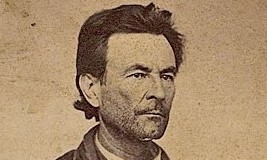 Champ Ferguson
Murderer · USA · 1861
Champ Ferguson was born November 29, 1821 in Clinton County, Kentucky, near the…
100 victims
Champ Ferguson
Murderer · USA · 1861
Champ Ferguson was born November 29, 1821 in Clinton County, Kentucky, near the…
100 victims
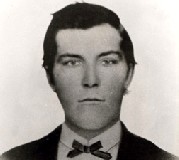 John Wesley Hardin
Murderer · USA · 1867
John Wesley (Wes) Hardin (1853-1895) was an American outlaw, gunfighter, and co…
42 victims
John Wesley Hardin
Murderer · USA · 1867
John Wesley (Wes) Hardin (1853-1895) was an American outlaw, gunfighter, and co…
42 victims
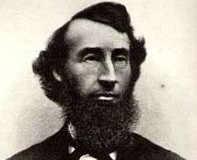 Nathaniel Gordon
Homicide · USA · 1860
Nathaniel Gordon (c.1834 – February 21, 1862) was the first and only American s…
29 victims
Nathaniel Gordon
Homicide · USA · 1860
Nathaniel Gordon (c.1834 – February 21, 1862) was the first and only American s…
29 victims
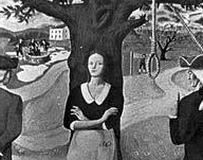 Bathsheba Spooner
Murderer · USA · 1778
Bathsheba Ruggles Spooner (February 15, 1746 – July 2, 1778) was executed by ha…
1 victim
Bathsheba Spooner
Murderer · USA · 1778
Bathsheba Ruggles Spooner (February 15, 1746 – July 2, 1778) was executed by ha…
1 victim
 Esmie Tseng
Homicide · USA · 2005
Name: Esmie Tseng Age: 16 at the time of the incident Role: accused Esmie Tseng…
1 victim
Esmie Tseng
Homicide · USA · 2005
Name: Esmie Tseng Age: 16 at the time of the incident Role: accused Esmie Tseng…
1 victim
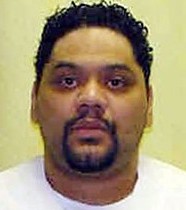 Marvallous Keene
Murderer · USA · 1992
Marvallous Keene was a Black male executed by lethal injection in Ohio on July…
5 victims
Marvallous Keene
Murderer · USA · 1992
Marvallous Keene was a Black male executed by lethal injection in Ohio on July…
5 victims
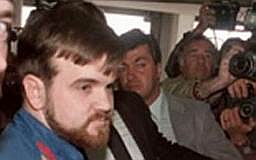 Denis Lortie
Murderer · Canada · 1984
Denis Lortie was a Canadian army corporal in the Royal 22 e Régiment of the Can…
3 victims
Denis Lortie
Murderer · Canada · 1984
Denis Lortie was a Canadian army corporal in the Royal 22 e Régiment of the Can…
3 victims
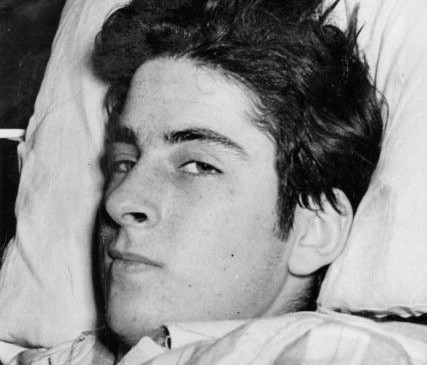 Christopher Craig
Homicide · United Kingdom · 1952
Christopher Craig Christopher Craig was ordered to be detained at Her Majesty's…
1 victim
Christopher Craig
Homicide · United Kingdom · 1952
Christopher Craig Christopher Craig was ordered to be detained at Her Majesty's…
1 victim
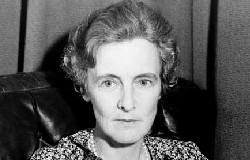 Grace Fortescue
Murderer · USA · 1932
Grace Hubbard Fortescue (née Grace Hubbard Bell; 1883–1979) was a New York soci…
1 victim
Grace Fortescue
Murderer · USA · 1932
Grace Hubbard Fortescue (née Grace Hubbard Bell; 1883–1979) was a New York soci…
1 victim
- Gender
- male
- Country
- USA
- Location
- Washington, D.C., USA
- Date of birth
- May 10, 1838
- Age at first offence
- 27
- Characteristics
- —
- Victim profile
- Abraham Lincoln, 55 (the 16th President of United States)
- Method of murder
- Shooting
- Date(s) of murder
- April 14, 1865
- Years active
- 1865
- Date of arrest
- —
- Status
-
Shot to death by a Union soldier after the barn in which he was hiding was set ablaze on April 26, 1865
Case overview
John Wilkes Booth (May 10, 1838 – April 26, 1865) was an American stage actor who assassinated President Abraham Lincoln at Ford's Theatre in Washington, D.C., on April 14, 1865. Booth was a member of the Booth theatrical family from Maryland and became a well-known actor. He was also a Confederate sympathizer, vehement in his denunciation of Lincoln, and strongly opposed the abolition of slavery in the United States.
Booth and co-conspirators originally plotted to kidnap Lincoln, but later planned to kill Lincoln, Vice President Andrew Johnson, and Secretary of State William H. Seward to help the Confederacy’s cause. Although Robert E. Lee’s Army of Northern Virginia had surrendered four days earlier, Booth believed the Civil War was not yet over because Confederate General Joseph E. Johnston’s army was still fighting the Union Army. Of the conspirators, only Booth succeeded in carrying out his part of the plot.
Booth shot Lincoln once in the back of the head. The President died the next morning. Seward was severely wounded but recovered. Johnson was never attacked.
After the assassination, Booth fled on horseback to southern Maryland and eventually made his way to a farm in rural northern Virginia 12 days later. Booth’s companion gave himself up; Booth refused to surrender and was shot by a Union soldier after the barn in which he was hiding was set ablaze.
Eight other conspirators or suspects were tried and convicted, and four were hanged shortly thereafter.
Timeline
- May 10, 1838 — John Wilkes Booth was born in a four-room log house near Bel Air in Harford County, Maryland.
- 1851 — Adelaide Delannoy Booth’s divorce from Junius Brutus Booth was granted on grounds of adultery; Mary Ann Holmes legally married John Wilkes Booth’s father on May 10, 1851.
- January 23, 1853 — The 14-year-old Booth was baptized at St. Timothy’s Protestant Episcopal Church.
- August 14, 1855 — Booth made his stage debut in the supporting role of the Earl of Richmond in Richard III at Baltimore’s Charles Street Theatre.
- October 5, 1858 — Booth played Horatio in Hamlet with Edwin Booth having the title role.
- April 12, 1861 — The Civil War began.
- December 2, 1859 — Booth attended the hanging of abolitionist leader John Brown executed for leading a raid on the Federal armory at Harpers Ferry.
- November 6, 1860 — Lincoln was elected president.
- March 4, 1865 — Booth attended Lincoln’s second inauguration as the invited guest of his secret fiancée, Lucy Hale.
- March 17, 1865 — Booth learned that Lincoln would be attending a performance at a hospital near the Soldier’s Home.
- April 12, 1865 — After hearing that Robert E. Lee had surrendered at Appomattox Court House, Booth told Louis J. Weichmann that he was done with the stage and that the only play he wanted to present was Venice Preserv’d.
- April 14, 1865 — Booth assassinated President Abraham Lincoln at Ford’s Theatre in Washington, D.C.
- April 15, 1865 — Lincoln died from the bullet wound to his brain at 7:22 a.m.; Booth had been fleeing after the assassination.
- April 20, 1865 — George Atzerodt was tracked down and arrested.
- April 21, 1865 — Booth and Herold were provided with a boat and compass by Jones to cross the Potomac at night, but they navigated upriver and came ashore again in Maryland on April 22.
- April 22, 1865 — Booth and Herold came ashore again in Maryland after their night crossing attempt.
- April 23, 1865 — Booth and Herold reached the Virginia shore near Machodoc Creek before dawn; they made contact with Thomas Harbin; Harbin took Booth and Herold to William Bryant, who supplied them with horses.
- April 24, 1865 — Lieutenant Edward P. Doherty’s detachment steamed 70 miles down the Potomac River, landing at Belle Plain, Virginia, at 10 p.m., and tracked Booth and Herold to Richard H. Garrett’s farm.
- April 26, 1865 — Union soldiers set the barn on fire; David Herold surrendered; Booth refused and was shot by Sergeant Boston Corbett; Booth died three hours later at age 26.
Background
Family, birth, and early life
Booth’s parents were Junius Brutus Booth and his mistress Mary Ann Holmes. They came to the United States from England in June 1821. They purchased a 150-acre farm near Bel Air in Harford County, Maryland, where John Wilkes Booth was born in a four-room log house on May 10, 1838, the ninth of ten children.
He was named after the English radical politician John Wilkes, a distant relative. Junius Brutus Booth’s wife, Adelaide Delannoy Booth, was granted a divorce in 1851 on grounds of adultery, and Holmes legally wed John Wilkes Booth’s father on May 10, 1851, the youth’s 13th birthday.
The same year that Booth’s father married Holmes (1851), he built Tudor Hall on the Harford County property as the family’s summer home while also maintaining a winter residence on Exeter Street in Baltimore in the 1840s–1850s.
As a boy, Booth was athletic and popular, becoming skilled at horsemanship and fencing. He was described as a sometimes indifferent student who attended the Bel Air Academy, where the headmaster described him as “[n]ot deficient in intelligence, but disinclined to take advantage of the educational opportunities offered him. Each day he rode back and forth from farm to school, taking more interest in what happened along the way than in reaching his classes on time”.
In 1850–1851 he attended the Quaker-run Milton Boarding School for Boys located in Sparks, Maryland, and later St. Timothy’s Hall, an Episcopal military academy in Catonsville, Maryland, beginning when he was 13 years old. At the Milton school students recited classical works including those by Herodotus, Cicero, and Tacitus. Students at St. Timothy’s wore military uniforms and were subject to daily formation drills and strict discipline. Booth left school at 14 after his father’s death.
While attending the Milton Boarding School, Booth met a Gypsy fortune-teller who read his palm and pronounced a grim destiny, telling Booth that he would have a grand but short life, doomed to die young and “meeting a bad end”. Booth’s sister recalled that Booth wrote down the palm-reader’s prediction and showed it to his family and others, often discussing its portents in moments of melancholy in later years.
Asia Booth Clarke later recounted that no one church was preeminent in the Booth household; Booth’s mother was Episcopalian and his father was described as a free spirit who preferred a Sunday walk along the Baltimore waterfront with his children to attending church. On January 23, 1853, the 14-year-old Booth was baptized at St. It was reported that he remained an Episcopalian and was buried in an Episcopal ceremony, while Clergyman Charles Chiniquy stated that Booth was a really a Roman Catholic and historian Constance Head declared Booth was of this religion. Head published in 1982 “Insights on John Wilkes Booth from His Sister Asia’s Correspondence,” quoting from a letter by Asia Booth Clarke in which she wrote that her brother was a Roman Catholic. Clarke’s memoir was published after her death. Terry Alford said: “Asia Booth Clarke's memoir of her brother John Wilkes Booth has been recognized as the single most important document available for understanding the personality of the assassin of President Abraham Lincoln” and “no outsider could give such insights into the turbulent Booth‘s childhood or share such unique personal knowledge of the gifted actor”.
Court testimony given at the trial of John Surratt showed that at his death, Booth had a Catholic medal on his person. Court evidence also showed his attending a Roman Catholic Church service on at least two occasions.
Constance Head stated: “In any case, it seems certain that Booth did not publicize his conversion during his lifetime. And while there is no reasonable cause to connect Booth's religious preference and his 'mad act', the few who knew of his conversion must have decided after the assassination that for the good of the church, it was best never to mention it. Thus the secret remained so well guarded that even the most rabidly anti-Catholic writers who tried to depict the assassination of Lincoln as a Jesuit or Papist plot were puzzled by the seemingly accurate information that John Wilkes Booth was an Episcopalian.”
Education and youth interests
By the age of 16, Booth was interested in theatre and in politics. He became a delegate from Bel Air to a rally by the Know Nothing Party for Henry Winter Davis, the anti-immigrant party’s candidate for Congress in the 1854 elections.
Aspiring to follow in the footsteps of his father and his actor brothers, Edwin and Junius Brutus, Jr., Booth began practicing elocution daily in the woods around Tudor Hall and studying Shakespeare.
The offence
Plot changes and targets
As the 1864 Presidential election drew near, Booth’s rage towards Lincoln grew as the Confederacy’s prospects for victory declined. He formulated plans to kidnap Lincoln from his summer residence at the Old Soldiers Home near the White House and smuggle him across the Potomac River into Richmond so that Lincoln would be exchanged for release of Confederate Army prisoners held in Northern prisons, bringing the war to an end by emboldening opposition in the North or forcing Union recognition of the Confederate government.
Booth recruited Samuel Arnold and Michael O’Laughlen as accomplices. They met often at the house of Maggie Branson, described as a known Confederate sympathizer, at 16 North Eutaw Street in Baltimore. Booth met with several well-known Confederate sympathizers at The Parker House in Boston. He made an unexplained trip to Montreal for ten days, staying at St. Lawrence Hall, described as a rendezvous for the Confederate Secret Service, and meeting several Confederate agents there.
After Lincoln’s landslide re-election in early November 1864, Booth devoted increasing energy and money to his kidnap plot and assembled a loose-knit band including David Herold, George Atzerodt, Lewis Powell (also known as Lewis Payne or Paine), and John Surratt, a rebel agent. They began to meet routinely at the boarding house of Surratt’s mother, Mrs. Mary Surratt.
Booth argued vehemently with his older pro-Union brother Edwin about Lincoln and the war, and Edwin told him he was no longer welcome at his New York home. Booth also railed against Lincoln in conversations with his sister Asia, saying: “That man's appearance, his pedigree, his coarse low jokes and anecdotes, his vulgar similes, and his policy are a disgrace to the seat he holds. He is made the tool of the North, to crush out slavery.” As the Confederacy’s defeat became more certain in 1865, Booth decried the end of slavery and Lincoln’s election to a second term, “making himself a king”, in “wild tirades,” as his sister recalled.
Booth attended Lincoln’s second inauguration on March 4 as the invited guest of his secret fiancée, Lucy Hale. There was no attempt to assassinate Lincoln during the inauguration. Later Booth remarked about his “excellent chance ... to kill the President, if I had wished.”
Shift from kidnapping to assassination
After hearing on April 12, 1865 that Robert E. Weichmann, a friend of John Surratt, and a boarder at Mary Surratt’s house, that he was done with the stage and that “the only play he wanted to present henceforth was Venice Preserv'd.” Weichmann did not understand the reference.
With the Union Army’s capture of Richmond and Lee’s surrender, Booth’s kidnapping scheme was no longer feasible and he changed his goal to assassination. The previous day Booth had been in the crowd outside the White House when Lincoln gave an impromptu speech from his window. When Lincoln stated he was in favor of granting suffrage to former slaves, Booth declared it would be “the last speech Lincoln would ever make.”
On the morning of Good Friday, April 14, 1865, Booth went to Ford’s Theatre to get his mail. He was told by John Ford’s brother that President and Mrs. Lincoln, accompanied by Gen. and Mrs. Ulysses S. Grant, would be attending Our American Cousin that evening. Booth set about making plans for the assassination, including arranging with livery stable owner James W. Pumphrey for a getaway horse and an escape route.
Booth informed Powell, Herold, and Atzerodt of his intention to kill Lincoln and assigned Powell to assassinate Secretary of State William H. Seward and Atzerodt to assassinate Vice President Andrew Johnson, while Herold would assist in their escape into Virginia.
Booth attempted to target Lincoln and also plan killings aimed at two immediate successors to the presidency. He hoped assassinations would create chaos so that the Confederate government could reorganize or, failing that, avenge the South’s defeat.
Assassination at Ford’s Theatre
On April 14, 1865, around 10 p.m., Booth slipped into Lincoln’s box and shot him in the back of the head with a .44 caliber Derringer.
Booth’s escape was almost thwarted by Major Henry Rathbone, who was present in the presidential box with Mrs. Mary Todd Lincoln. Booth stabbed Rathbone when Rathbone lunged at him. Clara Harris, Rathbone’s fiancée, was unhurt.
Booth then jumped from the presidential box to the stage. He raised his knife and shouted “Sic semper tyrannis” (Latin for “Thus always to tyrants,” attributed to Brutus at Caesar’s assassination and the Virginia state motto), while others said he added, “I have done it, the South is avenged!”
Various accounts stated Booth injured his leg when his spur snagged a decorative U.S. Treasury Guard flag while leaping to the stage. Historian Michael W. Kauffman questioned this legend, contending that eyewitness accounts made it unlikely that his leg was broken then and arguing that Booth was injured later during his flight when his horse tripped and fell on him.
Powell was able to stab Seward, who was bedridden due to an earlier carriage accident, and although badly wounded, Seward survived. Atzerodt lost his nerve, spent the evening drinking, and never made an attempt on Johnson’s life.
Response and immediate flight
In the ensuing pandemonium inside Ford’s Theatre, Booth fled by a stage door to the alley, where his getaway horse was held for him by Joseph “Peanuts” Burroughs. Booth arranged for Edmund Spangler to handle the horse so Burroughs could hold it.
Booth fled with David Herold into southern Maryland, using an escape route intended to take advantage of sparsely settled terrain and dense forests and swampy areas described as ideal for escape into rural Virginia. At midnight, Booth and Herold arrived at Surratt’s Tavern on the Brandywine Pike, 9 miles from Washington, where they had stored guns and equipment earlier in the year as part of the kidnapping plot.
They continued southward, stopping before dawn on April 15 at Dr. Samuel Mudd’s home in St. Catharine, 25 miles from Washington, for treatment of Booth’s injured leg. Mudd later said Booth told him the injury occurred when his horse fell. The next day they arrived at Samuel Cox’s home around 4 a.m., and Cox contacted Thomas A. Jones, described as his foster brother and a Confederate agent in charge of spy operations in the southern Maryland area since 1862.
The War Department advertised a $100,000 reward for information leading to the arrest of Booth and his accomplices, and Federal troops were dispatched to search southern Maryland extensively.
Booth read accounts of national mourning reported in newspapers brought to him by Jones and by April 20 was aware that some co-conspirators had been arrested: Mary Surratt, Powell, Arnold, and O’Laughlen.
On April 21, Booth wrote in a journal entry while awaiting nightfall before crossing the Potomac into Virginia: “For six months we had worked to capture. But our cause being almost lost, something decisive and great must be done. I struck boldly, and not as the papers say. I can never repent it, though we hated to kill.”
Booth and Herold crossed the Potomac at night on April 21 but mistakenly navigated upriver, coming ashore again in Maryland on April 22. On April 23, after reaching the Virginia shore near Machodoc Creek before dawn, they contacted Thomas Harbin, who took them to another Confederate agent, William Bryant, who supplied horses.
Investigation, pursuit, and capture
Pursuit operations
Lieutenant Edward P. Doherty was dispatched from Washington at 2 p.m. on April 24 with a detachment of 26 Union soldiers from the 16th New York Cavalry Regiment to capture Booth in Virginia. The detachment steamed 70 miles down the Potomac River on a boat and landed at Belle Plain, Virginia, at 10 p.m. with Lieutenant Colonel Everton Conger, an intelligence officer assigned by Lafayette Baker. The pursuers crossed the Rappahannock River and tracked Booth and Herold to Richard H. Garrett’s farm just south of Port Royal, Caroline County, Virginia.
Booth and Herold had been led to the farm on April 24 by William S. Jett, a former private in the 9th Virginia Cavalry. Booth was introduced to the Garretts as “James W. Boyd,” described as a Confederate soldier wounded in the battle of Petersburg who was returning home. Garrett’s 11-year-old son Richard was an eyewitness. In later years Richard became a Baptist minister and widely lectured on Booth’s demise at his family’s farm. In 1921 Garrett’s lecture was published in the Confederate Veteran as the “True Story of the Capture of John Wilkes Booth.”
After Booth learned of Johnston’s army surrender and later of Lincoln’s death and the reward for Booth’s capture, Booth asked whether the family would turn in the fugitive if they had the opportunity. He also told the Garretts he intended to reach Mexico.
The pursuers tracked down Jett, who was interrogated. Before dawn on April 26, soldiers caught up with Booth and Herold while they were hiding in Garrett’s tobacco barn.
Final moments and killing
David Herold surrendered, but Booth refused Conger’s demand to surrender, saying “I prefer to come out and fight.” The soldiers set the barn on fire. Sergeant Boston Corbett shot Booth as Booth moved about inside the blazing barn.
Conger’s report to Stanton stated that Corbett shot Booth “without order, pretext or excuse” and recommended punishment for Corbett for disobeying orders to take Booth alive.
Booth was fatally wounded in the neck, dragged from the barn to the porch of Garrett’s farmhouse, and died three hours later at age 26. The bullet pierced three vertebrae and partially severed his spinal cord, paralyzing him. In his dying moments, Booth reportedly whispered, “Tell my mother I died for my country.” He asked that his hands be raised to his face so he could see them, and his last words were “Useless, useless,” as dawn was breaking.
In Booth’s pockets were found a compass, a candle, pictures of five women including actresses Alice Grey, Helen Western, Effie Germon, Fannie Brown, and Booth’s fiancée Lucy Hale, and his diary. In the diary Booth had written of Lincoln’s death: “Our country owed all her troubles to him, and God simply made me the instrument of his punishment.”
Shortly after Booth’s death, Edwin Booth wrote to Asia, saying: “Think no more of him as your brother; he is dead to us now, as he soon must be to all the world, but imagine the boy you loved to be in that better part of his spirit, in another world.” Asia also had a sealed letter Booth had given her in January 1865 for safekeeping, only to be opened upon his death.
In the letter Booth wrote: “I know how foolish I shall be deemed for undertaking such a step as this, where, on one side, I have many friends and everything to make me happy ... to give up all ... seems insane; but God is my judge. I love justice more than I do a country that disowns it, more than fame or wealth.”
The letter, seized along with other family papers at Asia’s house by Federal troops and published while the manhunt was underway, included Booth’s reasons for plotting against Lincoln. In the letter he said: “I have ever held the South was right. The very nomination of Abraham Lincoln, four years ago, spoke plainly war upon Southern rights and institutions.” He wrote that “The institution of ‘African slavery,’” was “one of the greatest blessings that God has ever bestowed upon a favored nation,” and that Lincoln’s policy was one of “total annihilation.”
Trial and convictions of co-conspirators
After Booth’s death, eight other implicated people were tried by a military tribunal in Washington, D.C., and found guilty on June 30, 1865.
Mary Surratt, Lewis Powell, David Herold, and George Atzerodt were hanged in the Old Arsenal Penitentiary on July 7, 1865. Samuel Mudd, Samuel Arnold, and Michael O’Laughlen were sentenced to life imprisonment at Fort Jefferson in Florida’s Dry Tortugas, and Edmund Spangler was given a six-year term in prison. O’Laughlen died in a yellow fever epidemic there in 1867. The others were eventually pardoned in February 1869 by President Andrew Johnson.
The military tribunal was ordered by then-President Andrew Johnson on May 1, 1865, and presided over by Major General David Hunter.
Details of the tribunal proceedings
The nine-member commission was presided over by Major General David Hunter. Other voting members were Major General Lew Wallace, Brigadier Generals Robert Sanford Foster, Thomas Maley Harris, Albion P. Howe, and August Kautz, Colonels James A. Ekin and Charles H. Tompkins, and Lieutenant Colonel David Ramsay Clendenin. The prosecution team was led by U.S. Army Judge Advocate General Joseph Holt, assisted by Congressman John A. Bingham and Major Henry Lawrence Burnett. The transcript was recorded by Benn Pitman and several assistants and published in 1865.
The trial lasted about seven weeks with 366 witnesses testifying. All defendants were found guilty on June 30, and sentencing decisions included death by hanging for Mary Surratt, Lewis Powell, David Herold, and George Atzerodt, and life in prison for Samuel Mudd, Samuel Arnold, and Michael O’Laughlen. Mudd escaped execution by a single vote, with the tribunal voting 5–4 against hanging him.
The tribunal also sentenced Edmund Spangler to imprisonment for six years. After sentencing Mary Surratt to hang, five jurors signed a letter recommending clemency, but Johnson refused to stop the execution, and Johnson later claimed he never saw the letter. Mary Surratt was the first woman executed by the United States government.
Aftermath
Lincoln’s death and immediate scene
Lincoln died from the bullet wound to his brain at 7:22 a.m. on April 15, 1865; he was 56 years old. Mary Lincoln was not present at the time of his death.
Burial and remains
Booth’s body was shrouded in a blanket and tied to the side of an old farm wagon for the trip back to Belle Plain. There, his corpse was taken aboard the ironclad USS Montauk and brought to the Washington Navy Yard for identification and an autopsy. More than ten people who knew Booth identified the body as Booth based on features including a tattoo on his left hand with his initials J.W.B. and a scar on the back of his neck. The third, fourth, and fifth vertebrae were removed during the autopsy to allow access to the bullet; these bones were kept on display at the National Museum of Health and Medicine in Washington, D.C.
Booth’s body was buried in a storage room at the Old Penitentiary and later moved to a warehouse at the Washington Arsenal on October 1, 1867. In 1869 the remains were identified again and released to the Booth family, who buried him in the family plot at Green Mount Cemetery in Baltimore after a burial ceremony conducted by Fleming James, minister of Christ Episcopal Church, in the presence of more than 40 people.
Wider impacts
Eight others implicated in Lincoln’s assassination were tried and convicted by military tribunal on June 30, 1865, and those outcomes followed in July 1865. Forty years later, a border state official reflected on Lincoln’s assassination during the 1909 centenary of Lincoln’s birth, describing public services by Confederate veterans and expression of sentiment that “had Lincoln lived” reconstruction might have been softened and the era of good feeling ushered in earlier.
A century later, it was concluded that for millions of people, particularly in the South, it would be decades before the impact of the Lincoln assassination began to release its hold on their lives.
Theories of escape and later developments involving his remains
In 1907, Finis L. Bates wrote Escape and Suicide of John Wilkes Booth, contending that a Booth look-alike was mistakenly killed while Booth eluded pursuers. Bates said the look-alike assumed the pseudonym “John St. Helen,” settled on the Paluxy River near Glen Rose, Texas, later moved to Granbury, Texas, became gravely ill, made a deathbed confession, recovered, fled, and eventually committed suicide in 1903 in Enid, Oklahoma, under the alias “David E. George.” Bates also contended that “St. Helen’s” mummified body was exhibited in carnival sideshows.
In 1913, the Maryland Historical Society published an account by then-Baltimore mayor William M. Pegram who had viewed Booth’s remains upon the casket’s arrival at the Weaver funeral home in Baltimore on February 18, 1869 for burial at Green Mount Cemetery. Pegram submitted a sworn statement that the body he saw in 1869 was Booth’s. Others identifying the body included Booth’s mother, brother, and sister, along with his dentist and other Baltimore acquaintances. Earlier, The New York Times published an account by their reporter in 1911 detailing the burial at the cemetery and those who witnessed it.
A rumor was periodically revived in later years, including the 1920s when a corpse advertised as the “Man Who Shot Lincoln” was exhibited on a national tour by a carnival promoter. In 1938, the Saturday Evening Post reported an exhibitor’s claim to have obtained “St. Helen’s” corpse from Bates’ widow. In 1977, The Lincoln Conspiracy contended there was a government plot to conceal Booth’s escape; it revived interest and prompted display of the mummified body in Chicago. It was made into a feature film theatrically released in 1977.
In 1994, two historians and descendants sought a court order for exhumation of Booth’s body at Green Mount Cemetery intended to prove or disprove longstanding theories on Booth’s escape via photo-superimposition analysis. The application was blocked by Baltimore Circuit Court Judge Joseph H. H. Kaplan, who cited among other things “the unreliability of petitioners' less-than-convincing escape/cover-up theory” as a major factor. The Maryland Court of Special Appeals upheld the ruling. No gravestone marks the precise location where Booth is buried.
In December 2010, descendants of Edwin Booth reported that they obtained permission to exhume the Shakespearean actor’s body to obtain DNA samples. Bree Harvey, a spokesperson from Mount Auburn Cemetery in Cambridge, Massachusetts, refuted reports that the family had contacted them and requested to exhume Edwin’s body. The family hoped to obtain DNA samples from artifacts belonging to John Wilkes or from remains such as vertebrae stored at the National Museum of Health and Medicine in Maryland. On March 30, 2013, museum spokesperson Carol Johnson announced the family’s request to exhume DNA from the vertebrae had been rejected.
Portrayals in film
In 2011, Booth was portrayed by Toby Kebbell in the Robert Redford film The Conspirator.
Spotted an error, or have more information about this case?