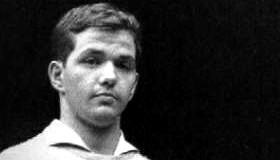
Jürgen Bartsch
Serial killer Joachim Kroll
Serial killer · Germany · 1955
Joachim Kroll was sentenced to 9 terms of life-imprisonment on April 8, 1982. H…
13 victims
Joachim Kroll
Serial killer · Germany · 1955
Joachim Kroll was sentenced to 9 terms of life-imprisonment on April 8, 1982. H…
13 victims
 Werner Boost
Serial killer · Germany · 1953
Werner Boost was a German offender who carried out attacks on lovers’ lanes and…
5 victims
Werner Boost
Serial killer · Germany · 1953
Werner Boost was a German offender who carried out attacks on lovers’ lanes and…
5 victims
 Fritz Honka
Serial killer · Germany · 1971
Fritz Honka Fritz Honka was a German serial killer. He killed at least four pro…
4 victims
Fritz Honka
Serial killer · Germany · 1971
Fritz Honka Fritz Honka was a German serial killer. He killed at least four pro…
4 victims
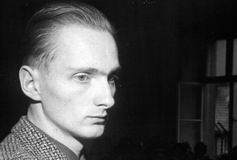 Heinrich Pommerencke
Serial killer · Germany · 1959
Heinrich Pommerencke grew up in the German village of Bentwich and lived as a l…
4 victims
Heinrich Pommerencke
Serial killer · Germany · 1959
Heinrich Pommerencke grew up in the German village of Bentwich and lived as a l…
4 victims
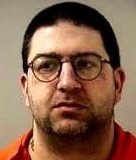 Adam Norcross
Murderer · USA · 1996
Adam W. Norcross (born 07/25/1970) was convicted of Murder 1st and was sentence…
1 victim
Adam Norcross
Murderer · USA · 1996
Adam W. Norcross (born 07/25/1970) was convicted of Murder 1st and was sentence…
1 victim
 Charles Jason Baldwin
Homicide · USA · 1993
Charles Jason Baldwin was born April 11, 1977. At the time of his arrests, Jaso…
3 victims
Charles Jason Baldwin
Homicide · USA · 1993
Charles Jason Baldwin was born April 11, 1977. At the time of his arrests, Jaso…
3 victims
 Mick Philpott
Homicide · United Kingdom · 2012
Michael “Mick” Philpott was an Englishman who had gained notoriety as a crimina…
6 victims
Mick Philpott
Homicide · United Kingdom · 2012
Michael “Mick” Philpott was an Englishman who had gained notoriety as a crimina…
6 victims
 Gerald Lee Mitchell
Homicide · USA · 1985
Gerald Lee Mitchell (offender, #838) was executed by lethal injection on Octobe…
2 victims
Gerald Lee Mitchell
Homicide · USA · 1985
Gerald Lee Mitchell (offender, #838) was executed by lethal injection on Octobe…
2 victims
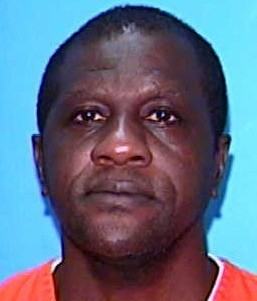 Lucious Boyd
Murderer · USA · 1998
Lucious Boyd was convicted in Broward County, Florida, in connection with the m…
1 victim
Lucious Boyd
Murderer · USA · 1998
Lucious Boyd was convicted in Broward County, Florida, in connection with the m…
1 victim
- Gender
- male
- Country
- Germany
- Location
- Bonn, Germany
- Date of birth
- November 6, 1946
- Age at first offence
- 16
- Characteristics
- sadist, pedophile, dismemberment, torture, rape
- Victim profile
- Klaus Jung, 8 / Peter Fuchs, 13 / Ulrich Kahlweiss, 12 / Manfred Grassmann, 12
- Method of murder
- Hitting with a hammer / Strangulation
- Date(s) of murder
- 1962 - 1966
- Years active
- 1962–1966
- Date of arrest
- June 22, 1966
- Status
-
Died during voluntary surgical castration on April 28, 1976
Case record: Jürgen Bartsch
Background
Jürgen Bartsch was born out of wedlock in post-war Germany. He lost his mother at the age of five months and was adopted after spending eleven months in a foundling home.
Bartsch was born in Essen and was given the original name “Karl-Heinz Sadrozinski”. He was later called Jürgen Bartsch.
His birth mother had tuberculosis, and she died soon afterward. During the early months of his life, Bartsch was cared for by nurses. At eleven months old, he was adopted by a professional animal slaughterer and his wife. The adoption took place after he spent time in a foundling home.
Bartsch entered school at age 10. Because his parents considered the schooling insufficiently strict, he was moved to a Catholic boarding school. While bed-ridden with fever, he was molested by the choir leader, Pater Pütz.
Bartsch’s adoptive mother had obsessive-compulsive disorder and was fixated on cleanliness. He was not permitted to play with other children lest he became dirty. Her practice of bathing Bartsch personally continued until his arrest.
At the time of his upbringing, Bartsch alternately received contempt and extravagant attention from his adoptive home. His adopted “mother” insisted on bathing him through adolescence and beyond. Clothing had to be folded and put in the shelf in military style.
Bartsch did not like working as a butcher. He accepted his father’s offer to become a butcher. He later mostly worked as a sales person at the meat counter in the shop.
Bartsch traveled through the neighborhood frequently and often used taxis. He stole money from the cash register of his parents’ butcher shop where he worked. He also used the small delivery van of the shop to a lesser extent.
Bartsch was described as a polite and mild boy and was not suspected of theft despite money leaving the cash register.
In prison and in the psychiatric hospital, Bartsch’s mother and an aunt were his prime contacts to his family. The two women were allowed to send him crime novels, comic books and magic tricks.
The offence
By 1967, Bartsch, now 17, was a butcher’s apprentice living with his adoptive parents in Bonn, West Germany. He was a sadistic pedophile who was responsible for the torture-slayings of four young boys he lured to an abandoned mine shaft. He killed each boy after brutalizing and sexually abusing them.
Bartsch also attempted to kill a fifth boy.
In his method, Bartsch lured boys to an abandoned mine or air-raid shelter used in the war. He forced the boys to undress and then sexually abused them. He attained their obedience by beating them. He tied up the boys, manipulated their genitals, and killed the children by beating or strangulation.
After the murders, he cut bodies into pieces and generally dismembered most of the bodies. The dismemberment included decapitation and removal of genitals. He emptied body cavities and partially buried remains inside the tunnel.
His stated actual goal was to very slowly torture victims to death. The final victim during his last murder was left restrained in an unused air-raid shelter, and the boy escaped.
Bartsch attempted anal intercourse with the victims but failed in the attempts described. He masturbated without ejaculation at times described and emphasized that he reached sexual climax while cutting flesh after victims’ death.
A final and central fantasy was described as skinning a live child with soft skin and few hair. He dismembered children and ejaculated onto flesh. He did not openly comment on whether he ate flesh; he said he touched it with his lips.
In several described cases, Bartsch used avoidance strategies, including stories told to children about working as a detective or for an insurance company and needing a witness to recover a suitcase full of diamonds from the tunnel. He also invited children for apple juice in a pub and offered them money.
Bartsch sometimes hung out at parish fairs and invited children for free rides. Parish fairs attracted poor and homeless people and those from a less respected social background, and he used anonymity in that setting to talk to children.
He sometimes carried a very large suitcase thinking he could transport children, but he got rid of it after being asked why he was carrying a “children’s coffin” (“Kinder-Sarg”). After it became known he visited parish fairs, he was called “parish fair killer,” later switching to “beast” (Bestie), an expression he sometimes used as a joke to sign letters out of prison or out of the psychiatric institution to friends.
He partially buried remains inside the tunnel to hide tissue and bones from children who might have come inside playing.
Timeline
- 1961 — Bartsch murdered his first victim, Klaus Jung.
- 1962 — Bartsch committed first murder, described as a boy named Klaus Jung.
- 1965 — Bartsch killed a second boy, Peter Fuchs, near Essen-Holsterhausen on a date described as “7 Aug 1965”.
- 7 Aug 1965 — Bartsch murdered a third boy, Ulrich Kahlweiss, with repeated hammer blows to the head.
- 1965 — Bartsch’s next victim was Peter Fuchs, killed four years later in 1965.
- 1966 — Bartsch murdered a fourth boy, Manfred Grassmann.
- 18 Jun 1966 — Bartsch tried for a fifth boy, Peter Frese, age 5; after leaving for dinner and television, the boy was restrained and escaped.
- 22 Jun 1966 — Bartsch was arrested after the kidnapping and attempted murder of boy Peter Frese.
- 30 Nov 1966 — Trial began; Bartsch was sentenced to life imprisonment and attempted suicide several times.
- December 15, 1967 — Bartsch was sentenced to life imprisonment by the Wuppertal regional court.
- 1969 — In January 1969, Hans Giese wrote that Bartsch must not try again to bring his life to an end.
- August 1968 — A note to Hans Giese was written on a printed Christmas card.
- 6 Apr 1971 — Appeal; more information was brought forward regarding his parent’s treatment; the new sentence was ten years plus further psychiatric care.
- 1971 — In April 1971, the German Federal Court of Justice reduced the sentence on appeal to 10 years juvenile detention and placement under psychiatric care in Eickelborn.
- Mar 1971 — Plea bargaining; sentenced to ten years and further psychiatric care.
- 15 Nov 1972 — Residence at Rottland, a nursing home near Eickelborn.
- 15 Feb 1973 — Engaged to nurse Gisela.
- 1974 — Bartsch married Gisela at his hospital.
- 1976 — Bartsch submitted to voluntary castration as part of his overall rehabilitation program.
- April 28, 1976 — Bartsch died during a surgical procedure on the operation table due to an error in the anesthetic procedure described as a Halothane overdose.
Investigation and arrest
Bartsch was arrested in 1966 after an unsuccessful attempt to torture, kill and dismember Peter Frese. Frese was left in an unused air raid shelter, and he freed himself by burning his ties with a candle flame while Bartsch had gone home to eat and watch TV with his parents.
Bartsch had left two burning candles in the tunnel before abandoning Frese. Frese put out the first candle while trying to burn his ties and succeeded in burning his ties at his ankles with the second candle, allowing escape.
Bartsch had been arrested after a described unsuccessful attempt to torture, kill and dismember a young boy. Before that attempt, Bartsch was described as having killed four boys between 1962 and 1966. He was estimated to have undertaken more than one hundred further homicidal attempts.
Upon arrest, Bartsch confessed openly to his crimes.
Trial
The first trial was held in 1967 at the High Court (Landgericht) in Wuppertal. The hearings lasted only days. Bartsch was treated under adult law and was found fully legally responsible. He lost all civil rights.
Bartsch was sentenced to technically “5x life-long imprisonment (-125 years)” for 4 homicides, 1 attempted homicide, abduction of children, and sexual contact to children.
In the first trial, the homosexuality element was described as still being illegal in Germany at the time but not an issue at the trial.
A motion for appeal argued that Bartsch had not been examined sufficiently, that he was still in the developmental stage of a juvenile, and that he was generally not responsible due to his mental constitution.
The German Federal High Court revised the case and agreed the Wuppertal court should have consulted an expert specialized in psychopathology of human sexuality, not just psychiatry. “Specialist statements about mental states in relation to sex drive anomalities” were requested.
At the second trial in 1971, held again at a district court, a very high number of experts were present. The court had 2 human geneticists/anthropologists/forensic biologists, 3 psychologists, 5 psychiatrists, and the director of the only German university based Institute for Sexology. Two of the three psychiatric experts from the first trial were rejected as experts as requested by the defense, including one by self-rejection.
Five experts’ testimony was considered relevant by the court. The conclusions described were that at the time of the crimes, Bartsch was not yet matured enough and was a juvenile offender, and his responsibility was reduced because he could not fully control sadistic impulses. This was contrasted with the District Court of Wuppertal’s judgment from December 15, 1967.
The District Court of Wuppertal judgment from December 15, 1967 included the following quoted statements:
"considering the structure of the defendant's personality based on the opininon given by 3 expert witnesses it has to be stated, that the defendant had already completed the process of developing his personality."
"The defendant could have controlled his impulses anytime."
An extract from the judgment of the District Court of Wuppertal, April 6, 1971 included the following quoted statements:
"The defendant clearly was still in the state of developement concerning bis social skills and bis moral maturity due to his personal disposition, bis childhood experiences and upbringing."
"The defendant could not escape bis sadistic fantasies which eventually overcame all moral boundaries and culminated in thefulfillment of his desires. The defendant's responsibility in juridical terms was therefore reduced to a considerable extent. "
The maximum sentence for juveniles was applied as described: 10 years of incarceration served in a mental institution, followed by preventive detention.
Bartsch was described as having attempted suicide several times after sentencing.
Sentencing
Bartsch was sentenced to life imprisonment on December 15, 1967, by the Wuppertal regional court.
On appeal in 1971, the German Federal Court of Justice of Germany reduced the sentence to 10 years juvenile detention and ordered placement under psychiatric care in Eickelborn.
A further description indicated the reduction included credit for time already served.
The sentence was adjusted in April 1971 after the appeal.
Appeals
The Supreme Court of Germany overturned Bartsch’s conviction on grounds that the lower court improperly ignored psychiatric evidence and that Bartsch was a minor when the crimes took place. The Supreme Court was described as basing its view on psychiatrists’ information that Bartsch’s actions were a product of sexual compulsion beyond his conscious control.
In 1971, the Federal Court of Justice of Germany on appeal reduced the sentence to 10 years juvenile detention and to be placed under psychiatric care in Eickelborn.
Aftermath
Bartsch lived in a psychiatric hospital after the second trial. He obtained permission to marry a woman who had written letters to him. He married Gisela in 1974 at his hospital.
Bartsch was engaged to nurse Gisela on 15 February 1973.
Bartsch’s residence at Rottland, a nursing home near Eickelborn, was noted on 15 November 1972.
Forensic psychiatrists considered various therapy concepts including psychotherapy, castration and psychosurgery. Bartsch initially denied any surgery and later agreed in voluntary castration in 1976.
Bartsch fought against castration before the operation and feared for his health. After a first application for castration was rejected, he fought harder for the operation. In his request, he sought a cure for impulses and hoped it might allow release from the mental institution for the reason of not being dangerous for society anymore.
Bartsch died on April 28, 1976, during the castration operation. His death was attributed to heart failure and also described as resulting from an anesthetic error described as an intoxication with a Halothane overdose by an insufficiently trained male nurse. A rumor circulated that the doctors overseeing the surgery intentionally caused his death. An anesthetic procedure error resulting in death for other patients was described as leading to a sentence of 9 month probation for the medical doctor.
Other details
Victims and counts
Bartsch was described as having murdered four boys and attempted to kill a fifth.
Named victims included:
- Klaus Jung (murdered in 1961; also described as first murder in 1962)
- Peter Fuchs (killed near Essen-Holsterhausen on 7 Aug 1965)
- Ulrich Kahlweiss (murdered on 7 Aug 1965 with repeated hammer blows to the head)
- Manfred Grassmann (murdered in 1966)
- Peter Frese (age 5 at attempted killing; escaped on June 18, 1966)
A surviving victim was described as Ernst Peter Freese (Peter Frese), and he was described as escaping on June 18, 1966.
Marriage and personal relationships
Bartsch’s fiancée was Gisela, a nurse, and he married her at his hospital in 1974. He was engaged on 15 February 1973.
Bartsch’s contacts during incarceration included his mother and an aunt, who sent him crime novels, comic books and magic tricks.
Bartsch became a friend of journalist Paul Moor. Moor worked for U.S. Time Magazine and German Die Zeit. Moor and Bartsch agreed Moor would not publish more about the case to allow their friendship to grow without public pressure.
Letters and inscriptions
Bartsch’s inscription to Peter Frese was quoted verbatim:
"Ernst Peter Freese! Please excuse if I dare to ask you for pardon! On june 18, you did not know if you would ever meet your parents again. I very much would have wanted to see my parents again, too! But I know I do not have the right to do so! ( ... ) And I know how you suffered! I learned that you received the 16 000 DM. My honest opinion is, that you deserved the money! However, you should give 1000 DM, and maybe a little extra, to the Grassmanns, they are poor and do not have money themselves! Can you pardon me, Peter? I wish for this so much, even if I cannot hear it any more. I can understand if you say: It was too bad, I cannot! But please, Peter, believe me, it would mean a lot to me. That is to say, I honestly started to develop a very strong affection for you. The fact that I would have killed you shall be the proof that my impulses had control over me."
Bartsch’s inscription to the police was quoted verbatim:
"Herr Hinrichs. Herr Fritsch. Herr Mätzler. You were all very kind to me! Would I not have been like "that", one day, I would have been one of you! And believe me: I surely would not have been a bad civil servant!"
Bartsch’s letter to the court included a quoted passage about being accused of being a “star”:
"High court, tell me how this could be prevented? Not at all? You are right. Today, I am already blamed for it. Immediately, there is the accusation of being a "star". This is as convenient as it is wrong. The story with Father Pützli also has another side: he is not guilty for what I have done but HE, nobody else, determined my orientation towards pedophilia and sadism, and HE told me (when I was 13) the exact plan which I used later. HE seduced me on the gallery of the church nearly every week (1 was 12). He put me in his bed when I had POLIO, and a fever of ca. 40°C, and told me about a knight (before that I had to masturbate him) who lived in France and who killed hundreds of boys."
Hans Giese’s letter wrote the following quoted passage:
"Dear Jürgen Bartsch, first of all I thank you for your friendly Christmas, and New Year greetings that I cordially send back to you in reply. I must however combine this letter with the urgent wish that you do not try again to bring your life to an end. You simply must not do this, one reason being to allow several things to happen in your case. With kind regards I am your Hans Giese"
Bartsch’s note to Hans Giese written in August 1968 included the following quoted passage:
"It sure is very nice of you that you wish to help me, and I am oh so grateful for this. It only is a pity, as you already said, that even a conversation in letters would be quite difficult at the moment, because every now and then there would be something that the judges would have to hold back because of the regulations. But I will wait for you. In thankfulness yours, Jürgen"
Criminal law and expertise
The first trial applied adult law. The second trial applied juvenile sentencing.
Psychiatric consultations influenced Bartsch’s views on his parents and memories of sexual abuse. It was stated that sexual abuse by a catholic priest was not validated in the Bartsch case. It also stated that it was unclear whether the claim was a recollection based on fact or a fabrication or exaggeration.
In the psychiatric institution, nobody received psychological treatment due to a lack of personnel.
Bartsch was described as a member of the German Organization of Magicians/Illusionists (Magischer Zirkel) before the trials. The organization did not allow him to stay a member because they disliked the bad reputation the Bartsch case might bring.
Bartsch was also voted the patient’s speaker and entertained fellow inmates by semi-professional magic tricks.
Quotations and language fragments
A brief quoted passage about his status and the “High court” letter was included above. No other verbatim judicial dialogue beyond the quoted judgment extracts was included.
Spotted an error, or have more information about this case?