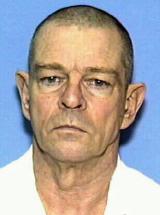
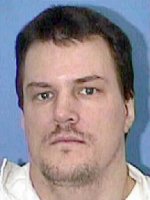
Richard William Kutzner
Murderer Russell Ellwood
Murderer · USA · 1991
Russell Ellwood was a former taxi driver. Authorities suspected him of killing…
20 victims
Russell Ellwood
Murderer · USA · 1991
Russell Ellwood was a former taxi driver. Authorities suspected him of killing…
20 victims
 Robert Martines Perez
Murderer · USA · 1994
Name: Robert Martines Perez · Other name used in proceedings: Robert Martinez P…
15 victims
Robert Martines Perez
Murderer · USA · 1994
Name: Robert Martines Perez · Other name used in proceedings: Robert Martinez P…
15 victims
 Billy Frank Vickers
Murderer · USA · 1993
Billy Frank Vickers Vickers was executed by lethal injection in Texas on Januar…
14 victims
Billy Frank Vickers
Murderer · USA · 1993
Billy Frank Vickers Vickers was executed by lethal injection in Texas on Januar…
14 victims
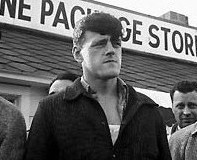 Joseph Taborsky
Spree killer · USA · 1951
Joseph “Mad Dog” Taborsky (March 23, 1924 – May 17, 1960) was a murderer who wa…
7 victims
Joseph Taborsky
Spree killer · USA · 1951
Joseph “Mad Dog” Taborsky (March 23, 1924 – May 17, 1960) was a murderer who wa…
7 victims
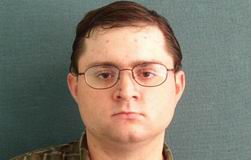 Andrew Lackey
Murderer · USA · 2005
Andrew Lackey · October 31, 2005 — Athens Police Department received and record…
1 victim
Andrew Lackey
Murderer · USA · 2005
Andrew Lackey · October 31, 2005 — Athens Police Department received and record…
1 victim
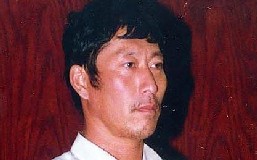 Bai Baoshan
Serial killer · China · 1996
Bai Baoshan was executed by shot in the head on May 6, 1998. · October 16, 1997…
14 victims
Bai Baoshan
Serial killer · China · 1996
Bai Baoshan was executed by shot in the head on May 6, 1998. · October 16, 1997…
14 victims
 Roberto Succo
Serial killer · Italy / France · 1981
Roberto Succo, also known as Roberto Zucco (April 3, 1962 – May 23, 1988), was…
7 victims
Roberto Succo
Serial killer · Italy / France · 1981
Roberto Succo, also known as Roberto Zucco (April 3, 1962 – May 23, 1988), was…
7 victims
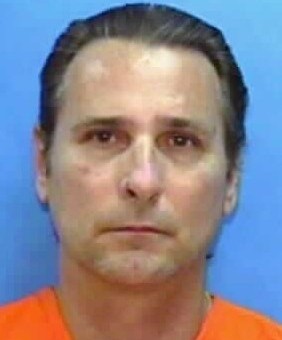 Ernest Downs
Murderer · USA · 1977
Ernest Downs was indicted in the Fourth Judicial Circuit, Duval County (Case #…
1 victim
Ernest Downs
Murderer · USA · 1977
Ernest Downs was indicted in the Fourth Judicial Circuit, Duval County (Case #…
1 victim
- Gender
- male
- Country
- USA
- Location
- Harris County, Texas, USA
- Date of birth
- November 17, 1942
- Age at first offence
- 54
- Characteristics
- robbery, kidnapping
- Victim profile
- Kathryn Harrison, 59 / Rita Sheron Van Huss, 54
- Method of murder
- Strangulation
- Date(s) of murder
- January 5/22, 1996
- Years active
- 1996
- Date of arrest
- February 22, 1996
- Status
-
Executed
Executed by lethal injection in Texas on August 7, 2002
Case details
Richard William Kutzner was convicted of capital murder and was sentenced to death in Texas. His execution occurred by lethal injection in Texas on August 7, 2002.
The offence
Kathryn Harrison (Spring, Texas)
Kathryn Harrison owned and operated a real estate business in Spring, Texas. Her body was found by a co-worker on Jan. 22, 1996, in her real estate office. Police officers found Harrison lying face down. Her wrists were bound with red plastic-coated wire and her ankles were locked in a cable tie. A cable tie was also secured tightly around her neck. Harrison’s purse had been turned inside out, and a computer keyboard and a videocassette recorder were missing from the office.
A note found in Harrison’s real estate office contained Kutzner’s alias, his wife’s nickname, his phone number, his street address and a reference to two big dogs. Evidence showed Harrison’s office note was in Harrison’s handwriting and Kutzner owned two big dogs. Harrison’s notes found in her office indicated that Kutzner had posed as a potential customer about three weeks before the murder, and another version of the evidence described that this matched the mode of operation in the Houston murder where he posed as a potential customer by completing a lease agreement for self-storage. The evidence also described Harrison’s notes as indicating Kutzner had posed as a potential customer on Jan. 1, 1996.
Rita Sheron Van Huss (Houston, Harris County)
Rita Sheron Van Huss was found strangled to death on Jan. 5, 1996, in her living quarters, adjacent to the self-storage business she managed in Houston. Van Huss’s wrists, ankles and neck were tightly bound with cable ties. Missing was Van Huss’s purse, containing $300 to $400 in cash; two money orders, one for $300 and one for $10; her jewelry and approximately $40 in petty cash from the self-storage office. Investigators recovered plastic cable ties and 14-gauge red electrical wires from Kutzner’s driveway and garage, and from a truck recently repossessed from him. All recovered cable ties and wire were described as being the same type, the same manufacturer and having the same identification number as those used to kill the victims.
A $10 money order belonging to Van Huss was found among items removed from the truck, bearing Kutzner’s fingerprints. A $10 money order from Van Huss with Kuntzner’s fingerprints on it was also described among items removed from the truck. Investigators also found that Van Huss’s tenant information sheet and a partially completed lease agreement dated Jan. 5, 1996 were present among the seized items.
Investigation
Harrison’s murder was investigated, and when Harris County detectives learned of Harrison’s murder, they recognized similarities and contacted Montgomery County authorities. Investigators discovered that Kutzner had cashed the $300 money order at a Houston check-cashing business. The money order bore the name Roy Landry, but it was Kutzner who endorsed and cashed it according to the clerk who recognized him as a repeat customer.
A 30-inch white plastic cable tie was recovered from Kutzner’s driveway when several detectives went to his house on Feb. 21, 1996. Kutzner’s truck had been repossessed and taken to A.W. Enterprises, a Houston used-car dealer. The investigation described Kutzner confronting and threatening to unleash his dogs on the employee sent to repossess the truck. Kutzner was offered opportunities to remove personal property from the truck but refused. A.W. Enterprises received the truck on the next business day. Upon delivery, all personal items were removed from the truck and secured in a locked storage building at the used-car lot. A day or two later, Kutzner called to inquire about retrieving his personal belongings.
On Feb. 22, 1996, a detective went to the car lot to look for Kutzner’s truck and inquire whether any personal items had been left in it. A search warrant was obtained for seizure of items, which included four plastic cable ties and 14-gauge red electrical wires. The classification number indicated the wire pieces were of the same type and had been manufactured by the same company, and it was described as not common in Montgomery County. The cable ties all carried the same manufacturer’s name.
When officers attempted to arrest Kutzner at his residence later that night and received no response, they entered and searched for him. Officers obtained another search warrant to seize wire and cable ties found in Kutzner’s garage. The wire that was wrapped around Harrison’s wrists, the wire recovered at the used-car lot, and the wire recovered from Kutzner’s home were described as bearing the same identification numbers. The tie wraps were described as carrying the same manufacturer’s name across the recovered materials, and the wire identification numbers were described as showing manufacture by Rome Cable of Rome, New York.
Kutzner’s fingerprints were discovered on Van Huss’s $10 money order among the seized items. Also found were the tenant information sheet from Van Huss’s self-storage business and a partially completed lease agreement dated Jan. 5, 1996.
The videocassette recorder and computer keyboard taken from Harrison’s real estate office were recovered in homes of Kutzner’s friends and were identified by Harrison’s co-worker. The keyboard and VCR were later identified as having been recovered in the possession of friends of Kutzner, and a witness described that Kutzner brought electronic equipment to another person.
An FBI forensic physical scientist specializing in tool mark identification examined the cable ties around the victim’s neck and ankles and determined they had been cut by the tin snips recovered from Kutzner’s personal belongings at the auto lot.
Last-minute attempts to have hair and fingernail scrapings of the victim DNA tested were denied because the testing was described as not having a “reasonable probability” that the tests would prove “innocence.” A later appeal also described a request for DNA testing on hairs found in Harrison’s office and scrapings taken from underneath the victim’s fingernails, and that the trial court denied the request.
Arrest
Kutzner was arrested at a friend’s home. After officers entered and searched for him at his residence due to no response when they attempted to arrest him, they later arrested him at the friend’s home. Another account described he was later arrested at a friend’s home after investigators had confronted and identified items connected to the murders.
Trial
Charges and jurisdiction
A grand jury indicted Kutzner on Mar. 7, 1996 in the 359th Judicial District Court of Montgomery County, Texas for the capital offense of murdering Kathryn Harrison while in the course of committing and attempting to commit robbery. The capital offense was also described in other procedural detail as under Tex. Penal Code Ann. § 19.03(a)(2) (Vernon 1995). Kutzner pleaded not guilty.
Findings in the Harrison trial
A jury found Kutzner guilty of capital murder on Sept. 5, 1997. On Sept. 8, 1997, following a separate punishment hearing, the court assessed a sentence of death.
In the 1997 trial described in appellate material, identity was the main contested issue. The evidence included that Harrison’s wrists were bound with red electrical wiring and her neck and ankles were bound with plastic tie wraps. A computer keyboard and a video cassette recorder were missing from Harrison’s office. Police seized red electrical wire from Kutzner’s home and from his repossessed truck, and it bore the same manufacturer’s identification number as the wire that bound Harrison’s wrists. The wire was described as manufactured in New York and not common in the area where the offense occurred. Police seized plastic tie wraps from Kutzner’s driveway, garage and repossessed truck, and these tie wraps were described as similar to those found around Harrison’s neck and ankles.
An FBI toolmark examiner determined that the tie wraps around Harrison’s neck and ankles had been cut with tin snips recovered from Kutzner’s repossessed truck. The police seized the victim’s videocassette recorder from the residence of Roy Landry, who had known Kutzner for many years and had worked for Kutzner in Kutzner’s air conditioning repair business. Landry testified that he received the videocassette recorder and the victim’s computer keyboard from Kutzner, and that Kutzner retrieved the computer keyboard later.
Testimony described that Kutzner suggested to Landry that Landry rob an older woman who worked alone in an office, and that Landry asked why Kutzner did not commit the robbery himself, after which Kutzner told Landry the office was too close to where he lived; the office was described as about a mile and a half from where Kutzner lived. Additional testimony described Kutzner commenting on three separate occasions that there were no serial numbers on plastic cable ties and that they would be good to use to kill someone.
During the punishment phase, the State presented evidence that about two and a half weeks before this offense, Kutzner murdered another woman under circumstances strikingly similar to those present in this case. The State also presented evidence that he had served several years in prison in California for armed robbery in the 1960s and that he had been convicted of theft in Texas in 1984 and aggravated robbery four times in Texas in 1985. The State also presented evidence that he had murdered Rita Sharon Van Huss in Harris County under very similar circumstances just two weeks prior to murdering Harrison, and that he was convicted and sentenced to death for that other murder.
Evidence and expert determinations
An assistant medical examiner testified that the killings were nearly identical and that injuries to the victims’ heads were similar. A forensic tool identification specialist testified that all of the tie wraps used to bind Harrison were cut with the snips recovered from Kutzner’s truck. Evidence was described as including a note in Harrison’s handwriting and a reference to two big dogs.
Lack of final meal and recorded final words
The record described “Final Meal: None.” It also included final words said by Kutzner.
Sentencing
Following a separate punishment hearing, the court assessed a sentence of death on Sept. 8, 1997. During the punishment phase, a life prison term was described as an option other than death, and defense attorneys did not argue for a life sentence. The record also stated that no witnesses testified on Kutzner’s behalf during the punishment phase. The record described that Kutzner’s attorney asked that closing argument not be given.
DNA testing requests and related procedural rulings
Kutzner filed an application for writ of habeas corpus in the trial court on Nov. 5, 1998. His conviction and sentence were affirmed by the Texas Court of Criminal Appeals on June 9, 1999. The Court of Criminal Appeals denied habeas relief in an unpublished order on June 23, 1999.
Kutzner filed for habeas in U.S. District Court, Southern District of Texas on Jan. 13, 2000. The federal district court denied habeas relief and permission to appeal on July 19, 2000. Kutzner requested permission to appeal from the U.S. Court of Appeals on Oct. 4, 2000. The Fifth Circuit denied permission to appeal on Feb. 16, 2001.
The trial court set an execution date for July 25, 2001 on Mar. 1, 2001. Kutzner filed a request for post-conviction DNA testing in the trial court on July 16, 2001, and the trial court denied DNA testing on July 20, 2001. Kutzner appealed the denial on July 23, 2001. On July 24, 2001, the Court of Criminal Appeals stayed his execution to hear the DNA appeal. On Apr. 10, 2002, the Court of Criminal Appeals affirmed the trial court’s denial of DNA testing. The Court of Criminal Appeals set an Aug. 7 execution date on June 12, 2002.
On Aug. 1, 2002, Kutzner filed a motion for a stay of execution in U.S. District Court, and on Aug. 5, 2002, the motion was denied.
In the appellate discussion of DNA litigation, the Court of Criminal Appeals concluded that convicts had to show that a “reasonable probability exists that exculpatory DNA tests would prove their innocence,” and it was stated that the court unanimously agreed he was not entitled to DNA testing. The record also included a concurring opinion by Judge Michael Keasler challenging the innocence standard and stating that the phrasing required the convicted person to show that he would not have been prosecuted or convicted. Another description stated prosecutors argued DNA presence would be meaningless because the crime scene was a public place, and the trial court agreed.
Appeals
State-level habeas and direct review
Kutzner’s direct appeal resulted in affirmance by the Texas Court of Criminal Appeals on June 9, 1999. Habeas relief in an unpublished order was denied on June 23, 1999.
Federal habeas and certificate of appealability proceedings
Kutzner filed a habeas petition in U.S. 13, 2000, and it was denied on July 19, 2000. A request for permission to appeal was denied by the Fifth Circuit on Feb. 16, 2001. The Fifth Circuit issued an opinion denying a motion for a certificate of appealability and stated it denied the motion.
Prior criminal history
The State proved that Kutzner had served several years in a California prison for an armed robbery committed in the late 1960s. The State also showed that he had been convicted of theft of stolen property in Johnson County in May 1984 and had four convictions for aggravated robbery from 1985. Another description indicated he received a two-year prison sentence in 1984 and a ten-year sentence in 1985, and that information on the length of time he served was not available for that report. The record also described that he was convicted of armed robbery in Michigan and served prison time there.
The record stated that Kutzner murdered Rita Sheron Van Huss on Jan. 5, 1996 under similar circumstances and received the death penalty for Van Huss’s murder.
Other details
Kutzner’s own statements
The record included Kutzner’s final words:
“I didn't kill your mother. The two guys that worked for me killed your mother and they are still out there. Warden, this is murder just as surely as the people that killed Rebecca's mother. I guess that's it. Warden, send me home.”
The record also included Kutzner maintaining his innocence from death row, stating:
“I'm absolutely innocent,” he said in a death-row interview. “I was absolutely railroaded. I was easy. I was an ex-convict.”
The record included a statement reported as Kutzner addressing Rebecca Harrison:
“I didn't kill your mother,” Kutzner told Rebecca Harrison from the death gurney. “Rebecca, I understand you wanted this day to come, and you got what you wanted. But I didn't kill your mother.”
The record also included a statement during execution preparation:
“I can taste it.” “I'm gone.”
Final execution description
Kutzner was executed by lethal injection in Huntsville, Texas. The record described him as pronouncing “I guess that's it” and “Send me home.” It also described that he was executed for the Jan. 22, 1996 killing of real estate agent Kathryn Harrison near The Woodlands, and that he was also convicted of capital murder of Reta Van Huss, the 54-year-old manager of a mini-storage warehouse in north Harris County, 17 days earlier. Both victims were described as being strangled with plastic ties and bound with electrical wire, and it described that the same materials were found in Kutzner’s truck.
Letter from Kutzner’s sister
The record included a letter by Richard Kutzner’s sister addressed to Hon. Jerry Madden. The letter began: “Dear Representative Madden:” “Re: Richard William Kutzner - Date of Execution 8/7/02” “Thank you for taking the time to answer my letter. It is obvious that you took some time and trouble to research this matter.”
The letter included the following statements in verbatim form, among others:
- “However, you missed my point, which was that since no death row inmate has been granted DNA testing under the new law, there may be a problem with the way it is being interpreted by the Court.”
- “Surely there has been at least one person who would qualify for DNA testing.”
- “But lets go a step further. Isn't it worth the little extra cost and time to make sure the right person is paying the ultimate penalty?”
- “By the time you receive this letter, it may be too late for my brother. But I am still going to try to convince you for the sake of others.”
- “But will killing the wrong man bring them justice? Shouldn't we be sure?”
- “And if there is DNA that exists and was never tested, why not test it.”
- “Yes, this does delay an execution for a short period of time.”
- “The law needs to be changed so the Court doesn't have such latitude to deny.”
- “The new cases get the DNA tested already.”
- “And only an idiot would want to have DNA tested that they know is their own.”
- “The courts do make mistakes.”
- “Why not be sure before executing someone who may be innocent?”
- “The Texas Court of Criminal Appeals issued a stay of execution Tuesday (07/26/2001) for convicted murderer Richard William Kutzner, allowing the court to clarify a new law giving some inmates state-funded testing of DNA evidence.”
The letter also included numbered assertions labeled 1 through 16, including:
- “1. The husband was the first suspect and the wife had continually for two years told family and friends that if she turned up dead it was her husband who did it.”
- “2. The husband failed his polygraph test.”
- “3. The husband's car was seen at the site around the time of the murder.”
- “4. The woman always (according to friends and family) kept the door locked when alone and it was not a forced entry.”
- “5. The husband had a piece of the "stolen" property in his possession.”
- “6. Roy Landry, who gave the stolen property to my brother to repay a debt was previously convicted of attempted murder of his own wife.”
- “7. Roy Landry knew about evidence before the police mentioned it.”
- “8. Roy Landry was friends with a guy name Maestas who was also convicted of a murder of a third woman with the exact m.o.”
- “9. Roy Landry is the one who said Bill told him it would be good to kill a an older woman and use tie wraps to do it. Maybe he was lying to cover himself.”
- “10. Roy Landry had worked for my brother in his business and had access to those "rare" tie wraps and electrical wire.”
- “11. Roy Landry knew enough about Bill to fill out a questionnaire containing personal information.”
- “12. My brother and I proved that the wire was not rare by obtaining documentation from the company who sells it to the Houston area but Bill's attorneys chose to ignore that information.”
- “13. I contacted Prof. Whitehurst at the FBI lab regarding the findings by that lab. He stated that Bill's attorneys should have put up a defense against that finding because it is very subjective and extremely hard to prove. But Bill's attorneys never did that.”
- “14. As for the second murder, it is a very similar story and I won't go into it now.”
- “15. My brother wants the scrapings under the victims fingernails tested.”
- “16. Bill's witnesses, who could have verified his alibi, sat in the hall waiting and were never called in to testify because Bill's attorney told him that they had already won and didn't need the witnesses.”
The letter also stated:
- “I understand law. And I know my brother.”
- “A crook he may be, but he isn't a murder.”
- “He may hang with the wrong people, and he lied to the police trying to protect his "friend" Landry.”
- “He shouldn't have to die for murder(s) he didn't commit.”
- “Please reconsider your stand on this issue.”
Spotted an error, or have more information about this case?