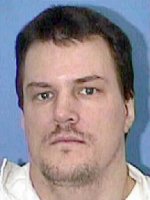
Troy Albert Kunkle
Murderer Brian Kevin Rosenfeld
Murderer · USA · 1985
Brian Kevin Rosenfeld Brian Kevin Rosenfeld was sentenced to three concurrent l…
23 victims
Brian Kevin Rosenfeld
Murderer · USA · 1985
Brian Kevin Rosenfeld Brian Kevin Rosenfeld was sentenced to three concurrent l…
23 victims
 Marvin Gray
Murderer · USA · 1975
Marvin Gray was convicted killer who claimed responsibility for 23 slayings and…
23 victims
Marvin Gray
Murderer · USA · 1975
Marvin Gray was convicted killer who claimed responsibility for 23 slayings and…
23 victims
 Yahweh ben Yahweh
Murderer · USA · 1980
Yahweh ben Yahweh was born and legally named Hulon Mitchell Jr. (October 27, 19…
23 victims
Yahweh ben Yahweh
Murderer · USA · 1980
Yahweh ben Yahweh was born and legally named Hulon Mitchell Jr. (October 27, 19…
23 victims
 Russell Ellwood
Murderer · USA · 1991
Russell Ellwood was a former taxi driver. Authorities suspected him of killing…
20 victims
Russell Ellwood
Murderer · USA · 1991
Russell Ellwood was a former taxi driver. Authorities suspected him of killing…
20 victims
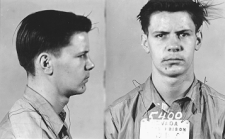 David Blackwell
Murderer · USA · 1947
David Blackwell was executed in the Nevada State Prison on April 22, 1949 for t…
2 victims
David Blackwell
Murderer · USA · 1947
David Blackwell was executed in the Nevada State Prison on April 22, 1949 for t…
2 victims
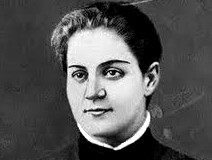 Jane Toppan
Serial killer · USA · 1887
Jane Toppan (1880-1901) was a nurse from Boston, Massachusetts. Another record…
31 victims
Jane Toppan
Serial killer · USA · 1887
Jane Toppan (1880-1901) was a nurse from Boston, Massachusetts. Another record…
31 victims
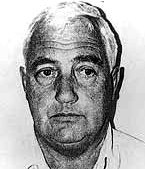 John Wayne Glover
Serial killer · Australia · 1989
John Wayne Glover (26 November 1932 – 9 September 2005) was a British-born Aust…
6 victims
John Wayne Glover
Serial killer · Australia · 1989
John Wayne Glover (26 November 1932 – 9 September 2005) was a British-born Aust…
6 victims
 Sarah Makin
Murderer · Australia · 1892
Sarah Makin was also known as Sarah Jane Makin. John Makin (14 February 1845 –…
12 victims
Sarah Makin
Murderer · Australia · 1892
Sarah Makin was also known as Sarah Jane Makin. John Makin (14 February 1845 –…
12 victims
- Gender
- male
- Country
- USA
- Location
- Nueces County, Texas, USA
- Date of birth
- May 27, 1966
- Age at first offence
- 18
- Characteristics
- kidnapping, robbery
- Victim profile
- Stephen Wayne Horton (male, 31)
- Method of murder
- Shooting (.22 caliber pistol)
- Date(s) of murder
- August 12, 1984
- Years active
- 1984
- Date of arrest
- August 1984
- Status
-
Executed
Executed by lethal injection in Texas on January 25, 2005
Case details
Troy Albert Kunkle was convicted of capital murder and sentenced to death for the August 1984 killing of Stephen Horton in Corpus Christi. Kunkle was executed by lethal injection in Texas on January 25, 2005.
Timeline
- August 11, 1984 — Troy Albert Kunkle and three companions drove from San Antonio to Corpus Christi, saw Stephen Horton walking along a road, offered him a ride, and demanded his wallet; Kunkle told one of his friends to kill Horton, and after the car was driven behind a skating rink Kunkle shot Horton in the back of the head, took Horton’s wallet, and pushed the body out of the car.
- October 17, 1984 — A Nueces County grand jury indicted Kunkle for the capital murder of Stephen Horton.
- February 22, 1985 — A jury found Kunkle guilty of capital murder.
- March 1, 1985 — The court assessed a sentence of death following a punishment hearing.
- February 26, 1985 — Kunkle was sentenced to death.
- June 18, 1986 — The Texas Court of Criminal Appeals affirmed Kunkle’s conviction and sentence.
- July 3, 1989 — Kunkle’s first petition for writ of certiorari was denied by the U.S. Supreme Court.
- July 27, 1989 — Kunkle filed an application for writ of habeas corpus in the trial court.
- August 30, 1989 — The U.S. Supreme Court declined to rehear Kunkle’s certiorari petition.
- February 3, 1993 — The Texas Court of Criminal Appeals denied Kunkle’s application for writ of habeas corpus.
- August 24, 1993 — Kunkle filed a petition for writ of habeas corpus in the U.S. District Court.
- October 4, 1993 — The U.S. Supreme Court denied Kunkle’s second petition for writ of certiorari.
- January 10, 1995 — The court dismissed Kunkle’s petition for habeas relief for failure to exhaust state court remedies.
- March 1, 1995 — Kunkle filed a second application for writ of habeas corpus in the trial court.
- March 29, 1995 — The Texas Court of Criminal Appeals denied Kunkle’s second application for writ of habeas corpus.
- April 28, 1995 — Kunkle filed a second petition for writ of habeas corpus in U.S. District Court.
- September 2, 2002 — The federal district court granted summary judgment and denied Kunkle’s petition.
- December 9, 2003 — The Fifth Circuit Court partially denied permission to appeal and affirmed denial of habeas.
- January 28, 2004 — The Fifth Circuit Court declined to rehear the case.
- April 27, 2004 — Kunkle filed a petition for writ of certiorari in the U.S. Supreme Court.
- October 4, 2004 — The U.S. Supreme Court denied the petition for a writ of certiorari.
- November 15, 2004 — Kunkle filed a successive application for a writ of habeas corpus.
- November 18, 2004 — The U.S. Supreme Court stayed Kunkle’s execution.
- January 25, 2005 — Kunkle was executed by lethal injection in Texas.
Background
At the time of the offense, Troy Albert Kunkle was 18 and under the influence of alcohol and L.S.D. during the trip from San Antonio to Corpus Christi. Kunkle had no prior criminal record, but he was frequently disciplined for truancy, smoking, and classroom disruption. He was described as a schizophrenic teenager with a family history of mental illness.
The case involved Lora Lee Zaiontz, Russell Stanley, and Aaron Adkins as companions during the events leading to the killing of Stephen Horton. Tom Sauls was present and was not indicted for any offense stemming from the activities.
The offence
On the evening of August 11, 1984, Kunkle and three companions drove from San Antonio to Corpus Christi. They saw Stephen Horton walking along a road and offered him a ride. After demanding Horton’s wallet, Kunkle told one of his friends to kill Horton; when that friend refused, Kunkle took the gun and stuck it up against Horton’s head, saying: “We’re going to take you back here and blow your brains out.”
After one of the companions drove the car behind a skating rink, Kunkle shot Horton in the back of the head. The group pushed the body out of the car and took Horton’s wallet.
In addition to the wallet being taken, the amount taken was described as seven dollars in one account, and as $13 in another account. Following the shooting, Kunkle quoted lyrics from a song called “No Remorse” from an album “Kill ’Em All” by the heavy metal rock group Metallica. The line quoted was: “another day, another death, another sorrow, another breath,” and he told the group that the murder was “beautiful.”
Sauls later stated that he freaked out on the whole thing and sat there scared. Sauls stated that when he complained about the murder and said that they did not have to kill Horton, Stanley pointed the gun at Sauls’ head and told him “[I]f you don't shut up, I am going to shoot you, too.” Sauls stated that he shut up and sat there and stared out the window the rest of the way home.
Investigation
A Corpus Christi police officer, Ed Wimberly, found Horton’s body. Sauls was later contacted by Austin police officers and told them everything that happened. Sauls was never arrested or charged with any offense arising out of the murder.
Arrest
No arrest date was included in the provided material.
Trial
In the sentencing and trial proceedings, the jury convicted Kunkle of capital murder and answered affirmatively special issues under Art. 37.071, V.A.C.C.P.
The appellate decision described these trial facts: on August 11, 1984 at approximately 6:00 p.m., Kunkle and his three co-defendants, Lora Lee Zaiontz, Russell Stanley, and Aaron Adkins, left San Antonio to go to Corpus Christi; Tom Sauls was also present. The appellate decision stated that all five individuals were under the influence of alcohol and L.S.D. and that Stanley removed a loaded .22 caliber pistol from the glove compartment, fired it into the air, and asked Adkins if he wanted to make some money.
The appellate decision also described the robbery of a man in a phone booth at gunpoint by Stanley and Adkins, with the robbery producing seven dollars, and described the later encounter with Stephen Horton on the roadside and the events inside the car: Zaiontz scratched Horton’s face and told him to look forward; Kunkle told Stanley to kill Horton but Stanley refused; Kunkle then took the gun away from Stanley, stuck it up against Horton’s head, and said: “We're going to take you back here and blow your brains out”; Kunkle shot Horton in the back of the head; the body was pushed out of the car; and Zaiontz took Horton’s wallet.
The appellate decision described Kunkle stating “another day, another death, another sorrow, another breath” after the murder and later stating that the murder was beautiful. It also described that, in the courtroom, Kunkle played an air guitar while lawyers discussed whether the Metallica song could be admitted into evidence.
Quotation: jury instruction excerpt
“If you find from the evidence that the witness, Tom Sauls, was an accomplice, or you have a reasonable doubt thereof, then you are instructed that if you find beyond a reasonable doubt that an offense was committed, you cannot convict the Defendant, Troy Kunkle, of capital murder upon the testimony of Tom Sauls unless you first believe that his testimony is true and shows that the Defendant is guilty as charged; and even then you cannot convict the Defendant unless you further believe that there is other evidence in this case, outside the testimony of Tom Sauls, tending to connect the Defendant with the offense committed, if you find that an offense was committed and tending to establish that the Defendant intentionally caused the death of Stephen Horton by shooting him with a firearm in the course of committing robbery of Stephen Horton, and then from all the evidence you must believe beyond a reasonable doubt that the Defendant is guilty of capital murder. The corroboration, if any, is not sufficient if it merely shows the commission of the offense, but it must tend to connect the Defendant with its commission and tend to establish that the Defendant intentionally caused the death of Stephen Horton by shooting him with a firearm in the course of committing robbery of Stephen Horton.”
Sentencing
After the punishment hearing following the February 22, 1985 verdict, the court assessed a sentence of death on March 1, 1985, and Kunkle was sentenced to death on February 26, 1985.
The sentencing outcomes for accomplices were described as follows:
- Lora Lee Zaiontz received a life sentence for capital murder.
- Russell Stanley and Aaron Adkins were both sentenced to 30 years for murder.
Appeals
Kunkle appealed his capital murder conviction and sentence.
- The Texas Court of Criminal Appeals affirmed Kunkle’s conviction and sentence on June 18, 1986.
- Kunkle’s first petition for writ of certiorari was denied by the U.S. Supreme Court on July 3, 1989, and the U.S. Supreme Court declined to rehear on August 30, 1989.
- The Texas Court of Criminal Appeals denied a state habeas application on February 3, 1993.
- Kunkle’s second petition for writ of certiorari was denied by the U.S. Supreme Court on October 4, 1993.
- On January 10, 1995, a habeas petition was dismissed for failure to exhaust state court remedies.
- The Texas Court of Criminal Appeals denied Kunkle’s second habeas application on March 29, 1995.
- A federal habeas petition was granted summary judgment against him on September 2, 2002.
- The Fifth Circuit Court partially denied permission to appeal but affirmed denial of habeas on December 9, 2003, and declined to rehear on January 28, 2004.
- The U.S. Supreme Court denied a petition for a writ of certiorari on October 4, 2004.
Direct appeal citation and holdings
In Kunkle v. State, 771 S.W.2d 435 (Tex.Cr.App. 1986), the Court of Criminal Appeals affirmed the conviction and sentence. The provided material stated that the court held:
- a witness was not an accomplice witness;
- evidence was sufficient to support finding that defendant caused death of victim deliberately, though there was evidence that defendant was under influence of LSD at time of murder; and
- evidence was sufficient to support finding that defendant would commit future acts of violence and be a continuing threat to society. Clinton and Teague, JJ., filed dissenting opinions, and Miller, J., wrote the opinion.
State habeas citation and holdings
In Ex parte Kunkle, 852 S.W.2d 499 (Tex.Cr.App. 1993), the Court of Criminal Appeals denied relief. The provided material stated the court held:
- in the punishment phase, the defendant was not entitled to submission of a particularized charge on mitigation in addition to statutory special issues; and
- counsel was not ineffective for deciding not to present evidence of defendant’s parents’ mental histories and evidence of defendant’s early abuse and behavioral problems. Maloney, J., dissented, and dissenting opinions were described as Clinton, J., joined by Baird, J.
Federal habeas citation and disposition
In Kunkle v. Dretke, 352 F.3d 980 (5th Cir. 2003), after examining merits, the Court of Appeals stated that the district court did not err in finding the ineffective assistance claim was unexhausted and denied as procedurally defaulted. The appellate court also stated that Kunkle failed to demonstrate prejudice as required by the second prong of Strickland. The provided material stated that the case was “AFFIRMED; COA DENIED.”
Outcome
Aftermath
Kunkle’s final meal was listed as fried chicken, chicken fried steak, a hamburger with cheese and onions, french fries, cauliflower, cinnamon rolls, apple pie and milk.
Kunkle’s final words were:
“I would like to ask you to forgive me. I made a mistake and I am sorry for what I did. All I can do is ask you to forgive me. I love you and I will see all of you in Heaven. I love you very much. Praise Jesus. I love you.” He then recited the Lord’s Prayer.
Other details
The Texas Attorney General Greg Abbott offered an information advisory describing Kunkle as scheduled to be executed after 6 p.m. Thursday, November 18, and stated that in 1985 Kunkle was sentenced to die for the August 1984 capital murder of Stephen Horton in Corpus Christi. The provided material included a description of the evidence presented at trial.
The Reuters report stated that Kunkle’s execution was delayed for two hours as the U.S. Supreme Court considered last minute appeals and that Kunkle was condemned for killing Steven Horton, 31, in Corpus Christi, Texas, after robbing him on Aug. 12, 1984. Another account stated that he was condemned for abduction, robbery, and murder of a 31-year-old man.
The “No Remorse” lyric was attributed to Metallica’s song “No Remorse” from the album “Kill ’Em All,” and Kunkle was described as known as the “No Remorse” killer. The material also included references to Kunkle’s attorneys arguing that the jury should have been instructed to consider his history of drug and alcohol abuse and his “troubled and turbulent home environment,” and described claims about his mental health and mitigating evidence being improperly considered.
Spotted an error, or have more information about this case?