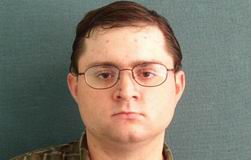
Andrew Lackey
Murderer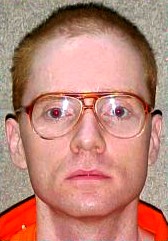 Robert Glen Jones
Murderer · USA · 1996
Defendant: Robert Glenn Jones (ADC#070566) · Co-defendant: Scott Nordstrom (ADC…
7 victims
Robert Glen Jones
Murderer · USA · 1996
Defendant: Robert Glenn Jones (ADC#070566) · Co-defendant: Scott Nordstrom (ADC…
7 victims
 Joshua Wayne Andrews
Murderer · USA · 2000
Joshua Wayne Andrews was a serial killer accused of killing several people in V…
5 victims
Joshua Wayne Andrews
Murderer · USA · 2000
Joshua Wayne Andrews was a serial killer accused of killing several people in V…
5 victims
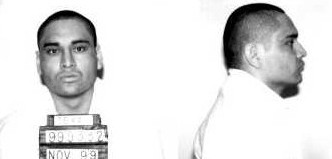 Juan Carlos Alvarez
Murderer · USA · 1998
Juan Carlos Alvarez, born on March 9, 1977, in San Luis, Mexico, was a Hispanic…
5 victims
Juan Carlos Alvarez
Murderer · USA · 1998
Juan Carlos Alvarez, born on March 9, 1977, in San Luis, Mexico, was a Hispanic…
5 victims
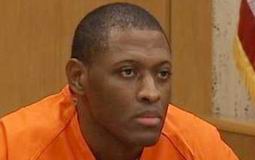 Leon Davis Jr.
Murderer · USA · 2007
Leon Davis Jr. was sentenced to death on April 29, 2011, for the execution-styl…
5 victims
Leon Davis Jr.
Murderer · USA · 2007
Leon Davis Jr. was sentenced to death on April 29, 2011, for the execution-styl…
5 victims
 Grant Charboneau
Murderer · USA · 1992
Grant Steven Charboneau was a Portlander who lived with his mother but hung aro…
3 victims
Grant Charboneau
Murderer · USA · 1992
Grant Steven Charboneau was a Portlander who lived with his mother but hung aro…
3 victims
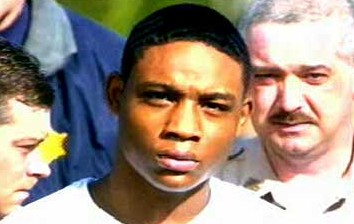 Devin Moore
Murderer · USA · 2003
Devin Moore (born 1985) was a teenager from Alabama. He sparked controversy ove…
3 victims
Devin Moore
Murderer · USA · 2003
Devin Moore (born 1985) was a teenager from Alabama. He sparked controversy ove…
3 victims
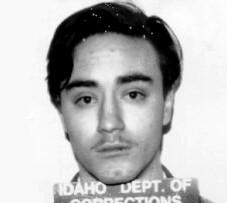 James Hairston
Murderer · USA · 1996
James Hairston was 27 years old and was of Grand Junction, Colo. James Hairston…
2 victims
James Hairston
Murderer · USA · 1996
James Hairston was 27 years old and was of Grand Junction, Colo. James Hairston…
2 victims
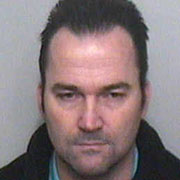 Stuart Campbell
Murderer · United Kingdom · 2001
Stuart Campbell (born 1958) was a builder who was convicted in December 2002 of…
1 victim
Stuart Campbell
Murderer · United Kingdom · 2001
Stuart Campbell (born 1958) was a builder who was convicted in December 2002 of…
1 victim
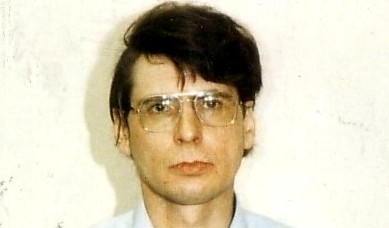 Dennis Nilsen
Serial killer · United Kingdom · 1978
Dennis Andrew Nilsen was born on November 23, 1945. He lived in London. He was…
16 victims
Dennis Nilsen
Serial killer · United Kingdom · 1978
Dennis Andrew Nilsen was born on November 23, 1945. He lived in London. He was…
16 victims
- Gender
- male
- Country
- USA
- Location
- Athens, Limestone County, Alabama , USA
- Date of birth
- October 29, 1983
- Age at first offence
- 22
- Characteristics
- robbery, abuse
- Victim profile
- Charles Newman, 80
- Method of murder
- Shooting
- Date(s) of murder
- October 31, 2005
- Years active
- 2005
- Date of arrest
- Same day
- Status
-
Executed
Sentenced to death on April 3, 2008; executed by lethal injection in Alabama on July 25, 2013
Case identification
Andrew Lackey
Timeline
- October 31, 2005 — Athens Police Department received and recorded an emergency telephone call originating from Charles Newman's house; Newman said, “Don't do that” and “Leave me alone,” and asked, “What do you want?”; the assailant repeatedly asked, “Where's the vault?”
- October 31, 2005 — Police entered Charles Newman's house through the back door and found Newman's body on the floor between a couch and a green chair.
- October 31, 2005 — Later that evening, officers responded to a shooting victim at a Chevron gasoline station and found Lackey sitting outside on a curb.
- November 5, 2010 — The Court of Criminal Appeals remanded the cause to the circuit court with instructions to hold a Batson hearing.
- December 13, 2010 — The return to remand was filed with the Court of Criminal Appeals.
- March 26, 2008 — The circuit court conducted a judicial-sentencing hearing and sentenced Lackey to death.
- March 3, 2008 — A jury unanimously recommended that Lackey be sentenced to death.
- March 26, 2008 — A seven-woman, five-man jury unanimously recommended that Lackey be given the death penalty.
- April 11, 2012 — Lackey sent the Court of Criminal Appeals a letter stating he wished to drop his Batson issue and not appeal his death sentence.
- April 16, 2009 — The State filed a brief agreeing to a remand for a Batson hearing.
- April 29, 2008 — Appellate counsel was appointed to represent Lackey on appeal.
- February 3, 2009 — A brief challenging Lackey’s convictions and sentences was filed by appellate counsel.
- June 8, 2012 — Lackey filed a motion seeking to invoke the state-law right to represent himself on appeal and to withdraw briefs and other documentation filed on his behalf.
- June 28, 2012 — The Court of Criminal Appeals remanded the cause to the circuit court for a hearing regarding the dangers and disadvantages of waiving appellate counsel, invoking self-representation, and striking briefs.
- July 12, 2012 — Appellate counsel filed a motion for a continuance and a motion seeking a mental-competency evaluation by a mental-health expert.
- July 16, 2012 — The circuit court conducted a hearing and issued an order finding Lackey competent to proceed pro se and to strike all documents filed on his behalf.
- July 23, 2012 — Appellate counsel filed a motion asking the Court of Criminal Appeals to remand for another competency hearing.
- October 28, 2010 — Lackey wrote the Alabama Attorney General seeking to drop his appeal and not continue to appeal his death-penalty conviction.
- 2005 (Halloween night) — Charles Newman’s home was broken into; Newman managed to call 911.
- 2005 (two days before the murder) — Derrick Newman and Lackey went to Long John Silver’s and Lackey ordered a chicken sandwich and chili-cheese fries.
Background
Charles Newman was an 80-year-old World War Two veteran. Newman participated in the D-Day invasion at Normandy, France, in 1944 and was a retired building contractor. Newman lived at his Limestone County home in Athens, Alabama. Newman was a close friend of his grandson’s friends, and Lackey was described as a friend of Newman’s grandson. The conviction occurred in Limestone County. Lackey was 22 at the time of the killing and had “no criminal history,” and police described him as polite and friendly when they took him from hospital to jail. Lackey lived alone at his Huntsville home at 3025 Sunlake Boulevard in Apartment 2110. Lackey’s brother sometimes stayed with him. Lackey was convicted in the Circuit Court, Limestone County, No. CC–05–814, Robert M. Baker, J., of two counts of capital murder and was sentenced to death. Lackey incorporated an internet-sales business under the name “Jacob McDeal.” At trial, psychologists testified that he displayed signs of autism, and he was described as shy, introverted, and socially awkward with few friends.
The offence
Lackey broke into Charles Newman’s home on Halloween night in 2005. Lackey had been told by Newman’s grandson that Newman had a vault in the home with a lot of cash. Lackey confronted Newman, who managed to call 911. Operators heard Lackey demanding to know where the vault was located. On a 911 recording, Newman’s last words were: “Come sit down and let me pray for you.” Newman was trying to calm Lackey. On the recording, Lackey could be heard asking for the location of the vault. Newman was also heard on the emergency recording saying: “Don't do that” and “Leave me alone,” and asking: “What do you want?” Lackey repeatedly asked: “Where's the vault?” and “Where's the vault?” Investigators theorized Newman shot Lackey during the robbery. A pathologist testified Newman was stabbed and slashed “some 70 times” and shot through the chest with Newman’s own gun. Dr. Emily Ward testified that Newman suffered a combination of 54 stab wounds and lacerations to his head, including stab wounds to both eyes, and a broken nose. Dr. Ward found Newman had seven wounds on his neck, one of which severed his carotid artery, and multiple cuts to his hands. Dr. Ward testified Newman sustained a gunshot wound; the entrance wound was on the right side of his chest and the exit wound was on the left side of his chest. Dr. Ward testified that the exit wound was surrounded by purple discoloration, indicating Newman was against a hard object such as the floor when he was shot. Dr. Ward testified the entrance wound was surrounded by gunpowder, indicating the pistol was at a close range. Dr. Ward testified Newman died as a result of numerous sharp and blunt-force injuries of the head and neck and a gunshot wound to the chest. Dr. Ward also testified Newman was likely dead prior to being shot.
Investigation
Detective Katrina Flannigan was dispatched after the emergency telephone call. When she did not receive an answer at the front door, Detective Flannigan went to the rear of the residence. Detective Flannigan noticed the glass storm door was closed but the wooden back door was open, and there was blood on the storm door. Flannigan summoned an officer who could see a body inside; the officers entered Newman’s house through the back door. Inside, the officers found Newman’s body on the floor between a couch and a green chair, and a large puddle of blood. Underneath the chair was a set of dentures and the base to a cordless telephone. Detective Flannigan noticed bloody shoe prints leading to the back door from the body and could smell the scent of gunpowder. Later that evening, Officer William Watson, Officer Bobby McCalphin, and Sgt. Clayton Jordan responded to a shooting victim who telephoned police from a Chevron gasoline station. The officers arrived to find Lackey sitting outside on a curb. Lackey told Officer Watson that he had been shot, and Lackey lifted his shirt. Officer Watson saw two gunshot wounds, one in the center of Lackey’s chest and another on the side of his chest. When asked how he was shot, Lackey responded: “ ‘I have no idea. I don't know anything. I just know I've been shot .’ ” (R. 566.) Lackey would not explain where he was when he was shot, nor would he explain how he came to be at the gasoline station. Officer Watson saw a white Nissan Altima parked in front of the gasoline station and noticed blood on the exterior. Through the windows, Officer Watson could see blood on the steering wheel and front dash, an insulated pizza bag and a radio scanner in the front-passenger seat, two pistols in the front-passenger floorboard, and a bloody knife with a broken tip in the rear floorboard. Sgt. Jordan called neighboring counties to determine whether any reported shootings occurred that evening and informed the Athens Police Department about Lackey and his vehicle. During a search of the Altima, officers found a Rossi brand .38 revolver, an 8mm starter pistol, a knife with a broken tip, an insulated pizza bag, a police scanner, a rental agreement signed by Lackey, a stun gun with a missing electrode, a baseball batting glove, a utility belt, two flashlights, two black tube socks filled with nylon rope, a pack of six bottles of super glue, two black gym bags, a pair of blood-stained eyeglasses, an axe, a sledgehammer, a hammer with a towel wrapped around it, a roll of duct tape, five screwdrivers, several packs of batteries, a pair of night-vision goggles, and a wallet with Lackey’s driver’s license, several credit cards in his name, and a PayPal card in the name of “Jacob McDeal.” Officer Jay Looney collected two one-dollar bills and a receipt from a Long John Silver’s restaurant from Newman’s house. The one-dollar bills and receipt were found folded together near the back door. The receipt reflected an order of a chicken sandwich and chili-cheese fries. A piece of metal believed to be an electrode from the stun gun was recovered from the scene. Officer Looney found a bill of sale for Newman’s purchase of the Rossi brand .38 revolver in a box sitting on the fireplace mantel. Doris Langster testified she sold the Rossi .38 revolver to Newman, and Newman typically carried it in a pocket in his robe. The computers at Lackey’s apartment were seized. Brian Wilmoth analyzed the computer hardware and recovered messages sent from “Jacob” to “Damian” from January 2005 through July 2005. In the messages, “Jacob” wrote about an impending heist, reconnaissance of the target described as the house of an “old rich guy,” vulnerabilities, collection of supplies for the heist, the cash and gold “Jacob” believed was in the house, use of a pizza bag as a ploy to gain entry, and a desire for money. Within Lackey’s computer internet history, Wilmoth found a previous search of Newman’s address. Robert Bass analyzed bloodstained evidence from Newman’s house and the Altima. Bass testified Lackey was a DNA match for bloodstains on the sweatshirt Lackey wore the night of the murder, on the steering wheel, on the interior of the back door, and on the storm door. Bass testified Newman was a DNA match for bloodstains on the exterior of the back door and on the interior of the storm door. Bass testified there was a mixed-DNA profile on the trigger guard of the Rossi .38 revolver, on the trigger on the starter pistol, and on the hand brake lever on the Altima, and that Newman and Lackey were likely contributors. Crystal Kissel testified Newman was a DNA match for bloodstains found on the soles of the boots Lackey wore the night of the murder. Jacquelyn Bowling testified Newman and Lackey were DNA matches for various bloodstains on the blue jeans Lackey wore the night of the murder. John Kilbourn examined bloody shoe prints and concluded the shoe prints were made by a sole with an identical sole pattern and the same length and width as Lackey’s left boot. Kilbourn was unable to definitively state that the shoe print was made by Lackey’s boot because of the uneven nature of the linoleum flooring where the print was made. Tammy Sligh testified a piece of metal lodged in Newman’s skull was the tip of the knife found in the Altima. Sligh confirmed three bullets and one bullet jacket recovered from Newman’s house had been fired from the Rossi .38 revolver, and that all five cartridges remaining in the revolver had been fired.
Arrest
Lackey was taken from hospital to jail and charged with capital murder in the slaying of an Athens man. Athens Police Capt. Marty Bruce and Lt. Floyd Johnson met Lackey at Huntsville Hospital after doctors released him from treatment for a gunshot wound to his left chest. Police recovered two handguns, a bloody knife, and property belonging to Newman from Lackey’s rental car. Lackey rented the car the day of the killing. Police confiscated Lackey’s personal car, which Lackey left at Enterprise car rental in Huntsville. Lackey asked for an attorney and was not questioned about the case. Police did not know whether Lackey ever met Newman before the killing and were trying to determine whether Lackey had been at Newman’s home prior to the killing. Newman would look out his window before opening his door and would not give candy to trick-or-treaters, according to Newman’s pastor at Berea Baptist Church, Patrick Lawrence.
Trial
Lackey was indicted for and convicted of two counts of capital murder. Lackey was convicted of one count of capital murder for taking the life of Charles Newman during the course of a robbery, under § 13A–5–40(a)(2), Ala. Code 1975. Lackey was convicted of a second count of capital murder for taking the life of Charles Newman during the course of a burglary, under § 13A–5–40(a)(4), Ala. Code 1975. A seven-woman, five-man jury unanimously recommended March 3, 2008, that Lackey be given the death penalty. That same day, the jury returned a guilty verdict on all four counts in the capital murder trial after two and a half hours. During the three-day trial, Lackey did not take the stand in his defense against indictments of capital murder during a burglary, capital murder during a robbery, burglary, and robbery. Defense attorney Randy Gladden of Huntsville put both of Lackey’s parents—father Michael Lackey and mother Sharon Lackey—on the stand. The defense attempted to refute the state’s contention that the death was “heinous, atrocious and cruel.” Sharon Lackey testified about Lackey’s infancy and childhood, including her seeking help for him due to his inability to relate to others. Lackey exited the courtroom handcuffed and under guard with eyes cast down and appeared to be muttering. Gladden stated the only time he saw Lackey show emotion during more than two years of representation was during Sharon Lackey’s tearful testimony. Psychologist Frank Preston testified that he found Lackey to be of average intelligence, sane and aware of right and wrong, but displaying signs of autism. District Attorney Kristi Valls said she would have liked to hear Lackey apologize to the family of the 80-year-old victim but was glad he cleared Derrick Newman of complicity in the slaying. Valls stated: “We always knew Derrick wasn’t involved,” and also said: “We always knew Derrick wasn’t involved in the brutal slaying of his grandfather.” Lackey spoke before sentencing at Baker’s invitation. Lackey said: “I’m not going to ask you to spare my life,” and “My life is over anyway…Derrick was not involved in any way. I thank my family for being with me through all of this.” Derrick Newman burst into tears at Lackey’s statement and was comforted by his parents.
Sentencing
The circuit court accepted the jury’s recommendation and sentenced Lackey to death on March 26, 2008. A March 26, 2008 sentencing hearing occurred after the penalty phase on March 3, 2008. The sentencing order found aggravating circumstances outweighed mitigating circumstances. The circuit court found three aggravating circumstances:
- The capital offense was committed while Lackey was engaged in the commission of a burglary, § 13A–5–49(4), Ala. Code 1975.
- The capital offense was committed while Lackey was engaged in the commission of a robbery, § 13A–5–49(4), Ala. Code 1975.
- The capital offense was especially heinous, atrocious, or cruel when compared to other capital offenses, § 13A–5–49(8), Ala. Code 1975. The circuit court found one statutory mitigating circumstance: Lackey had no significant history of prior criminal activity, § 13A–5–51(1), Ala. Code 1975. The circuit court found nonstatutory mitigating circumstances including:
- Lackey was “different” in that he lived in a world of computer games.
- Lackey was shy, introverted, and socially awkward with few friends.
- Lackey, at a young age, was distant, cold, and detached.
- Family members testified Lackey was a kind, good child and did not bully other children.
- Lackey’s family moved frequently when he was young, causing him to change schools and preventing him from becoming established with a doctor.
- Lackey seemed younger than his chronological age.
- Lackey was easily influenced by others, so he often may not fully appreciate the reality of what he was doing.
- Lackey absolved Derrick Newman during the penalty phase, which the circuit court viewed as a gesture of kindness. Valls stated: “I’m very pleased with the judge’s sentence,” and “I believe justice was done.” Valls also stated: “a death sentence is always difficult to ask for but, because of the viciousness of the crime, this time it was the only thing she could request.” An automatic appeal process was described as mandated by law.
Appeals
Lackey appealed his two capital-murder convictions and sentences of death. The Court of Criminal Appeals addressed whether Lackey could waive counsel, proceed pro se, and strike all documents filed on his behalf. On return to remand, the Court of Criminal Appeals held Lackey was competent to waive counsel, proceed pro se, and strike documents filed on his behalf. The Court of Criminal Appeals held Lackey knowingly, intelligently, and voluntarily made the decisions to waive counsel, proceed pro se, and strike documents filed on his behalf. The Court of Criminal Appeals held evidence was sufficient to support the convictions. The Court of Criminal Appeals held aggravating circumstances outweighed mitigating circumstances. The Court of Criminal Appeals held the death sentence was not excessive or disproportionate. The Court of Criminal Appeals remanded with instructions and later affirmed on return to second remand. A Batson v. Kentucky issue arose regarding peremptory challenges and whether they were used in a racially discriminatory manner. Lackey argued the record raised an inference that the State used peremptory challenges in a racially discriminatory manner. The State acknowledged Lackey did not raise a Batson objection at trial and agreed to a remand for a Batson hearing. The Court of Criminal Appeals stated that because Lackey did not raise a Batson objection at trial, the State did not have an opportunity to respond and provide reasons for striking African-American veniremembers. The Court of Criminal Appeals remanded for a hearing requiring the State to provide its reasons for striking African-American veniremembers and for Lackey to offer evidence of pretext. The Court of Criminal Appeals instructed the circuit court to determine whether the State had provided legitimate race-neutral reasons and whether reasons were a sham or pretext. The Court of Criminal Appeals stated that if the State could not provide legitimate race-neutral reasons or if Lackey established a sham or pretext, Lackey would be entitled to a new trial. On later return to remand, the Court of Criminal Appeals affirmed that Lackey’s convictions and death sentences stood.
Waiver of appeals and related mental-competency hearings
After appellate counsel was appointed, Lackey informed his attorney he did not want to appeal convictions and sentences of death. Appellate counsel filed a brief challenging convictions and sentences, and Lackey later sought to drop the Batson issue and restrict review. Lackey wrote to the Alabama Attorney General on October 28, 2010 seeking to drop his appeal. Lackey’s statements in a letter included: “I, Andrew Reid Lackey, ... do not wish to appeal my death penalty conviction beyond the so-called ‘automatic’ level.” “I have already written both Kristen Nelson of [Equal Justice Initiative] and my original [appellate] attorney, James Barry Abston of Huntsville, ... several months ago.” “I am neither crazy nor suicidal nor mentally unstable; I simply wish not to continue to appeal my death penalty conviction.” “I, Andrew Reid Lackey, willfully and knowingly declare my intentions to cease and desist my appeals over my death penalty conviction. I declare my intentions to entirely drop my criminal case appeals, fully aware [that the attorney general's office] will seek an execution date, which I do not and will not protest.” Lackey sent a letter on April 11, 2012 stating: “Hello. My name is Andrew Lackey. I wish to drop my Batson issue and not appeal my death sentence. Please get in touch with me.” Lackey filed a motion on June 8, 2012 stating he understood the law regarding automatic review and asked for review only as strictly required, i.e., for plain error. Lackey attached a letter included: “Dear Equal Justice Initiative and Mr. Abston: “I thank you for you work on my behalf, but your efforts do not match my desires in this matter. “I have tried to make my wishes clear in the past. I do not desire your services any further and your representation is hereby terminated. Do not file anything further on my behalf.”” A hearing occurred on July 16, 2012. At the hearing, Lackey testified that he understood the implications of proceeding pro se and that he knowingly and voluntarily made his decision. The circuit court issued a detailed order denying appellate counsel’s motion for a mental evaluation and finding Lackey competent. The circuit court found Lackey’s motion to proceed pro se and to strike all briefs was made knowingly, intelligently, voluntarily, and with full knowledge and appreciation of dangers and pitfalls. The circuit court’s finding included: “Lackey's motion to proceed pro se and to strike all briefs filed on his behalf is made knowingly, intelligently, voluntarily, and with full knowledge and appreciation of the dangers and potential pitfalls associated with such a decision.” (R. on return to remand 14.) The circuit court granted Lackey’s request to terminate appellate counsel, proceed pro se, and strike documents filed on his behalf. At trial, before sentencing, Frankie L. Preston described Lackey as socially awkward, probably shy and anxious in unfamiliar surroundings, but sufficiently confident in abilities to communicate verbally and in writing, to strategize, and financially achieve beyond most others his age. Dr. Preston testified that Lackey’s examination indicated no severe mental disorder and concluded Lackey was sane at the time of the offense and competent to stand trial and aid in defense.
Other details
Lackey’s last meal came from the prison kitchen and included grilled cheese and bologna sandwiches with french fries. A note about final words stated: None. Lackey was described as an advocate case where prisoners’ rights groups argued mental illness. An Equal Justice Initiative statement before the execution argued Lackey was mentally ill, that he lived in a world of “Andrew land,” and that he took multiple psychotropic drugs. Authorities said Lackey made no statement before his execution. In court proceedings, Lackey wrote letters requesting execution rather than further appeals. Lackey requested: “Please set me an execution date. I do not wish to pursue any further appeals for my death sentence,” in a letter to the Alabama Supreme Court. At the execution, Holman Warden Gary Hetzel asked Lackey if he had anything to say. Lackey replied: “No, sir, I don’t.” Holman Chaplain Chris Summers walked to Lackey’s side and held his hand; Summers knelt beside Lackey and prayed quietly.
Outcome
Lackey was convicted of two counts of capital murder and sentenced to death. The Court of Criminal Appeals affirmed Lackey’s convictions and sentences of death on return to second remand. The Supreme Court execution resulted in Lackey’s death by lethal injection.
Spotted an error, or have more information about this case?