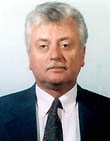
Bennie Lawson
Murderer Brian Kevin Rosenfeld
Murderer · USA · 1985
Brian Kevin Rosenfeld Brian Kevin Rosenfeld was sentenced to three concurrent l…
23 victims
Brian Kevin Rosenfeld
Murderer · USA · 1985
Brian Kevin Rosenfeld Brian Kevin Rosenfeld was sentenced to three concurrent l…
23 victims
 Russell Ellwood
Murderer · USA · 1991
Russell Ellwood was a former taxi driver. Authorities suspected him of killing…
20 victims
Russell Ellwood
Murderer · USA · 1991
Russell Ellwood was a former taxi driver. Authorities suspected him of killing…
20 victims
 Robert Martines Perez
Murderer · USA · 1994
Name: Robert Martines Perez · Other name used in proceedings: Robert Martinez P…
15 victims
Robert Martines Perez
Murderer · USA · 1994
Name: Robert Martines Perez · Other name used in proceedings: Robert Martinez P…
15 victims
 Billy Frank Vickers
Murderer · USA · 1993
Billy Frank Vickers Vickers was executed by lethal injection in Texas on Januar…
14 victims
Billy Frank Vickers
Murderer · USA · 1993
Billy Frank Vickers Vickers was executed by lethal injection in Texas on Januar…
14 victims
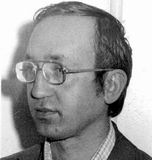 Vasiliy Kulik
Serial killer · Russia · 1984
Vasiliy Kulik was a Russian serial killer. He was responsible for the murders o…
13 victims
Vasiliy Kulik
Serial killer · Russia · 1984
Vasiliy Kulik was a Russian serial killer. He was responsible for the murders o…
13 victims
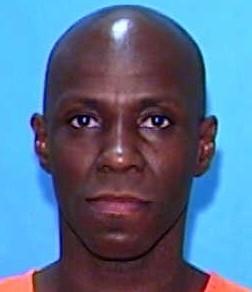 Alphonso Cave
Murderer · USA · 1982
Alphonso Cave was convicted of first-degree murder, robbery with a firearm, and…
1 victim
Alphonso Cave
Murderer · USA · 1982
Alphonso Cave was convicted of first-degree murder, robbery with a firearm, and…
1 victim
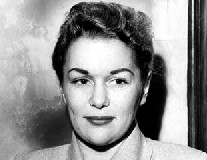 Barbara Graham
Murderer · USA · 1953
Barbara Graham (June 26, 1923 – June 3, 1955) was an American criminal and conv…
1 victim
Barbara Graham
Murderer · USA · 1953
Barbara Graham (June 26, 1923 – June 3, 1955) was an American criminal and conv…
1 victim
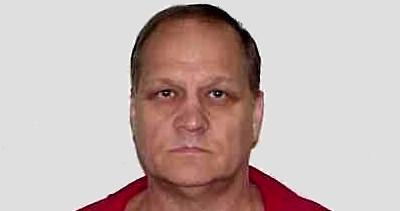 Roger Dale Epperson
Murderer · USA · 1985
Roger Dale Epperson Roger Dale Epperson (DOB 5-19-50) was sentenced to death Ju…
3 victims
Roger Dale Epperson
Murderer · USA · 1985
Roger Dale Epperson Roger Dale Epperson (DOB 5-19-50) was sentenced to death Ju…
3 victims
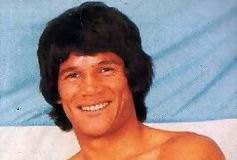 Carlos Monzón
Murderer · Argentina · 1988
Carlos Monzón (August 7, 1942 – January 8, 1995) was an Argentine professional…
1 victim
Carlos Monzón
Murderer · Argentina · 1988
Carlos Monzón (August 7, 1942 – January 8, 1995) was an Argentine professional…
1 victim
 Andrea Volpe
Murderer · Italy · 2004
The Beasts of Satan were a suspected satanic cult in Italy. Members of this gro…
3 victims
Andrea Volpe
Murderer · Italy · 2004
The Beasts of Satan were a suspected satanic cult in Italy. Members of this gro…
3 victims
- Gender
- male
- Country
- USA
- Location
- Washington, D.C., USA
- Date of birth
- 1969
- Age at first offence
- 25
- Characteristics
- revenge, gang, armed robbery
- Victim profile
- D.C. Police Sergeant Henry Joseph Daly, 51, and FBI Special Agents Martha A. Martinez, 35, and Michael John Miller, 36
- Method of murder
- Shooting
- Date(s) of murder
- November 22, 1994
- Years active
- 1994
- Date of arrest
- —
- Status
-
Died in custody
Four law-enforcement officers were killed in a gun battle inside the Police Headquarters building; Bennie Lawson then took an FBI agent’s gun, put it to his head, and pulled the trigger, and he was later described as having been killed during the shooting
Case record: Bennie Lawson
Background
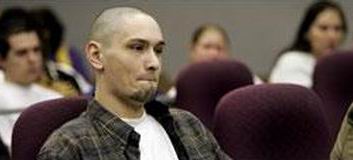
Bennie Lawson was a “street thug” who was described as having been concerned about his reputation among fellow gang members. He had been questioned by police about his role in a triple murder, and the word on the street was that Lawson was cooperating. He was labeled a “snitch,” and to Lawson that was described as “a fate worse than death.”
Lawson was identified as Benny Lee Lawson and Bennie L. Lawson Jr. in different reports. He was described as a 25-year-old former college student from the District. He lived with his father, a products marketing manager.
Court records described Lawson’s life as often interrupted by arrest and punishment starting in 1988, and his criminal record as including convictions on 13 weapons and ammunition charges. Federal authorities said he had been one of three men who had entered a third-floor room where police officer and FBI agents were working. The incident involved an office used by the department’s homicide “cold case” squad, which investigated crimes in which leads had withered.
A police lieutenant described Lawson’s earlier contact with headquarters: after investigators failed to gain a confession, they released Lawson but kept his car to inspect for evidence. The lieutenant said this angered him, and Lawson left headquarters apparently intent on returning with a gun.
A federal law enforcement official described the killings as having occurred by “happenstance” when Lawson asked two civilians the location of the homicide office and they mistakenly directed him to Sergeant Daly’s unit, which investigated older crimes.
The offence
A wild eruption of gunfire occurred inside the Police Headquarters building.
The police said the incident began around 3:30 P.M. and lasted about an hour. The police and federal authorities suggested that the victims were killed before an hour-long standoff with members of a SWAT team who had tried to negotiate with someone inside the room.
The authorities said that the SWAT members did not fire any weapons and that all the law-enforcement officers in the room were armed, suggesting that the gunman was killed by the law-enforcement agents in the room.
Federal authorities said Lawson was armed with a semiautomatic weapon and that he was one of three men who had entered a third-floor room in which the police officer and the Federal agents were working.
After the killings, Lawson took an FBI agent’s gun, put it to his head, and pulled the trigger. Authorities said that he was killed during the shooting.
Investigation
Chief of Police Fred Thomas said the gunfire occurred in the office used by the department’s homicide “cold case” squad.
Police officers and federal agents pieced together what happened, and many questions remained unanswered, including whether Lawson killed himself.
Authorities did not provide a precise chronology. They suggested that the victims were killed before an hour-long standoff, while the SWAT team tried to negotiate with someone inside the room.
A police statement said that when officers finally broke into the room, they found:
- the one man who was unharmed,
- the two dead FBI agents,
- and another dead man, believed to have been the gunman.
A police officer said officers inside headquarters managed to pull two victims—the police sergeant who was killed and a wounded FBI agent—out of the room. Another man, identified as a civilian by police, crawled from the room with a bullet wound in his leg.
Several local television stations reported that the incident involved a former police officer who had been dismissed; Chief Thomas and FBI assistant director Anthony Daniels did not confirm this.
On whether Lawson had been shot or had shot himself, one official said Lawson might have taken his own life because he died of a single shot to the forehead. The official said the location of the wound left open the question of whether he was shot by one of the officers.
Police said the incident began with Lawson entering the cold case squad office.
Arrest / prior criminal record and related events
Lawson had been questioned earlier in the day on Tuesday in connection with a triple homicide last week.
Court records described Lawson as having received one year’s probation for a crime in 1988; the records did not identify the crime.
In 1990, Lawson and five other members of a gang known as the First and Kennedy Crew, named for streets in his neighborhood, were arrested after police raided a house where a gang member lived and found a cache of weapons, including loaded semiautomatic rifles and handguns.
He subsequently spent a year and a half at the Federal prison in Lorton, Va.
The New York Times also described a probation sentence:
- Lawson received 16-month probation after 18 months in jail.
- The probation had ended four days before the shootings.
While on parole, Lawson was arrested again in March of this year and pleaded guilty to possession of marijuana.
Trial / court proceedings (pre-incident)
Eileen Sheehan, a federal prosecutor who had won convictions on 13 of 14 charges against Lawson, was quoted about the case as memorable.
Sheehan said:
"He was associated with a group of people who were extraordinarily dangerous," she said. "We process 14,000 misdemeanor cases a year and 100 to 150 at a time. Out of all those I was working on, this one caught my eye because of the firepower recovered."
While in jail, Lawson wrote a letter to the judge who sentenced him, Ellen Segal Huvelle, of the Superior Court of the District of Columbia. In the letter, Lawson complained about the living conditions in jail and asked the judge to reduce his sentence.
Lawson wrote:
"Your honor, I only ask that if you can help me, that you please do so," he wrote. "My piety towards yourself and the courts would be at its greatest. I can say with surety that if I was given another chance, it would be to the best of society's and my interest."
Sentencing
The New York Times reported that Lawson had been sentenced by Ellen Segal Huvelle, of the Superior Court of the District of Columbia, in the prior case referenced by the letter.
Timeline
- 1988 — Lawson received one year’s probation for a crime that court records did not identify.
- 1990 — Lawson and five other members of a gang known as the First and Kennedy Crew were arrested after police raided a house and found a cache of weapons, including loaded semiautomatic rifles and handguns.
- March of this year — Lawson was arrested again and pleaded guilty to possession of marijuana.
- Four days before the shootings — Lawson’s 16-month probation ended after 18 months in jail.
- 3:30 P.M. — The police said the incident began inside the Police Headquarters building.
- Shortly after 4 P.M. — A negotiator made contact with someone inside the office.
- About a half-hour after that — The SWAT team broke into the room.
- November 22, 1994 — Authorities described the shootings as occurring; Lawson died during the shooting.
- November 23, 1994 — The New York Times reported details of the incident.
- November 24, 1994 — The New York Times reported Lawson’s prior weapons and ammunition convictions and related background.
People involved
Perpetrator
Bennie Lawson (also identified as Benny Lee Lawson and Bennie L. Lawson Jr.) was the gunman described in connection with the shooting.
He used a semiautomatic handgun, described as either a Tech-9 or an M-11/9.
He had never been in contact with the officers he shot, according to police.
Victims
Sgt. Henry Joseph Daly, 51, was identified as a supervisor of the “cold case squad” and as the police sergeant killed.
The FBI agents killed were:
- Martha A. Martinez, 35
- Michael John Miller, 36
A third FBI agent, John David Kuchta, was said to be in serious but stable condition at Washington Medical Center after the shootings in one report and in critical condition at Washington Hospital Center after the shootings in another report; the bullet described entered his chest, hit his kidney and lodged in his stomach.
Arrest / negotiation / response
Within minutes of the initial gunfire, police officers sealed off the area around the building.
The special weapons and tactics unit and a hostage negotiator were called in.
A negotiator made contact with someone inside the office shortly after 4 P.M., and about a half-hour later the SWAT team broke into the room.
Police said officers had not found security devices at police headquarters and precinct stations and urged Mayor-elect Marion S. Barry Jr. not to cut the Police Department budget any further.
Locations
The police station was at Indiana Avenue and Third Street N.W., about a half-mile east of the White House and several blocks from the Capitol.
The police said the gunfire occurred in the office used by the department’s homicide “cold case” squad on the third floor of Police Headquarters.
Other details
At a news conference, Mayor-elect Marion S. Barry Jr. outlined a plan to grapple with the city’s financial situation. A committee appointed by Barry recommended reducing the police force by 152 positions for a savings of $10.8 million.
Chris Sanders, a five-year-veteran of the police force, criticized security precautions at the building. Sanders said:
"Anybody can walk in here and take over the building. No problem," Officer Sanders said. "This is just ridiculous. The normal security around here is a guy sitting at the front door and someone at Motor Vehicles. They keep cutting the budget."
Federal authorities said Lawson was cooperating and that his reputation among fellow gang members and the label “snitch” motivated him to “clear his name.” He walked into the “Cold Case Squad” office at D.C. Police Headquarters and opened fire without saying a word.
When asked what might have motivated the shootings, Anthony Daniels, the assistant director of the FBI Washington field office, said:
"I have no idea."
The police said the incident involved four people dead, including the gunman and three law-enforcement officers, and that two other people were reported to have been wounded.
The authorities said one of the two men who accompanied the gunman into the room was wounded and that the other was unharmed and was being questioned.
Spotted an error, or have more information about this case?