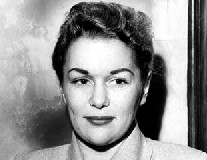
Barbara Graham
Murderer Marie Noe
Murderer · USA · 1949
Marie Noe was convicted in June 1999 of murdering eight of her children. Betwee…
8 victims
Marie Noe
Murderer · USA · 1949
Marie Noe was convicted in June 1999 of murdering eight of her children. Betwee…
8 victims
 Earle Dennison
Murderer · USA · 1952
Earle Dennison was a widow and worked as a surgical nurse. She worked at the We…
2 victims
Earle Dennison
Murderer · USA · 1952
Earle Dennison was a widow and worked as a surgical nurse. She worked at the We…
2 victims
 Betty Butler
Murderer · USA · 1952
Betty Butler was executed on June 11, 1954. She was 26 years old and was of the…
1 victim
Betty Butler
Murderer · USA · 1952
Betty Butler was executed on June 11, 1954. She was 26 years old and was of the…
1 victim
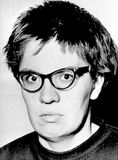 Betty Smithey
Murderer · USA · 1963
Betty Smithey was a live-in babysitter who murdered a 15-month-old child, Sandy…
1 victim
Betty Smithey
Murderer · USA · 1963
Betty Smithey was a live-in babysitter who murdered a 15-month-old child, Sandy…
1 victim
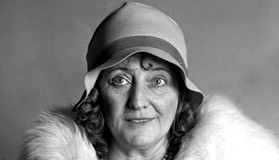 Walburga Oesterreich
Murderer? · USA · 1922
Walburga “Dolly” Oesterreich was an American homemaker and the wife of a wealth…
1 victim
Walburga Oesterreich
Murderer? · USA · 1922
Walburga “Dolly” Oesterreich was an American homemaker and the wife of a wealth…
1 victim
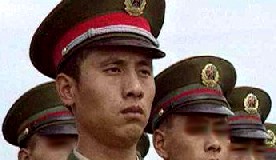 Tian Mingjian
Mass murderer · China · 1994
Tian Mingjian (Chinese: 田明建) was an Army officer with the rank of First Lieuten…
23 victims
Tian Mingjian
Mass murderer · China · 1994
Tian Mingjian (Chinese: 田明建) was an Army officer with the rank of First Lieuten…
23 victims
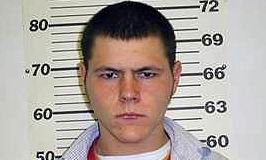 Matthew Slocum
Murderer · USA · 2011
Matthew Slocum was sentenced to 88 years to life in state prison for the shotgu…
3 victims
Matthew Slocum
Murderer · USA · 2011
Matthew Slocum was sentenced to 88 years to life in state prison for the shotgu…
3 victims
 Danny Wolfe
Murderer · USA · 1997
Danny Wolfe was tried in the State of Missouri v. Danny R. Wolfe. On February 1…
2 victims
Danny Wolfe
Murderer · USA · 1997
Danny Wolfe was tried in the State of Missouri v. Danny R. Wolfe. On February 1…
2 victims
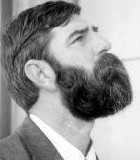 Louis Van Schoor
Serial killer · South Africa · 1986
Louis van Schoor was a security guard and an ex-policeman who was convicted and…
39 victims
Louis Van Schoor
Serial killer · South Africa · 1986
Louis van Schoor was a security guard and an ex-policeman who was convicted and…
39 victims
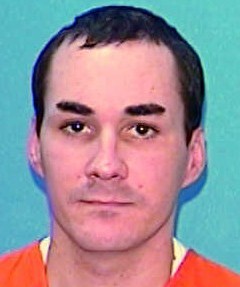 John Chamberlain
Murderer
John Chamberlain was sentenced in Florida in connection with a triple murder at…
1998 victims
John Chamberlain
Murderer
John Chamberlain was sentenced in Florida in connection with a triple murder at…
1998 victims
- Gender
- female
- Country
- USA
- Location
- Burbank, Los Angeles County, California, USA
- Date of birth
- June 26, 1923
- Age at first offence
- 30
- Characteristics
- robbery, abuse
- Victim profile
- Mabel Monahan, 64
- Method of murder
- Suffocation with a pillow
- Date(s) of murder
- March 9, 1953
- Years active
- 1953
- Date of arrest
- May 4, 1953
- Status
-
Executed
Executed in the gas chamber at San Quentin State Prison on June 3, 1955
Case identity
Barbara Graham (June 26, 1923 – June 3, 1955) was an American criminal and convicted murderer.
Status and end of case
Graham was executed in the gas chamber at San Quentin State Prison on June 3, 1955.
Her last words were “Good people are always so sure they're right.”
Graham was buried in Mount Olivet Cemetery, San Rafael, California.
Timeline
- March 9, 1953 — The robbery-murder of Mabel Monohan occurred.
- March 11, 1953 — Mitchell Truesdale discovered the crime scene; Monohan’s body was found in a blood-spattered hallway partly within a closet.
- March 31 — Baxter Shorter made a statement to police; the motive for the crime was robbery.
- April 14, 1953 — Shorter was kidnapped at gunpoint from his home.
- May 4, 1953 — Perkins, Santo, and Graham were arrested in Lynwood.
- August 14, 1953 — Graham, Santo, and Perkins began their joint trial, lasting five weeks.
- August 25, 1953 — The trial reconvened after an interruption; Graham became dizzy while climbing steel jail stairs and fell, badly spraining her ankle.
- September 8, 1954 — A petition for rehearing was denied.
- March 7, 1955 — The United States Supreme Court denied the defendants’ petition for certiorari.
- May 31, 1955 — Graham’s application for a writ of habeas corpus was denied by the U.S. District Court for the Southern District of California.
- June 2, 1955 — A stay petition was denied by the Ninth Circuit.
- June 3, 1955 — Graham was executed in the gas chamber at San Quentin State Prison.
Background
Barbara Graham was born Barbara Elaine Wood in Oakland, California.
When Barbara was two, her mother was sent to reform school.
Barbara was raised by strangers and extended family and had a limited education despite being intelligent.
As a teenager, she was arrested for vagrancy and sentenced to serve time at Ventura State School for Girls, the same reform school where her mother had been.
She was released from reform school in 1939.
Graham married and enrolled in a business college; she soon had her first child. She divorced in 1941.
She was married twice more and had a second child, but each attempt at a normal life failed.
During World War II, she worked near the Oakland Army Base, Oakland Naval Supply Depot, and Alameda Naval Air Station as a “seagull.” She and other “seagulls” flew down to Long Beach and San Diego in 1942.
She was arrested on vice charges in these naval cities and in San Pedro.
At age 22, she worked for brothel madam Sally Stanford in San Francisco for a time.
She became involved in drugs and gambling and had friends who were ex-convicts and career criminals.
She served five years for perjury as an alibi witness for two petty criminals, with her sentence at the California Department of Corrections Women’s State Prison at Tehachapi.
After her stint in state prison, she moved to Reno, Nevada and then Tonopah, working in a hospital and as a waitress.
She went to Los Angeles, got a room on Hollywood Boulevard, and returned to prostitution.
In 1953, she married a bartender, Henry Graham, with whom she had a third child named Tommy.
Graham was described as bisexual in the imprisonment and trial narrative.
Graham was held at the State Institution for Women at Corona before being moved to San Quentin.
She was moved from Corona to San Quentin on November 11, 1953, out of concern that attempts might be made on her life.
A memorandum in her file indicated officials had received reports that someone might try to free her or impregnate her via artificial insemination to delay her execution.
Graham was returned to Corona on June 23, 1954, with the imminent threat deemed to have passed.
The offence
Victim
Mabel Monohan was a sixty-four-year-old widow who lived in Burbank, California.
Facts of the attack and robbery
The crime occurred on the evening of March 9, 1953.
On March 11, 1953, Monohan’s gardener arrived at the house and noticed that the front door was ajar and that the house appeared to have been ransacked; Monohan’s body was found in a blood-spattered hallway, partly within a closet, with her hands bound behind her back.
Monahan had a pillowcase over her head tied around her neck with a strip of cloth.
She was struck repeatedly on the head and strangled with a strip of cloth.
Her hands were bound behind her back.
Monahan’s purse containing $474 and items of jewelry had been left behind, while the intruders pulled up carpeting, emptied drawers, and searched the house.
The house was described as ransacked top to bottom, including tearing out an even a furnace vent in the floor.
There were bloodstains across walls, floors, furniture, and rugs, and a trail of blood led down the hallway.
The coroner’s office cause of death was asphyxiation.
The motive was robbery.
The attackers allegedly tried to find a safe or cache of valuables; they did not locate Scherer’s money or anything of value and left empty-handed.
They later learned they had missed about $15,000 in jewels and valuables stashed in a purse in the closet near where they had murdered Monohan.
Investigation
Reward and informant chain
Monahan’s daughter offered a $5,000 reward for information leading to an arrest.
An informant who led Burbank police a week later to Baxter Shorter contacted police in response to the reward.
Shorter made a statement to police on March 31.
The motive for the crime was robbery.
Shorter’s partners had heard that Tudor Scherer hid several caches of $100,000 in the Burbank house.
Shorter provided first names of partners and a physical description of the fourth partner, a woman.
Police focused on John Santo (born in 1900) and Emmett Perkins (born in 1908), described as long-time felons whose known previous offenses included robbery, weapons violations, and kidnapping.
Perkins and Santo were also responsible for a quadruple murder in 1952 in Plumas County, though they would be tried for the Monahan murder first.
Investigative moves
John True was identified as Perkins’s girlfriend and was arrested, questioned, and released; he claimed he had no knowledge of the crime or of the alleged crime partners other than Santo.
An April 13 edition of the San Francisco Examiner reported that a suspect was being held in the Monahan murder.
Shorter was kidnapped at gunpoint from his home on April 14 and presumably murdered in retaliation for his confession.
True agreed to become a state witness in exchange for immunity from prosecution.
True testified against Graham.
Police also interviewed William Upshaw, who had been approached by Santo about the robbery but backed out of the venture before the evening of the crime; Upshaw later testified about meetings with Santo, Perkins, Shorter, and Graham and a drive past Monahan’s home in preparation for the robbery.
Grand jury indictments and flight
True told his story to the Los Angeles County grand jury, which returned indictments against Perkins, Santo, and Graham.
Santo, Perkins, and Graham made several moves after April 10, moving from their homes to the Ambassador Motel, then to Seal Beach, and finally to an apartment in a Lynwood machine shop building.
Arrests
The three were arrested on May 4, 1953, after an undercover police officer followed Graham to the building.
Crime scene and evidence
At the coroner’s inquest, it was ruled that the victim’s cause of death was asphyxiation due to strangulation.
Fingerprint and physical evidence did not identify defendants Perkins, Santo, or Graham at the crime scene.
A shabby old black purse was found hanging in a bedroom closet; it was not touched despite other rummaging.
The purse contained $475 in cash and an estimated $10,000 in miscellaneous jewelry.
Arrest
Perkins, Santo, and Graham were arrested on May 4, 1953 in Lynwood.
Trial
Charges and co-defendants
Graham, Santo, and Perkins pled not guilty at their joint trial.
The prosecution relied heavily on witness testimony from John True.
John True was taken outside Los Angeles to a sheriff’s honor farm to be kept in seclusion until time for him to testify.
Trial start and duration
The joint trial began on August 14, 1953 and lasted five weeks.
A recess occurred after Graham became dizzy while climbing steel jail stairs and fell, badly spraining her ankle.
Court and parties
The judge was Charles W. Fricke.
J. Miller Leavy led the prosecution.
Defense counsel included Jack Hardy for Graham.
Ward Sullivan was referenced as counsel for Santo and Perkins.
Three defense attorneys were appointed for Perkins, Santo, and Graham, with a public defender representing True.
Prosecution witnesses and evidence
The trial included testimony about the security-conscious behavior of Merle Leslie and the crime scene discovery by Mitchell Truesdale.
Lieutenant Robert Coveney testified about how Monohan’s neck ligature and her hands bindings were untied, and read the inventory of cash and jewelry.
Dr. Frederic Newbarr testified that the cause of death was asphyxia due to strangulation, clarifying the effects of the ligature around Monohan’s neck and also describing intracranial hemorrhaging caused by being struck on the left side of the head by a blunt instrument resembling a pistol barrel.
No fingerprints found there matched those of defendants Perkins, Santo, or Graham.
Attempted alibi and recordings
Graham became the center of media attention almost immediately after arrest.
During the trial, Sam Sirianni testified and described conversations with Graham in jail that supported an alibi scheme involving Encino and a motel.
Graham’s defense attorney attempted to withdraw as Graham’s attorney; the court denied the motion.
Sam Sirianni testified and read from a transcription, and a tape recording of one exchange was played in court.
Hardy denounced “the utterly ruthless” and “deceptive” manipulation of Graham in closing arguments.
Graham’s statements at trial
When questioned about her actions at the trial, she said:
- “Oh, have you ever been desperate? Do you know what it means not to know what to do?”
Graham also attempted to claim she could not remember where she was on the murder night and planned for an alibi.
After the disproof of the alibi, Graham testified and denied being with the codefendants on March 9.
She said she went along with Prow’s plan out of desperation.
Relationship to witnesses and other testimony
The trial narrative described Graham as testifying that she did not know Shorter or Upshaw.
It also described that the prosecution introduced some amorous notes exchanged by Graham and Prow.
Defense witnesses and testimony
Defense evidence included testimony by Eleanor Perkins and Thelma Sustrick.
Eleanor Perkins testified that Emmett Perkins was with her the night of the murder.
Thelma Sustrick said Emmett was at her home in Alhambra planting a nectarine tree until late in the afternoon, after which he allegedly was planning the Monohan robbery with Santo and the others.
Gladys Jones remembered seeing the men plant the tree.
A dental nurse, Margaret Vertrees, produced an appointment book showing Perkins had work done at 9:30 the next day and that his appearance and behavior were normal.
Only one witness testified for Jack Santo: Harriet Henson.
Harriet Henson testified that Santo and John True were at her house the night of the murder and until early in the morning on March 10.
On cross-examination, it was revealed Harriet had told a man named James Ferneaux that Santo had dropped his car off in Modesto early in the morning after driving all night from southern California.
Ferneaux was an undercover agent for the California Department of Justice and had recorded the conversation.
Verdict and sentencing
Verdict
The jury deliberated for less than five hours.
The jury returned guilty verdicts against Graham, Perkins, and Santo.
They were found guilty of murder in the first degree.
Sentencing
After verdicts, Judge Fricke formally sentenced the three convicted murderers to “suffer the extreme penalty, to wit, the death penalty, and that said penalty be inflicted within the walls of the state penitentiary at San Quentin, California, in the manner prescribed by law, to wit, the administration of lethal gas, until said defendant is dead.”
Appeals
Graham appealed her sentence while serving time at the California Institute for Women in the city of Corona.
Her appeals failed, and she was transferred to death row at San Quentin to await execution.
The California Supreme Court held that contentions were without merit in People v. Santo, 43 Cal. 2d 319.
A petition for rehearing was denied on September 8, 1954.
The U.S. Supreme Court denied the defendants’ petition for certiorari on March 7, 1955, without opinion.
Graham’s application for a writ of habeas corpus was denied on May 31, 1955, by the U.S.
The Ninth Circuit issued its opinion in Graham v. Teets on June 3, 1955.
The stay petition was denied on June 2, 1955.
Execution
Scheduled time changes
On June 3, 1955, the execution was scheduled at 10:00 a.m., then stayed by California governor Goodwin J. Knight until 10:45 a.m.
At 10:43 a.m., the execution was stayed again until 11:30 a.m.
Graham protested:
- “Why do they torture me? I was ready to go at ten o'clock.”
At 11:28 a.m., Graham was led from her cell to be strapped in the gas chamber.
Graham requested a blindfold so she wouldn’t have to look at the observers.
Observations and death
Pellets dropped at 11:34 a.m., and she died at 11:42 a.m.
Gene Blake of the Los Angeles Times reported:
- “it seemed an interminable time before death came…. She gasped and drew her head up twice. Then came another gasp. Then her head tipped far back, her mouth agape. Again and again she gasped until her head pitched forward for the last time at 11:37. Her gasps came slowly and fainter. And finally stopped”
Al Martinez wrote that Graham “gasped and strained against the straps that bound her … [f]oam bubbled at her mouth.”
Graham’s body was claimed by her husband Henry.
Co-defendants’ execution
Perkins and Santo were executed at 2:30 p.m. on the same day, June 3, 1955.
Aftermath
Burial and memorial
Graham was buried in the Roman Catholic cemetery in San Rafael.
A funeral was held on the second day after her execution at 9:15 in the morning at the Keaton Mortuary.
Legal and cultural discussion
Graham’s case involved legal issues related to execution delays and appellate procedures.
Her case was referenced in death penalty studies as an example of procedural irregularities.
Popular culture
Actress Susan Hayward played Graham in the movie I Want to Live! (1958), and won the Best Actress Academy Award for the role.
The film I Want to Live! (1958) was discussed as being fictionalized in parts, including presentations of arrest and evidence.
Graham was also portrayed by actress Lindsay Wagner in a 1983 TV version of I Want to Live!
Jazz/pop singer Nellie McKay had an hour-long touring production entitled I Want To Live!
Graham’s case was discussed through references in books including Wikipedia materials, and additional named works listed in the bibliography.
Other details (life facts mentioned)
Graham’s birth name was Barbara Elaine Wood.
She was described as having a troubled childhood and as being the eldest of three children of Hortense Wood, a teenaged mother.
Graham’s putative father, Joe Wood, was absent from her life at an early stage.
Her Alameda County Juvenile Court report from 1937 described her mother’s conduct as “questionable.”
Graham ran away from home in December 1936 and was made a ward of the court on March 19, 1937 as a wayward girl on grounds of immorality.
She was placed at the Convent of the Good Shepherd and later sent to Ventura School for Girls.
Graham escaped from Ventura multiple times and attempted escape on several occasions, including described behavior of “smirks and struts around,” and frequent “written up.”
She remained at Ventura until April 1939 and was released from parole in January 1942; an officer noted she was “impossible to supervise.”
Graham traveled and worked in multiple roles she later listed: cocktail waitress, dice girl or gambling shill, hotel clerk, and manager of a “call house” (brothel).
Graham described her mother with bitterness; she said, “She’s never cared whether I lived or died so long as I didn’t bother her.”
Graham married four times: in 1940 to Harry Kielhammer; 1944 to Aloyse Puechel; 1947 to Charles Newman; and 1950 to Harry Graham.
She had three children.
Sole custody of her two older sons was given to Kielhammer, their father.
Her third son, Tommy Graham (b. 1951), was mentioned as featuring prominently in media coverage of the trial and aftermath.
Graham was arrested for disorderly conduct in 1940 and 1942 under the names Barbara Redcliffe and Barbara Kielhammer, and for vagrancy and suspicion of prostitution in 1941, 1943, and 1944.
In 1947, as Barbara Kielhammer, she was charged with perjury for supplying a false alibi for Mark Monroe and Thomas Sittler, who had been charged with assault with intent to commit robbery.
She spent one year in the San Francisco County Jail for perjury.
In 1951, she was arrested on suspicion of a narcotics violation and released the next day for lack of evidence.
She had no record of violent offenses.
She was frequently associated with men who had records of violent crime.
Graham attempted to buy an alibi during the Monahan murder proceedings and also became involved in drugs and gambling prior to the murder.
Graham lived with Emmett Perkins when Perkins was identified as having an illegal gambling operation in El Monte.
Graham’s associates mentioned in the case included Jack Santo and Emmett Perkins, and also John True and Baxter Shorter.
At the trial, Graham’s mother’s identity was discussed in relation to the “seagulls” narrative and later in popular accounts.
Spotted an error, or have more information about this case?