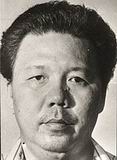
Adrian Lim
Murderer Wang Zhijian
Murderer · Singapore · 2008
Wang Zhijian was a Chinese national. Wang’s relationship with Zhang Meng ended…
3 victims
Wang Zhijian
Murderer · Singapore · 2008
Wang Zhijian was a Chinese national. Wang’s relationship with Zhang Meng ended…
3 victims
 Flor Contemplacion
Murderer · Singapore · 1991
Flor R. Contemplacion (January 1953 - March 17, 1995) was a Filipina domestic w…
2 victims
Flor Contemplacion
Murderer · Singapore · 1991
Flor R. Contemplacion (January 1953 - March 17, 1995) was a Filipina domestic w…
2 victims
 Michael McCrea
Murderer · Singapore · 2002
Michael McCrea was sentenced to 24 years imprisonment on June 29, 2006. · 2 Jan…
2 victims
Michael McCrea
Murderer · Singapore · 2002
Michael McCrea was sentenced to 24 years imprisonment on June 29, 2006. · 2 Jan…
2 victims
 Took Leng How
Murderer · Singapore · 2004
Defendant: Took Leng How (vegetable packer) · Victim: Huang Na (female, 8 years…
1 victim
Took Leng How
Murderer · Singapore · 2004
Defendant: Took Leng How (vegetable packer) · Victim: Huang Na (female, 8 years…
1 victim
 Jim Jones
Murderer · Guyana · 1978
James Warren "Jim" Jones (May 13, 1931 – November 18, 1978) was the American fo…
900 victims
Jim Jones
Murderer · Guyana · 1978
James Warren "Jim" Jones (May 13, 1931 – November 18, 1978) was the American fo…
900 victims
 Ervil LeBaron
Murderer · USA · 1972
Ervil Morrell LeBaron (1925 to August 16, 1981) was the leader of a polygamous…
35 victims
Ervil LeBaron
Murderer · USA · 1972
Ervil Morrell LeBaron (1925 to August 16, 1981) was the leader of a polygamous…
35 victims
 Nicholas Ncama
Serial killer · South Africa
Nicholas Lungisa Ncama was a South African serial killer who was convicted in 1…
Nicholas Ncama
Serial killer · South Africa
Nicholas Lungisa Ncama was a South African serial killer who was convicted in 1…
 Jerry Scott Heidler
Mass murderer · USA · 1997
Jerry Scott Heidler (defendant) Heidler briefly lived with the Daniels family w…
4 victims
Jerry Scott Heidler
Mass murderer · USA · 1997
Jerry Scott Heidler (defendant) Heidler briefly lived with the Daniels family w…
4 victims
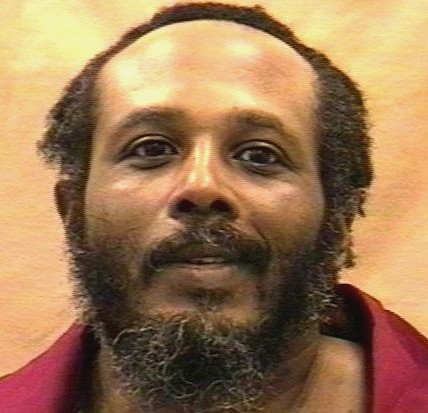 Guy Tobias LeGrande
Murderer · USA · 1983
Guy Tobias LeGrande was sentenced to death in Stanley County Superior Court for…
1 victim
Guy Tobias LeGrande
Murderer · USA · 1983
Guy Tobias LeGrande was sentenced to death in Stanley County Superior Court for…
1 victim
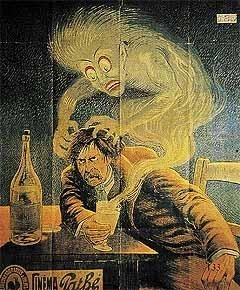 Jean Lanfray
Homicide · Switzerland · 1905
Jean Lanfray (1873/74 – February 26, 1906) was a Swiss laborer. He was convicte…
3 victims
Jean Lanfray
Homicide · Switzerland · 1905
Jean Lanfray (1873/74 – February 26, 1906) was a Swiss laborer. He was convicte…
3 victims
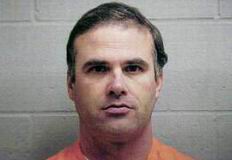 Cary Stayner
Murderer · USA · 1999
Cary A. Stayner (born August 13, 1961) was an American serial killer. Stayner w…
4 victims
Cary Stayner
Murderer · USA · 1999
Cary A. Stayner (born August 13, 1961) was an American serial killer. Stayner w…
4 victims
 Richard Tucker
Murderer · USA · 1963
Richard Tucker was executed by electrocution in Georgia on May 22, 1987. Richar…
2 victims
Richard Tucker
Murderer · USA · 1963
Richard Tucker was executed by electrocution in Georgia on May 22, 1987. Richar…
2 victims
- Gender
- male
- Country
- Singapore
- Location
- Singapore
- Date of birth
- January 6, 1942
- Age at first offence
- 39
- Characteristics
- murder for hire
- Victim profile
- Agnes Ng Siew Heok, 9 / Ghazali bin Marzuki, 10
- Method of murder
- Smothering / Drowning
- Date(s) of murder
- January 24/February 6, 1981
- Years active
- 1981
- Date of arrest
- February 7, 1981
- Status
-
Executed
Executed by hanging on November 25, 1988
Parties
- Adrian Lim (unemployed 39-year-old professed to be a medium with powers to cure people’s ailments)
- Catherine Tan Mui Choo (wife; age 26 at the time of trial)
- Hoe Kah Hong (mistress/“holy wife”; age 25 at the time of trial)
- Lucy Lau Kok Huang (cosmetics seller; rape accuser of Lim)
- Agnes Ng Siew Hock (victim; nine-year-old)
- Ghazali bin Marzuki (victim; 10-year-old)
- Benson Loh Ngak Hua (Hoe’s husband)
- Rajendra Munoo (Singapore Infopedia)
- Glenn Knight (deputy public prosecutor)
- Francis Seow (defence for Tan on appeal)
- H. E. Cashin (defence counsel)
- J. B. Jeyaretnam (defence counsel; retained by Tan with permission)
- Nathan Isaac (defence counsel for Hoe; assigned by the High Court to defend Lim, Tan and Hoe)
- Howard Cashin (lawyer appointed for Lim at High Court level)
- Justice T. S. Sinnathuray (trial judge; also delivered judgment)
- Justice F. A. Chua (trial judge)
- Chief Justice Wee Chong Jin (appeal)
- Justice Lai Kew Chai (appeal)
- Justice L. P. Thean (appeal)
- President Wee Kim Wee (clemency)
Timeline
- 6 January 1942 — Adrian Lim was born.
- 25 January 1981 — The body of Agnes Ng Siew Hock was found near a staircase at Block 11, Toa Payoh.
- 7 February 1981 — The body of Ghazali bin Marzuki was found between Blocks 10 and 11, Toa Payoh.
- 25 May 1983 — Lim, Tan and Hoe were sentenced to death.
- August 1986 — The appeal was dismissed by Chief Justice Wee Chong Jin, Justice Lai Kew Chai and Justice L. P. Thean.
- 25 November 1988 — Lim, Tan and Hoe were hanged at Changi Prison; their bodies were cremated at Mount Vernon Crematorium.
Background
In the early 1980s, murders of two young children, Agnes Ng Siew Heok and Ghazali bin Marzuki, led to investigations and to the capture of Adrian Lim and two women associated with him: his wife Catherine Tan Mui Choo and his mistress Hoe Kah Hong. The murders were described as being connected to rites and rituals that unfolded during the trial.
The bodies of Ng and Ghazali were found on 25 January 1981 and 7 February 1981, respectively, in similar locations at Toa Payoh Lorong 7. Agnes was found in a bag near Block 11. Ghazali was found near Blocks 10 and 11.
The offence
The murders involved the death of Agnes Ng Siew Hock and Ghazali bin Marzuki, and were presented during the trial as ritual killings, including assertions that the children had been killed purportedly as blood sacrifices to the Hindu goddess Kali.
Victim 1: Agnes Ng Siew Hock
Agnes Ng Siew Heok was a nine-year-old student who attended the Holy Innocents Chinese Girls’ School and was the youngest of nine children. She was last seen alive by her sister Pauline and a friend at the Church of Risen Christ in Toa Payoh at about 4pm on Jan 24, 1981. She had been waiting there for her sister to finish classes before returning home together.
Her body was found on Jan 25, at about 2.20am near a staircase at Block 11, Toa Payoh, in a brown vinyl bag. Her home at Block 233 was not far from where she was found. She had been sexually assaulted and suffocated, and there were indications that a hand covering her nose and mouth contributed to her suffocation. A forensic expert during the trial testified that it would have taken her 10 minutes to die.
Victim 2: Ghazali bin Marzuki
Ghazali Marzuki was a 10-year-old boy who studied in Henry Park Primary School. He was staying with his grandmother at Block 344, Clementi Avenue 5, on Feb 6 for the Chinese New Year holidays.
While at a playground with two cousins, a woman approached and asked for help to collect some things from a friend’s house. Ghazali agreed to help and followed her into a taxi. He was last seen alive when he boarded the taxi.
In the early hours of Feb 7, Mr Fung Joon Yong, who lived at Block 12 in Toa Payoh, saw Catherine Tan stepping out of a lift, carrying a child over her shoulder. Adrian Lim was with her. They walked in the direction of Blocks 10 and 11. Later that morning, Ghazali’s body was found near a hedge just in front of Block 10.
Forensic pathologists deemed the cause of death drowning, and there were also indications of suffocation marks similar to those on Ng. Burn marks were found on his back and a puncture on his arm, and traces of a sedative were detected in his blood. There were also descriptions of him being drugged, choked and drowned, including that his head was pushed into a tub of water.
Investigation and arrests
A bloody trail near Ghazali’s body led police investigators to a flat in Block 12, Toa Payoh Lorong 7, which was occupied by Lim, Tan and Hoe. The flat contained religious items, including pictures of Jesus Christ, as well as Hindu and Chinese idols smeared with blood.
A blood stain on the kitchen floor led police to take the three in for questioning. Officers searched the block house-to-house after the discovery of blood trail leading to Lim’s residence.
When police found various evidence in Lim’s flat, the evidence included:
- Pictures of Jesus Christ and Hindu and Chinese idols, some smeared with blood
- Slips of paper with Agnes and Ghazali’s names
- A drop of blood spotted on the kitchen floor, where Lim claimed Chinese New Year had been just over and he had been killing chickens; later tests revealed it was human blood
- Vials of blood in the fridge
- A single piece of paper inside (a telephone book) with both their names, Agnes and Ghazali’s
- A pair of slippers, shorts and a handkerchief stained with blood belonging to Lim
- A bloodstained blouse belonging to Hoe found in a pail
- Pills containing the drug found in Ghazali seized, along with a syringe believed to contain his blood
- Strands of hair that seemed like Ghazali’s found under a carpet and under a sofa
Lim was arrested and taken into custody together with Tan and Hoe after police found this evidence.
Trial
Charges and committal
Two days after their arrest, Lim, Tan and Hoe were charged in the Subordinate Court for the murders of the two children. In committal proceedings on 16–17 September, Deputy Public Prosecutor Glenn Knight called on 58 witnesses and arrayed 184 pieces of evidence before the magistrate. Lim, Tan and Hoe remained in custody while investigations continued.
Lim pleaded guilty and claimed sole responsibility for the acts, while Tan and Hoe denied the charges of murder. The magistrate decided that the case against the accused was sufficiently strong to be heard at the High Court.
High Court
The High Court convened in the Supreme Court Building on 25 March 1983. The presiding judges were Justice T. S. Sinnathuray and Justice F. A. Chua.
The defence counsels assigned by the High Court were H. E. Cashin, J. B. Jeyaretnam and Nathan Isaac, with Howard Cashin appointed as Lim’s lawyer when capital crimes required a legal professional. Tan used $10,000 of the $159,340 seized from the trio’s flat to engage J. B. Jeyaretnam for her defence. Hoe accepted the court’s offer of counsel and received Nathan Isaac.
The prosecution presented circumstantial evidence including photographs of crime scenes, blood samples, religious objects, drugs, and notes with Ng and Ghazali’s names. Glenn Knight had no eyewitnesses to the murders.
Glenn Knight made the following opening statement:
"What matters is that [the accused] did intentionally suffocate and drown these two innocent children, causing their deaths in circumstances which amount to murder. And this we will prove beyond all reasonable doubt."
Confessions and statements described at trial
In police statements read out at remand, Lim stated that he had killed for revenge and that he had sodomised Ng. The accused also confirmed in their statements that each was an active participant in the murders. The trial involved descriptions of contradictions among statements and confessions made in court.
At trial, Lim maintained that he was the sole perpetrator and denied that he raped Lucy Lau or Ng, claiming that he made earlier statements only to satisfy his interrogators. Lim testified about refusing legal representation at the Subordinate Court level and also described that he had been bound by religious and moral duty to tell the truth when challenged about his confession.
Psychiatric evidence and diminished responsibility arguments
The defence argued diminished responsibility and attempted to show that the accused were not of sound mind and could not be held responsible for the killings. The prosecution opposed the diminished responsibility defence, and the court considered expert testimony.
The expert witnesses included:
- Dr Wong Yip Chong (private practice) who believed Lim was mentally ill at the time of the crimes and described characteristics consistent with mild manic depression.
- Dr Chee Kuan Tsee (Woodbridge Hospital) who testified that Lim was “purposeful in his pursuits, patient in his planning and persuasive in his performance for personal power and pleasure”.
- Dr R. Nagulendran who testified that Tan was mentally impaired by reactive psychotic depression.
- Dr Chee Kuan Tsee’s disagreement with Dr Nagulendran regarding Tan’s mental state.
- Both Dr Nagulendran and Dr Chee agreeing that Hoe suffered from schizophrenia long before she met Lim, and that her stay at Woodbridge Hospital had helped her recovery.
Dr Chee Kuan Tsee stated:
"purposeful in his pursuits, patient in his planning and persuasive in his performance for personal power and pleasure"
Dr Chee also testified about the prosecution’s view that none of the Woodbridge doctors saw signs of relapse during the six months of follow-up checks (16 July 1980 – 31 January 1981).
Closing statements
The defence closing speeches were given by Cashin, Jeyaretnam and Isaac:
- Cashin argued Lim was a normal man until his initiation into the occult and acted on delusions to kill children in Kali’s name.
- Jeyaretnam argued that Tan was “a robot”, carrying out orders without thought.
- Isaac stated:
"[Hoe's] schizophrenic mind accepted that if the children were killed, they would go to heaven and not grow up evil like her mother and others."
Knight’s prosecution closing included the argument that the accused could not have shared the same delusion and that their “cunning and deliberation” could not have been done by a deluded person. Knight urged the judges with:
"My Lords, to say that Lim was less than a coward who preyed on little children because they could not fight back; killed them in the hope that he would gain power or wealth and therefore did not commit murder, is to make no sense of the law of murder. It would lend credence to the shroud of mystery and magic he has conjured up his practices and by which he managed to frighten, intimidate and persuade the superstitious, the weak and the gullible into participating in the most lewd and obscene acts."
Sentencing
On 25 May 1983, the three accused were sentenced to death.
At the time of judgment, the judges found Lim “abominable and depraved” in carrying out his schemes. They described Tan as an “artful and wicked person” and a “willing [party] to [Lim's] loathsome and nefarious acts”. They described Hoe as “simple” and “easily influenced”. The judges noted that although Hoe suffered from schizophrenia, they considered her to have been in a state of remission during the murders and therefore bore full responsibility for her actions.
Appeals
Tan and Hoe appealed on grounds of mental illness. Tan’s appeal was represented by Francis Seow and Hoe’s appeal by Nathan Isaac again.
In August 1986, their appeal was dismissed by Chief Justice Wee Chong Jin, Justice Lai Kew Chai and Justice L. P. Thean.
Further appeals to the Privy Council of London did not succeed, and clemency from President Wee Kim Wee was also rejected.
Outcome
Lim, Tan and Hoe were hanged on 25 November 1988 at Changi Prison. Their bodies were cremated at the Mount Vernon Crematorium following a church service at the Church of the Holy Family in Katong.
Other details
Adrian Lim’s background and claimed mediumship
Adrian Lim was born on 6 January 1942, was the eldest of three children, and attended Anglo-Chinese School but dropped out after Secondary One.
He worked as an Internal Security Department informer for a few months and then worked for Rediffusion for 14 years as a wireman and bill collector. He professed to be a medium who could cure ailments. He would go into trances, adopting different voices and speaking in a different language. He performed tricks, and he convinced clients to sleep with him on a pretext of “cleansing” evil or through harnessing their fears and insecurities.
Lim claimed he had taken lessons from “Uncle Willie” who had “special powers”. At trial, he described his abilities as tricks to get young women to sleep with him because he believed it would prolong his life. Lim also told the police that he had hormone injections to increase his sexual potency, and that he had consulted doctors at least 40 times for hormone injections.
Lim met Tan in 1974, introduced for “treatment” by friends at the bar where she was working. Lim persuaded Tan to become a prostitute to support him financially. After divorcing his first wife, Lim married Tan in 1977, but he continued to take on other “holy wives” in later years.
During the trial, Lim said he had been framed for rape and then described a revenge plan. He described the killings as revenge and testified that they were intended as sacrifice to the deity Kali.
Catherine Tan Mui Choo
Catherine Tan Mui Choo was 26 years old at the time of the trial and was the eldest of four children. She attended schools including the Convent of the Holy Infant Jesus and Macpherson Secondary School and was sent to the Marymount Vocational Centre.
During the trial, it was described that she was generally depressive, was taken in by attention from Lim, and stayed with him despite ill-treatment and infidelities. She moved into Lim’s flat in 1975, but moved out with their children after discovering the truth, divorcing Lim in 1976. They registered their marriage in June 1977, and Lim dominated Tan through beatings, threats, and lies. She was persuaded to prostitute herself to supplement income and assisted in preparing clients for Lim’s pleasure.
Hoe Kah Hong
Hoe Kah Hong was born on 10 September 1955 and was 25 years old at the time of the trial. She was described as being sent to live with her grandmother until she was 15, and later experiencing difficulties with her family.
Her mother brought her to Lim’s flat in 1979. Hoe became a believer in Lim’s powers, including his “needles and egg” trick, and she was instrumental in bringing the children to Lim.
Hoe participated in electric shock therapy sessions with Lim, and she reported that her husband, Benson Loh Ngak Hua, was electrocuted during one such session on 7 January 1980. Her story at the time was that Loh was electrocuted while trying to switch on a faulty fan. A coroner recorded an open verdict and the police made no further investigations.
Hoe was later admitted to Woodbridge Hospital, where psychologists diagnosed schizophrenia; she was discharged by the first week of July and continued treatment with follow-up checks showing remission.
Lucy Lau Kok Huang and rape investigation
Lim was charged in relation to a rape complaint by Lucy Lau Kok Huang, a door-to-door cosmetics salesgirl, in late 1980. On 19 October, Lim told Lau that a ghost was haunting her and that he could exorcise it with sex rituals. Lim secretly mixed two capsules of Dalmadorm into milk and offered it to Lau, who became groggy after drinking it. Lim then abused her by using drugs or threats over the following weeks. In November, after Lau made a police report regarding his treatment of her, Lim was arrested on charges of rape and Tan was arrested for abetting him.
Lim had been required to report to police when he extended bail. He described this as an inconvenience and became frustrated, plotting to murder children as revenge.
Arrest, charges and custody
After police searched Lim’s flat, Lim, Tan and Hoe were arrested and then charged with murder. They remained in custody during trial proceedings and further interrogations.
Court and sentencing atmosphere
During the trial, crowds gathered outside the courts and proceedings were monitored and reported by the media. On 25 May 1983, crowds massed outside the building waiting for the verdict.
Reports about the trial and legacy
The trial was described as the second-longest murder trial in Singapore at the time, lasting about two months, and it was discussed in media and public response in Singapore. After the sentences were carried out, Lim and the women were counselled by Catholic priests and nuns. Lim asked for absolution and Holy Communion from Father Brian Doro. Sister Gerard Fernandez was identified as the spiritual counsellor for Tan and Hoe. Reports noted that Lim was hated by fellow prisoners in prison.
Motion pictures and public commentary
Two films were described as being based on the murder case during the 1990s: Medium Rare (1991) and God or Dog (1997). It was described that the first film had foreign involvement and was jeered at a midnight screening, and the second film had a dismal box-office performance despite more positive critical reception. A television programme scheduling reference was included, and public complaints were described as resulting in a reshuffle of schedule.
Quotations and judicial remarks
The record included the following statements:
- Adrian Lim (testifying): "I felt that I had been framed and that the police had been blind. We (with Tan and Hoe) wanted revenge and had a meeting. At the meeting, we decided to kill small children"
- Justice statements were included through characterisations: Lim was “abominable and depraved”; Tan was “artful and wicked”; Hoe was “simple” and “easily influenced”.
- Glenn Knight’s opening statement (verbatim) and Knight’s closing address (verbatim) were included above.
Spotted an error, or have more information about this case?