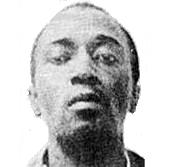
Richard Tucker
Murderer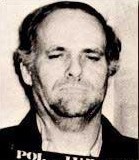 Ervil LeBaron
Murderer · USA · 1972
Ervil Morrell LeBaron (1925 to August 16, 1981) was the leader of a polygamous…
35 victims
Ervil LeBaron
Murderer · USA · 1972
Ervil Morrell LeBaron (1925 to August 16, 1981) was the leader of a polygamous…
35 victims
 Charles Manson
Murderer · USA · 1969
Charles Milles Manson (born November 12, 1934) was an American criminal and mus…
9 victims
Charles Manson
Murderer · USA · 1969
Charles Milles Manson (born November 12, 1934) was an American criminal and mus…
9 victims
 Dennis Duane Webb
Murderer · USA · 1973
Defendant: Dennis Duane Webb · Victims: John Rainwater and Lori Rainwater · Cou…
7 victims
Dennis Duane Webb
Murderer · USA · 1973
Defendant: Dennis Duane Webb · Victims: John Rainwater and Lori Rainwater · Cou…
7 victims
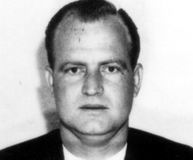 Gary Gene Tison
Murderer · USA · 1967
Gary Gene Tison was serving life sentences at the Arizona state prison. He had…
7 victims
Gary Gene Tison
Murderer · USA · 1967
Gary Gene Tison was serving life sentences at the Arizona state prison. He had…
7 victims
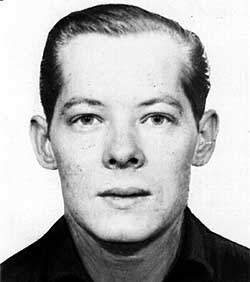 Richard Lee Tingle
Murderer · USA · 1968
Richard Lee Tingle was born out of wedlock in December 1940. He was raised by a…
6 victims
Richard Lee Tingle
Murderer · USA · 1968
Richard Lee Tingle was born out of wedlock in December 1940. He was raised by a…
6 victims
 Billy Daniel Raulerson
Murderer · USA · 1993
Defendant: Billy Daniel Raulerson Jr. Age: 27 Court/case references: Raulerson…
3 victims
Billy Daniel Raulerson
Murderer · USA · 1993
Defendant: Billy Daniel Raulerson Jr. Age: 27 Court/case references: Raulerson…
3 victims
 Mark Barton
Spree killer · USA · 1999
Mark Orrin Barton (1955 – July 29, 1999) committed a spree killing in Stockbrid…
12 victims
Mark Barton
Spree killer · USA · 1999
Mark Orrin Barton (1955 – July 29, 1999) committed a spree killing in Stockbrid…
12 victims
 David Earl Gibbs
Murderer · USA · 1985
David Earl Gibbs was convicted and sentenced to death for the July 1985 murder…
3 victims
David Earl Gibbs
Murderer · USA · 1985
David Earl Gibbs was convicted and sentenced to death for the July 1985 murder…
3 victims
 Ernesto Salgado Martinez
Murderer · USA · 1995
Ernesto Salgado Martinez — defendant · Officer Robert Martin — victim; DPS offi…
1 victim
Ernesto Salgado Martinez
Murderer · USA · 1995
Ernesto Salgado Martinez — defendant · Officer Robert Martin — victim; DPS offi…
1 victim
 Hai Hai Vuong
Murderer · USA · 1986
Hai Hai Vuong challenged the dismissal of his petition for a writ of habeas cor…
2 victims
Hai Hai Vuong
Murderer · USA · 1986
Hai Hai Vuong challenged the dismissal of his petition for a writ of habeas cor…
2 victims
 Carlton Francis
Murderer · USA · 1997
Carlton Francis was a neighbor of twin sisters Claire Brunt and Bernice Flegel.…
2 victims
Carlton Francis
Murderer · USA · 1997
Carlton Francis was a neighbor of twin sisters Claire Brunt and Bernice Flegel.…
2 victims
- Gender
- male
- Country
- USA
- Location
- Bibb County, Georgia, USA
- Date of birth
- 1943
- Age at first offence
- 20
- Characteristics
- kidnapping, rape, robbery
- Victim profile
- Woman (h is aunt) / Edna Sandefur (female, 50)
- Method of murder
- St abbing with knife / Beating with an iron pipe
- Date(s) of murder
- 1963 / 1978
- Years active
- 1963–1978
- Date of arrest
- September 21, 1978
- Status
-
Executed
Executed by electrocution in Georgia on May 22, 1987
Background
Richard Tucker was executed by electrocution in Georgia on May 22, 1987.
Richard Tucker, 44 years old, was executed hours after the United States Supreme Court and the State Board of Pardons and Paroles refused to issue a stay of execution. John Silers, spokesman for the Department of Corrections, said Tucker died at 7:23 P.M.
Earlier in the day, Tucker visited with a sister, lawyers and clergymen.
Tucker was convicted in 1978 of murdering a nurse while on parole in another killing. He had been released from prison six months earlier, after serving 14 years for the stabbing death of his aunt.
Tucker was described in his petition to the State Board of Pardons and Paroles as the son of poor, alcoholic parents who often were violent and frequently in jail. The petition said his mother was shot to death by a neighbor in a fight over alcohol and his father died after a drinking bout.
Wayne Snow Jr., chairman of the parole board, said the fact that Tucker was on parole for another murder at the time he killed the nurse played a large part in its decision to deny the petition.
The executions of Tucker and Joseph Mulligan, who died in the electric chair May 15, were scheduled soon after the Supreme Court ruled that the state's death penalty law was constitutional even though a study showed it was more likely to be imposed on killers of whites than on killers of blacks. Tucker’s victim was white. Mulligan’s victim was black.
The offence
In 1978, Edna Sandefur was kidnapped and killed in Bibb County, Georgia. A Bibb County, Georgia jury found Richard Tucker, Jr., guilty of malice murder and kidnapping with bodily injury. Tucker was sentenced to two death penalties.
Edna Sandefur, 50 years old, of Albany, was in Macon to visit her ill mother in a hospital. She was kidnapped as she left the hospital.
The evidence revealed that Sandefur was kidnapped from a hospital parking area on a Friday evening and was forced to drive to a secluded area in the rear of an abandoned warehouse. Tucker robbed Sandefur, killed her by hitting her on the head with an iron pipe, and then stripped the body of all clothing. After burning her clothing, Tucker left the scene in Sandefur’s car.
Sandefur’s badly decomposed body was discovered in a secluded area of Macon, Georgia, on September 19, 1978. The body was not discovered until the following Tuesday afternoon.
After the kidnapping and murder, Tucker stripped the body of all clothing, burned her clothing, and disposed of items from Sandefur’s purse and credit cards, including taking police officers to where he had disposed of the purse and credit cards.
Several eyewitnesses testified that they saw Tucker driving the victim’s car shortly after the murder.
Investigation
Two days after the body was discovered, Tucker admitted his complicity in the abduction and murder of Sandefur but claimed that his friend, Willie Lee Mahone, had killed her. In a later statement to police, Tucker confessed that he alone abducted and killed Sandefur.
Tucker stated that after the murder he undressed the victim and burned her clothes to destroy fingerprints. He took police to the scene of the crime, identified the murder weapon (an iron pipe) and the charred remains of Sandefur’s clothing. Tucker also took police officers to where he had disposed of Sandefur’s purse and credit cards. Tucker’s confession was tape recorded and played for the jury during the trial.
An FBI witness identified Tucker’s thumb print on one of the victim’s credit cards.
An expert witness testified that “a medium brown Caucasion pubic hair” was found on clothes seized in Tucker’s apartment several days after the killing.
Willie Lee Mahone testified that on the night of the murder Tucker bragged about killing “a white woman” and “said he enjoyed killing ... and [that] he'll do it again one day.” Transcript of Evidence, Volume III, at 676-77.
Tucker is black; Sandefur was white.
Arrest
Tucker admitted his complicity in the abduction and murder of Sandefur within two days after her body was discovered.
Trial
In 1978, a Bibb County, Georgia jury found Richard Tucker, Jr., guilty of malice murder and kidnapping with bodily injury.
The sentencing phase began after the jury found Tucker guilty of murder and kidnapping with bodily harm.
Tucker did not testify at trial but took the stand during the sentencing phase. He claimed that he made the confession introduced at trial only to stop the police from pressuring him. Tucker said it was Mahone who killed Sandefur and that Tucker merely undressed the victim to remove fingerprint evidence.
On cross-examination during sentencing, Tucker was asked about his denial of the confession and his previous record, including the 1964 murder of his aunt and two burglary charges, one stemming from an incident of attempted rape. Tucker had pled guilty to these crimes.
The prosecution called Frank Sagnibene, Tucker’s parole officer, to testify at sentencing. Sagnibene told the jury that shortly after Tucker’s arrest Tucker admitted to the murder, indicating he was the sole perpetrator. Sagnibene’s testimony was inconsistent with Tucker’s claim that Mahone had killed Sandefur.
Following closing arguments by each attorney, the jury was charged with its sentencing task. After a short deliberation, it returned death sentences for each crime.
Tucker v. State affirmed Tucker’s convictions and death sentences on direct appeal.
Sentencing
Tucker received two death penalties after the jury found him guilty of malice murder and kidnapping with bodily injury.
Appeals
United States Court of Appeals (Eleventh Circuit)
Tucker appealed his case through federal habeas corpus proceedings.
Richard Tucker, Petitioner, v. Ralph Kemp, Warden, Georgia Diagnostic and Classification Center, Respondent, No. 83-8466, United States Court of Appeals, Eleventh Circuit, decided Nov. 7, 1985, involved appeal from the United States District Court for the Middle District of Georgia.
The appellate history described included:
- In 1978, the Bibb County, Georgia jury found Tucker guilty of malice murder and kidnapping with bodily injury and sentenced him to two death penalties.
- After exhausting his state remedies, Tucker filed a habeas corpus petition in federal district court.
- The district court denied relief.
- On appeal, the Eleventh Circuit reversed in part and remanded for a new sentencing hearing because the prosecutor’s closing argument during the sentencing phase was improper and denied Tucker “a fundamentally fair sentencing proceeding.”
“In this case, the prosecutor's closing argument was a speculative parade of horrors that had little to do with aiding the jury in deciding whether to sentence Richard Tucker to death.” Tucker v. Francis, 723 F.2d at 1508.
- The panel opinion was vacated when the Eleventh Circuit granted a rehearing en banc.
- The en banc court decided that Tucker was not entitled to receive another sentencing hearing. Tucker v. Kemp, 762 F.2d 1496 (11th Cir. 1985) (en banc).
The Eleventh Circuit affirmed the district court’s denial of relief on the two issues it had remanded for, and affirmed the district court’s denial of Tucker’s claim regarding ineffective assistance of counsel at sentencing and the denial of an evidentiary hearing.
Ineffective assistance of counsel at sentencing
Tucker argued the district court erred in denying his claim that he received ineffective assistance of counsel at the sentencing phase.
The decision addressed the standard from Strickland v. Washington, 466 U.S. 668 (1984), requiring both deficient performance and actual prejudice.
Tucker was represented by attorneys John Robert Sikes and Robider Markwalter. Tucker argued that they did not attempt to develop or present mitigating evidence at the sentencing trial.
Sikes and Markwalter testified at the state habeas hearing. The state court credited their testimony. The appellate decision described that they interviewed Tucker, discussed strategy for the penalty phase with him, and asked Tucker for the names of potential witnesses. Markwalter testified:
“We discussed with Mr. Tucker that phase of the trial and sought his assistance and who we might call and people who might have some knowledge of him. Couldn't produce anything.” Transcript of state habeas hearing held on May 29, 1981 (hereinafter “Transcript”) at 54.
Sikes explained why no witnesses were presented:
“There wasn't anybody ... to put up. Mr. Tucker had no family. I think perhaps he had one relative left, a cousin, Rosa Lewis, I believe is her name, and Rosa had not seen him in several years. He had only been out of the penitentiary for a very short period of time at the time this sentencing took place. She was not at all helpful. We talked with her, and she just could not give us anything that would be in mitigation of the offense.” Transcript at 37.
Sikes also testified that if Rosa Lewis had been called to testify at Tucker’s sentencing she would have been subject to cross-examination concerning her knowledge of Tucker’s “prior prison record and that sort of thing.” Transcript at 13.
The appellate decision stated that Sikes and Markwalter made a strategic decision to offer only Tucker’s testimony at the sentencing trial, citing Sikes’s testimony:
“The idea behind that was to try to invoke as much sympathy and empathy for him as we could from the Jury.” Transcript at 36.
The appellate decision described that through Tucker’s testimony, counsel brought out Tucker’s drug and alcohol use prior to the commission of the crime, Tucker’s contention that Willie Lee Mahone was responsible for Sandefur’s murder, and information detailing the conditions at Reidsville State Penitentiary during Tucker’s previous incarceration.
Through cross-examination of Frank Sagnibene, counsel brought out Sagnibene’s impression of Tucker:
“He was very orderly, very neat, very polite, quiet. He was very good as a parolee.” Transcript of Evidence, Volume III, at 884.
Sikes argued on Tucker’s behalf, emphasizing Tucker’s cooperation with the police.
The appellate decision stated it agreed with the district court that counsel did as well as could be expected under the circumstances. It also described the state court’s note:
“While it may be true that Counsel put up a relatively scant defense, the finest lawyer in the country could not put up a defense that did not exist. Both attorneys appeared to be intelligent and concerned defense lawyers.” Tucker v. Zant, No. 5019, slip op. at 5 (Ga.Super.Ct. Sept. 11, 1981).
Evidentiary hearing claim
Tucker argued the district court erred in denying him an evidentiary hearing and asserted that material facts were not adequately developed at the state court hearing. Tucker argued he did not have funds necessary to bring to court witnesses other than those who would voluntarily appear and pay their own expenses.
The appellate decision described Tucker’s claim that he should have obtained an evidentiary hearing under Townsend v. Sain and Thomas v. Zant.
Tucker had submitted in support of his motion for an evidentiary hearing below “a list of eight potential witnesses who would testify to mitigating circumstances.” Brief for Appellant at 36.
Tucker claimed these witnesses would detail and explain his “turbulent family history.” Brief for Appellant at 25.
The appellate decision said that because none of the potential witnesses had been contacted or investigated by trial counsel, Tucker contended his trial counsel was ineffective. It quoted:
“[N]one of these potential witnesses had been contacted or investigated by trial counsel,” Brief for Appellant at 36.
The appellate decision concluded that counsel was not ineffective and that the facts necessary to Tucker’s ineffective assistance claim were adequately developed. It also stated that the existence of the eight potential witnesses and their purported testimony did not alter the conclusion that no new evidentiary hearing was required.
Accordingly, the judgment of the district court denying Tucker an evidentiary hearing and denying the writ of habeas corpus on the ineffective assistance of counsel at sentencing issue was affirmed.
The appellate decision included a discussion that it would be unable to conclude that any failure to develop a material fact was not attributable to Tucker’s inexcusable neglect or deliberate bypass, and it reasoned that Tucker did not explain why he did not develop related facts during cross-examination at the state habeas hearing or explain why he did not attempt to submit affidavits to the state court of the eight potential witnesses who would not “voluntarily appear and pay their own expenses.” Brief for Appellant at 37.
Outcome
Richard Tucker’s habeas corpus challenges in federal court were denied. The Eleventh Circuit affirmed the district court’s denial of relief and affirmed the denial of an evidentiary hearing and denial of ineffective assistance of counsel at sentencing.
Aftermath
John Silers, spokesman for the Department of Corrections, reported that Tucker died at 7:23 P.M.
Timeline
- September 19, 1978 — Edna Sandefur’s badly decomposed body was discovered in a secluded area of Macon, Georgia.
- 1978 — A Bibb County, Georgia jury found Richard Tucker, Jr., guilty of malice murder and kidnapping with bodily injury; Tucker was sentenced to two death penalties.
- Nov. 7, 1985 — The United States Court of Appeals, Eleventh Circuit, affirmed denial of habeas relief and denial of an evidentiary hearing and ineffective assistance of counsel at sentencing.
- May 22, 1987 — Richard Tucker was executed by electrocution in Georgia.
- May 23, 1987 — The New York Times published coverage stating Tucker was executed and that Supreme Court and the State Board of Pardons and Paroles refused to issue a stay.

Spotted an error, or have more information about this case?