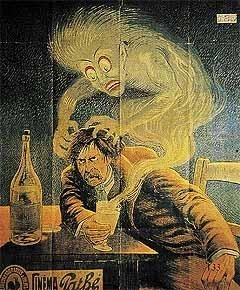
Jean Lanfray
Homicide Cayetano Santos Godino
Homicide · Argentina · 1906
Cayetano Santos Godino (October 31, 1896 – November 15, 1944), also known as "P…
4 victims
Cayetano Santos Godino
Homicide · Argentina · 1906
Cayetano Santos Godino (October 31, 1896 – November 15, 1944), also known as "P…
4 victims
 Richard Archer Prince
Homicide · United Kingdom · 1897
Richard Archer Prince was found “guilty, but according to the medical evidence,…
1 victim
Richard Archer Prince
Homicide · United Kingdom · 1897
Richard Archer Prince was found “guilty, but according to the medical evidence,…
1 victim
 Edward Brian Capetillo
Homicide · USA
Edward Brian Capetillo was a Latino male who was 17 years of age at the time of…
1995 victims
Edward Brian Capetillo
Homicide · USA
Edward Brian Capetillo was a Latino male who was 17 years of age at the time of…
1995 victims
 Cassidy Goodson
Homicide · USA · 2012
Cassidy Goodson — 14-year-old girl; Lakeland teenager who strangled her newborn…
1 victim
Cassidy Goodson
Homicide · USA · 2012
Cassidy Goodson — 14-year-old girl; Lakeland teenager who strangled her newborn…
1 victim
 Christian Dornier
Spree killer · France · 1989
Christian Dornier Christian Dornier was found insane on November 10, 1989 and w…
14 victims
Christian Dornier
Spree killer · France · 1989
Christian Dornier Christian Dornier was found insane on November 10, 1989 and w…
14 victims
 Joseph Michael Lawrence
Murderer · USA · 2005
Joseph Michael Lawrence was convicted in connection with the murder of Jason Ga…
1 victim
Joseph Michael Lawrence
Murderer · USA · 2005
Joseph Michael Lawrence was convicted in connection with the murder of Jason Ga…
1 victim
 John Thomas Noland
Murderer · USA · 1982
John Thomas Noland was executed in North Carolina by lethal injection on Novemb…
2 victims
John Thomas Noland
Murderer · USA · 1982
John Thomas Noland was executed in North Carolina by lethal injection on Novemb…
2 victims
 Michelle Hall
Murderer · USA · 2008
Michelle Hall was a Coweta County woman. Her husband was John Britt Hall. The c…
1 victim
Michelle Hall
Murderer · USA · 2008
Michelle Hall was a Coweta County woman. Her husband was John Britt Hall. The c…
1 victim
- Gender
- male
- Country
- Switzerland
- Location
- Commugny, Vaud, Switzerland
- Date of birth
- 1873/74
- Age at first offence
- 32
- Characteristics
- parricide, drunken rage
- Victim profile
- His pregnant wife and his daughters Rose, 4, and Blanche, 2
- Method of murder
- Shooting (rifle)
- Date(s) of murder
- August 28, 1905
- Years active
- 1905
- Date of arrest
- Same day (suicide attempt)
- Status
-
Imprisoned
Sentenced to 30 years in prison on February 26, 1906
Case record: Jean Lanfray
Background
Jean Lanfray (1873/74 – February 26, 1906) was a Swiss laborer. He was convicted of murdering his pregnant wife and two children in a drunken rage on the afternoon of August 28, 1905. Police later revealed that he had drunk an excessive amount of wine and hard liquors that morning, along with two ounces of absinthe.
The case became associated with a moral panic against absinthe in Europe at that time. The murders were blamed solely on the influence of absinthe, which led to a petition to ban absinthe in Switzerland shortly after the murders. A petition received 82,000 signatures, and absinthe was banned in Vaud shortly thereafter.
A 1908 constitutional referendum led to absinthe being banned in all of Switzerland, and absinthe was banned in most European countries (and the United States) before the outbreak of World War I.
The offence
On August 28, 1905, Lanfray consumed seven glasses of wine, six glasses of cognac, one coffee laced with brandy, two crème de menthes, and two glasses of absinthe after eating a sandwich.
He returned home drunk with his father and drank another coffee with brandy. He then got into an argument with his wife, and asked his wife to polish his shoes for him. When she refused, Lanfray retrieved a rifle and shot her once in the head, killing her instantly. His father fled.
His four-year-old daughter, Rose, heard the noise and ran into the room, where Lanfray shot and killed her and his two-year-old daughter, Blanche. He then shot himself in the jaw and carried Blanche’s body to the garden, where he collapsed. He was discovered minutes later by police after his father notified the police.
Lanfray was taken to a hospital. He eventually recovered and was put on trial for murder.
Investigation
Police learned the amount of alcohol consumed before and during the day of the murders. It was revealed that he had drunk an excessive amount of wine and hard liquors that morning, along with two ounces of absinthe.
During the day, his intake was described as including creme de menthe, cognac and soda, and wine breaks and additional drinks, culminating in coffee laced with brandy and later absinthe after eating a sandwich. Police and psychiatrists delved into his behavior pattern and found that he drank regularly and frequently, including several brandies and cordials plus one or two absinthes a day.
Trial
The trial started on February 23, 1906 and ended that same day. Attorneys argued that the two ounces of absinthe he consumed prior to the murders were solely to blame for his actions.
Dr. Albert Mahaim, a leading Swiss psychologist, testified that Lanfray suffered from “a classic case of absinthe madness”.
The prosecutor, Alfred Obrist, argued that the two ounces of absinthe he had ingested were minor in relation to the large amounts of other alcoholic beverages he had consumed that day.
Lanfray was found guilty on all three counts of murder. He received thirty years’ imprisonment. Due to his intoxicated state at the time of the murders, he did not face capital punishment.
Sentencing
Lanfray was sentenced to 30 years in prison on February 26, 1906.
Outcome
Three days after the trial, on February 26, 1906, Lanfray committed suicide by hanging in his prison cell.
Public reaction
The Lanfray case received significant coverage, especially by Europe’s temperance movement. It set off a moral panic against absinthe in Switzerland and other countries.
A petition to ban absinthe in Switzerland received 82,000 signatures. The Vaud legislature voted to ban absinthe on May 15, 1906. A referendum to reverse this decision was launched but failed, with the vote recorded as 23,062 to 16,025.
On February 2, 1907, the Grand Conseil voted to ban the retail sale of absinthe, including its imitations.
On July 5, 1908, Article 32 to the Swiss Constitution was proposed, which would prohibit manufacturing or possession of absinthe in Switzerland. The article was added following a referendum, in which it won by 241,078 to 139,699 votes, and would be effective October 7, 1910.
Other details
After the murders, on September 3, 1905, a Sunday, citizens of Commugny held a mass meeting in the schoolhouse. Villagers learned after an autopsy on Mme. Lanfray that she was four months pregnant with a male fetus. The community had to find a scapegoat, and absinthe became that scapegoat.
At the meeting, the mayor denounced absinthe. The mayor said: “Absinthe,” declaimed the mayor, “is the principal cause of a series of bloody crimes in our country.”
After the shooting, Nurse Marie Blaser said that Lanfray wept and moaned and said:
“It is not me who did this. Tell me, O God, please tell me that I have not done this. I loved my wife and children so much.”
Lanfray insisted he did not remember anything about the murders.

Spotted an error, or have more information about this case?