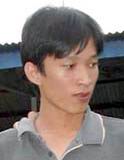
Took Leng How
Murderer Wang Zhijian
Murderer · Singapore · 2008
Wang Zhijian was a Chinese national. Wang’s relationship with Zhang Meng ended…
3 victims
Wang Zhijian
Murderer · Singapore · 2008
Wang Zhijian was a Chinese national. Wang’s relationship with Zhang Meng ended…
3 victims
 Michael McCrea
Murderer · Singapore · 2002
Michael McCrea was sentenced to 24 years imprisonment on June 29, 2006. · 2 Jan…
2 victims
Michael McCrea
Murderer · Singapore · 2002
Michael McCrea was sentenced to 24 years imprisonment on June 29, 2006. · 2 Jan…
2 victims
 Adrian Lim
Murderer · Singapore · 1981
Adrian Lim (unemployed 39-year-old professed to be a medium with powers to cure…
2 victims
Adrian Lim
Murderer · Singapore · 1981
Adrian Lim (unemployed 39-year-old professed to be a medium with powers to cure…
2 victims
 Guen Aguilar
Murderer · Singapore · 2005
Guen Garlejo Aguilar was a Filipino domestic worker. She pleaded guilty and was…
1 victim
Guen Aguilar
Murderer · Singapore · 2005
Guen Garlejo Aguilar was a Filipino domestic worker. She pleaded guilty and was…
1 victim
 Umesh Reddy
Murderer · India · 1998
Umesh Reddy was sentenced to death on October 27, 2006. The Karnataka High Cour…
18 victims
Umesh Reddy
Murderer · India · 1998
Umesh Reddy was sentenced to death on October 27, 2006. The Karnataka High Cour…
18 victims
 Mohammed Adam Omar
Murderer · Yemen · 1995
Mohammed Adam Omar was a morgue assistant at Sanaa University’s medical faculty…
16 victims
Mohammed Adam Omar
Murderer · Yemen · 1995
Mohammed Adam Omar was a morgue assistant at Sanaa University’s medical faculty…
16 victims
 Ronald James Hamilton
Murderer · USA · 2001
Ronald James Hamilton, Jr. was sentenced to death in Texas. · 11/07/2001 — Hami…
1 victim
Ronald James Hamilton
Murderer · USA · 2001
Ronald James Hamilton, Jr. was sentenced to death in Texas. · 11/07/2001 — Hami…
1 victim
 Adremy Dennis
Murderer · USA · 1994
Adremy Dennis was convicted in Summit County, Ohio, of aggravated murder with d…
1 victim
Adremy Dennis
Murderer · USA · 1994
Adremy Dennis was convicted in Summit County, Ohio, of aggravated murder with d…
1 victim
 John George Haigh
Serial killer · United Kingdom · 1944
John George Haigh was an English serial killer during the 1940s. He was commonl…
6 victims
John George Haigh
Serial killer · United Kingdom · 1944
John George Haigh was an English serial killer during the 1940s. He was commonl…
6 victims
 Andre Lee Thomas
Murderer · USA · 2004
Andre Lee Thomas (TDCJ Number 999493) was born on 03/17/1983. He was received o…
3 victims
Andre Lee Thomas
Murderer · USA · 2004
Andre Lee Thomas (TDCJ Number 999493) was born on 03/17/1983. He was received o…
3 victims
 David Pittman
Murderer · USA · 1990
David Pittman (date of birth: 12/10/61) was sentenced to death in the Tenth Jud…
3 victims
David Pittman
Murderer · USA · 1990
David Pittman (date of birth: 12/10/61) was sentenced to death in the Tenth Jud…
3 victims
 Petr Zelenka
Serial killer · Czech Republic · 2006
Petr Zelenka was a male nurse who worked in a hospital in eastern Bohemia in Ha…
7 victims
Petr Zelenka
Serial killer · Czech Republic · 2006
Petr Zelenka was a male nurse who worked in a hospital in eastern Bohemia in Ha…
7 victims
- Gender
- male
- Country
- Singapore
- Location
- Singapore
- Date of birth
- 1981
- Age at first offence
- 23
- Characteristics
- rape, sexual assault
- Victim profile
- Huang Na, 8
- Method of murder
- S mothering and stomping on her to ensure her death
- Date(s) of murder
- October 10, 2004
- Years active
- 2004
- Date of arrest
- October 30, 2004 (turned himself)
- Status
-
Executed
Sentenced to death on August 27, 2005; executed by hanging on November 3, 2006
Case record
Parties
- Defendant: Took Leng How (vegetable packer)
- Victim: Huang Na (female, 8 years old; Chinese national; Singapore resident)
Background
Huang Na was an eight-year-old Chinese national living at the Pasir Panjang Wholesale Centre in Singapore. Her father, Huang Qinrong, and mother, Huang Shuying, were both born in 1973 in Putian city in Fujian, People’s Republic of China. They met in 1995 and married soon after, as Shuying was pregnant with Huang Na. In 1996, Qinrong left China to seek his fortune in Singapore and worked illegally as a vegetable packer at the Pasir Panjang Wholesale Centre. When Shuying found out that he was having affairs in Singapore, she divorced him and was given custody of Huang Na. Shuying later married Zheng Wenhai, a Fujian businessman, and she became pregnant with his child in early 2003.
In May 2003, Shuying immigrated to Singapore as a peidu mama accompanying Huang Na, who was enrolled in Jin Tai Primary School. They lived at the Pasir Panjang Wholesale Centre, where Shuying worked. People from the wholesale centre and Jin Tai Primary School described Huang Na as intelligent, independent, sociable, and active.
Huang Na became friends with Took Leng How, a vegetable packer at the wholesale centre. Took was born in Malaysia in 1981 as the second child of a close-knit family of four. He came to Singapore when he was 18 seeking better-paying jobs. At the wholesale centre, he often played with Huang Na, bought her food, and gave her rides on his motorcycle.
The offence
Huang Na disappeared on 10 October 2004. The prosecution alleged that Took lured Huang Na to a storeroom, then stripped and sexually assaulted her. The prosecution alleged that he smothered and stomped on her to ensure her death and stored her body in nine layers of plastic bags stuffed into a sealed cardboard box.
The charge on which Took was convicted read:
That you, TOOK LENG HOW … on or about the 10th day of October 2004, between 1.40 p.m. and 10.00 p.m., at the Pasir Panjang Wholesale Centre, Singapore, did commit murder by causing the death of one Huang Na, female/8 years old, and you have thereby committed an offence punishable under section 302 of the Penal Code, Chapter 224.
Investigation
Huang Na went missing on 10 October 2004. She was last seen at a food court near the wholesale centre, barefoot and wearing a blue denim jacket and bermuda shorts.
Shuying looked across the island for her daughter from 7 a.m. to past midnight every day for three weeks. The police, including a Criminal Investigation Department team, conducted an intensive search and police officers carried photographs of Huang Na during their daily rounds. Volunteers formed search parties and Crime Library distributed over 70,000 leaflets appealing for information. Two Singaporeans offered rewards of S$10,000 and S$5,000 for finding Huang Na, and the manager of an online design company set up a website to raise awareness and gather tip-offs. Search efforts extended to Malaysia, with volunteers putting up posters in Johor Bahru and Kuala Lumpur.
On 19 and 20 October, Singaporean police questioned Took as part of their investigations. He said that three Chinese men kidnapped the girl. After questioning Took, police accompanied him home and to the police station again for a polygraph test. While eating at a restaurant along Pasir Panjang Road, Took said he needed to go to the toilet, escaped, took a taxi to Woodlands, and sneaked across the Causeway to Malaysia.
Singaporean police searched for him until he turned himself in on 30 October, confessing that he had accidentally strangled Huang Na during a game of hide-and-seek in a storeroom.
On 31 October 2004, Took led police investigators to a slope at Telok Blangah Hill Park. A systematic search at the downhill, forested area of the park by officers of the Gurkha Contingent led to the retrieval of a sealed carton box containing the decomposed remains of Huang Na.
Arrest / custody and related conduct
Took was placed under intensive questioning during the early days after the disappearance. No formal arrest was made at the time.
On 10 October 2004, Took worked as a vegetable packer at Messrs All Seasons Fruits and Vegetables Supplier at Block 7 of Pasir Panjang Wholesale Centre and his employer employed Huang Shuying to work part time at the shop. At the relevant time, both the mother and child resided with other Chinese nationals at an apartment in Block 8 of the wholesale centre.
On 27 September 2004, Huang Shuying departed for China and left Huang Na in the care of one of her housemates, Li Xiu Qin (“Li”). That was to be the last time she saw the deceased alive. At about 1.30pm on 10 October 2004, Huang Na told Li that she wanted to make an overseas call to her mother, then left the apartment alone. Li searched for Huang Na near blocks close to the wholesale centre and the area surrounding Huang Na’s school but to no avail. By about 10.00pm, Li reported Huang Na’s disappearance to the police.
On 20 October 2004, Took disclosed to police investigators for the first time that, while he had not committed any offence, he knew persons responsible for Huang Na’s disappearance. He claimed someone at the wholesale centre had abducted Huang Na to “teach [her] mother a lesson” because the latter had “created disharmony amongst the traders”. Took claimed he had some influence in the “underworld” and could arrange to have Huang Na released, but he said he needed to collect his two mobile telephones since relevant contact numbers were stored in them. Arrangements were made for him to undergo a polygraph test the next day. In the early hours of 21 October 2004, investigating officers accompanied him to his residence at Telok Blangah to collect one mobile telephone and then to the shop at the wholesale centre to pick up the other. The officers offered for Took to remain at the wholesale centre if he would turn up later for the polygraph test; he instead preferred to follow the officers back to their CID office.
En route to the CID, Took said he was hungry and the officers stopped at a restaurant along Pasir Panjang Road for food. He excused himself to go to ease himself in the toilet, left through the back door, and escaped.
Took managed to make his way to Penang, Malaysia and hid until 30 October 2004 when he surrendered to Malaysian authorities. A team of Singapore police officers escorted him back to Singapore.
Trial
Court and timeline
- The 14-day trial of Took began on 11 July 2005 before Justice Lai Kew Chai in the High Court.
- On 27 August 2005, Justice Lai ruled Took was guilty of murder and sentenced him to death.
Prosecution evidence and allegations
The prosecution relied on 76 witnesses, a video in which Took re-enacted the murder, forensic evidence, and an autopsy that found several bruises on Huang Na’s head.
In its case, the prosecution alleged that on 10 October 2004 Took stayed behind at the wholesale centre after his work and at about 1.30pm saw Huang Na at Block 13 and lured her into the storeroom at Block 15 on the pretext of playing hide-and-seek. In the storeroom, the prosecution alleged the deceased was stripped, had her limbs bound with raffia string, and was sexually assaulted. The prosecution alleged he smothered her mouth and nose with his bare hands until her body went limp, then stomped and kicked her head. The prosecution alleged he then packed her naked body into multiple layers of plastic bags, sealed the bundle in a cardboard box with adhesive tape, and discarded it by tossing the box down the slope at Telok Blangah Hill Park.
Defence and psychiatrist evidence
At the close of the prosecution’s case, the defence made a submission of no case to answer, which was rejected.
Took chose not to testify. Two defences were raised: (1) that the prosecution failed to prove beyond a reasonable doubt that Took caused Huang Na’s death, and (2) diminished responsibility.
The defence relied on diminished responsibility, claiming Took had schizophrenia. Psychiatrist R. Nagulendran argued Took was schizophrenic, citing behaviour such as frequently smiling to himself and talking of spirits as inappropriate, and he said Took had no motive. Nagulendran also called Took’s story about three Chinese men a delusion.
In Justice Lai’s judgment, it was unnecessary to determine motive or whether a sexual assault had taken place. Justice Lai noted Took had no history of mental abnormality; the behaviour cited was “not necessarily abnormal” and the murder was “clearly the product of a cold and calculating mind”. Justice Lai said the defence of diminished responsibility failed because the defence failed to prove on a balance of probabilities that Took was suffering from schizophrenia or any mental disorder of any kind at the time of the offence. Justice Lai found Took guilty of murder and sentenced him to suffer the punishment of death.
Evidence detail: Took’s investigation statements and re-enactment
After his arrest and during custody, Took’s statements and video re-enactment were relied on by the prosecution. His statements described the events he said occurred in the storeroom.
In a statement on 9 November 2004, Took narrated:
… After a short time I went back into the office. It was still in darkness as the lights were off. I started beating on the table with my hand and calling her name at the same time. While I was beating on the table I suddenly heard a loud thud. I knew that the thud did not come from my beating on the table. It clearly came from within the office. I immediately went to switch on the lights in the office. I saw her lying on the floor. She did not seem alright. Something was amiss. She seemed to have vomited blood because blood was trickling out from the right corner of her mouth. She seemed to be going into a spasm. Her eyes were wide open and there was urine all over the floor. I immediately went over to call her name but she did not reply and she was still having her spasm. I did not know what to do. I wanted to untie her ankles but I did not know how to undo the knots. I sat on the chair in a daze and looked at her. …
He continued:
… To my mind the police would not believe that such a thing happened. There was no grudge between Huang Na and myself and I loved her as a kid. …
He further narrated:
… When I was seated there my mind went blank. Her body was shaking and on seeing her in that position, I suddenly recalled some scenes that I have seen on television. I recalled that people who were given a chop on the neck with the back of one’s hand would lose consciousness momentarily and then come to again. I immediately tried it out on her by chopping at the back of my neck with the back of my left hand. After the first chop there was no reaction. I tried again the second time with a bit more force – again no reaction. I then tried the third time with more force than the second. This time when I looked at her I saw that she had vomited more blood … I was at a loss. My mind was totally blank. I did not know why but I put both my hands round her neck and pressed it. I pressed it momentarily with my eyes closed. I let go of my hands and looked at her. She looked no different. I put my hands round her neck again and closed my eyes. I pressed her neck harder this time. After sometime, I relaxed my hands. I opened my eyes and looked at her. This time I notice her face was greyish white although her eyes were still open. …
He also described:
Thereafter, I moved her position so that her head was resting on the opposite side to the original position. I sat down on the floor and watched her again. This time she was hiccupping (“urg”). This went on for very long and it scared me. I stood up and stamped on her neck about three times with my foot. She continued to hiccup and each time she hiccupped I would become very scared because her face would be ashen grey and her eyes would still be open. I took off the jacket that she was wearing and covered her face. I did not dare look at the face. She was wearing only a jacket and no other tops then. I think she was wearing some kind of pants. I could not take it off since her ankles were bound. I really did not know why I was trying to strip off her pants at the time … I put my right hand on her backside and inserted my third finger into an opening. I am not sure whether it was the anus or the vagina. To my mind that must be the anus. I did not know why I inserted my finger into it. …
In a statement of 10 November 2004, Took said:
… I was dwelling on how to handover this kid to the police. The kid was already dead. After thinking for a while I put my thoughts aside. I next went into the office [in the storeroom]. I bent over the kid and clasped my hand over both her wrists. With my other hand I clasped her ankles. I lifted her in this manner and took her out of the office and put her on the floor.
He continued:
After putting her on the cement floor near the washing area where there was a tap, I got hold of the scissors and snip the string binding her ankles. I removed the strips of string and shifted her so that her legs were in the washing area. I washed her feet under the tap by spraying water through the rubber hose because the base of her feet were very dirty. Just before moving her nearer the washing area, I had removed her shorts after snipping the strings. Actually I am not sure what kind of pants she was wearing. She was not wearing panties. China people don’t wear panties. She was only a kid so she was not wearing one. From the box I brought along, I took a plastic bag, 20 by 30, and put the strings and her clothes, i.e. the blue jacket and pants into it. I took another plastic bag of the same size and squatted down beside her.
He also described plastic bag placement:
Following this, I put the plastic bag over her head by pulling it down all the way to her legs. She was still in a lying position on the cement floor. The bag only came up to some where around her legs. I am not sure which part of the legs it came to. I cannot remember. As her legs were still sticking out of the edge of the plastic bag, I held on to the edge of the plastic bag around her legs and stood up. …
Took stated he placed the body into several plastic bags, tied each one in turn, placed the body into the cardboard carton, and sealed the carton with adhesive tape.
He put the deceased’s clothes into a plastic bag and threw them into a rubbish dump at Block 16 of the wholesale centre. He loaded the cardboard carton on a motorcycle, rode to Telok Blangah Hill Park, and threw the carton down the hill from a spot where there was a lamp post with a triangular sign. He chose that spot because it was easier for him to bring the police to recover it. He said he put the body in the plastic bags to slow down decomposition and chose a sturdy carton so the body would not be eaten by wild dogs. His re-enactment of what he did in the storeroom and how he packed the body in the box was recorded on video.
Forensic evidence
After recovery of the cardboard carton, plain radiography revealed there was a body inside. The carton was opened at the mortuary by Dr Paul Chui, Senior Consultant Forensic Pathologist, Centre for Forensic Medicine, Health Sciences Authority. The naked body of the deceased was revealed curled in a foetal position inside nine layers of plastic bags.
Dr Chui conducted a post-mortem examination and prepared a report. The findings of direct relevance included:
- vomitus in the mouth
- bruising over the left side of the tongue
- faecal staining around the anal orifice
- five areas of bruising referred to as injuries 1 to 5:
- injury 1: elliptical area of bruising over the left mandible
- injury 2: oval-shaped bruising 2cm? by 1cm over the left angle of jaw
- injury 3: bruising of 1cm diameter over the left mastoid process
- injury 4: bruising of 1.5cm diameter over the right angle of jaw
- injury 5: bruising over the upper lip region in the midline
Dr Chui’s examination of the neck region revealed no musculature injuries or fractures consistent with the forceful chopping, pressing, and stamping described by Took. Dr Chui certified the cause of death as “Acute Airway Occlusion”, meaning blockage or closure of the air passage. That finding was not disputed; the point of contention was the cause of the blockage.
In testimony and report, Dr Chui opined the cause was smothering. He said:
Having examined the body, one can safely [conclude] that there was no natural disease that would have caused death at the material point in time. Then one notes that there are a number of injuries about the face which have been listed as injuries 1 to 5 [in the autopsy report]. … One also notes that the body was discovered or found in a plastic bag or set of nine plastic bags. From the findings alone one could also exclude some degree -- some head injury for [sic] a lack of -- because of the absence of fractures of the skull or bleeding in the subdural or extradural space, which is commonly associated with serious head injuries. One explanation in which to [sic] in order to exclude -- sorry, one explanation to -- or the cause of death could be inferred from the presence of the injuries around the face and the lower mouth region. … Smothering in the manner I have demonstrated [earlier] would explain one such possibility. As I mentioned [before], one could also have been strangled -- the victim could also have been strangled leaving little trace, but then because of the absence of injuries, I cannot speculate on that aspect. So based on those findings, that is the cause of death.
Dr Chui further explained that bruised tongue, vomitus in the oral cavity, and faecal staining over the anal region, as well as spasms and loss of bowel control described by Took, were manifestations of the dying process.
During cross-examination, concessions were extracted from Dr Chui. He conceded among other possibilities:
- it was possible for a person with no prior medical history of fits to suffer a fit or seizure
- it was possible for a person to suffer a fit resulting from trauma to the head
- it was possible for a person experiencing a fit to swallow her tongue, which could lead to acute airway occlusion
- injuries to the lower facial region could have been inflicted after death while the body was being packed into plastic bags
- it was possible the deceased died from oxygen deprivation after she was wrapped in plastic bags
In re-examination, Dr Chui also said:
If I had not found the five injuries and the body was in the plastic bag I would most likely have concluded based on the evidence or based on the findings, that she died as a result of suffocation within the plastic bag. (It should be pointed out that if the deceased had died from being suffocated in the plastic bag, the cause of death would not be acute airway occlusion as the airway would not have been occluded.)
During the trial, the defence attempted to extract concessions about fit-related causes:
Q: You agree with me that a person can get fits even if there is no history of fits in the family? A: That is possible.
Q: And the fact that we talk about the history of the family you do not confine yourself to the parents, you can go up to the grandparents and further, right? A: Really, I think in terms of medical history the closer is the relationship to the person who is having the fits -- of course the history is stronger, and also it is a question of how far back it can be traced.
Q: But it can be traced back to the parents too. I believe that certain generations skip? A: Possible.
Q: So if the mother does not have fit [sic], the daughter can have it, because the grandmother had it; correct? A: I think --
Q: It can happen; right? It is possible. There are some situations where it skips generations? A: Yes.
Q: And you also agree that it is possible for a person who comes from a family with no fits to have fits, right? A: I mean -- I already explained yesterday in the majority of cases you need to look at all the other cases and having excluded all these, yes, the possibility does exist but then it may not be in the majority. … Q: Right. But you know, doctor, there is a saying that there is a first time for everything. So the deceased could have got fits; right? A: Many things are possible for the first time.
Appeals
Court of Appeal judgment
Took appealed to the Court of Appeal of Singapore. The Court of Appeal case information included:
- Suit No: Cr App 10/2005
- Decision Date: 25 Jan 2006
- Court: Court of Appeal
- Coram: Chao Hick Tin JA, Kan Ting Chiu J, Yong Pung How CJ
- Counsel: Subhas Anandan, Anand Nalachandran, Sunil Sudheesan (Harry Elias Partnership) and Chung Ping Shen (H A and Chung Partnership) for the appellant; Jaswant Singh and David Khoo (Deputy Public Prosecutors) for the respondent
The appeal was dismissed. The imposition of the mandatory death sentence was affirmed.
The majority and dissent addressed issues including causation, adverse inferences from silence, and diminished responsibility.
In addressing adverse inference and legal principles, the Court of Appeal included verbatim quotations from case law. Among them, it quoted Lord Sankey:
Throughout the web of the English Criminal Law one golden thread is always to be seen, that is the duty of the prosecution to prove the prisoner’s guilt subject to what I have already said as to the defence of insanity and subject also to any statutory exception. If, at the end of and on the whole of the case, there is a reasonable doubt, created by the evidence given by either the prosecution or the prisoner, as to whether the prisoner killed the deceased with a malicious intention, the prosecution has not made out the case and the prisoner is entitled to an acquittal.
The Court of Appeal also quoted Denning J in Miller v Minister of Pensions:
That degree is well settled. It need not reach certainty, but it must carry a high degree of probability. Proof beyond a reasonable doubt does not mean proof beyond the shadow of a doubt. The law would fail to protect the community if it admitted fanciful possibilities to deflect the course of justice. If the evidence is so strong against a man as to leave only a remote possibility in his favour which can be dismissed with the sentence “of course it is possible but not in the least probable,” the case is proved beyond reasonable doubt, but nothing short of that will suffice. [emphasis added]
It also quoted Yong Pung How CJ:
It bears repeating that the burden on the prosecution is to prove its case beyond reasonable doubt. It is not to prove the case beyond all doubts. That standard is impossible to achieve in the vast majority of cases. In almost all cases, there will remain that minutiae of doubt. Witnesses, apparently independent, could have conspired to ‘frame’ an accused. Alternatively, an accused could be the victim of some strange, but unfortunate, set of coincidences. The question in all cases is whether such doubts are real or reasonable, or whether they are merely fanciful. It is only when the doubts belong to the former category that the prosecution had not discharged its burden, and the accused is entitled to an acquittal. [emphasis added]
The Court of Appeal majority concluded the defence had not raised a reasonable doubt on causation and upheld the conviction.
Presidential clemency and execution
After the Court of Appeal upheld the death sentence in January 2006, Took’s relatives gathered signatures and submitted a clemency petition to President S R Nathan. The clemency petition was rejected in October 2006, after which Took was hanged.
Took was hanged on November 3, 2006.
Outcome
- Took Leng How was convicted of murder and sentenced to suffer the punishment of death.
- The conviction and sentence were upheld on appeal in January 2006.
- Presidential clemency was rejected in October 2006.
- Took Leng How was executed by hanging on November 3, 2006.
Aftermath
Zheng Wenhai and Huang Shuying returned to Putian where Huang Na was buried in a tomb halfway up a mountain near their house. While alive, Huang Na had asked that her surname be changed to her stepfather’s, so her altar tablet bore the name Zheng Na. The couple decided to focus on raising their remaining child, with Zheng planning to pursue business opportunities in Guangzhou or Shenzhen.
A follow-up report in 2009 found that Shuying had given birth to another two children and was running a shoe distribution business in Taiwan.
During funeral events, Direct Singapore Funeral Services oversaw Huang Na’s funeral for free. Many Singaporeans attended her wake and funeral; some gave bai jin contributions and gifts, such as sweets, flowers, and her favourite Hello Kitty merchandise. Some Singaporeans tried to make money from the girl’s death by buying 4D numbers associated with her, and others spread rumours that Shuying had affairs and was greedy for donations.
In January 2007, Jack Neo considered making a movie about the murder, but both families objected.
The cause of death certified by Dr Paul Chui was “Acute Airway Occlusion”. The Court of Appeal dissent stated there was a reasonable doubt whether Took caused death by smothering the mouth and nose or whether she died as a result of a fit, and in place of murder it would convict Took for voluntarily causing hurt under s 323 of the Penal Code based on admissions in his investigation statements as corroborated by post-mortem findings.


Spotted an error, or have more information about this case?