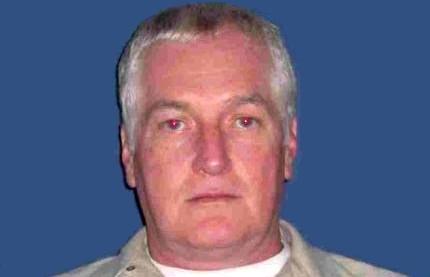
Thomas Edward Luther
Serial killer Donald Henry Gaskins
Serial killer · USA · 1969
Donald Henry Gaskins, also known as Donald “Pee Wee” Gaskins, was a serial kill…
200 victims
Donald Henry Gaskins
Serial killer · USA · 1969
Donald Henry Gaskins, also known as Donald “Pee Wee” Gaskins, was a serial kill…
200 victims
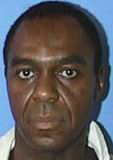 Carl Eugene Watts
Serial killer · USA · 1974
Carl Eugene Watts (born November 7, 1953; died September 21, 2007), also known…
100 victims
Carl Eugene Watts
Serial killer · USA · 1974
Carl Eugene Watts (born November 7, 1953; died September 21, 2007), also known…
100 victims
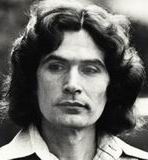 Rodney Alcala
Serial killer · USA · 1977
Rodney James Alcala (born August 23, 1943) was also known as Rodrigo Jacques Al…
100 victims
Rodney Alcala
Serial killer · USA · 1977
Rodney James Alcala (born August 23, 1943) was also known as Rodrigo Jacques Al…
100 victims
 Donald Harvey
Serial killer · USA · 1970
Donald Harvey was known as an American serial killer and a self-professed “Ange…
87 victims
Donald Harvey
Serial killer · USA · 1970
Donald Harvey was known as an American serial killer and a self-professed “Ange…
87 victims
 Ottis Toole
Serial killer · USA · 1961
Ottis Elwood Toole (sometimes misspelled as “Otis”) was an American serial kill…
65 victims
Ottis Toole
Serial killer · USA · 1961
Ottis Elwood Toole (sometimes misspelled as “Otis”) was an American serial kill…
65 victims
 Donald Leroy Evans
Serial killer · USA · 1975
Donald Leroy Evans (born July 5, 1957) was an American serial killer who murder…
60 victims
Donald Leroy Evans
Serial killer · USA · 1975
Donald Leroy Evans (born July 5, 1957) was an American serial killer who murder…
60 victims
 Wade Frankum
Mass murderer · Australia · 1991
Wade Frankum Committed suicide by shooting himself the same day; in 1991 Wade F…
7 victims
Wade Frankum
Mass murderer · Australia · 1991
Wade Frankum Committed suicide by shooting himself the same day; in 1991 Wade F…
7 victims
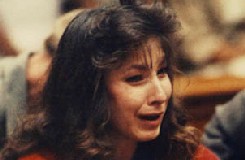 Cynthia Coffman
Serial killer · USA · 1986
Name: Cynthia Coffman · Race: White · Date of birth: 1962 · Age at crime: 24 ·…
4 victims
Cynthia Coffman
Serial killer · USA · 1986
Name: Cynthia Coffman · Race: White · Date of birth: 1962 · Age at crime: 24 ·…
4 victims
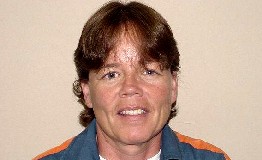 Gwendolyn Graham
Serial killer · USA · 1987
Gwendolyn Graham worked as a nurse’s aide at the Alpine Manor Nursing Home in W…
5 victims
Gwendolyn Graham
Serial killer · USA · 1987
Gwendolyn Graham worked as a nurse’s aide at the Alpine Manor Nursing Home in W…
5 victims
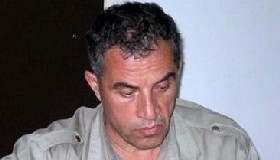 Vlado Taneski
Serial killer · Macedonia · 2005
Vlado Taneski (1952 - June 23, 2008) was a Macedonian crime reporter turned ser…
3 victims
Vlado Taneski
Serial killer · Macedonia · 2005
Vlado Taneski (1952 - June 23, 2008) was a Macedonian crime reporter turned ser…
3 victims
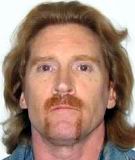 Michael Mulder
Murderer · USA · 1996
July 8, 1996 — Michael J. Mulder robbed and killed 77-year-old John Ahart in hi…
1 victim
Michael Mulder
Murderer · USA · 1996
July 8, 1996 — Michael J. Mulder robbed and killed 77-year-old John Ahart in hi…
1 victim
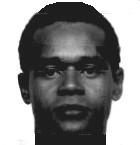 Darryl Elroy Stewart
Murderer · USA · 1980
Darryl Elroy Stewart was 38 at the time of his execution and had an education l…
1 victim
Darryl Elroy Stewart
Murderer · USA · 1980
Darryl Elroy Stewart was 38 at the time of his execution and had an education l…
1 victim
- Gender
- male
- Country
- USA
- Location
- Vermont/Colorado/West Virginia/Pennsylvania , USA
- Date of birth
- June 23, 1957
- Age at first offence
- 13
- Characteristics
- convicted rapist, rape, drugs, long-haul trucker
- Victim profile
- Women
- Method of murder
- Shooting - Stabbing with knife
- Date(s) of murder
- 1970's - 1994
- Years active
- 1970–1994
- Date of arrest
- —
- Status
-
Life imprisonment
Sentenced to life in prison in Colorado in 1996
Case record
Parties
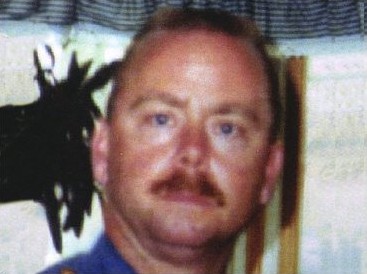
Thomas Edward Luther was a convicted rapist who was sentenced to life in prison in Colorado in 1996.
Mary Brown was 21 years old. She accepted a ride from Thomas Luther in Breckenridge, Colorado, and was raped and severely beaten with a claw hammer.
Cher Elder was 20 years old. She disappeared after being last seen leaving a Central City casino with Thomas Luther, was later murdered, and was shot three times in the back of the head. Her body was finally found in 1995 near Empire.
Rhonda Edwards was Cher Elder’s mother. She filled notebooks with writing after her daughter disappeared and later wrote about Luther’s conviction.
Earl Elder was Cher Elder’s father. He divorced Rhonda and filed a missing-persons report when Cher disappeared.
Van was Rhonda Edwards’s second husband. Van was a long-distance trucker.
Detective Scott Richardson worked on the Lakewood Police Department missing-persons case after Cher Elder’s disappearance.
Byron Powers was Cher Elder’s boyfriend. He was arrested for attempted murder and later sentenced to 24 years for assault. He testified during Luther’s trial for the murder of Cher Elder.
Debrah Snider was Luther’s former girlfriend. She became a reluctant betrayer and testified at Luther’s trial.
Lauren Cleaver and Michael Enwall were defense lawyers for Thomas Luther.
Dennis Hall and Mark Minor were prosecutors in Thomas Luther’s trial for the murder of Cher Elder.
Christopher Munch was Jefferson County District Judge.
Karen Knott was Cher Elder’s childhood friend and a cocktail waitress. She testified about seeing Cher with Luther in Central City.
Jeff Oberholtzer was the husband of Bobbie Jo Oberholtzer, and he was mentioned in investigations related to the killings of Oberholtzer and Schnee.
Charlie McCormick was a member of the 11th Judicial District homicide task force investigating killings on Hoosier Pass.
Tracy Petrocelli was named as another suspect in killings on Hoosier Pass.
Kirk Mitchell was mentioned in connection with another DenverPost.com item about hitchhiking-related killings near Breckenridge.
Other named individuals and roles
Jeff Oberholtzer was referenced as a former suspect in relation to the Hoosier Pass murders.
Dennis Healey was named as a drug-dealing friend of Luther’s referenced during the trial narrative.
Justin Eerebout was Byron Powers’s step-brother and testified.
Karen Knott was the witness described as seeing Cher with Luther and testifying about whether Cher and Luther left while drunk.
Jefferson County grand jury indicted Thomas Luther.
FBI psychologist was mentioned in connection with work involving Byron Powers.
Timeline
- Jan. 6, 1982 — Mary Brown? (Not linked to this date in the record), and January 6, 1982 was the date when 29-year-old Bobbie Jo Oberholtzer and another young woman, Annette Schnee, were described as apparently hitchhiking down Hoosier Pass within hours of each other and disappearing.
- Jan. 7, 1982 (3 p.m.) — Bobbie Jo Oberholtzer’s body was found about 20 feet off Colorado 9 and about 300 feet south of the Hoosier Pass summit parking lot.
- March 28, 1993 (early Sunday morning) — Rhonda Edwards reported being awakened and recording the time; Thomas Luther was described as killing Cher sometime after leaving Central City early on the morning of March 28, 1993.
- March 24, 1995 — Cher Elder was laid to rest in the Grand Junction cemetery.
- 1993 — Thomas Luther was charged with the murder of Cher Elder; Rhonda’s narrative placed Cher’s disappearance in March 1993 and Luther’s release in 1993 into the same timeline.
- 1994 — Thomas Luther was caught and convicted for raping and beating a hitchhiker in West Virginia and returned to Colorado after serving time.
- 1995 — Cher Elder’s body was found in 1995 near Empire; a Denver Post picture led to conviction for the 1993 knife attack victim’s case.
- February 29, 1996 — A narrative article describing the trial and conviction was dated February 29, 1996.
- 1996 — Thomas Luther was sentenced to life in prison in Colorado.
Background
Thomas Luther was traced through his truck after a ride in Breckenridge ended with Mary Brown being raped and severely beaten with a claw hammer.
A psychiatrist concluded that the attacks might have resulted from Luther’s mother’s physical and extreme verbal abuse. Luther told a psychiatrist that Mary Brown reminded him of his mother.
Luther reportedly told an inmate that, regarding a future sexual assault, "the next girl won't live. They'll never find her body."
The offence
1982 assaults and murders described in the record (Hoosier Pass killings)
In January 1982, two young women were described as apparently hitchhiking down Hoosier Pass within hours of each other and disappearing:
- Bobbie Jo Oberholtzer was 29 years old. Her body was found face down in a snow bank the next day at Jan. 7, 1982 (3 p.m.) about 20 feet off Colorado 9 and about 300 feet south of the Hoosier Pass summit parking lot.
- Annette Schnee was 21 years old. Her body was found face down in Sacramento Creek south of Alma. She was wearing the mate to an orange bootie found near Oberholtzer’s body.
The record stated that Oberholtzer apparently fought her way out of a car parked at Hoosier Pass, causing her attacker to bleed, and it described injuries and ballistics:
- Oberholtzer was fatally shot in the chest with a Winchester hollow-point bullet.
- Her tracks showed hesitation and backtracking near the spot where she was shot in the back from a distance of only a foot or two.
- Plastic ties were found on her wrist, indicating someone had tried to bind her.
- Schnee was shot in the back, and the gunshot left no bullet in the body; the bullet was not found, and authorities believed it could have been a .38- or .357-caliber bullet.
- Schnee’s clothes were described as in disarray, and the record stated it seemed to indicate that someone raped her and then dressed her.
The record said investigators believed cold temperatures and cold water helped preserve Schnee’s body until she was found.
1993 disappearance and murder of Cher Elder
Cher Elder disappeared after being last seen leaving a Central City casino with Thomas Luther.
The record described that Cher Elder was shot three times in the back of the head. By the time her body was found, decomposition prevented determination of evidence of sexual assault or other trauma.
Her remains were found near Empire.
During the trial narrative, the record stated Luther had cut off Cher Elder’s ring finger and lips because she threatened to expose an illegal sports-card ring connected to him.
In trial proceedings described in the record, Luther was also described as telling people he had buried Cher’s nude body after someone else killed her; the record also stated that after presentation, the judge dismissed the second count for lack of evidence.
Investigation
Thomas Luther was traced through his truck after the attack on Mary Brown.
In the narrative about Cher Elder’s case:
- Earl Elder filed a missing-persons report by going to the Lakewood Police Department after Cher disappeared.
- Detective Scott Richardson was assigned to the missing-persons case.
- Richardson told Cher’s family that he believed she was dead.
- Richardson was described as catching Byron Powers in numerous lies, including denying he knew the gray-haired man pictured with Cher on the casino’s videotape, and Richardson told the family the man’s name was Thomas Luther and that he had a history of attacking young women.
The record also stated:
- Rhonda and Van refused to give up hope, made posters, and called friends across multiple states.
- The investigation included discussions of whether to bring Luther to trial without a body; the family was described as knowing that going to trial without a body meant the search would end and Cher might never be discovered.
- Byron Powers was later arrested for attempted murder, and later sent to prison for assault, which was described as giving Richardson a chance to work with an FBI psychologist.
- The record stated Cher’s body was finally found near Empire, and her funeral was planned with an autopsy described as incomplete that had postponed the funeral several times.
Arrest and custody
The record stated that after Luther was convicted in West Virginia for a rape attack in 1994, he returned to Colorado.
In the trial narrative, Luther was described as being incarcerated in the Jefferson County jail during the Cher Elder murder trial; he was allowed to change from orange jail jumpsuit into civilian clothes and was always brought into the courtroom before jurors arrived with handcuffs removed before they could see them.
Trial
Charges presented and evidentiary rulings
A Jefferson County grand jury indicted Thomas Luther on two counts of murder for the killing of Cher Elder. One count involved Luther allegedly raping Cher and then killing her to cover up the crime; another count involved killing Cher Elder and that the murder had been premeditated.
The trial narrative described evidentiary rulings by Judge Christopher Munch in December:
- Evidence of Luther’s history of "bad acts" and "prior similars"—chiefly brutal rapes of two women in 1982 and 1994—was not presented to jurors.
- The ruling was described as affecting the prosecution’s ability to prove the second count (that Luther raped Cher and then killed her to cover up the crime).
- The judge was described as dismissing the second count for lack of evidence after the prosecution’s presentation at trial.
Jury and verdict issues
The record described the jury as deadlocked at one point and then compromised.
- A lone juror refused to vote for first-degree murder and held out for second-degree murder even though eleven other jurors believed Luther guilty of first degree.
- Judge Christopher Munch invoked a Colorado law by telling the eleven jurors it was their duty to compromise and find Luther guilty of the lesser charge.
- After the verdict was announced, there would be no death-penalty phase and no public hearing described in the narrative.
Trial witnesses and testimony
Karen Knott testified that she saw her friend Cher with Luther in Central City and denied that the pair had been drunk when they left or that Cher had driven Luther’s car as he told Detective Richardson.
Dennis Healey testified that Luther called him early March 28, 1993 to say he had "fucked up and killed a broad." The record described Healey as a lookout when Luther went to bury Cher.
Justin Eerebout testified that he gave Luther a stolen .22-caliber handgun, which the record said was the sort used to kill Cher Elder, and a ballistics expert was described as being expected to testify.
Byron Powers testified:
- The record said he overheard Luther talking about a body that needed burying.
- Byron testified that Luther had threatened to kill Byron’s family if any of them talked and that Luther told him he had cut Byron’s ring off Cher’s finger and would use it to frame Byron if necessary.
- Prosecutor Hall questioned Byron about how his family knew Luther, and Byron let it slip that his stepfather had gotten out of prison shortly before Luther, his cellmate.
- After Byron’s return to the stand, Enwall accused Byron of killing Cher himself; Byron responded: "I did not kill Cher Elder." and "Thomas Luther killed Cher Elder."
- Byron testified: "This may sound stupid," Byron testified, "but I wanted to find out where she was buried so that I could slip a note under the Elders' door so they could have their daughter's body back."
The record described how a slip-up occurred when the jury heard that Luther was incarcerated and served time, followed by a defense mistrial motion:
- Enwall asked for a mistrial, and Judge Munch said he would consider it overnight.
- The next morning, Judge Munch denied the mistrial motion but instructed the jury to ignore the slip-up and stated the assumption that because someone had been convicted they were likely to commit another crime was "often wrong."
The record also described that Judge Munch’s evidentiary and evidentiary-limitation rulings affected the prosecution strategy and the motive argument.
Sentencing
Luther received a 48-year sentence for second-degree murder. The record also described that Luther was sentenced to life in prison in Colorado in 1996.
A judge refused to allow the jury to consider Luther’s statements to other inmates and his previous rape convictions at the Cher Elder murder trial.
Appeals
The record included no appellate outcome.
Other details
Rhonda Edwards’s writing and quotes during the Cher Elder case narrative
Rhonda wrote statements and recorded emotions, including:
- "I feel anger, rage, and resentment. I have lost a piece of myself,"
- "I know I will never be the same as I was before her death, some sorrows leave deeper scars than others. A mother's loss of her child is a deep scarE"
- "Cher didn't get a fair trial,"
- "Our justice system can be twisted, because of one person who cannot see that execution by three bullets to the back of the head is deliberate murder."
- "There is a vacuum that can never be filledEa terrible emptinessEto be able to talk to your child you have to go to a cemetery and visit a cold stoneEit is the most heartbreak a mother can have."
- "I just want to find my baby. I just want to find my baby."
- "I don't want Cher to lay in some shallow grave forever."
- "Did I contribute to her death?"
- "Was I too busy at work? Did I listen enough?"
- "How long do I have to wait?"
The record also included Rhonda’s dream-related narrative and diary writing about what she felt in a dream:
- "Instantly, I close my eyes as the light grows bright and there is a sudden, heavy warmth that runs through my bodyEI shrink into nothing," she would write in her diary that night.
Trial logistics and courtroom description facts included in the record
- The record described that pains had been taken so that the jury would not know Luther was incarcerated in the Jefferson County jail.
- The record described the jury membership: six men and nine women, including three alternates, making 15 members.
Additional investigations and DNA testing details in the Hoosier Pass narrative
The record stated DNA testing results did not match:
- The record said the DNA test found that blood on Oberholtzer’s wool glove was that of a man and investigators were "99 percent sure it’s the blood of the killer."
- However, it said the DNA did not match Luther; it also did not match Jeff Oberholtzer.
- The record said a friend of Luther’s from Vermont who had been with Luther in Colorado had no match.
The record also included:
- Petrocelli was named as continuing to be a suspect even though his blood didn’t match.
Denial, denial-of-involvement, and suspects in Hoosier Pass narrative
- The record stated Luther denied involvement when interviewed and failed two lie-detector tests.
- The record stated officials eliminated Jeff Oberholtzer as a suspect for reasons including alibi witnesses who had contact with him that night.
- The record stated Luther remained a suspect but that the culprit in all likelihood was someone else, with the likely culprit described as someone local familiar with the rural road where Schnee’s body was discovered.
Statements attributed to Charlie McCormick
The record included direct quotes:
- "It appears she popped him in the nose,"
- "She collapsed on her back and froze or bled to death,"
- "It's difficult to tell."
- "We were sure it was Luther,"
- "We were sure it was Luther,” McCormick said.
- "Whoever's blood it is has a lot of explaining to do,"
- "We’re 99 percent sure it’s the blood of the killer."
- "We’re sure it’s the blood of the killer." (appears as repeated phrasing in the narrative; kept as a single distinct quote in the record above via the quote itself)
- "Whoever’s blood it is has a lot of explaining to do," McCormick said.
- "It's probably someone local rather than someone just passing through,"
(Quot
Spotted an error, or have more information about this case?