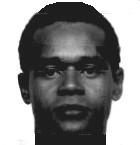
Darryl Elroy Stewart
Murderer Ervil LeBaron
Murderer · USA · 1972
Ervil Morrell LeBaron (1925 to August 16, 1981) was the leader of a polygamous…
35 victims
Ervil LeBaron
Murderer · USA · 1972
Ervil Morrell LeBaron (1925 to August 16, 1981) was the leader of a polygamous…
35 victims
 Brian Kevin Rosenfeld
Murderer · USA · 1985
Brian Kevin Rosenfeld Brian Kevin Rosenfeld was sentenced to three concurrent l…
23 victims
Brian Kevin Rosenfeld
Murderer · USA · 1985
Brian Kevin Rosenfeld Brian Kevin Rosenfeld was sentenced to three concurrent l…
23 victims
 Marvin Gray
Murderer · USA · 1975
Marvin Gray was convicted killer who claimed responsibility for 23 slayings and…
23 victims
Marvin Gray
Murderer · USA · 1975
Marvin Gray was convicted killer who claimed responsibility for 23 slayings and…
23 victims
 Yahweh ben Yahweh
Murderer · USA · 1980
Yahweh ben Yahweh was born and legally named Hulon Mitchell Jr. (October 27, 19…
23 victims
Yahweh ben Yahweh
Murderer · USA · 1980
Yahweh ben Yahweh was born and legally named Hulon Mitchell Jr. (October 27, 19…
23 victims
 Mario Marquez
Homicide · USA · 1984
Mario Marquez was executed by lethal injection in Texas on January 17, 1995. Du…
2 victims
Mario Marquez
Homicide · USA · 1984
Mario Marquez was executed by lethal injection in Texas on January 17, 1995. Du…
2 victims
 Louis Bernard Gaskin
Serial killer · USA · 1986
Louis Bernard Gaskin (also known as Louis B. Gaskins; “Pappa”) had a date of bi…
5 victims
Louis Bernard Gaskin
Serial killer · USA · 1986
Louis Bernard Gaskin (also known as Louis B. Gaskins; “Pappa”) had a date of bi…
5 victims
 Tsukasa Kanda
Murderer · Japan · 2007
Name: Tsukasa Kanda (神田司) Born: 20 July 1976 Role: one of three men who robbed…
1 victim
Tsukasa Kanda
Murderer · Japan · 2007
Name: Tsukasa Kanda (神田司) Born: 20 July 1976 Role: one of three men who robbed…
1 victim
 Anthony Allen Shore
Serial killer · USA · 1986
Name: Anthony Allen Shore · TDCJ Number: 999488 · Date of birth: 06/25/1962 · A…
5 victims
Anthony Allen Shore
Serial killer · USA · 1986
Name: Anthony Allen Shore · TDCJ Number: 999488 · Date of birth: 06/25/1962 · A…
5 victims
- Gender
- male
- Country
- USA
- Location
- Harris County, Texas, USA
- Date of birth
- April 2, 1955
- Age at first offence
- 25
- Characteristics
- armed robbery, attempted rape, disputes, rape, robbery
- Victim profile
- Donna Kate Thomas (female, 22)
- Method of murder
- Shooting (.25-caliber pistol)
- Date(s) of murder
- February 6, 1980
- Years active
- 1980
- Date of arrest
- —
- Status
-
Executed
Executed by lethal injection in Texas on May 3, 1993
Background
Darryl Elroy Stewart was 38 at the time of his execution and had an education level described as “High school graduate or GED.” He lived in the same complex as his neighbor, Donna Kate Thomas.
Stewart and an accomplice, Kelvin Kelley, walked into the apartment of Donna Kate Thomas looking for something to steal so they could buy drugs. Thomas had left the door open because she was watching her four-year-old daughter, Donna Faye, while she was playing outside.
The offence
On Feb. 6, 1980, Stewart broke into an apartment in the Scarsdale area to burglarize it. During the burglary, he shot Donna Kate Thomas, 22, when she refused to have sex with him.
Donna Kate Thomas’ daughter, also named Donna, hid in a closet after entering the apartment. Stewart and Kelley were arrested later in the day.
Trial testimony described the attempted sexual assault and the shooting. Stewart tried to rape Mrs. Thomas; when she cried and resisted, Stewart put a pillow over her head and shot her twice in the head. Her daughter entered the apartment and hid in a closet.
According to statements and accounts described during the proceedings, Stewart and Kelley were looking for something to steal so they could buy drugs, and Stewart tried to force sexual relations on the victim. When the victim refused, Stewart proceeded to shoot her.
Investigation
Authorities initially did not know who had actually killed Thomas. Donna Faye identified Stewart. Donna Faye testified: "The skinny man shot my mama."
Arrest
Stewart and Kelvin Kelley were arrested later in the day.
Trial
Stewart and Kelley provided conflicting theories about the crime.
According to Stewart’s statement introduced at trial, Stewart and Kelley were walking past Donna Kate Thomas’ apartment when Kelley saw through the open door a stereo he wanted to steal. Kelley told Stewart he would run in and grab the stereo and instructed Stewart to stand guard at the door. Stewart heard a woman scream, heard Kelley attempt to force sexual relations, saw glimpses of a struggle, and heard two shots. Under this version, Stewart agreed to assist in Kelley’s theft of the stereo, Kelley strayed from the plan and attempted a sexual offense against the occupant, and during the course of that offense Kelley killed the victim. Stewart’s statement indicated that Stewart did not himself kill, did not attempt to kill, and did not intend that a killing would take place.
According to Kelley’s account, Stewart entered the apartment to commit burglary, Stewart had the gun, Stewart attempted a sexual assault on the victim, and Stewart killed her, while Kelley waited at the door. The State introduced evidence corroborating this story.
Kelley testified against Stewart in exchange for sentencing. Kelley said: "I go to bed every night and hear that woman screaming." Kelley avoided the death penalty and received a 20-year prison term in exchange for his testimony.
Defense counsel requested that the jury be instructed to specify upon which of two murder offenses it had convicted Stewart, but the trial judge denied the request. The trial proceeded to the sentencing phase, and Stewart was sentenced to die.
The jury was asked to resolve conflicting evidence and determine guilt or innocence of Stewart on the murder charge. The trial judge provided a lengthy instruction on the Texas “law of parties,” setting out two theories of capital murder. The instructions provided the jury with two theories:
- guilt if Stewart intentionally shot the victim himself; or
- a series of findings in which Stewart conspired to commit burglary, the murder was committed by Kelley in the course of the burglary, Stewart intentionally aided Kelley during the execution of the burglary, and the murder was an offense that “should have been anticipated” as a result of the conspiracy.
At trial, counsel described the victim’s daughter’s testimony. The jury convicted Stewart and returned a verdict of guilty.
The dissenting Justice’s account included verbatim trial instruction language. The judge’s charge to the jury included:
'Now, if you find from the evidence beyond a reasonable doubt that . . . the Defendant, Darryl Elroy Stewart, did while in the course of committing or attempting to commit burglary of a habitation, . . . intentionally caused [sic] the death of [the victim] by shooting her with a gun, then you will find the Defendant guilty of Capital Murder, as charged in the Indictment. Or if you find from the evidence beyond a reasonable doubt that . . . Kelvin Kelly and Darryl Elroy Stewart entered into a conspiracy to burglarize the habitation . . ., and that pursuant thereto they did carry out or attempt to carry out such conspiracy to commit burglary, and while in the course of committing such burglary, if any, Kelvin Kelly did intentionally cause the death of [the victim] by shooting her with a gun and that the Defendant, Darryl Elroy Stewart, pursuant to said conspiracy, if any, with the intent to promote, assist, or aid Kelvin Kelly in the commission or attempted commission of the said burglary, then and there, at the time of the shooting, if any, was acting with and aiding Kelvin Kelly in the execution or attempted execution of said burglary, and that the shooting of [the victim] followed in the execution of the conspiracy and in furtherance of the unlawful purpose of Kelvin Kelly and Darryl Elroy Stewart to commit the burglary, and that the shooting of [the victim] was an offense that should have been anticipated as a result of the carrying out of the conspiracy, then you will find the Defendant, Darryl Elroy Stewart, guilty of Capital Murder as charged in the indictment.' "
Sentencing
During the sentencing phase, the jury responded affirmatively to the two special issues submitted in accordance with Tex. Code Crim. Proc. Ann. Art. 37.071, and punishment was assessed at death.
During the sentencing phase, Stewart characterized himself as a lookout man who did not intend to kill the victim and did not assume an active role in the murder. His argument in later proceedings stated that if the jury believed Stewart was not the triggerman, it could give effect to that understanding in answering the punishment phase issues.
Appeals
Supreme Court of the United States
Darryl Elroy Stewart petitioned for writ of certiorari. The petition for writ of certiorari was denied in:
474 U.S. 866 Darryl Elroy STEWART v. TEXAS. No. 84-6558 Supreme Court of the United States October 7, 1985
Justice MARSHALL, with whom Justice BRENNAN joins, dissented.
The dissent discussed the Texas law of parties and intent, stating that a sentence of death may not be imposed on one “who aids and abets a felony in the course of which a murder is committed by others but who does not himself kill, attempt to kill, or intend that a killing take place or that lethal force will be employed.” The dissent included extensive discussion and concluded:
I would grant the petition, vacate the sentence, and remand for further proceedings.
Fifth Circuit
Stewart appealed denial of federal habeas relief.
Case identification appeared as:
978 F.2d 199 Darryl Elroy STEWART, Petitioner-Appellant, v. James A. COLLINS, Director Texas Department of Criminal Justice, Institutional Division, Respondent-Appellee. No. 92-2262. United States Court of Appeals, Fifth Circuit. Nov. 27, 1992.
The Fifth Circuit described that the district court dismissed with prejudice the application for writ of habeas corpus while leaving its previously granted stay of execution in effect pending appeal. The district court granted a certificate of probable cause and Stewart timely appealed.
The Fifth Circuit concluded its disposition was directed by its recent en banc decision in Graham v. Collins and affirmed the district court:
we affirm the district court.
The Fifth Circuit explained that Penry v. Lynaugh required consideration of mitigating evidence relevant to moral culpability beyond the scope of the Texas death penalty statute’s special issues unless special instructions were given. It described that in Graham v. Collins, Penry did not invalidate the Texas statutory scheme where no major mitigating thrust was substantially beyond the scope of the special issues.
The Fifth Circuit stated that the first special issue clearly encompassed evidence that Stewart was merely an accomplice in the killing and lacked the intent to kill, and that the law of parties was not even applied to punishment deliberations. It also described that counsel for Stewart argued during punishment that the jury should consider whether Stewart was in fact the triggerman or merely an accomplice.
It concluded the jury required no separate instruction and that Stewart did not meet the burden of demonstrating a reasonable likelihood that the jury applied the instructions in a way that prevented the consideration of constitutionally relevant evidence.
The Fifth Circuit further stated that to the extent Stewart challenged whether he had the requisite mental state for culpability under Enmund v. Florida, it affirmed the district court’s holding that the jury verdict and its answers to the special issues together with the Court of Criminal Appeals’ holding satisfied Enmund and Cabana v. Bullock.
Accordingly, it stated that the judgment denying habeas relief was affirmed and the stay of execution issued by the district court was lifted:
Accordingly, the judgment of the district court denying habeas relief is affirmed and the stay of execution issued by the district court is lifted.
Outcome
Stewart was executed by lethal injection in Texas.
An account noted that with his final appeal exhausted, Stewart was brought to the execution chamber almost 14 years after the murder. When the warden asked if Stewart had any last words, he looked up at the ceiling, closed his eyes, and said nothing. He was injected with the lethal dose at 12:18 a.m. and the official time of death was announced as 12:25 a.m. on May 4, 1993.
The status field indicated execution on May 3, 1993.
Aftermath
Ponzella Johnson, the victim’s mother, said she had no sympathy for Stewart before, during or after his execution because he had no sympathy for her daughter. She said: "I hope he had the same terror in him that my daughter had when she died."
The victim’s mother also commented on alleged jury prejudice, saying: " He murdered her in cold blood. I don't know how he can think they were prejudiced."
Shirley Cornelius, Harris County assistant district attorney, was described as feeling the jury was fair. Cornelius said: "the facts would have been just as bad if the jury had been black or if Stewart had been white."
The account also included remarks by Larry Johnson, the victim’s brother. He was described as still living with the memory of the 1980 tragedy. He said: "The wound has healed, but the scar will never go away. Loneliness and sorrow still remain and always will."
Spotted an error, or have more information about this case?