Ahmed Bragimov
Spree killer Alexander Greb
Spree killer · Russia · 2004
Alexander Greb was arrested by law enforcement officers of the Rakitinsky depar…
4 victims
Alexander Greb
Spree killer · Russia · 2004
Alexander Greb was arrested by law enforcement officers of the Rakitinsky depar…
4 victims
 Alexander Tchayka
Spree killer · Russia · 1994
Alexander Tchayka (born in 1974 in Sumy, USSR (now, Ukraine)) was a Russian ser…
4 victims
Alexander Tchayka
Spree killer · Russia · 1994
Alexander Tchayka (born in 1974 in Sumy, USSR (now, Ukraine)) was a Russian ser…
4 victims
 Martin Bryant
Spree killer · Australia · 1996
Martin Bryant was born May 7, 1967, and was the elder of two children of Mauric…
35 victims
Martin Bryant
Spree killer · Australia · 1996
Martin Bryant was born May 7, 1967, and was the elder of two children of Mauric…
35 victims
 Genildo Ferreira do Franca
Spree killer · Brazil · 1997
Genildo Ferreira de Franca died in a shootout after he released two hostages un…
15 victims
Genildo Ferreira do Franca
Spree killer · Brazil · 1997
Genildo Ferreira de Franca died in a shootout after he released two hostages un…
15 victims
 Robert Farquharson
Murderer · Australia · 2005
Robert Donald William Farquharson (born 1969) was an Australian father convicte…
3 victims
Robert Farquharson
Murderer · Australia · 2005
Robert Donald William Farquharson (born 1969) was an Australian father convicte…
3 victims
 Dorthia Bynum
Homicide · USA · 1998
Dorthia Bynum was sentenced to a minimum of 124 years in prison after pleading…
1 victim
Dorthia Bynum
Homicide · USA · 1998
Dorthia Bynum was sentenced to a minimum of 124 years in prison after pleading…
1 victim
 Sheila LaBarre
Murderer · USA · 2005
Sheila LaBarre was convicted of first-degree murders of Kenneth Countie and Mic…
2 victims
Sheila LaBarre
Murderer · USA · 2005
Sheila LaBarre was convicted of first-degree murders of Kenneth Countie and Mic…
2 victims
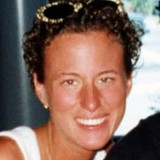 Erika Sifrit
Murderer · USA · 2002
Erika Sifrit and Benjamin Sifrit gained notoriety in 2002 for the murders of Jo…
2 victims
Erika Sifrit
Murderer · USA · 2002
Erika Sifrit and Benjamin Sifrit gained notoriety in 2002 for the murders of Jo…
2 victims
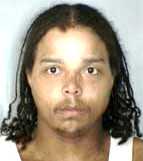 James Cooke
Murderer · USA · 2005
James Cooke (James E. Cooke, Jr.; James Edward Cooke) James E. Cooke, Jr. was b…
1 victim
James Cooke
Murderer · USA · 2005
James Cooke (James E. Cooke, Jr.; James Edward Cooke) James E. Cooke, Jr. was b…
1 victim
- Gender
- male
- Country
- Russia
- Location
- Mekenskaya, Chechen, Russia
- Date of birth
- ???
- Characteristics
- hate crime
- Victim profile
- Men and women (Russians)
- Method of murder
- Shooting
- Date(s) of murder
- October 8, 1999
- Years active
- 1999
- Date of arrest
- —
- Status
-
Died in custody
Killed by an angry mob the same day Ahmed Ibragimov (Russian: Ахмед Ибрагимов) was a Chechen bus driver and spree killer who killed at least 34 Russians in a shooting spree through the Chechen village of Mikenskaya on October 8, 1999.
Background
Ahmed Bragimov (Russian: Ахмед Ибрагимов) was described as a Chechen bus driver and a spree killer who killed at least 34 Russians in a shooting spree through the Chechen village of Mikenskaya on October 8, 1999.
The offence
Witnesses said Ahmed Bragimov went on a shooting spree in the Chechen town of Mekenskaya. Survivors said he targeted only Russians. He was described as methodical and as vowing to kill as many people as he could before Russian troops arrived to seize the town. His victims’ bodies were left “scattered about in gardens and doorways and muddy streets.” During his afternoon, he apparently yelled racist comments, vowing to kill as many Russians as he could, and he left bodies laying in gardens and doorways and in the muddy streets.
Bragimov killed at least 34 people.
Investigation
Forensic tests were conducted on the corpses by pathologists. A Russian soldier was filling in a fresh grave dug for the victims after pathologists conducted forensic tests on the corpses.
Arrest
Bragimov himself was caught by townspeople and beaten to death.
Trial
No trial information was provided.
Sentencing
No sentencing information was provided.
Appeals
No appeals information was provided.
Outcome
Bragimov was beaten to death by townspeople the same day as the shooting spree.
“He wasn’t a Wahhabist,” Larisa Chikova said, using a term that in the Caucasus means any kind of Islamic fundamentalist.
“He just hated Russians. They all feel that way about Russians.”
“He was a killer and a thief, just as they all are,” said an elderly man in Mekenskaya.
“The Chechens are all bandits. They would all kill us if they could.”
Aftermath
Most people left in Mekenskaya saw Bragimov and the Chechen guerrillas fighting Russian troops in the breakaway republic as one and the same, although there was no evidence that he was working on orders of Chechen guerrillas. Russian officials insisted they were not waging war against the Chechen people, though human-rights activists and Western critics said bombing campaigns caused too many civilian casualties. Russians blamed Chechen militants for a series of terrorist bombings across Russia that killed nearly 300 people, and they referred to anyone opposing the Russian march into Chechnya as a bandit or terrorist. The conflicts and Chechnya’s isolation from Russia were described as testing friendships and breeding suspicion even among people with no role in the fighting. Moscow’s aim was described as either subjugating or eliminating the estimated 4,000 Chechen fighters still battling Russian troops, with the campaign intensifying. Chechen fighters claimed they had encircled and inflicted heavy losses on a force of Russian paratroopers who parachuted into the mountains to cut off rebel supplies, and federal forces were described as stepping up their barrage on Grozny. Russian forces were described as battling an estimated 500 rebels near the town of Serzhen-Yurt, 18 miles southeast of Grozny, as reported by the Interfax news agency citing Russia’s military command. Federal jets and artillery were described as pounding settlements across Chechnya’s south. Viktor Kazatsev, the head of Russia’s forces in Chechnya, spoke of a planned “special operation” to free Grozny from Muslim rebels but denied again that an all-out assault was planned. It was also reported that rumors had swirled around Mozdok, the Russian army’s headquarters in the region, about a major assault on Grozny scheduled for “today through Friday,” and the Defense Ministry denied it. Chechen refugees from Grozny were described as saying tens of thousands of people may remain trapped in the capital, and they claimed that Russian officials, at best, care little about Chechen lives and, at worst, were trying to wipe them out. Ramazan Shamayev, 30, fled Grozny at the end of last week and left behind a mother determined to protect her property should Russian soldiers take control. Shamayev was described as sleeping on a table in the mess hall surrounded by young mothers and children because there was no space in a heated tent. The article described Chechen refugees bristling at commands from Russian soldiers and complaining they had to beg or pay for everything, even a chunk of bread. It was reported that most Chechens believed Moscow engineered the latest war not to target the Chechen race but to further the political career of Prime Minister Vladimir Putin, and that some feared Russia was eager to rid itself of its so-called “Chechen problem” by ridding itself of its Chechens. Nala, a 26-year-old mother of two, was quoted saying:
“We’re not people to the Russians,”
“We’re criminals, terrorists, all of us. They say this is a war against criminals, but whom are they killing? This is genocide.” It was said to be what the Chechens “deserve” by some in Mekenskaya. Alexander Iskandaryan, who heads the Center for Caucasian Studies in Moscow, was quoted saying: “The world’s experience shows that fears of ethnic groups are much easier to wake up than to put to rest,”
Other details
Larisa Chikova witnessed Bragimov moving through Mekenskaya killing people on October 8, 1999, and she hid from him. She recalled “how she and others hid from Bragimov as he moved through Mekenskaya killing people on Oct. 8.” She described the day as “a sunny and clear day,” and it was described as “good flying weather for the Russian bombers and helicopter gunships attacking Grozny.” Next to Chikova, a Russian soldier was described as filling in a fresh grave dug for the victims after pathologists conducted forensic tests on the corpses.
Spotted an error, or have more information about this case?