Christopher Green
Mass murderer Gameel Al-Batouti
Mass murderer · USA · 1999
Gameel Al-Batouti (also rendered “Gamil ElBatouty” or “El Batouty” in U.S. offi…
216 victims
Gameel Al-Batouti
Mass murderer · USA · 1999
Gameel Al-Batouti (also rendered “Gamil ElBatouty” or “El Batouty” in U.S. offi…
216 victims
 Timothy McVeigh
Mass murderer · USA · 1995
Timothy James McVeigh (April 23, 1968 – June 11, 2001) was a United States Army…
168 victims
Timothy McVeigh
Mass murderer · USA · 1995
Timothy James McVeigh (April 23, 1968 – June 11, 2001) was a United States Army…
168 victims
 Julio Gonzalez
Mass murderer · USA · 1990
Julio Gonzalez was sentenced to 174 twenty-five-year sentences (a total of 4,35…
87 victims
Julio Gonzalez
Mass murderer · USA · 1990
Julio Gonzalez was sentenced to 174 twenty-five-year sentences (a total of 4,35…
87 victims
 David Burke
Mass murderer · USA · 1987
David Augustus Burke (May 18, 1952–December 7, 1987) was an employee of USAir,…
43 victims
David Burke
Mass murderer · USA · 1987
David Augustus Burke (May 18, 1952–December 7, 1987) was an employee of USAir,…
43 victims
 George Jo Hennard
Mass murderer · USA · 1991
George Jo Hennard carried out a mass killing at a Luby’s Cafeteria in Killeen,…
23 victims
George Jo Hennard
Mass murderer · USA · 1991
George Jo Hennard carried out a mass killing at a Luby’s Cafeteria in Killeen,…
23 victims
 Ronald Gene Simmons
Mass murderer · USA · 1987
Ronald Gene Simmons was a retired United States Air Force sergeant. Over the Ch…
16 victims
Ronald Gene Simmons
Mass murderer · USA · 1987
Ronald Gene Simmons was a retired United States Air Force sergeant. Over the Ch…
16 victims
 Terry Jess Dennis
Murderer · USA · 1999
Terry Jess Dennis was a male white/Caucasian death row inmate named DENNIS, TER…
1 victim
Terry Jess Dennis
Murderer · USA · 1999
Terry Jess Dennis was a male white/Caucasian death row inmate named DENNIS, TER…
1 victim
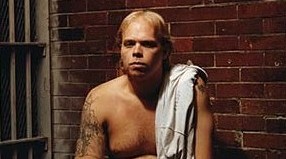 Jeremy Gross
Murderer · USA · 1998
Jeremy Gross was convicted of murder, felony murder, conspiracy to commit robbe…
1 victim
Jeremy Gross
Murderer · USA · 1998
Jeremy Gross was convicted of murder, felony murder, conspiracy to commit robbe…
1 victim
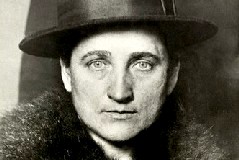 Tillie Klimek
Serial killer · USA · 1914
Ottilie “Tillie” Klimek, also known as Ottilie “Tillie” Klimek (or Tillie Gbure…
6 victims
Tillie Klimek
Serial killer · USA · 1914
Ottilie “Tillie” Klimek, also known as Ottilie “Tillie” Klimek (or Tillie Gbure…
6 victims
 Billy George Hughes
Murderer · USA · 1976
Name: Billy George Hughes Victim: Trooper Mark Frederick, a Texas Department of…
1 victim
Billy George Hughes
Murderer · USA · 1976
Name: Billy George Hughes Victim: Trooper Mark Frederick, a Texas Department of…
1 victim
 Julian Andrew Frank
Mass murderer · USA · 1960
6 January 1960 — National Airlines Flight 2511 exploded and crashed 1-1/2 miles…
33 victims
Julian Andrew Frank
Mass murderer · USA · 1960
6 January 1960 — National Airlines Flight 2511 exploded and crashed 1-1/2 miles…
33 victims
 Adolph Gil Hernandez
Murderer · USA · 1988
Adolph Gil Hernandez was executed by lethal injection in Texas on February 8, 2…
1 victim
Adolph Gil Hernandez
Murderer · USA · 1988
Adolph Gil Hernandez was executed by lethal injection in Texas on February 8, 2…
1 victim
- Gender
- male
- Country
- USA
- Location
- Monclair, New Jersey, USA
- Date of birth
- 1965
- Age at first offence
- 30
- Characteristics
- robbery
- Victim profile
- Postal employees Ernest Spruill, 56, and Stanley Scott Walensky, 42; and the two customers, Robert Leslie, 38, and George Lomago, 59
- Method of murder
- Shooting
- Date(s) of murder
- March 21, 1995
- Years active
- 1995
- Date of arrest
- 2 days after
- Status
-
Life imprisonment
Sentenced to life in prison on September 20, 1995
Case record: Christopher Green
Background
Christopher Green was 29 years old at the time of the offences. He had worked at post offices in Montclair as a temporary employee from July 16, 1992, until April 25, 1993. He later worked for Montclair’s Department of Public Works and was described as a dependable laborer with a salary of $26,600 a year. In the 1980s he had been a well-regarded electrician’s helper for a small electrical company in South Orange.
In 1984, at age 18, Christopher Green began working for Benjamin Troncone, the owner of a small electrical company in South Orange. Benjamin Troncone’s wife, Jean, said he was an excellent worker and that she and her husband thought of him as a son. She also said her husband took him on fishing trips to the Jersey Shore.
Christopher Green came from a religious middle-class family. He trained to become an electrician’s helper at the Essex County Vocational School after attending local schools and playing Little League baseball. He graduated from Immaculate Conception High School in Montclair. The township manager, Terence Reidy, said Christopher Green was one of seven children. Reidy also said his grandfather had worked as a school crossing guard on Valley Road, a main thoroughfare in town, and his father, Clyde, had worked for years as a custodian at the Montclair Kimberly Academy.
Christopher Green passed a statewide police entrance exam in October of the prior year and his name was placed on a waiting list for departments with openings for patrolmen. He had no arrest record as an adult, but investigators said he had one minor offence as a juvenile that did not appear to foreshadow the charged conduct.
The municipal government held no protective glass or surveillance cameras at the smaller post office branch that was invaded. The main office had put in bulletproof glass to protect its workers.
In the early 1990s, there were indications Christopher Green had a brief flirtation with Louis Farrakhan’s Nation of Islam before returning to Montclair to work. Jean Troncone said that in 1991 Christopher Green became active with the Nation of Islam, married a member of the organization, left her husband’s company, lived in Maryland for much of 1991, and then returned to Newark in early 1992 to take up his old job. She said neither she nor her husband asked about his activities with the Nation of Islam and he volunteered nothing about it.
Records in New Jersey Superior Court in Newark showed Christopher Green had a running feud over rent with the landlord of Executive House, Theodore Murnick of Newark. He was sued for nonpayment of one month’s rent ($630) last October. On Feb. 6, Murnick filed another suit for nonpayment. After the first suit, Christopher Green failed to appear for a scheduled hearing in December and a default judgment was entered against him. The reports said it was unclear what action grew out of the February suit because the docket file could not be located in the records room in Superior Court.
Christopher Green’s sister, Dawn, said she knew nothing about any debt. City Hall officials and employees described being stunned by the crime and the confession.
The offence
On March 21, 1995, Christopher Green returned to rob the Monclair, NJ post office where he once worked and killed four people and wounded one during a holdup. Authorities described the violence as execution-style: he forced victims to lie face down before shooting them at close range.
The victims included two postal workers and two customers. Two postal workers were killed: Ernest Spruill, 56, and Stanley Scott Walensky, 42. The two customers killed were Robert Leslie, 38, and George Lomago, 59. David Grossman, 45, was the only survivor; he was shot twice in the face and was listed in guarded but stable condition at University Hospital in Newark.
A customer and a postal worker had reported events that led to the police response. An investigator with the Essex County Prosecutor’s office said the customer had called ahead, asking either Spruill or Walensky to remain open a few minutes past the normal closing time of 4 P.M. so she could bring in a package. The worker agreed and told her to knock on the front door when she arrived. When she did, either Spruill or Walensky rushed to the door and told her to go away, saying there was a plumbing problem in the building. As she walked away, the woman heard shots.
The investigators and prosecutors said Christopher Green ordered his victims to lie down on the ground and then shot them. Faith S. Hochberg, the United States Attorney in Newark, said he told police after he was taken into custody at his apartment in nearby East Orange that he stole more than $5,000 from the post office because he needed money to pay back rent. The police said that in his confession he said he had a “mountain of debt.” Hochberg stated: “I think that you can determine something of his mental state that after the killings he went and paid off his debts.”
Investigation
After Christopher Green was taken into custody, investigators continued searching his apartment at the Executive House in East Orange. Officials recovered about $2,000 from the apartment.
The investigation involved a computer search that indicated Christopher Green was the registered owner of a stainless steel, 9-millimeter Taurus handgun. The caliber matched the weapon used in the killings. Authorities said they did not know exactly why he decided to buy the handgun. He bought his handgun on March 13, 1993, from a gun shop in New Jersey and followed proper procedures in obtaining it.
Christopher Green led investigators to his refrigerator, under which he had concealed part of the money. He also gave investigators a garbage bag outside his apartment. Thomas J. Russo, chief of the Montclair police, said that the bag contained a gym bag holding his bloodied clothing from the night before, as well as three postal money orders and 13 rounds of ammunition for his gun.
Officials recovered a car involved in the crime. Clifford J. Minor, the Essex County Prosecutor, said Christopher Green took Spruill’s car keys and drove Spruill’s Chrysler New Yorker to Newark. The neighbourhood post office where the killings took place was described as a satellite of the main Montclair station.
The police received a tip from an acquaintance of Christopher Green that he might be involved in the killings. A public statement referenced that federal and local law enforcement agencies homed in on him after the tip.
The reports described how David Grossman helped develop a description of the suspect and the gun. After the shooting, Grossman was able to communicate with investigators on Tuesday night by wiggling his fingers and toes, which responses helped corroborate the tip and develop a description. Grossman was also interviewed by the police the following morning.
Arrest
Christopher Green was arrested at his apartment in nearby East Orange on March 23, 1995, after police confronted him shortly before noon. He did not try to flee. Police described him as calm and soft-spoken and as readily describing how he had killed Ernest Spruill, Stanley Scott Walensky, Robert Leslie, and George Lomago. The authorities said at least one of the postal workers apparently called his name before the shots rang out.
When Federal Magistrate Stanley R. Chesler asked if Christopher Green wished to have a court-appointed lawyer, Christopher Green spoke only once and answered “yes.” He was held pending his bail hearing on Monday.
Christopher Green was led into the Federal courthouse in Newark wearing a light tan jacket, blue jeans, blue slippers and wire frame glasses. He was hunched over with his hands cuffed behind his back and fidgeted during the hearing.
Trial
Christopher Green pleaded guilty to murder.
Sentencing
Christopher Green was sentenced to life in prison on September 20, 1995.
Appeals
No appeal information was included in the provided record.
Outcome
Christopher Green pleaded guilty to murder and received a life prison sentence on September 20, 1995.
Aftermath
Terence Reidy, the town manager of Montclair, said the municipal government would hold a memorial service for the victims on Sunday. Reidy stated: “The next step for us is to begin the healing process,” and: “This incident took on a level of tragedy, largely because we have such a tight-knit community.”
Other details
Authorities said the case was under Federal jurisdiction because it occurred in a post office. Hochberg said Christopher Green could face the death penalty if convicted of murder charges in the case. Christopher Green was also charged with robbery and using a gun in the commission of a crime.
Hochberg said: “We are absolutely confident that we have the individual,” and that the confidence was confirmed by “the rather extensive confession he provided.”
Hochberg said: “Christopher Green stated that he committed the robbery because he had a mountain of debt.” She also said it was: “not a case to our knowledge which involved a disgruntled postal worker.”
Investigators said Christopher Green’s co-workers described him as a conscientious employee who came from a middle-class Montclair family that was well respected in its neighborhood.
Investigators said while Christopher Green took money from the post office, they could not explain why he needed to shoot the two postal workers and three customers after taking the money, though they suggested he did not want to leave witnesses. Hochberg was quoted as saying: “I think that you can determine something of his mental state that after the killings he went and paid off his debts.”
Reidy said at City Hall: “No one had a clue.” Employees at the public works garage were described as stunned by both the magnitude of the crime and Christopher Green’s confession to the authorities. Reidy was also quoted: “Everyone's second-guessing themselves,” and: “Why didn't we know, why didn't we see it, could we have done something?”
One ranking Montclair police official said: “Nothing on gambling or narcotics.” A pizza parlor owner, Tom Moloughney, said Christopher Green dressed nice but not flashy, with “nice Dockers and a clean sweatshirt, but no gold or jewelry.” Moloughney said Christopher Green discussed fishing excursions with his brother to northern New England or the New Jersey Shore.
Records described Christopher Green’s cars as old ones. In 1987 a 1964 Oldsmobile was registered to him. In 1993 he began driving a 1980 Oldsmobile. Officials said Montclair’s Municipal Court suspended his driving license for nonpayment of four parking tickets in November. The tickets were eventually paid, but he apparently never applied for reinstatement.
Moloughney said two weeks before the crime, Christopher Green mentioned in passing that he might start looking for a part-time job to earn extra cash, and the comment was casual.
A secretary at Theodore Murnick’s office said Murnick was away until Sunday and unable to comment on the case.
Spotted an error, or have more information about this case?