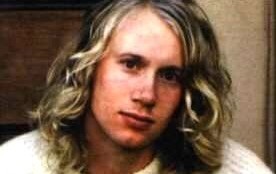
Martin Bryant
Spree killer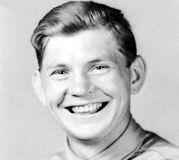 Edward Joseph Leonski
Spree killer · Australia · 1942
Edward Joseph Leonski was a U.S. Army private. He was described as a heavy drin…
3 victims
Edward Joseph Leonski
Spree killer · Australia · 1942
Edward Joseph Leonski was a U.S. Army private. He was described as a heavy drin…
3 victims
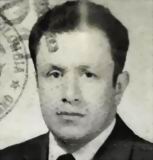 Campo Elías Delgado Morales
Spree killer · Colombia · 1986
Campo Elías Delgado Morales was a Colombian Vietnam War veteran. He lived with…
30 victims
Campo Elías Delgado Morales
Spree killer · Colombia · 1986
Campo Elías Delgado Morales was a Colombian Vietnam War veteran. He lived with…
30 victims
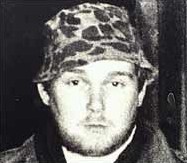 Michael Robert Ryan
Spree killer · United Kingdom · 1987
Michael Robert Ryan was an unemployed local labourer. He lived in Hungerford, B…
16 victims
Michael Robert Ryan
Spree killer · United Kingdom · 1987
Michael Robert Ryan was an unemployed local labourer. He lived in Hungerford, B…
16 victims
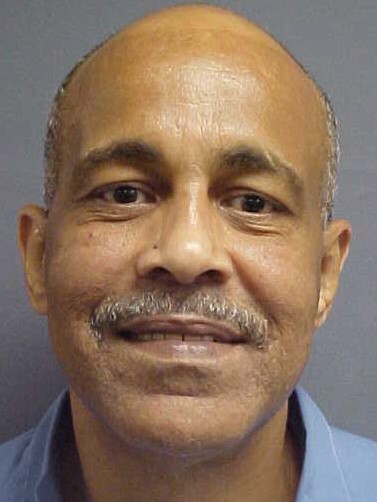 Kenneth Turrentine
Mass murderer · USA · 1994
Kenneth Turrentine was convicted in Oklahoma of four counts of first degree mur…
4 victims
Kenneth Turrentine
Mass murderer · USA · 1994
Kenneth Turrentine was convicted in Oklahoma of four counts of first degree mur…
4 victims
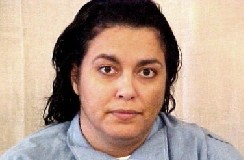 Angelina Rodriguez
Murderer · USA · 2000
Angelina Rodriguez was a Latina. She was 32 years old at the time of the crime.…
1 victim
Angelina Rodriguez
Murderer · USA · 2000
Angelina Rodriguez was a Latina. She was 32 years old at the time of the crime.…
1 victim
 Amelia Sach
Serial killer · United Kingdom · 1900
Amelia Sach was a British serial killer born in 1873 and executed on February 3…
Amelia Sach
Serial killer · United Kingdom · 1900
Amelia Sach was a British serial killer born in 1873 and executed on February 3…
- Gender
- male
- Country
- Australia
- Location
- Port Arthur, Tasmania, Australia
- Date of birth
- May 7, 1967
- Age at first offence
- 29
- Characteristics
- revenge, history of mental illness, shooting spree, abuse, drug addict
- Victim profile
- Winifred Joyce Aplin (58) / Walter John Bennett (66) / Nicole Louise Burgess (17) / Sou Leng Chung (32) / Elva Rhonda Gaylard (48) / Zoe Anne Hall (28) / Elizabeth Jayne Howard (26) / Mary Elizabeth Howard (57) / Mervyn John Howard (55) / Ronald Noel Jary (71) / Tony Vadivelu Kistan (51) / Leslie Dennis Lever (53) / Sarah Kate Loughton (15) / David Martin (72) / Noelene Joyce Martin (69) / Pauline Virjeana Masters (49) / Alannah Louise Mikac (6) / Madeline Grace Mikac (3) / Nanette Patricia Mikac (36) / Andrew Bruce Mills (49) / Peter Brenton Nash (32) / Gwenda Joan Neander (67) / Moh Yee Willing Ng (48) / Anthony Nightingale (44) / Mary Rose Nixon (60) / Glen Roy Pears (35) / Russell James Pollard (72) / Janette Kathleen Quin (50) / Helene Maria Salzmann (50) / Robert Graham Salzmann (58) / Kate Elizabeth Scott (21) / Kevin Vincent Sharp (68) / Raymond John Sharp (67) / Royce William Thompson (59) / Jason Bernard Winter (29)
- Method of murder
- Shooting
- Date(s) of murder
- April 28, 1996
- Years active
- 1996
- Date of arrest
- Same day
- Status
-
Life imprisonment
Sentenced to 35 life sentences without possibility of parole on November 22, 1996
Background
Martin Bryant was born May 7, 1967, and was the elder of two children of Maurice and Carleen Bryant.
In the early years of his schooling, he was diagnosed as having an IQ of 66 (considered to indicate mental disability) and was put into special education classes. Teachers described him as unusually detached from reality and either unemotional or expressing inappropriate emotions. Bryant was described as a disruptive and sometimes violent child and was severely bullied by other children. He was referred for psychiatric treatment several times during childhood.
In 1984, a psychological evaluation by Dr Eric Cunningham Dax described him as mentally retarded and stated that he had a personality disorder.
In adulthood, descriptions showed he continued to be disturbed. When his father, who had taken early retirement to care for him, died in an apparent suicide, ambulance officers described Bryant as quite excited by the search and unconcerned about the death.
Bryant was eligible for a disability pension due to his low IQ and lived on a pension for some years. He took on odd jobs as a handyman and gardener.
One of these odd jobs led to him meeting Helen Harvey, heiress to a share in the Tattersall's Lottery fortune. Harvey befriended Bryant, inviting him to live with her. She spent large amounts of money on him. Harvey and Bryant moved together to Copping, where they lived until her death in a traffic accident. Bryant was named the sole beneficiary of Harvey's will and came into possession of a mansion in Hobart and other assets totalling more than half a million dollars.
In 1993, Bryant's mother applied for and was granted a guardianship order placing Bryant's assets under the management of trustees. The order was based on evidence of Bryant's diminished intellectual capacity.
Bryant travelled extensively both in Australia and internationally during this period, seeking social contact with other travellers, but was frustrated at people's negative reactions to him. Bryant travelled to Singapore, Bangkok, London, Sweden, Los Angeles, Frankfurt, Copenhagen, Sydney, Tokyo, Poland, and Auckland; some of these locations more than once, and the United Kingdom many times. He also travelled all over Australia with many interstate trips. On several occasions he made last-minute flight changes to destinations unknown. His estate manager restricted his funds and Bryant stopped travelling frequently. Bryant withdrew many thousands of dollars during this period.
He inherited a great deal of money from Helen Harvey, a deceased family friend who left her estate to him. He used part of this money to go on many trips around the world from 1993 onwards.
Bryant used at least some of this money in late 1993 to purchase an AR-10 semi-automatic rifle through a newspaper advertisement in Tasmania. In March 1996, he had his AR-10 repaired at a gun shop and made enquiries about AR-15 rifles in other gun shops. He later purchased an AR-15 from Terry Hill, a local gun shop owner. In April 1996, he purchased cleaning kits for a .30 calibre weapon and 12 gauge shotgun. He purchased a sports bag and told a shop attendant it needed to be strong enough to carry large amounts of ammunition, measured out with a tape measure. He told his girlfriend, Petra Wilmot, a different story about the purpose of the bag. He hid the weapons and a large amount of ammunition at his house.
Petra Wilmot was initially employed as a gardener by Bryant. She never saw any weapons or ammunition in the house.
Bryant's father had tried to purchase a property called Seascape, but David and Noelene Martin bought this property before his father could ready his finances. It was unknown if this was responsible for the father's depression and subsequent suicide. Bryant offered to buy another property owned by Mr and Mrs Martin at Palmers Lookout Road, but they declined the offer.
Timeline
- 28 April 1996 — Bryant murdered 35 people and injured 37 others in the Port Arthur massacre.
- 7 November 1996 — A trial was scheduled to begin.
- 19 November 1996 — The facts were presented in court.
- 22 November 1996 — He was sentenced to 35 life sentences without possibility of parole.
- 13 November 2006 — Bryant was moved into Hobart's Wilfred Lopes Centre.
The offence
Bryant provided conflicting and confused accounts of what led him to kill 35 people at the Port Arthur site on 28 April 1996. The accounts included a reported desire for attention and mounting frustration at social isolation. A psychiatric report cited by News Limited said a possible trigger was being prevented from selling home-made trinkets outside the Broad Arrow Cafe when he was 9 years old.
His first victims were David and Sally Martin, who owned a guest house in the area. It was claimed he was angered because they bought a guest house he wanted to buy. He shot them in the guest house before travelling to the Port Arthur ruins and opening fire on visitors.
After he killed most of his victims at the site itself, and the remainder during his escape, he returned to the guest house where police, unaware that the Martins were already dead, assumed he had them as hostages and besieged the guest house.
One potential victim was spared because when Bryant pointed the gun at him, their eyes met and Bryant immediately recognised him as someone he had been acquainted with before, and seemingly decided to let him live before moving on.
Port Arthur massacre and aftermath
After the spree killing, the Howard government banned semi-automatic center-fire rifles, high-capacity repeating shotguns, and high-capacity rifle magazines. It also placed heavy limitations on low-capacity repeating shotguns and rim-fire semi-automatic rifles. The Tasmanian state government attempted to ignore the directive but was threatened with penalties from the federal government. A controversy resulted, and most Government opposition to the new laws was silenced by media and mounting public opinion.
Morning events
Bryant woke up at 6 a.m. when his alarm clock went off. His girlfriend and other family members said he had never been known to use it since he did not work and had no other commitments. At 8 a.m., his girlfriend left the house (also inherited from Miss Harvey) to visit her parents.
Bryant left the house and engaged the alarm, which registered the time as 9:47 a.m. He left a large amount of ammunition in the hallways of the house.
Around 10:30 a.m., Bryant purchased a cigarette lighter from Midway Point News Agency, paying with a large note without waiting for change. He entered the shop without money to clarify that the shop did sell lighters, and upon hearing that it did, he went back to his car to retrieve the money.
He travelled to Sorell Supermarket and purchased a bottle of tomato sauce, paying with gold and silver denomination coins between 20 cents and $2.
He travelled to Forcett Village arriving sometime around 11 a.m. He stopped at the Shell service station and bought a cup of coffee paying with five and ten cent coins. He told the attendant he was going surfing at Roaring Beach, though the attendant noticed it was a very calm day.
He drove past Eaglehawk Neck area and stopped at the service station “Convict Bakery” and purchased fifteen dollars of petrol. The attendant saw Bryant staring at the bay and its calm water. Bryant had a surf board on the roof rack of his yellow Volvo and the attendant noted the surfing conditions were poor.
Seascape guest accommodation
Bryant continued down to Port Arthur and stopped at the Seascape guest accommodation site owned by David and Sally Martin. Bryant drove into Seascape down the Arthur Highway around 11:45.
He went inside and fired several shots, then gagged Mr Martin and stabbed him. Witnesses testified to different numbers of shots fired at this time. It was claimed in court that it was believed this was when Bryant killed Mr. and Mrs. Martin.
A couple then arrived at Seascape and Bryant appeared outside. They asked if they could have a look at the accommodation. Bryant told them they could not because his parents were away and his girlfriend was inside. His demeanour was quite rude and the couple felt uncomfortable. They left at about 12:35 p.m.
Bryant’s car was seen reversed up to the front door. It was assumed he unloaded ammunition. Bryant drove to Port Arthur taking with him keys to the Seascape properties after locking the doors.
Bryant stopped at a car that had pulled over from overheating and talked with two people there. He suggested they come to the Port Arthur cafe for some coffee later.
He travelled past the Port Arthur historic site toward the Martins’ Palmer’s Lookout Road property, where he came across Mr Roger Larner driving out of his driveway. Mr Larner had met him on some occasions over 15 years and did not initially recognise him. Bryant told Mr Larner he had been surfing and had bought a property called Fogg Lodge and was now looking to buy cattle from Larner. Bryant made comments about buying the Martins’ place next door. He asked if Mrs Marian Larner was home and asked if he could continue down the driveway of the farm to see her. Mr Larner said OK but told Bryant he would come also. Bryant then changed his mind, claiming he was going to return in the afternoon.
Port Arthur Historic Site
At around 1:10 p.m., Bryant got in line behind other cars at the toll booth at the entrance to the historic site. He left the line and moved to the back again, and when he approached the front of the line he claimed someone almost reversed into him.
He paid the entry fee and proceeded to park near the Broad Arrow Cafe near the water’s edge. The site security manager told him to park with other cars because that area was reserved for camper-vans and the car park was busy that day.
Bryant moved his car to another area and sat in his car for a few minutes. He then moved his car back near the water outside the cafe. The security manager saw him go up to the cafe carrying a large bag and a video camera.
Bryant went into the cafe and purchased a meal, eating on the deck outside. People held the door open and commented on the large amount of food. Bryant replied that he was hungry from surfing. He started conversations with several people about wasps and the lack of Japanese tourists, but seemed mainly to be mumbling to himself. He appeared nervous and continually looked back to the car-park and into the cafe. He waved away wasps flying around the area.
Bryant’s remarks about “wasps” were interpreted by some Australian and overseas media as meaning “White Anglo Saxon Protestants”, though there was no evidence to support this.
Broad Arrow Cafe murders
After finishing his meal, Bryant walked into the cafe and returned his tray, assisted by people who opened the door for him. He put down his bag on a table and pulled out an AR-15 rifle with one 30-round magazine attached. He left the bag on the table, which contained, among other things, the knife he had stabbed Mr Martin with. It was believed the magazine was partially emptied from previous rounds fired at Seascape.
The cafe was small and tables were very close. The cafe was busy as people waited for the next ferry. The events happened extremely quickly.
Bryant took aim from his hip and pointed his rifle at Mr Moh Yee Ng and Miss Sou Leng Chung of Malaysia at a table beside his. He shot them at close range, killing them instantly.
He lifted the rifle to his shoulder and fired a shot at Mick Sargent, grazing his scalp and knocking him to the floor, and fired a fourth shot that hit Mick’s girlfriend, 21 year old Kate Elizabeth Scott, fatally in the back of the head.
A 28-year-old New Zealand winemaker, Jason Winter, helped staff at the busy cafe. As Bryant turned towards Winter’s wife Joanne and their 15-month-old son Mitchell, Jason Winter threw a serving tray at Bryant to distract him. Winter’s father pushed his daughter-in-law and grandson to the floor and under the table. Jason Winter was shot by Bryant.
Anthony Nightingale stood up after the sound of the first shots but had no time to move. Nightingale yelled “No, not here!” as Bryant pointed the weapon at him. Nightingale leaned forward and was shot fatally through the neck and spine.
The next table had held a group of ten people but some had just left to return their trays and visit the gift shop. Bryant fired twice, with one shot killing Mr Sharp and the second hitting Walter Bennett, passing through him and striking another Mr Sharp (related to the first), killing both. They had their backs towards Bryant and were unaware.
One of them made the comment “That’s not funny” after hearing the first few shots, not realising it was a real gun.
Gerald Broome, also at the table, was struck in the face by a bullet fragment from one of these shots and survived. Gaye Fidler suffered wounds to her back from fragments from one of the previous shots. John Fidler was struck in the head by bullet fragments and survived.
Bryant turned towards another table where two couples were sitting: Tony and Mrs Kistan, and Andrew and Mrs Mills. Both men stood up at the noise of the initial shots but had no time to move away. Mr Mills was shot in the head. Mr Kistan was also shot from about 2 metres away, also in the head; in the second before this he managed to push his wife away. Mrs Mills and Mrs Kistan were apparently under the table and Bryant did not shoot at them.
Thelma Walker and Pamelia Law at another table behind were struck with fragments from the shots that killed Mr Kistan and Mr Mills. Peter Crosswell at the same table dragged both women to the ground and sheltered underneath the table. Patricia Barker was also hit by fragments from the same shots and survived.
After this, most people began to realise what was happening. Bryant moved near the main exit and then began shooting at another table, hitting Graham Colyer in the neck. Despite choking on his own blood for some time, he survived.
Bryant pivoted and fatally shot Mervyn Howard still seated. The bullet travelled through him, through a window of the cafe, and hit a table on the outside balcony. Several people outside began to run away after realising the danger. Bryant followed quickly with a shot to the neck of Elizabeth Howard, then leaned over and shot her a second time.
Sarah Loughton saw Mr Colyer shot, ran towards her mother, who had been moving between tables, and the mother took them to the ground and lay on top of her daughter. Bryant shot Carolyn Loughton in the back, then shot her daughter in the head. Mrs Loughton had her eardrum ruptured by the sonic boom from the gun beside her ear. The mother survived and learned of her daughter’s death in hospital later.
Gift shop murders
As Bryant was near the exit, people had not attempted to run past him and escape. Bryant moved across the cafe toward the gift shop area.
There was an exit door through the display area to the outside balcony, but it was locked and could only be opened with a key. Mr Elliott realised he would soon be seen, could not hide under the table as it was full of people, and tried to run over to a fireplace. He was shot in the arm and head as he ran and survived after extensive surgery.
From the first bullet that killed Mr Ng, all events took approximately 15 seconds. During that time 12 people were dead and 9 more were wounded.
As Bryant moved toward the gift shop area, many people hid under tables and behind shop displays. Mrs Lever, Mrs Jary, Mrs Morr, and Mrs Wanderpeer hid behind a fabric screen. Peter and Mrs Nash attempted to open the locked door but could not. Mr Nash lay down on top of his wife to hide her from Bryant. Bryant moved into the gift shop area where people were trapped and crouched in corners.
Bryant calmly walked up to Nicole Burgess and shot her in the head. He then pointed the gun at Mr Lever and shot him in the head, fatally. Mrs Neander was also shot in the head and killed.
Bryant moved back to the cafe near the front door. He shot at a table and hit Mr Crosswell who was hiding under it in the buttock.
Mr Winter, hiding in the gift shop, thought Bryant had left and made a comment before moving into the open. Bryant saw him and shot him as he was getting up, hitting his hand, neck and chest. Bryant moved back toward Mr Winter and shot him in the head, killing him. Fragments from these shots struck Dennis Olsen who had been hiding with Mr Winter, and Olsen survived.
The order of events after that point was unclear. Bryant reloaded at some point, either before or after killing other people.
Bryant walked back to the gift shop and shot Ronald Jary through the neck, killing him. He shot Peter Nash and Pauline Masters, killing both of them. He did not see Mrs Nash underneath Mr Nash.
At some point, Bryant aimed his gun at an unidentified Asian man, but the rifle’s magazine was empty. Bryant then moved to the gift shop counter where he reloaded his rifle, leaving an empty magazine on the service counter.
In the cafe, 29 rounds were fired in approximately 90 seconds, very few shots missed, and most were fired from extremely close range. In that time Bryant killed 20 people.
Car park murders
During the cafe shooting, some staff escaped through the kitchen and alerted people outside. A number of coaches were outside with lines of people, many of whom hid in buses or nearby buildings. Others moved toward the area and some believed there was some sort of historical re-enactment.
Ashley John Law, a site employee, moved people away from the cafe into the information centre when Bryant fired at him from 50–100 metres away. Bullets missed Law and hit nearby trees.
Bryant moved down towards the coaches where Brigid Cook guided people down between buses and along the jetty area to cover. Royce Thompson, a coach driver, was shot in the back as he moved along the passengers’ side of a coach. He fell, crawled, rolled under the bus to safety, and later died of his wounds.
Bryant walked across to the next coach, and shot at people scrambling to hide. Cook was shot in the right thigh, causing the bone to fragment and the bullet lodging there. Ian McElwee, a coach driver, was hit by fragments of Cook’s bone, and both were able to run away and survive.
Bryant moved around another coach and fired at another group. Winifred Aplin was fatally shot in the chest as she ran to cover behind another coach. A bullet grazed Yvonne Lockley’s cheek but she entered a coach to hide and survived.
Some people moved away from the car park toward the jetty but were informed Bryant was moving that way, so they double-backed around the coaches to where Cook was previously shot. Janette Quin was shot in the back and lay there unable to move. Bryant continued along the car park as people escaped along the shore. Mr Hutchinson was attempting to get into a coach when he was shot in the arm. He ran around the front of the coach, along the shore to the jetty, and hid.
Bryant went to his vehicle just past the coaches, changed weapons to the FN FAL, and fired at Denise Cromer near the penitentiary ruins. Gravel flew up and bullets hit the ground.
Bryant returned to the coaches and fired again. When people realised he had seen them, they ran into the bush. He fired several shots; at least one hit a tree behind which someone was taking cover, but no one was hit. Douglas Hutchinson tried to move between cars to the jetty; Bryant noticed her and shot at her. The shot missed and she escaped.
Bryant moved back to the buses where Mrs Quin lay injured and shot her in the back, then left. She later died from her wounds.
Bryant entered one of the coaches and fired a shot at Elva Gaylard on the bus hiding, hitting her in the arm and chest and killing her.
At an adjacent coach, Gordon Francis saw what happened and moved down the aisle to try to shut the door. Bryant was seen by him and Bryant shot him from the opposite coach. Francis survived but needed four major operations.
Neville Quin, husband of Janette Quin, escaped to the jetty area but came back to look for his wife after being forced to leave earlier. Bryant exited the coach and noticed Mr Quin. Bryant fired at him but missed. Bryant chased Mr Quin around the coaches; he fired at least once more before Mr Quin ran onto a coach. Bryant entered the coach, pointed the gun at Mr Quin’s face, and said, “No one gets away from me”. Mr Quin ducked when he realised Bryant was about to pull the trigger. The bullet missed his head but hit his neck, leaving him momentarily paralysed. After Bryant left, he found his wife and she later died in his arms. Mr Quin was taken away by helicopter and survived.
As Bryant left the coach, James Balasko, a U.S. citizen, tried to catch Bryant on video camera. Balasko succeeded, and Bryant saw him and fired at him, hitting a nearby car.
By this point many people were hiding or running along Jetty Road or the jetty itself because gunfire was loud and difficult to pinpoint. It was unclear whether Bryant was mobile, and unclear which direction the shots were coming from.
Toll booth murders and car jacking
Bryant got back into his car and proceeded to leave the car park. Witnesses said he sounded the horn and waved; others said he also fired.
Bryant drove along Jetty Road toward the toll booth where people were running away. Ahead of him were Nanette Mikac (Née Moulton) and her two young children, Madeline, 3, and Alannah, 6 years old. She carried Madeline and Alannah ran slightly ahead. They had run approximately 600 metres from the car park.
Nanette told Alannah, “We’re safe now, pumpkin.” Bryant opened his door and slowed down. Mrs Mikac moved towards the car, apparently thinking he was offering help. Someone recognised him as the gunman and yelled, “It’s him!”
Bryant calmly told Mrs Mikac to get on her knees. She said, “Please don’t hurt my babies”. Bryant shot her in the temple, killing her, and then fired at Madeleine, hitting her in the shoulder, before shooting her fatally through the chest.
Alannah ran off and hid behind a tree. Bryant shot twice at Alannah as she ran behind the tree, missing. He walked up, pressed the barrel of the gun into her neck, and fired, killing her instantly.
Bryant fired one or two more rounds at some people hiding in a bush but missed. People further up the road began running; they told drivers to go back, thinking Bryant would head up the road.
Cars reversed up to the toll booth and drivers stopped to ask staff what was happening. It appeared no-one at the toll booth area knew what was happening.
Bryant drove up to the toll booth where several vehicles were present. He had put his gun away at this point and got out of his car, involved in an argument with Robert Salzmann. It was not known why, possibly because Bryant could not proceed due to cars blocking the road.
Bryant took out the FAL and shot Mr Salzmann, killing him. A driver got out of his BMW and approached. It was not clear why; Bryant walked up and shot him in the chest, killing him. More cars arrived but reversed back up the road.
Bryant moved to the BMW. It was not clear what happened next as no-one was nearby. It appeared he pulled two more women occupants from the car, shot them dead, and dragged their bodies onto the road.
Bryant transferred ammunition, handcuffs, the AR-15 rifle, and a fuel container to the BMW. Mary Nixon, Russell Pollard, Helene Salzmann, and Graham Salzmann were the people Bryant was charged with killing at the toll booth.
Another car approached and Bryant shot at it. The driver, Graham Sutherland, was hit with glass. A second bullet hit the driver’s door. The car reversed back up the road and left. Bryant got into the BMW, having left behind items in his Volvo including a shotgun and hundreds of rounds of ammunition.
Service station murder and abduction
After the BMW incident, Graham Sutherland reversed back up the road and drove to the service station close by where he tried to inform people what was happening.
Bryant drove to the service station and cut off a white Toyota Corolla trying to exit onto the highway. Glenn Pears drove the car with Zoe Hall in the passenger seat.
Bryant exited the car with his rifle and tried to pull Miss Hall from the car. Mr Pears got out and approached. Bryant pointed the gun at Pears and pushed him backward, directing him into the now open boot of the BMW. He locked Mr Pears inside.
Bryant moved back to the passenger side of Mr Pears’ car. Miss Hall climbed over to the driver’s seat. Bryant raised his rifle and fired three shots, killing her. Her body was later seen by a police officer in the passenger seat.
Many people around the service station saw this and ran to hide in the bush. The service station attendant told everyone to lie down and locked the main doors. He grabbed his rifle, but ammunition was kept locked in a safe. By the time it was retrieved and the gun loaded, Bryant was back in his car and gone. A police officer arrived minutes later and went in the direction of Bryant.
Seascape roadway
As Bryant drove down to Seascape, he shot at one red vehicle coming the other way, smashing its front windscreen.
Upon arriving at Seascape, a Frontera 4WD vehicle approached. They saw Bryant with his gun but believed him to be rabbit hunting and slowed down as they passed. Bryant fired into the car, and the first bullet hit the bonnet and broke the throttle cable. He fired at least two more bullets as it passed, breaking the windows. One bullet hit the driver, Linda White, in the arm.
The car went downhill and rolled down the road out of sight around a corner. The driver swapped seats with her boyfriend who attempted to drive but was unable because of the broken throttle cable.
Another vehicle carried four people; it was not until they were almost adjacent to Bryant that they realised he had a gun. Bryant shot at their car, smashing the windscreen. Douglas Horner was wounded by shrapnel from the shattered windscreen. The car drove on. After they saw Mrs White had been shot, they came back and picked them up. They continued down to the Fox and Hound where they called police.
Yet another car drove past and Bryant shot at it, hitting the driver in the hand. Simon Williams was struck by shrapnel. Another approaching vehicle reversed back up the road. Bryant also fired at this car, hitting it but not injuring anyone. Bryant got back into the BMW and drove down the Seascape driveway to the house.
Bryant removed Mr Pears from the boot and handcuffed him to a stair rail within the house. He set the BMW on fire with fuel, using the lighter he had purchased earlier in the day. He was believed to have arrived at the house by about 2 p.m.
Investigation, arrest and prosecution
At 1:30 p.m., the only two police officers in the area received a radio message to attend Port Arthur and look out for a yellow Volvo. They travelled to Port Arthur in different cars via different routes. They were informed to look for the BMW and then informed about people shot at the Fox and Hound. One officer drove past Seascape and past the disabled car of Mrs White, looked at it, continued to the Fox and Hound, informed his partner, and they proceeded back to Seascape.
Around 2 p.m. they were back at Seascape and saw the BMW on fire. They were fired upon and had to hide in a ditch. Bryant fired at them whenever they tried to escape and they were unable to move for many hours.
At around 2:10 p.m., Bryant received a call from a woman from the ABC network who was ringing local businesses to get information. Bryant answered the Seascape phone. He told her his name was Jamie, and when she asked what was happening he replied “Lots of fun”. He told her that if she phoned again, he would shoot Mr Pears.
At about 3 p.m., shortly after forcing the police officers to take cover in the ditch, Bryant rang the local police station where the girlfriend of one of the officers answered. He asked who she was and whether she knew where her husband was. He called himself Jamie. He asked if she knew whether her husband was okay. When she did not answer, he told her her husband was okay and that he knew where her husband was.
As night fell, one police officer saw a woman running around naked and screaming who later seemed to run back into the house. It was possible this was Noelene Martin.
Around 9 p.m., a team from the Special Operations Group of the Tasmania Police arrived. They removed the policemen from the ditch to safety using the cover of darkness, riot shields, and bullet proof jackets. They did not provide cover fire for fear of hitting hostages. An 18-hour standoff ensued during which police talked by phone to Bryant who called himself Jamie. He requested a helicopter, saying he wanted to be flown to a plane and then to Adelaide in South Australia. He said he would release one hostage, Mr Pears, and keep Mrs Martin if the helicopter arrived. It was possible both Mrs Martin and Mr Pears were still alive at this time.
Bryant demanded the SOG officers retreat each time they began an approach to the house. Police believed he had some kind of visual aid device because he maintained awareness of events despite the darkness, though none was found. A man was spotted on the roof of an adjacent building at one point believed to be Bryant. Later in the night, the cordless phone Bryant used began to run low on batteries. Police tried unsuccessfully to get him to return the phone to the charger. It went dead and no further communications were established.
Bryant was captured the following morning when he presumably started a fire in the guest house. He taunted police to “come and get him”, but they believed the hostage was already dead and decided the fire would bring him out.
A large amount of ammunition ignited and exploded sporadically as the house burned. Bryant ran out with his clothes on fire, quickly removed his burning clothes, and was arrested and taken to hospital for treatment.
Mr Pears was found to have been shot dead during or before the standoff, and had died before the fire. The remains of the Martins were found. They had been shot and Mrs Martin had suffered blunt force trauma. They both died before the fire, and witness accounts as presented to the Supreme Court of Tasmania placed the time of death of David and Sally Martin at approximately noon on 28 April.
One weapon was found burnt in the house and the other on the roof of the adjacent building, where police believed they had seen Bryant the night before. Both weapons had massive chamber blast pressure, possibly from heat of the house fire.
In his police interview, Bryant admitted to car jacking the BMW but claimed it only had three occupants and denied shooting any person. He claimed he did not take the BMW from the vicinity of the toll booth and that his hostage was taken from the BMW. He said he thought the man he took hostage died in the boot when the car exploded, and he did not distinguish between the car fire and the later house fire.
He denied visiting Port Arthur on that day, despite identification by several people including the toll attendant. Discrepancies indicated Bryant was either lying during the police interview or was mentally incapable of recalling events accurately.
Bryant claimed the guns found by police were not his, but admitted owning the shotgun found with his passport in his own car near the toll booth.
Trial
Bryant initially pleaded not guilty to the 35 murders, laughing hysterically as the judge read out the charges against him. He later changed his plea to guilty once the prosecution began presenting evidence. He did not provide a confession.
His trial began as scheduled to begin 7 November 1996, and the facts were presented in court on 19 November 1996. Despite his mental dysfunction, he was judged as fit to stand trial.
Sentencing
Two weeks after his guilty plea, Hobart Supreme Court Judge William Cox gave Bryant 35 life sentences and recommended that he should remain in prison until he died. On November 22, 1996, he was sentenced to 35 life sentences without possibility of parole.
Appeals
No appeal information was included.
Outcome
Bryant was found guilty of all charges and was serving 35 sentences of life imprisonment (for the 35 murders) plus 1,035 years in Hobart's Risdon Prison as a cumulative penalty for various charges including attempted murders and grievous bodily harm for shooting at and injuring numerous people. His prison papers indicated that he was never to be released. He was serving his term without possibility of parole.
Aftermath
Australian reaction included widespread shock and horror and political effects that were significant and long-lasting. Both federal and state governments acted to restrict the availability of firearms, including after the Howard government banned certain weapons. The Tasmanian state government initially attempted to ignore federal direction but was threatened with penalties.
Family members of victims, notably Walter Mikac who lost his wife and two children, spoke out in favour of the changes.
Media coverage after the massacre raised questions about journalistic practices. Photographs of Bryant had been digitally manipulated to make him appear deranged, and there were questions about how the photographs had been obtained.
The Tasmanian Director of Public Prosecutions warned the media that the reporting compromised a fair trial and issued writs against the Hobart Mercury, which used Bryant’s picture under the headline “This is the man”, The Australian, The Age, and the Australian Broadcasting Corporation for their coverage.
David Flint, the Australian Press Council chairman, argued that because Australian newspapers regularly ignored contempt-of-court provisions, this showed that the law, not newspapers, needed change. Flint suggested that a change in the law would not necessarily lead to trial by media.
Bryant was held in a purpose-built special suicide prevention cell for the first eight months of his imprisonment in almost complete solitary confinement. He remained in protective custody for his safety, until he moved to detention centres a decade after his conviction. He had attempted suicide 6 times while imprisoned. Recent reports from visitors described Bryant as “overweight, shambolic wreck”.
On Monday 13 November 2006, Bryant was moved into Hobart's Wilfred Lopes Centre, a secure mental health unit run by the Tasmanian Department of Health and Human Services. The 35-bed unit for inmates with serious mental illness was staffed inside with doctors, nurses, and other support workers. Inmates were not locked down and could come and go from their cells. Exterior security was provided by a three-wall perimeter patrolled by private contract guards.
Spotted an error, or have more information about this case?