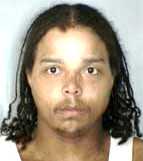
James Cooke
Murderer Robert Glen Jones
Murderer · USA · 1996
Defendant: Robert Glenn Jones (ADC#070566) · Co-defendant: Scott Nordstrom (ADC…
7 victims
Robert Glen Jones
Murderer · USA · 1996
Defendant: Robert Glenn Jones (ADC#070566) · Co-defendant: Scott Nordstrom (ADC…
7 victims
 Joshua Wayne Andrews
Murderer · USA · 2000
Joshua Wayne Andrews was a serial killer accused of killing several people in V…
5 victims
Joshua Wayne Andrews
Murderer · USA · 2000
Joshua Wayne Andrews was a serial killer accused of killing several people in V…
5 victims
 Juan Carlos Alvarez
Murderer · USA · 1998
Juan Carlos Alvarez, born on March 9, 1977, in San Luis, Mexico, was a Hispanic…
5 victims
Juan Carlos Alvarez
Murderer · USA · 1998
Juan Carlos Alvarez, born on March 9, 1977, in San Luis, Mexico, was a Hispanic…
5 victims
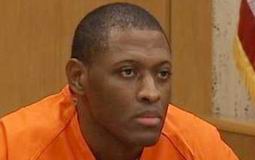 Leon Davis Jr.
Murderer · USA · 2007
Leon Davis Jr. was sentenced to death on April 29, 2011, for the execution-styl…
5 victims
Leon Davis Jr.
Murderer · USA · 2007
Leon Davis Jr. was sentenced to death on April 29, 2011, for the execution-styl…
5 victims
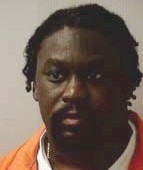 Jermaine Marlow Wright
Murderer · USA · 1991
Jermaine Marlow Wright was born on 10/11/1972. He was Black and male. Jermaine…
1 victim
Jermaine Marlow Wright
Murderer · USA · 1991
Jermaine Marlow Wright was born on 10/11/1972. He was Black and male. Jermaine…
1 victim
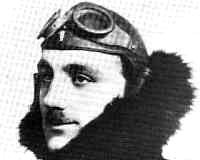 Ronald True
Murderer · United Kingdom · 1922
Ronald True was sentenced to death for the murder of 25-year-old Olive Young, a…
1 victim
Ronald True
Murderer · United Kingdom · 1922
Ronald True was sentenced to death for the murder of 25-year-old Olive Young, a…
1 victim
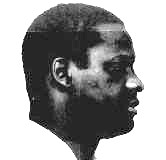 Charlie Livingston
Murderer · USA · 1983
Charlie Livingston was executed by lethal injection in Texas on November 21, 19…
1 victim
Charlie Livingston
Murderer · USA · 1983
Charlie Livingston was executed by lethal injection in Texas on November 21, 19…
1 victim
 William Bracy
Murderer · USA · 1980
William Bracy was convicted, in a joint trial with Murray Hooper and in related…
5 victims
William Bracy
Murderer · USA · 1980
William Bracy was convicted, in a joint trial with Murray Hooper and in related…
5 victims
 George Sitts
Murderer · USA · 1945
George Sitts was executed by the State of South Dakota on April 8, 1947 for the…
3 victims
George Sitts
Murderer · USA · 1945
George Sitts was executed by the State of South Dakota on April 8, 1947 for the…
3 victims
 Brittny Adams
Murderer · USA · 2013
Seven months after seeing his father shot dead during an altercation at his Law…
1 victim
Brittny Adams
Murderer · USA · 2013
Seven months after seeing his father shot dead during an altercation at his Law…
1 victim
- Gender
- male
- Country
- USA
- Location
- New Castle County, Delaware, USA
- Date of birth
- December 2, 1970
- Age at first offence
- 35
- Characteristics
- rape, armed robbery, arson, domestic violence, hate crime, white supremacist
- Victim profile
- Lindsey M. Bonistall, 20
- Method of murder
- Strangulation
- Date(s) of murder
- May 1, 2005
- Years active
- 2005
- Date of arrest
- June 7, 2005
- Status
-
Sentenced to death
Sentenced to death by lethal injection on June 6, 2007
Name and identity
James Cooke (James E. Cooke, Jr.; James Edward Cooke)
Personal details
James E. Cooke, Jr. was born on 12/02/1970. He was described as Black and male. He was 34 at the time of the May 1, 2005 killing and was described as 36 in 2007 during the sentencing reporting. He was unemployed and described as a shoe store clerk. He lived in Newark, Delaware, with his girlfriend and children.
Background
Cooke had a criminal record in New Jersey that included convictions for theft, resisting arrest, riding in a stolen vehicle, drug possession and distributing drugs on school property. A spokeswoman for the New Jersey Department of Corrections, Deirdre Fedkenheuer, said that since 1992, Cooke served time in several state prisons, including the South Woods State Prison in Bridgeton and the New Jersey State Prison in Trenton. He had been on parole in New Jersey and forbidden to leave the state without the consent of his parole officer until March 2, 2004, according to New Jersey parole records.
Cooke lived about a block away from Lindsey Bonistall’s off-campus apartment in Newark, Delaware. He was described as having an impoverished childhood in nearby Salem, N.J., and as having been abused and neglected, including getting his feet scalded by his mother’s boyfriend as a toddler.
Victim
Lindsey M. Bonistall was a 20-year-old University of Delaware student from White Plains, N.Y., and was identified by Newark Police as a homicide victim. She was described as an English major and as a UD sophomore. Her body was discovered after an arson fire in her Towne Court apartment.
The offence
On May 1, 2005, Cooke broke into the apartment of University of Delaware student Lindsey Bonistall at 81 Thorn Lane. Cooke proceeded to rape and strangle her to death, then he put her body in the bathtub. He attempted to cover up the crime by setting the apartment on fire. In an attempt to throw off police detectives, Cooke scrawled white-supremacist graffiti on the walls of Lindsey’s apartment. Cooke used a blue magic-marker to write “KKK” in several places near the front door of Lindsey Bonistall’s Towne Court apartment, Newark Police Detective Andrew Rubin said.
The narrative described Cooke’s killing as the culmination of a break-in spree of escalating violence during that week. The night before May 1, he threatened to kill a woman but fled her apartment when she screamed her roommate’s name and dialed 911 on her cell phone. Early on May 1, he broke into Bonistall’s apartment through a sliding-glass door, gagged her, raped her and strangled her with a T-shirt. He then put her body in the bathtub, set it on fire and scrawled messages on the wall to confuse police into thinking the crime was committed by white supremacists.
Investigation
A fire marshal returned to 81 Thorn Lane to resume the investigation of a fire after completing the investigation on Murray Road. During that investigation, the fire marshal found that the fire also was arson. The fire marshal then contacted the Newark Police Department. Upon further investigation, Ms. Bonistall’s body was discovered in the bathtub under a large pile of debris from the fire. Cooke’s public defenders and prosecutors later referred to DNA evidence linking him to the killing.
Detectives described a 911 call made by Cooke. The 911 caller “had a number of details on the crime,” Capt. William Nefosky said, but also said things “to send us off in a different direction,” the captain said. Detectives who listened to the call thought, “He is from New Jersey, and he has this distinctive accent,” Captain Nefosky said, adding, “We believe it was Cooke that made the phone call.” The 911 call provided leads and was made not long after Bonistall was found dead in her apartment on May 1.
Prosecutors used DNA evidence to link Cooke to the killing. A prosecutor played excerpts from a 911 tape during opening statements and described it as including details about burglaries at nearby residences just days before Bonistall’s killing, with the caller suggesting the killing was part of a drug war involving white supremacists. A handwriting analyst testified that the writing was consistent with samples of Cooke’s writing. Police said two DNA samples belonging to Cooke were found on Lindsey Bonistall’s body.
Cooke’s attempt to misdirect police included the white supremacist and “KKK” graffiti at the apartment.
Timeline
- April 27, 2005 — James Cooke Jr. broke into Cheryl Harmon’s apartment at 11 Thorn Lane in Newark, Del., and stole two rings with her name on them.
- April 30 (1:00 a.m.) — Cooke confronted Amalia Cuadra in her West Park Place house and threatened to kill her if she did not turn over money and credit cards; he demanded that she take her clothes off but fled when she yelled, “Christina, Christina,” her roommate’s name.
- April 30 (4:19 a.m.) — Cooke tried to use one of Cuadra’s credit cards at a nearby automated teller machine.
- May 1 (1:15 a.m.) — Lindsey Bonistall returned to her apartment at 81 Thorn Lane.
- May 1 (2:45 a.m.) — Firefighters responded to reports of smoke at Bonistall’s apartment and extinguished a fire; they left to battle another fire a few blocks away.
- May 1 (12:30 p.m.) — Fire officials and a Newark detective returned to Bonistall’s apartment and found her body under charred debris in the bathtub; she had been gagged, raped and strangled.
- May 2, 2005 — Cooke disguised his voice on a 911 call to Newark police in which he claimed the killing and the Harmon burglary were the work of a white supremacist drug gang; he used Harmon's name and the name of Cuadra's roommate, which had not been made public, helping police link the three crimes.
- Late May — Cooke’s bosses at a shoe store told police they recognized Cooke in a poster showing a surveillance photo from the ATM.
- June 6, 2007 — Cooke was arrested in Wilmington, Del., on charges in the second break-in; he was charged that week in Bonistall’s killing when results of DNA testing linked him to the rape.
- Jan. 23, 2007 — Cooke’s trial began.
- March 8, 2007 — Cooke was convicted of first-degree murder after the jury rejected his lawyers’ contention that he was guilty but mentally ill.
- March 21, 2007 — The jury recommended the death penalty for Cooke.
- June 6, 2007 — Superior Court Justice Jerome Herlihy found that aggravating factors outweighed mitigation and sentenced Cooke to death by lethal injection.
Arrest and charges
Cooke was arrested on June 7 and held on more than $50,000 bail in connection with the home invasion before being charged with first-degree counts of murder, rape, arson, burglary and reckless endangerment. Cooke faced the death penalty if convicted.
He was also charged in connection with a home invasion after police searched the residence of Rochelle Campbell, where Cooke had been living when the killing occurred.
Trial
Defence and motion to suppress
Attorneys for James E. Cooke Jr. argued to suppress evidence collected during a search of their client’s former Newark residence. Defense attorney Brendan O'Neill said that the search warrant used by Newark police had deficiencies; therefore evidence collected from the home of James E. Cooke Jr.’s former girlfriend should not be used at his trial scheduled for September. Defense targeted DNA evidence and also attempted to suppress Cooke’s DNA samples. Police said they found two samples of DNA belonging to Cooke on Lindsey Bonistall’s body.
Key testimony: Rochelle Campbell
Rochelle Campbell testified that when police asked to search her Lincoln Drive apartment on June 6, she told them to get a search warrant. She said she would have allowed police to search her home without a warrant, but she was still upset that officers stopped her for more than 30 minutes the day before. She was walking to the apartment carrying her laundry with four children in tow and was nine-months pregnant. “It was embarrassing,” she said as she started to cry, “because everyone in our neighborhood got a chance to see us.”
After investigators returned with a warrant and began searching her home, Campbell said she was asked to go to the police station. Campbell also said an FBI agent implied that if she didn't go she would be arrested. She went willingly. When she returned, police asked her to sign a consent form allowing them to take certain items, such as a handwriting sample, from the home. She signed it. Campbell gave answers about whether she was aware police had already seized the items before getting her written consent, and some items were removed by police before she signed a form authorizing them.
Trial proceedings and conviction
Cooke denied killing Bonistall and said they had had consensual sex. He also said he was not mentally ill. In court, he claimed his attorneys were working with the judge to railroad him. Judge Jerome Herlihy banished Cooke from the courtroom after frequent outbursts, and Cooke spent most of the trial in a holding cell after outbursts, including being wrestled to the floor by bailiffs on one occasion.
The jury deliberated just over two days before finding him guilty of murder, felony murder, rape, robber, three counts of burglary, arson, reckless endangering, and two counts of misdemeanor theft. The jury rejected Cooke’s claims and convicted him of first-degree murder. The next step was the death penalty phase.
Sentencing recommendation
The jury recommended the death penalty for Cooke.
Sentencing
On June 6, 2007, Superior Court Judge Jerome Herlihy sentenced Cooke to death after finding that the aggravating factors outweighed the mitigation. Cooke was ordered into the custody of the Department of Correction until he was injected intravenously with a substance or substances in a lethal quantity sufficient to cause death until he was dead.
“James E. Cooke, in accordance with the law of the state of Delaware, it is the sentence of the Court that you be kept in the custody of the Department of Correction until such time that you shall be injected intravenously with a substance or substances in a lethal quantity sufficient to cause death until you are dead,” Herlihy said.
Herlihy stated, “Strangling Bonistall requires a desire to kill lasting much longer than pulling a trigger one or two times,” and that it was “up close and personal.” He also stated, “The use of her T-shirt and pressing on her chest betrays a cold-blooded viciousness. It was a slow, painful, terrifying death.”
Prosecutors used language describing the sentence as appropriate, and Deputy Attorney General Steven Wood said:
“There was a striking contrast between the promise and goodness of Lindsey Bonistall and the menacing evil that is James Cooke,” said Deputy Attorney General Steven Wood.
“And that contrast was, I think for all of us, a source of very powerful emotions.”
Appeals
Cooke’s conviction and sentence were automatically appealed to the Delaware Supreme Court.
Outcome
Cooke received a death sentence by lethal injection. No execution date was set, and it would be several years before he was put to death. Cooke joined 16 other men on Delaware’s death row, with executions on hold while a lawsuit challenging lethal injection as cruel and unusual punishment was pending.
Aftermath
UD President David P. Roselle commented after the arrest announcement was made public. Roselle said:
“The entire University of Delaware community is shocked and saddened by this terrible tragedy,” UD President David P. Roselle said.
“We extend our deepest sympathies to the members of the Bonistall Family, as well as to her family of friends here on the University campus.
“Miss Bonistall was a popular student, and our Center for Counseling and Student Development will be available to provide assistance desired by any of her many friends,” Roselle said.
At sentencing, Mark Bonistall embraced his wife Kathleen as she sobbed against his shoulder. Kathleen Bonistall said:
“We were never big proponents of the death penalty. But when you have a child murdered so violently, so horrifically, any lesser sentence would not have served justice,” Kathleen Bonistall said.
Lindsey’s uncle John Bonistall said the family refrained from uttering Cooke’s name:
“Neither would refer to Cooke by name, calling him the ‘individual’ or the ‘defendant.’”
“Lindsey's uncle, John Bonistall, said the entire family refrains from uttering the name. “It's almost considered a curse word in our family,” he said.”
Cooke’s public defenders Brendan O'Neill and Kevin O'Connor planned to begin the appeal immediately. O’Connor said:
“He's more than just the worst thing he ever did. He's a human being,” O'Connell said.
“We lost this battle, but there's still more to be done.”
O'Neill said Cooke was stunned:
O'Neill said their client was stunned. “He understood this day was coming, and while he could expect this decision from the judge, it's difficult to appreciate it fully until it's announced publicly.”
Stewart Dotts, a 53-year-old high school chemistry teacher, spoke at sentencing and said:
“Neither side won. The truth came out,” he said.
“We made no moral judgment. It was a legal decision.”
Five jurors and one alternate attended the sentencing and welcomed the chance to speak with the Bonistall family, and Kathleen Bonistall told jurors about “PEACE OUTside Campus,” the Lindsey M. Bonistall Foundation set up to promote safe campus communities at colleges around the country.
Other details
Cooke was described as having lived around the corner from Bonistall with his girlfriend and four of his 10 children. The narrative described him as having threatened to kill a woman the night before the homicide and then fleeing when she screamed her roommate's name and dialed 911 on her cell phone.
The first home invasion involved a surveillance camera recording images of a man using an automated teller machine card belonging to the victim of the first home invasion. A graduate student in a separate attack (identity not disclosed) was attacked as she slept and the assailant took money, credit cards and an automated teller machine card from the Wilmington Trust Company. A composite sketch was prepared and run in Delaware newspapers and shown on local television; it was also posted in a local shoe store where Cooke had been working, and he immediately went missing from his job and did not return.
Cooke was charged separately with a series of home invasions that occurred the week before his arrest, in Atlantic City. In Wilmington, Del., Cooke faced charges in connection with the second break-in.
Defense attorneys referred to mental illness defense and sought life imprisonment; Cooke’s public defenders focused on his troubled childhood, and he did not want the mental illness defense.
Spotted an error, or have more information about this case?