Robert Wayne Marshall
Murderer Brian Kevin Rosenfeld
Murderer · USA · 1985
Brian Kevin Rosenfeld Brian Kevin Rosenfeld was sentenced to three concurrent l…
23 victims
Brian Kevin Rosenfeld
Murderer · USA · 1985
Brian Kevin Rosenfeld Brian Kevin Rosenfeld was sentenced to three concurrent l…
23 victims
 Yahweh ben Yahweh
Murderer · USA · 1980
Yahweh ben Yahweh was born and legally named Hulon Mitchell Jr. (October 27, 19…
23 victims
Yahweh ben Yahweh
Murderer · USA · 1980
Yahweh ben Yahweh was born and legally named Hulon Mitchell Jr. (October 27, 19…
23 victims
 Russell Ellwood
Murderer · USA · 1991
Russell Ellwood was a former taxi driver. Authorities suspected him of killing…
20 victims
Russell Ellwood
Murderer · USA · 1991
Russell Ellwood was a former taxi driver. Authorities suspected him of killing…
20 victims
 Robert Martines Perez
Murderer · USA · 1994
Name: Robert Martines Perez · Other name used in proceedings: Robert Martinez P…
15 victims
Robert Martines Perez
Murderer · USA · 1994
Name: Robert Martines Perez · Other name used in proceedings: Robert Martinez P…
15 victims
 Richard Lynch
Murderer · USA · 1999
Name: Richard Lynch · Date of birth: 06/19/53 · Case citation: Florida Supreme…
2 victims
Richard Lynch
Murderer · USA · 1999
Name: Richard Lynch · Date of birth: 06/19/53 · Case citation: Florida Supreme…
2 victims
 Helge Fossmo
Murderer · Sweden · 1999
Helge Arnold Fossmo (1971-) was a Pentecostal pastor. He was involved in the Kn…
2 victims
Helge Fossmo
Murderer · Sweden · 1999
Helge Arnold Fossmo (1971-) was a Pentecostal pastor. He was involved in the Kn…
2 victims
 George Percy Stoner
Murderer · United Kingdom · 1935
George Percy Stoner was sentenced to death on May 31, 1935. His sentence was co…
1 victim
George Percy Stoner
Murderer · United Kingdom · 1935
George Percy Stoner was sentenced to death on May 31, 1935. His sentence was co…
1 victim
 Manling Williams
Murderer · USA · 2007
Manling Tsang Williams was 32 years old at sentencing and lived in a Rowland He…
3 victims
Manling Williams
Murderer · USA · 2007
Manling Tsang Williams was 32 years old at sentencing and lived in a Rowland He…
3 victims
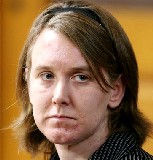 Michelle Kehoe
Murderer · USA · 2008
Michelle Kehoe was convicted in Iowa of first-degree murder, attempted murder,…
1 victim
Michelle Kehoe
Murderer · USA · 2008
Michelle Kehoe was convicted in Iowa of first-degree murder, attempted murder,…
1 victim
- Gender
- male
- Country
- USA
- Location
- Pittsburgh, Pennsylvania, USA
- Date of birth
- 1955
- Age at first offence
- 33
- Characteristics
- dismemberment, alcohol
- Victim profile
- Michael Hickmott, 30 / Anthony P. Michalowski, 22
- Method of murder
- ???
- Date(s) of murder
- 1988 / 1992
- Years active
- 1988–1992
- Date of arrest
- —
- Status
-
Died in custody
Committed suicide to avoid arrest on May 15, 1992
Case record: Robert Wayne Marshall
Timeline
- May 15, 1992 — Robert Wayne Marshall committed suicide to avoid arrest in the Strip District before police could question him.
Background
Robert Wayne Marshall was a past Edison hotel guest whom police suspected was a violent serial killer.
Police believed Marshall, 37, was the culprit in the dismemberment/disembowelment deaths of Anthony Michalowski in 1988 and Michael Hickmott in 1992.
Investigators said overwhelming evidence pointed to Marshall. Police also said killers using such bloodthirsty methods usually did not start with such gruesomeness. Police said Marshall may have killed many more, but he killed himself in 1992 as police closed in on him for the Hickmott murder. Marshall left no suicide note.
The offence
Police suspected Marshall in the dismemberment/disembowelment deaths of:
- Anthony Michalowski (1988): police described the decapitation as “crude” and called it “a terrible mutilation. ... There was so little of the body.”
- Michael Hickmott (1992): Marshall was charged with criminal homicide in the 1992 slaying and dismemberment of 30-year-old Michael Hickmott.
Police discussed a profile of the person who dismembered Michalowski. Investigators said doctors told police the suspect was likely a white male with a history of mental illness who was within 10 years of Michalowski’s age. Nevling said:
“The person that did this had a lot of hate, and he vented by doing what he did,” Nevling said. “It was almost certainly a male—women are getting more like men all the time, but it’s highly unlikely it was a woman. They haven’t gotten into the really brutal murders yet.”
Police said the motive was sex. The motive field stated: “MOTIVE: Sex.” The modus operandi was described as: “MO: Gay alcoholic; dismembered male victims.”
Nevling said investigators were afraid whoever dismembered Michalowski was a serial killer and would strike again.
Investigation
Allegheny County police Inspector Floyd Nevling was sure that someone was playing a prank when he heard that a human head had been found in a trash bin in North Versailles Township. Nevling thought:
“Someone probably found a mannequin head left over from Halloween,” Nevling thought as he headed to the scene just as few days after Christmas 1988.
Nevling looked inside the garbage bag and realized it was no joke. Residents across the region reported finding human remains. Most turned out to be parts of deers or other animals. After two more grisly finds in North Braddock and Whitaker, the Allegheny County coroner’s office positively identified the victim as 22-year-old Anthony P. Michalowski.
Police described Michalowski as a “drifter” from the North Side of Pittsburgh with no known connection to the Mon Valley. More than 150 mourners attended a funeral service for Michalowski on Jan. 28, 1989, in St. Peter Roman Catholic Church near the former Three Rivers Stadium, though most of his body was not recovered.
Investigators said they did not know when or where he died. They said the death was never ruled a homicide because forensic pathologists could not tell what killed him. Charlie Lenz said:
“I wanted to clear that case in the worst possible way,” said the man they called “The Silver Fox”—retired county homicide Detective Charlie Lenz, who led the Michalowski investigation. “That case did bug me.”
Lenz also said:
“It was one of those we knew was going to take a long time to figure out,” he said. “People said, `You’ll never get it,’ and I wanted to prove them wrong.”
Dr. Joshua Perper said:
“Mankind has many mysteries,” said Dr. Joshua Perper, former Allegheny County Coroner. “Add this one to the long list.”
Nevling said Michalowski was seen in a Lawrenceville bar on Dec. 24, 1988, and police were told by witnesses that he might have been in a tavern in Great Valley Shopping Center.
No known link to the Mon Valley was described by Nevling. Police said Michalowski rarely strayed far from the North Side and had no known link to the Mon Valley. Police said Michalowski was a high school dropout who did not have a steady job and hung out on Liberty Avenue, described as Downtown’s center for strip bars and prostitution. Lenz said:
“He could have been taking up with anybody and everybody,” said Lenz, who began his career with Pittsburgh police in 1950 and retired from the county in 1996. “When you’re dealing with transients, it makes (for) a difficult case to solve.”
Several Liberty Avenue regulars told investigators Michalowski was working as a male prostitute, but his family disputed the claims. Walter Engel, who was then married to Michalowski’s mother, said recently Michalowski was not homosexual, and that while he liked to party, he was not the drifter police made him out to be. Engel said:
“He was just a young kid ... he was a good kid,” Engel said. “One time I tried to get him to go into the Army, I even gave him $100. I hoped it would straighten him out—I hoped it would slow him down a bit.”
Toxicology tests on Michalowski’s remains showed high concentrations of sedatives in his bloodstream when he died. Nevling said investigators wondered whether he was drugged into unconsciousness and then killed, or if he died of an overdose and was dismembered. Nevling said:
“For this to be a purely accidental death seems unlikely,” Nevling said. “Somebody had to have a pretty malicious reason to do this.”
Perper said the decapitation was “crude” and called it:
“a terrible mutilation. ... There was so little of the body.”
Michalowski’s head was found on the night of Dec. 27, 1988, behind the Able Home Center in Great Valley Shopping Center by a man who said he was scavenging for cardboard boxes. Longtime employee Ron Pedersen said the man went to a nearby drugstore to call police.
Detectives canvassed the shopping center trying to find someone who might have seen the bag being dumped, Nevling said. Nevling said:
“The immediate thing you do is start searching the crime scene,” he said. “You look for evidence. We really found nothing.”
As a police sketch was being released to the news media Dec. 29, another find was made in Whitaker by a black Labrador retriever named Molly, owned by John Zelena of Lincoln Avenue. Under the shrubs at the home of Zelena’s neighbors, Bill and Flo Lackovich, Molly found what turned out to be a lung and several of Michalowski’s teeth, investigators said. Flo Lackovich was at work in Squirrel Hill. Her husband was unwinding with the crowd at Pido’s Pub on Ravine Street in Munhall.
Bill Lackovich recalled:
“They said, ‘Hey, Bill! Your house is on TV!’“ Bill Lackovich recalled.
Flo Lackovich said:
“Everyone was just aghast,” added Flo Lackovich. “Why did they pick our place?”
Flo Lackovich said:
“It’s very sad,” Lackovich said. “How can you do that?”
Joe Dominick, former senior deputy coroner and chief of operations in the Allegheny County Medical Examiner’s Office, said:
“It was kind of a panic situation,” said Joe Dominick, former senior deputy coroner and chief of operations in the Allegheny County Medical Examiner’s Office. “Everybody and their brother was calling the office with whatever they found.”
Their discoveries turned out to be animal remains—deer season was in full swing—until Jan. 3, 1989, when a security guard at U.S. Steel’s Edgar Thomson Works found a jawbone near a pedestrian entrance on Braddock Avenue.
On the next day, a revised, computer-enhanced photo of the victim’s face was shown on television. Michalowski’s aunt called police to say the picture looked like her nephew. Dental records confirmed the identity.
Because of his frequent, lengthy absences, Michalowski had never been reported missing, Lenz and Nevling said. On Jan. 6, 1989, WTAE-TV hosted a live, 30-minute call-in show in which county police solicited information from the public. Nevling’s teen-age children dubbed it the “head-a-thon.” Investigators said they were confident the tips would lead them to a suspect, and several were targeted. Lenz said:
“We always felt it was someone familiar with North Versailles,” Lenz said. If the suspect was from somewhere besides the Turtle Creek Valley, he said, “why not dump that head somewhere other than that damned Dumpster?”
Police pressed hard on one suspect with a history of picking up young men and choking them to unconsciousness, and on another with a violent past to whom Michalowski supposedly owed money. Nevling said the rule of thumb for solving a homicide was:
“The rule of thumb is if you’re going to solve a homicide, it’s going to be done in the first 72 hours,” he said. “We were already just about at the cutoff.”
Perper said DNA evidence would have helped crack the case, giving blood on a suspect’s clothing as an example. Perper said:
“Short of that, I don’t see how you do it,” he said. “Eighty-five percent of the body was missing. You can’t make a determination on things that are absent.”
Domenick said the case was the kind that came along only two or three times in a career, particularly in an area like Pittsburgh. Domenick said:
“It finds a little place in your heart,” he said.
Arrest / charges
Police said their best suspect was Robert Wayne Marshall, 37, of Shadyside.
Marshall was charged with criminal homicide in the 1992 slaying and dismemberment of 30-year-old Michael Hickmott.
Outcome
Marshall committed suicide in the Strip District before police could question him.
Aftermath
Police discussions with forensic psychologists and experience with similar cases enabled them to create a profile of the person who dismembered Michalowski.
Nevling said the difficulty in solving the case was that too much time had passed between when Michalowski was last seen alive and when his remains were discovered.
Investigators watched Teletypes for months and contacted departments around the country whenever similar crimes were reported.
Spotted an error, or have more information about this case?