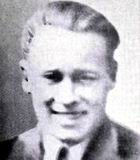
George Percy Stoner
Murderer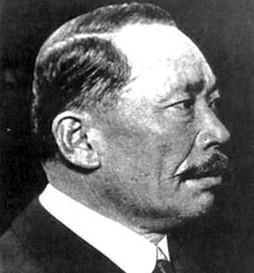 Lock Ah Tam
Murderer · United Kingdom · 1925
Lock Ah Tam was 54 when he killed his wife and two daughters. He had been a suc…
3 victims
Lock Ah Tam
Murderer · United Kingdom · 1925
Lock Ah Tam was 54 when he killed his wife and two daughters. He had been a suc…
3 victims
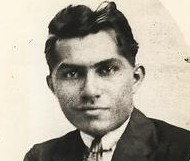 Buck Ruxton
Murderer · United Kingdom · 1935
Buck Ruxton (21 March 1899, Bombay – 12 May 1936, Manchester) was also known as…
2 victims
Buck Ruxton
Murderer · United Kingdom · 1935
Buck Ruxton (21 March 1899, Bombay – 12 May 1936, Manchester) was also known as…
2 victims
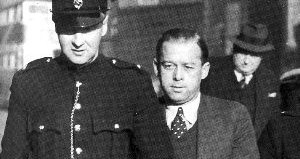 Walter Graham Rowland
Murderer · United Kingdom · 1934
Defendant: Walter Graham Rowland Age: 39 (labourer) Residence/Origin: from Mell…
2 victims
Walter Graham Rowland
Murderer · United Kingdom · 1934
Defendant: Walter Graham Rowland Age: 39 (labourer) Residence/Origin: from Mell…
2 victims
 Ivan Abner Cantu
Murderer · USA
Name: Ivan Abner Cantu · TDCJ number: 999399 · Date of birth: 06/14/1973 · Age…
2000 victims
Ivan Abner Cantu
Murderer · USA
Name: Ivan Abner Cantu · TDCJ number: 999399 · Date of birth: 06/14/1973 · Age…
2000 victims
 Joseph Stanley Faulder
Murderer · USA · 1975
Joseph Stanley Faulder was executed by lethal injection in Texas on June 17, 19…
1 victim
Joseph Stanley Faulder
Murderer · USA · 1975
Joseph Stanley Faulder was executed by lethal injection in Texas on June 17, 19…
1 victim
 Thomas Quick
Serial killer · and Finland · 1964
Thomas Quick (born Sture Bergwall, 1950, Korsnäs, Falun, Sweden) was sentenced…
15 victims
Thomas Quick
Serial killer · and Finland · 1964
Thomas Quick (born Sture Bergwall, 1950, Korsnäs, Falun, Sweden) was sentenced…
15 victims
 Howard Unruh
Mass murderer · USA · 1949
Howard Barton Unruh (born January 21, 1921, Camden, N.J.) carried out a shootin…
13 victims
Howard Unruh
Mass murderer · USA · 1949
Howard Barton Unruh (born January 21, 1921, Camden, N.J.) carried out a shootin…
13 victims
 Terry Lynn King
Murderer · USA · 1983
Terry Lynn King was convicted of murder in the first degree while in the perpet…
1 victim
Terry Lynn King
Murderer · USA · 1983
Terry Lynn King was convicted of murder in the first degree while in the perpet…
1 victim
- Gender
- male
- Country
- United Kingdom
- Location
- Bournemouth, Dorset, England, United Kingdom
- Date of birth
- 1917
- Age at first offence
- 18
- Characteristics
- domestic violence, jealousy, convicted rapist
- Victim profile
- Francis Mawson Rattenbury, 67 (celebrated architect)
- Method of murder
- B ludgeoned to death with a croquet mallet
- Date(s) of murder
- March 24, 1935
- Years active
- 1935
- Date of arrest
- 3 days after
- Status
-
Died in custody
Commuted to life in prison; sentenced to death on May 31, 1935; he served just seven years and was released to serve in World War II; he died in 2000, aged 83
Case record: George Percy Stoner
Status
George Percy Stoner was sentenced to death on May 31, 1935. His sentence was commuted to life in prison, and he served just seven years before he was released to serve in World War II. He died in 2000, aged 83.
The offence
Francis Rattenbury, an architect, was bludgeoned to death with a croquet mallet.
Stoner was described as Francis Rattenbury’s younger wife’s jealous 17-year-old lover and the family chauffeur. Rattenbury was 67 years old at the time, and his wife Alma was only 36.
The killing was also referred to as occurring in the sitting room while the victim was in his drawing room/lounging. Alma was described as being in the house at the time of the killing.
Investigation
After Francis Rattenbury was found seriously injured, doctors took him to hospital for examination and wiped matted blood away from his head, after which they realised foul play had taken place and informed the police.
Police arrived at the Villa Madeira in the early hours of Monday morning, by which time Alma was described as being worse for wear through drink or drugs and kept repeating that she had “done him in”.
Alma repeated the same story the following morning and was arrested for attempted murder, while Francis was still alive at this time.
A housekeeper-companion, Irene Riggs, was described as the person to whom Stoner confessed two days later that he had done the deed.
Arrest
Alma Rattenbury was arrested for attempted murder after repeating that she had “done him in”.
Two days later, Stoner confessed to Irene Riggs that he had done the deed and was also arrested.
Trial
Alma Rattenbury and George Stoner were tried together at the Old Bailey on 27 May 1935.
By the time of the trial, both defendants had been persuaded to plead not guilty.
Stoner refused to say anything at the trial other than answer to his name, while Alma put up a robust defence.
Stoner was found guilty of murder four days later and sentenced to death. Alma was released.
Stoner was said to have been found guilty at the Old Bailey and sentenced to death, with public support developing that he had been led on by Alma. The public became convinced he’d been led on by Alma, and the Home Secretary was persuaded to reduce his sentence.
At the time of the trial, the case was described as having been headline news, with too much local interest for the case to be heard at Winchester, leading to the Old Bailey hearing.
Sentencing
Stoner was sentenced to death after being found guilty of murder at the Old Bailey.
The Home Secretary commuted his sentence to penal servitude for life, and later narrative described the commutation as being forced by the public and “a 300,000-strong petition for clemency”.
Appeals
A petition containing an “amazing 320,000 signatures” was described as having been handed in to the Home Secretary, leading to commutation to penal servitude for life.
A different account described a “300,000-strong petition for clemency” that spared Stoner the noose.
Outcome
Stoner was convicted and sentenced to death on May 31, 1935, and his sentence was commuted to life in prison.
Alma Rattenbury was described as being acquitted of murder. One account described Alma as being acquitted of having anything to do with the killing, after initially being co-charged with murder.
Aftermath
After Alma’s release/acquittal, she died by suicide by stabbing herself on the banks of the River Avon, after writing notes on the bankside.
Alma committed suicide shortly after Stoner’s lover was sentenced to death (in the context of the trial narrative where she was tried and then released), and was described as having stabbed herself “six times in the breast” with a knife in one account.
It was described that after Stoner was informed of her death, he broke down and cried.
Stoner was released seven years later in 1942, after serving just seven years, and joined the Army for the remainder of World War 2. He returned to live in the house in Redhill he had left at the age of 18.
Stoner lived in Bournemouth after the war and died in Christchurch Hospital in 2000, aged 83.
Background
Francis Rattenbury was a designer of British Columbia’s Parliament buildings and the Empress Hotel in Victoria, and the Law Courts in Vancouver.
Rattenbury was described as having been trained as an architect in England and moved to Victoria as a young man, spending over a quarter of a century designing famous buildings in the province before returning to Bournemouth, Dorset after his marriage broke up.
Rattenbury’s marriage was described as breaking up in a sensational divorce. He was described as having left his wife Florence Nunn, who he had married in 1898, and had two children, Frank and Mary.
Rattenbury was described as falling in love with Alma Pakenham, who was said to be 24 years old, and also described as having been already divorced twice herself (in one narrative strand) and as only about 25.
Rattenbury left Victoria and moved to Bournemouth, Dorset. His son John was described as being born in 1929.
Alma was described as having been a pianist and flapper and as having played the BBC. In one narrative strand, Alma was described as being a talented musician and as having been awarded a leading French medal, the Croix de Guerre with Star and Palm, based on service in World War I after joining a Scottish ambulance unit.
Alma was described as having been the recipient of fame as a musician and having married Ulsterman Caledon Dolling, then having her marriage broken up after the birth of Christopher. After Christopher’s birth, Alma’s marriage broke up and she joined her mother in Vancouver, where she returned to music professionally.
George Percy Stoner was described as having been 17 at the time, as the family chauffeur, and as having been jealous of Alma’s relationship with Francis. He was also described in some places as an 18-year-old chauffeur/handyman recruited through an advert.
In one account, a Bournemouth advertisement for “Daily willing lad, 14-18 – scout trained preferred. Apply between 11-12, 8-9 at 5 Manor Road, Bournemouth.” preceded Stoner being recruited, and he became a permanent resident and chauffeur-handyman.
The Villa Madeira was described as being at 5 Manor Road on Bournemouth’s East Cliff, and it was described as having five people resident: Francis Rattenbury (67), Alma (39/36/10 years younger-wife figure in different strands), Alma’s 13-year-old son Christopher, their 6-year-old son John, and Alma’s live-in companion-housekeeper Irene Riggs.
In one narrative strand, it was said that in late 1934 Alma and Stoner began an affair, and that Stoner became increasingly aggressive and possessive, expressing jealousy when Alma and Francis spent time together.
The court proceedings and surrounding narrative
Public support developed for Stoner while he was on death row, because it was felt that Alma had manipulated him “for her own pleasure and entertainment”.
It was also stated that Stoner served as a “model prisoner”, was released early to join the Army in the Second World War, and later lived a quiet life in Bournemouth until his death.
The case was described as inspiring works including television plays, novels, legal textbooks, and Terence Rattigan’s final play Cause Célèbre.
A quote attributed to John Rattenbury, Francis and Alma’s son, was included: John Rattenbury said: “He was a very important architect and had an extremely successful career. I think it's an extremely thoughtful gesture so long after his death.”
Another quote attributed to John Rattenbury was included: John Rattenbury said: “It was not a happy house,”
John Rattenbury said: “I remember the night my father was murdered because the lights went on in the house – and I woke up. Nobody would tell me what had happened but I had this cold feeling that something terrible had occurred.”
John Rattenbury said: “I was too young to know and everybody was afraid to tell me,”
John Rattenbury said


Spotted an error, or have more information about this case?