
Michelle Kehoe
Murderer Miranda Barbour
Murderer · USA · 2013
Miranda Barbour, 19, defendant. · Elytte Barbour, 22, defendant and husband of…
100 victims
Miranda Barbour
Murderer · USA · 2013
Miranda Barbour, 19, defendant. · Elytte Barbour, 22, defendant and husband of…
100 victims
 Tiffany Hall
Murderer · USA · 2006
Tiffany Hall was 24 when she was charged in September 2006. She later entered a…
5 victims
Tiffany Hall
Murderer · USA · 2006
Tiffany Hall was 24 when she was charged in September 2006. She later entered a…
5 victims
 Banita Jacks
Murderer · USA · 2007
Banita Jacks was a Washington, DC resident convicted of murdering her four daug…
4 victims
Banita Jacks
Murderer · USA · 2007
Banita Jacks was a Washington, DC resident convicted of murdering her four daug…
4 victims
 Holly Grigsby
Murderer · USA · 2011
Holly Grigsby was sentenced to life in prison without parole on July 15, 2014.…
4 victims
Holly Grigsby
Murderer · USA · 2011
Holly Grigsby was sentenced to life in prison without parole on July 15, 2014.…
4 victims
 Jessica Tata
Murderer · USA · 2011
Jessica Tata was a Houston home day care owner who fled to Nigeria after a fire…
4 victims
Jessica Tata
Murderer · USA · 2011
Jessica Tata was a Houston home day care owner who fled to Nigeria after a fire…
4 victims
 Amanda Bennett
Murderer · USA · 2011
Amanda Bennett was an Indiana woman who shot her three children and set the fam…
3 victims
Amanda Bennett
Murderer · USA · 2011
Amanda Bennett was an Indiana woman who shot her three children and set the fam…
3 victims
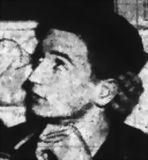 Clifford Fortner
Homicide · USA · 1959
Clifford Fortner was a 15-year-old boy from the neighborhood. Lorna Lax was a 1…
1 victim
Clifford Fortner
Homicide · USA · 1959
Clifford Fortner was a 15-year-old boy from the neighborhood. Lorna Lax was a 1…
1 victim
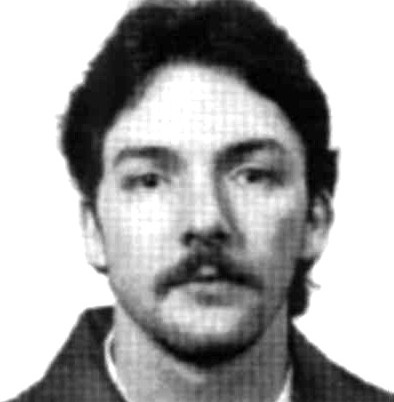 Benny Lee Saylor
Murderer · USA · 1992
Benny Lee Saylor was released from DOC in 1991 on Probation for 4 years followi…
1 victim
Benny Lee Saylor
Murderer · USA · 1992
Benny Lee Saylor was released from DOC in 1991 on Probation for 4 years followi…
1 victim
 The kidnapping of Freddy Heineken
Kidnapping · Netherlands · 1983
The kidnapping of Freddy Heineken, chairman of the board of directors and CEO o…
2 victims
The kidnapping of Freddy Heineken
Kidnapping · Netherlands · 1983
The kidnapping of Freddy Heineken, chairman of the board of directors and CEO o…
2 victims
 Scott William Cox
Serial killer? · Several States USA / Canada · 1980
Name: Scott William Cox Tia Hicks vanished in 1990 after Scott William Cox was…
20 victims
Scott William Cox
Serial killer? · Several States USA / Canada · 1980
Name: Scott William Cox Tia Hicks vanished in 1990 after Scott William Cox was…
20 victims
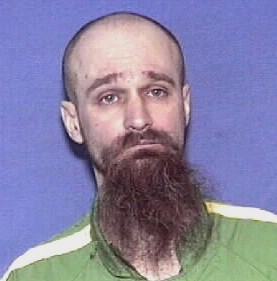 Edward Tenney
Serial killer · USA · 1992
Edward Tenney Edward Tenney was sentenced to death. That sentence had been stay…
3 victims
Edward Tenney
Serial killer · USA · 1992
Edward Tenney Edward Tenney was sentenced to death. That sentence had been stay…
3 victims
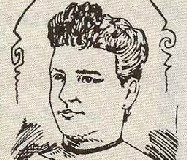 Alice Mitchell
Murderer · USA · 1892
Alice Mitchell was tried for murder and entered a plea of “present insanity,” m…
1 victim
Alice Mitchell
Murderer · USA · 1892
Alice Mitchell was tried for murder and entered a plea of “present insanity,” m…
1 victim
- Gender
- female
- Country
- USA
- Location
- Littleton, Buchanan County, Iowa , USA
- Date of birth
- March 27, 1973
- Age at first offence
- 35
- Characteristics
- parricide
- Victim profile
- Seth Kehoe, 2 (her son)
- Method of murder
- Slitting his throat with a hunting knife
- Date(s) of murder
- October 26, 2008
- Years active
- 2008
- Date of arrest
- Same day (suicide attempt)
- Status
-
Life imprisonment
Sentenced to life in prison without parole on December 15, 2009
Case record: Michelle Kehoe
Other details
Michelle Kehoe was convicted in Iowa of first-degree murder, attempted murder, and child endangerment resulting in serious injury. She was sentenced to life in prison without parole on December 15, 2009. She also received 25 years on one count of attempted murder and 10 years for child endangerment.
In an appeal, Kehoe argued her trial counsel was ineffective in three respects: by failing to challenge the constitutionality of Iowa's laws defining the insanity defense, by failing to request a jury instruction on the consequences of a not guilty verdict by reason of insanity, and by failing to object to an element of the jury instruction on the attempted murder charge.
The Iowa Court of Appeals affirmed Kehoe’s convictions and rejected her contention that her counsel was ineffective. The appellate court ruled that Kehoe’s due process rights were not violated by Iowa law, and it found no violation of state and federal cruel or unusual punishment clauses. The court also found her counsel had no duty to object to the jury instruction. The court concluded trial counsel was not ineffective for failing to challenge the constitutionality of Iowa’s laws and not contesting aspects of jury instruction.
Timeline
- October 26, 2008 — Michelle Kehoe drove her two children, seven-year-old S.M.K. and two-year-old S.L.K., in the family's van to a secluded pond near Jessup, Iowa. One by one, she took each child from the van, covered the child's eyes, nose, and mouth with duct tape, and then slit the child's throat with a hunting knife; she then slit her own throat.
- October 27, 2008 — Kehoe survived her suicide attempt and regained consciousness early the next day. She made her way to a house about a half mile away, and law enforcement officers were called. Officers found S.L.K.'s lifeless body near a bush and S.M.K. alive hiding in the van. S.M.K. told the officers his mother had taken him to the woods and cut him; Kehoe told officers a man had tried to kill her and her children.
- November 4, 2009 — A jury rejected Kehoe’s insanity defense and found her guilty of first-degree murder, attempted murder, and child endangerment causing serious injury.
- December 15, 2009 — Kehoe was sentenced to life in prison without parole, with additional sentences of 25 years for attempted murder and 10 years for child endangerment.
- July 13, 2011 — The Iowa Court of Appeals affirmed Kehoe’s convictions; the appeal was resolved with an affirmance and the judgment was upheld.
The offence
Michelle Kehoe took her 2-year-old son, Seth, and her then 7-year-old son, Sean, to a remote area near Littleton in northeast Iowa in October 2008. Police and prosecutors said she placed duct tape over her sons' eyes, mouths and hands and cut their throats with a hunting knife she had bought a month earlier. Authorities said she then cut her own throat.
Authorities said Kehoe wrote a note to make it appear as though they were abducted by a fictitious assailant and she made similar claims before allegedly admitting to the crime. Police said Seth died as a result of his injuries, while Sean survived.
During the trial, Kehoe’s defense did not contest her actions against the children but argued that her mental state at the time of the attacks prevented her from being held accountable. The jury ultimately rejected her insanity defense.
Investigation and arrest
After Kehoe survived her self-inflicted injuries, she made her way to a house and law enforcement officers were called. Kehoe told officers a man had tried to kill her and her children, and officers went to the pond where she alleged she and her children were attacked. alive hiding in the van. S.M.K. told the officers his mother had taken him to the woods and cut him.
Trial
Kehoe was charged with first-degree murder, attempted murder, and child endangerment resulting in serious injury.
Her trial counsel conceded the State’s version of events was correct and relied on the insanity defense. Two experts testified for her insanity defense:
- Dr. William Logan, M.D., testified that Kehoe was diagnosed with major depressive disorder and opined that while Kehoe was able to understand she was killing herself and her children, her thought processes were so distorted by her mental illness that she was not rational.
- Dr. Marilyn Hutchison, Ph.D., opined that Kehoe both understood the nature and quality of her actions when she cut her children's throats and formed a specific intent to kill her children, but she opined Kehoe did not understand cutting her children's throats was wrong. Hutchison testified that Kehoe believed killing her children would save them from losing a parent and from a lifetime of depression, as well as guarantee them eternal life in Heaven.
The State presented Dr. Michael Taylor, M.D., who testified that Kehoe suffered from major depressive disorder, and that on October 28, 2008 Kehoe “was fully competent, fully capable of deliberating, premeditating, forming a specific intent to kill.” Taylor also testified that Kehoe “very clearly had the ability to differentiate between right and wrong.”
At the close of evidence, the jury received an instruction concerning the elements of the insanity defense. The instruction provided:
If the State has proved all of the elements of a crime, you should then determine if [Kehoe] has proved whether she was insane. In order for [Kehoe] to establish she was insane, she must prove by a preponderance of the evidence either of the following: 1. At the time the crime was committed, [Kehoe] did not have sufficient mental capacity to know and understand the nature and quality of the acts she is accused of; or 2. At the time the crime was committed, [Kehoe] did not have the mental capacity to tell the difference between right and wrong as to the acts she is accused of. If [Kehoe] has failed to prove either of the elements by a preponderance of the evidence, [Kehoe] is guilty.
Kehoe’s trial counsel did not object to the insanity instruction or to the marshalling instruction on attempted murder as not including malice aforethought as an element. Kehoe’s trial counsel also did not request an instruction advising the jury of “the consequences of a verdict of not guilty by reason of insanity.”
The trial’s outcome was that the jury rejected Kehoe’s insanity defense and found her guilty as charged.
Sentencing
On December 15, 2009, Judge Bruce Zager sentenced Kehoe to life in prison without parole.
The jury and court outcomes included:
- Life in prison without parole for first-degree murder.
- 25 years for attempted murder.
- 10 years for child endangerment resulting in serious injury.
The judge also granted an extension of the prosecution’s request for a no-contact order prohibiting Kehoe from contacting her surviving son or anyone with whom he lives. The order was to remain in effect for five years and extended to father and son. Kehoe’s surviving son lived with her husband, Gene Kehoe, and Gene Kehoe regularly visited his wife until the order went into effect last April.
At sentencing, Judge Bruce Zager sentenced Kehoe consecutively for first-degree murder and attempted murder and concurrently on attempted murder and child endangerment so that the sentences would represent the two boys. Buchanan County Attorney Allan Vander Hart stated: “I asked for consecutive time because there were two victims and because of the extensive planning and premeditation of these crimes,” and he also stated: “When [the victim's] therapist tells us he is ready and it might be beneficial, then that's the time to revisit the no contact order. He's pretty fragile right now,” and prosecutors countered that Kehoe methodically planned to kill her sons and herself, but botched it. Iowa Attorney General Andrew Prosser stated that the detailed planning showed she was not legally insane.
Kehoe’s lawyer, Andrea Dryer, asked the court to run the sentences concurrently on account of her extreme mental illness.
Appeals
Kehoe appealed her convictions for first-degree murder, attempted murder, and child endangerment resulting in serious injury. She contended her trial counsel was ineffective in three respects:
- Failing to challenge the constitutionality of Iowa Code section 701.4, which defined the legal standard for the insanity defense, based on alleged violations of due process and cruel and unusual punishment clauses under both the state and federal constitutions.
- Failing to request a jury instruction on the consequences of a verdict of not guilty by reason of insanity.
- Failing to object to the marshalling instruction on attempted murder as not including malice aforethought as an element.
The Iowa Court of Appeals affirmed Kehoe’s convictions. The court held that her due process rights were not violated by Iowa law and that there was no violation of state and federal cruel or unusual punishment clauses. The court also found Kehoe’s counsel had no duty to object to the jury instruction and that counsel was not ineffective for failing to challenge the constitutionality of Iowa’s insanity-defense laws or for failing to object to the attempted-murder marshalling instruction.
The appellate court concluded:
- Kehoe’s due process rights were not violated by Iowa Code section 701.4, and her trial counsel was not ineffective for failing to challenge that constitutionality.
- Kehoe’s argument regarding cruel and unusual punishment was unpersuasive, and counsel was not ineffective for failing to challenge section 701.4 under those clauses.
- A normally competent attorney would have found the request for the instruction on the consequences of a verdict of not guilty by reason of insanity was not worth raising, and Kehoe’s attorney was not ineffective for failing to request it.
- Malice aforethought was not an element required by the statute governing attempted murder as given, so Kehoe’s trial counsel had no duty to object to the attempted-murder instruction.

Spotted an error, or have more information about this case?