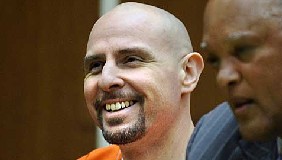
Timothy McGhee
Murderer Russell Ellwood
Murderer · USA · 1991
Russell Ellwood was a former taxi driver. Authorities suspected him of killing…
20 victims
Russell Ellwood
Murderer · USA · 1991
Russell Ellwood was a former taxi driver. Authorities suspected him of killing…
20 victims
 Robert Martines Perez
Murderer · USA · 1994
Name: Robert Martines Perez · Other name used in proceedings: Robert Martinez P…
15 victims
Robert Martines Perez
Murderer · USA · 1994
Name: Robert Martines Perez · Other name used in proceedings: Robert Martinez P…
15 victims
 Billy Frank Vickers
Murderer · USA · 1993
Billy Frank Vickers Vickers was executed by lethal injection in Texas on Januar…
14 victims
Billy Frank Vickers
Murderer · USA · 1993
Billy Frank Vickers Vickers was executed by lethal injection in Texas on Januar…
14 victims
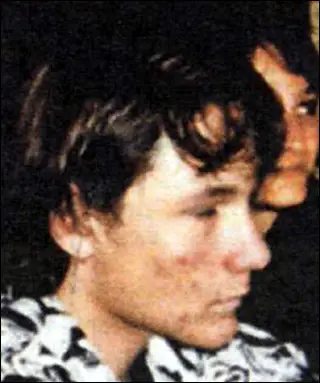 James Vlassakis
Serial killer · Australia · 1997
James Spyridon Vlassakis (born 24 December 1979) was an Australian serial kille…
4 victims
James Vlassakis
Serial killer · Australia · 1997
James Spyridon Vlassakis (born 24 December 1979) was an Australian serial kille…
4 victims
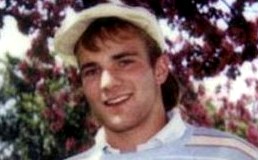 Peter Zimmer
Homicide · USA · 1983
Peter Zimmer pleaded no contest to the killings in 1983 and was found delinquen…
3 victims
Peter Zimmer
Homicide · USA · 1983
Peter Zimmer pleaded no contest to the killings in 1983 and was found delinquen…
3 victims
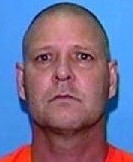 Wayne Tompkins
Murderer · USA · 1983
Wayne Tompkins was convicted of the strangulation murder of Lisa Lea DeCarr, ag…
1 victim
Wayne Tompkins
Murderer · USA · 1983
Wayne Tompkins was convicted of the strangulation murder of Lisa Lea DeCarr, ag…
1 victim
 John O'Shaughnessy
Murderer · United Kingdom · 1996
John O'Shaughnessy was born in 1965 in Chester, England. He was 31 at the time…
1 victim
John O'Shaughnessy
Murderer · United Kingdom · 1996
John O'Shaughnessy was born in 1965 in Chester, England. He was 31 at the time…
1 victim
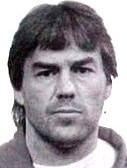 Matthew Wrinkles
Murderer · USA · 1994
Defendant: Matthew Eric Wrinkles · Legal status: Executed by lethal injection i…
3 victims
Matthew Wrinkles
Murderer · USA · 1994
Defendant: Matthew Eric Wrinkles · Legal status: Executed by lethal injection i…
3 victims
 Angela Johnson
Murderer · USA · 1993
Angela Jane Johnson was convicted in federal court of aiding and abetting the m…
5 victims
Angela Johnson
Murderer · USA · 1993
Angela Jane Johnson was convicted in federal court of aiding and abetting the m…
5 victims
- Gender
- male
- Country
- USA
- Location
- Los Angeles, Los Angeles County, California, USA
- Date of birth
- April 27, 1973
- Age at first offence
- 24
- Characteristics
- gang, thrill killer, rape, police officer
- Victim profile
- Ronnie Martin, 25 (rival gang member) / Ryan Gonzales, 17 (member of the rival Rascals gang) / Marjorie Mendoza, 25
- Method of murder
- Shooting
- Date(s) of murder
- 1997 / 2000 / 2001
- Years active
- 1997–2001
- Date of arrest
- February 12, 2003
- Status
-
Sentenced to death
Sentenced to death on January 9, 2009
Case record: Timothy McGhee
Background
Timothy Joseph McGhee was a northeast Los Angeles gang leader and a member of the Toonerville gang. Police described him as a “monster” and as a “thrill killer,” and he boasted in rap lyrics about hatred of police and his love of killing. Prosecutors and police described him as hunting rivals and, at times, killing indiscriminately.
The Toonerville gang was formed in the 1950s and claimed a largely middle-class area north of Los Feliz Boulevard between San Fernando Road and the Los Angeles River. The gang also had members in Glendale, Sunland and Tujunga. Police described McGhee as directing the gang like a military drill instructor, leading calisthenics, target practice, and methods for evading police or killing gang rivals. Police said the gang posted armed sentries with cellular phones or walkie-talkies to guard the three main roadways that ran in and out of their turf. Police also said McGhee demanded absolute loyalty and led his charges in this way.
Authorities said McGhee taunted law enforcement and led an ambush that ensnared two Los Angeles Police Department officers. While locked up, he incited jail riots and assaulted guards.
A Superior Court Judge Robert J. Perry later stated that McGhee treated killing “as some kind of perverse sport, as if he was hunting human game.” The judge said he accepted defense arguments that McGhee’s father abandoned him as a young boy and that McGhee was nevertheless a good father to his children and the children of his girlfriend, but the judge said he believed execution was the appropriate punishment. Perry said: “He is a committed killer and an obvious danger to society,”
Deputy District Attorney Hoon Chun described McGhee in the jury’s death-penalty consideration as having a quality typical of a serial killer. Chun said: “The one quality that I have seen in him that I have not seen before is a quality that is more typical of a serial killer: They enjoy killing,” and “He seemed to enjoy killing.”
Defense attorneys H. Clay Jacke II and Franklin Peters Jr. argued that some witnesses involved in the crimes had tried to emphasize McGhee’s role in order to minimize their own. Defense attorneys also argued against the judge’s decisions to allow jurors to see Christina Duran’s videotaped interview with police and to remove a juror during deliberations who favored the defense. Franklin Peters Jr. said after a hearing: “We're hopeful that this is not the final chapter,” and Peters said he would represent McGhee at the retrial.
Peters also commented on the jury’s decision and sentencing. Peters stated: “saving lives,” and he later said: “There were two people who disagreed and who felt there were some redeeming qualities of the defendant that deserves a verdict other than death,” and he cited testimony that McGhee had raised three children and five stepchildren.
The offence
A jury convicted Timothy Joseph McGhee of murder in gang-related shootings of three people between 1997 and 2001. Jurors also found him guilty of the attempted murder of four other people, including two LAPD officers in a pre-dawn ambush in Atwater Village as the officers chased three other Toonerville gang members.
Prosecutors and police described McGhee as involved in multiple killings beyond the convictions. Police suspected that McGhee took part in or ordered other slayings, including:
- the September 2000 shooting of a 17-year-old boy who was sketching a picture at the Los Angeles River; and
- the death of a homeless man who might have witnessed the shooting.
Prosecutors initially charged McGhee with nine murders but dropped six counts before trial, citing an unreliable witness.
Murder convictions
The jury found McGhee guilty of murdering:
- Ronnie Martin, 25, a rival gang member who was shot 28 times in 1997. (Another account reported 27 times in October 1997.)
- Ryan Gonzales, 17, a member of another gang, who was killed in 2000.
- Marjorie Mendoza, 25, who was fatally shot in November 2001 when she and her boyfriend drove through an area where McGhee and his associates were gunning for gang rivals.
A death-penalty phase presentation also included evidence that McGhee was involved in a fourth murder described as an execution-style killing of Christina Duran, which prosecutors tied to her having told police about his involvement in a killing. Christina Duran’s videotaped interview with LAPD detectives helped convict McGhee of the 2001 murder of Marjorie Mendoza.
Prosecutors said Mendoza was fatally shot while McGhee and his associates prowled the streets to avenge the killing of a comrade hours earlier. Mendoza’s boyfriend, who belonged to a rival gang, and another woman were wounded in the attack. Prosecutors said McGhee dropped his girlfriend’s cellphone at the scene and asked Duran to help him retrieve it. A neighbor who witnessed the assault also recalled that one of the gunmen had a distinctive tattoo of an eagle eating a snake on his shaved head.
Jurors also found McGhee guilty in the murders of Ronnie Martin and Ryan Gonzales as described above.
Attempted murder convictions (including LAPD officers)
Jurors convicted McGhee of attempted murder of both LAPD officers Thomas Baker and Carlos Langarica in an incident on July 4, 2000. Prosecutors alleged that in the predawn hours of July 4, 2000, McGhee used a police radio scanner to track the progress of LAPD officers as they chased three Toonerville members into the heart of the gang’s turf in Atwater Village.
Police said gang members threw a washing machine and a bicycle into the road, causing the cruiser to swerve toward two gunmen waiting in the dark. Bullets struck the car. One tore a hole in Baker’s pants, but neither officer was injured. Prosecutors argued that McGhee was one of the gunmen. Jurors convicted him of attempted murder of both officers.
Langarica later said: “I thought that I was going to get shot and killed,”
The jury also convicted McGhee of attempted murder in the November 2001 incident involving Mendoza. The jury found attempted murder of Mendoza’s boyfriend and her girlfriend. Additionally, the jury convicted McGhee of attempted murder in that November 2001 incident.
A separate account said the jury convicted him of attempted murder of four people, including two LAPD officers and two others in the Mendoza incident.
Investigation and evidence
Prosecutors relied heavily on former gang members, including accomplices in the slayings, as well as other witnesses and ballistic evidence. Several witnesses were relocated for their safety. Others had to be ordered to testify. Once witnesses confronted McGhee in court, some rival gang members backed away from statements against him that they had given detectives.
During the death-penalty phase, prosecutors presented evidence that included Christina Duran’s videotaped interview with LAPD detectives. Prosecutors also presented McGhee’s rap lyrics composed for his girlfriend as part of efforts to help prove his guilt.
Deputy District Attorney Hoon Chun recited McGhee’s lyrics for the jury. Chun recited: “Here I come, last chance to run. Killer with a gun. Out to have some fun. In my dreams, I hear screams. Pleasure I feel is so obscene.”
The case included witness testimony that McGhee had a tattoo of an eagle eating a snake on his shaved head. A witness said the tattoo helped place McGhee at one of the crime scenes. McGhee also dropped his girlfriend’s cellphone at a murder scene, described as critical evidence in his conviction for that crime.
In addition to prosecutors’ evidence, the court proceedings included references to fear and intimidation. One neighborhood resident was so frightened that her hands shook as she took the witness stand. Prosecutors played a videotape of a police interrogation in which Christina Duran stated that she feared retribution. The videotape portrayed her reluctantly telling officers that McGhee was at the scene of a murder and her repeated fear of retribution. Two days later, Duran was murdered, prosecutors said.
Arrest and fugitive period
Authorities said McGhee had been on the run for almost a year and made the U.S. Marshals Service’s most-wanted list. He was arrested in Bullhead City, Arizona.
During his arrest, he was captured without incident about 1 p.m. by more than two dozen officers from the Los Angeles Police Department, Bullhead City, and federal law enforcement. LAPD Lt. Horace Frank said: “He was ordered out of the car and onto the ground. He surrendered without a struggle,”
U.S. Marshals Chief John Clark said: “He did not say a word. One LAPD officer who knows him tried to engage him in conversation. McGhee just glared at him.”
A reader of a Mojave Desert newspaper saw a story about McGhee, told authorities he was living in Bullhead City, and led them to an apartment there. A surveillance team observed a man believed to be McGhee but could not get close enough to confirm identity. Surveillance led investigators to a nearby double-wide mobile home. Authorities were preparing a search warrant early Wednesday and planning an entry with the Bullhead City SWAT team when marshals watching the mobile home saw McGhee leave. He was a passenger in a car driven by a woman. Police said the woman was unaware of McGhee’s true identity and “was unaware of McGhee’s true identity,” adding: “She did not know he was wanted. It came as quite a shock.”
Police seized a T-shirt imprinted with advice for eluding police. In one account, the T-shirt advised: “Throw a donut.” In another account, the T-shirt read: “Fugitive. Can't see me.”
Trial
Conviction phase
A Los Angeles jury convicted Timothy McGhee in October 2007 of three murders and four attempted murders after a week of deliberations. The jury found him guilty of murdering:
- Ronnie Martin, 25;
- Ryan Gonzales, 17; and
- Marjorie Mendoza, 25.
The jury also found him guilty of attempted murder of Mendoza’s boyfriend and her girlfriend in the November 2001 incident. The jury also found attempted murder in the July 4, 2000 ambush of two LAPD officers who were chasing Toonerville gang members, finding McGhee fired on the officers, who were not injured.
Police described the Toonerville gang leader as once being one of the nation’s most notorious fugitives. Prosecutors used rap lyrics to rap music that McGhee had composed for his girlfriend to help prove his guilt. During trial, McGhee wore a dark suit. His hair had grown out, covering a tattoo of an eagle clutching a snake in the colors of the Mexican flag on his skull, which a witness said helped her place him at one of the crime scenes.
Prosecutors said McGhee had taunted one of his victims before firing fatal shots into his skull. The account quoted the taunt: “Die like a man.”
Defense attorney Franklin Peters Jr. said during a period after the jury’s decision favoring death penalty after a deadlock was resolved: Peters was gratified with the result and said he is in the business of “saving lives.”
Sentencing phase and jury deadlock
In November 2007, a Los Angeles jury deadlocked over sentencing. The vote was 10 to 2 in favor of executing McGhee for the three murders and other crimes, with the only alternative life in prison without the possibility of parole. Deputy District Attorney Hoon Chun said prosecutors would retry the penalty phase. Under California law, the convictions would stand.
During sentencing considerations, the prosecution described life on gang turf centered on Atwater Village and testified that deadly violence was employed casually to protect narcotics sales. One of the jurors who favored death penalty said: “The feeling I got was that I sort of can understand why people don't want to get involved. Why should you volunteer any information? Its almost like there's nothing to gain and everything to lose,” and the juror said: “If that's not a case for the harshest penalty, what would be?” and “What would it take to tip the scales? That's the way most of us felt.”
The same juror explained that two jurors voted against execution because they felt McGhee had grown up without a father and should be sentenced to life in prison without the possibility of parole. said he would represent McGhee at the retrial.
Chun had urged jurors to remember McGhee’s comment to his victim when considering pleas for mercy.
Sentencing
Timothy McGhee was sentenced to death on January 9, 2009. Superior Court Judge Robert J. Perry imposed the sentence. During the sentencing, Perry said that he accepted defense arguments that McGhee’s father abandoned him as a young boy and that McGhee was nevertheless a good father to his children and the children of his girlfriend. Perry also said McGhee was a committed killer and an obvious danger to society.
The judge stated: “He is a committed killer and an obvious danger to society,” and also stated that McGhee treated killing “as some kind of perverse sport, as if he was hunting human game.”
Appeals
McGhee’s attorneys said he would appeal. Franklin Peters Jr. said: “We're hopeful that this is not the final chapter,” and Peters said the defense would represent McGhee at the retrial.
Outcome
McGhee’s legal outcome was a death sentence imposed on January 9, 2009 for murders and attempted murders found by a jury in 2007. The status reflected the death sentence.
Aftermath
Police described McGhee as having incited jail riots and assaulted guards while locked up. An officer survived one attack and responded with the statement: “Next time I'll have to stab him.”
Police suspected that McGhee may have been involved in additional killings beyond those for which he was convicted, including the September 2000 shooting of a 17-year-old boy sketching a picture at the Los Angeles River and the death of a homeless man who might have witnessed the shooting.
Police said that McGhee’s crimes were linked to intimidation of neighborhood residents, rival gang members, and his own associates, which made linking him to killings difficult until late.
Other details
Prior convictions and parole history
McGhee was convicted in 1994 of assaulting a peace officer in San Bernardino County and sentenced to four years in prison. Police said he was released after serving three years and was sent back in 1997 on a parole violation. After his release in 1999, police said he was found guilty of violating parole again and returned to prison in 2000. A later account said he was released in March 1999 and violated parole again and was returned to prison in February 2000, and he was released again two months later.
While he was on parole and staying with his grandmother in the San Gabriel Valley, McGhee took police science classes at Cal Poly Pomona. Detectives believed he learned how police conduct investigations.
Additional alleged killings and victims named in investigation
Police alleged or suspected additional killings involving the following named individuals:
- Marty Gregory Roybal, 17, who was sketching a picture at the Los Angeles River on Sept. 14, 2000; police said he was fatally shot by McGhee.
- David Lamont Martin, 33, described as a homeless man who might have been a witness; police said he was killed after Roybal’s shooting.
- Manuel Apodaca, 21, a Pomona resident, described as fatally shot by McGhee.
- Nina Guerrero, McGhee’s pregnant girlfriend described as critically wounded on Los Feliz Boulevard near the Golden State Freeway in June 2001. Police said she suffered severe brain damage but was able to give birth.
- Carlos Velasco, 21, described as a man working at a furniture warehouse on San Fernando Road. Police said McGhee ordered his killing the next month after Guerrero was wounded. The account said McGhee passed by but didn’t recognize him, and ordered gang subordinates to take care of the stranger.
- Bryham Robinson, 38; Cheri Wisotsky, 46; and Mary Ann Wisotsky, 64. Police said McGhee killed them three weeks later. The account said McGhee heard that Cheri Wisotsky told police about drug dealing at the house of McGhee’s sister in Atwater Village, and authorities alleged the others were killed because they were witnesses.
Gang ambush logistics and weapons
In the July 4, 2000 ambush, police and prosecutors described a pre-dawn chase in Atwater Village and gang members throwing a washing machine and a bicycle into the road. Police and prosecutors said gang members tossed debris, including washing machines and bicycles, and fired numerous shots at officers, with the intent to hinder a police pursuit. Prosecutors alleged McGhee used a police radio scanner to track LAPD officers Thomas Baker and Carlos Langarica during the chase.
In the November 2001 incident involving rival territory and revenge for a Toonerville member’s slaying, police said McGhee and fellow gang members were armed with handguns and assault rifles as they went looking to kill a victim in rival territory, and prosecutors said they fatally shot Marjorie Mendoza and wounded her husband while the victims rode in their SUV in the 3100 block of Hollydale Drive.
Victim ages and names as stated in the convictions
The convicted victims included:
- Ronnie Martin, 25;
- Ryan Gonzales, 17;
- Marjorie Mendoza, 25.
The conviction findings also included attempted murder of Mendoza’s boyfriend and her girlfriend and attempted murder of LAPD officers Thomas Baker and Carlos Langarica.
Taxonomy and gang-related characterization used in the proceedings
Police characterized McGhee as a thrill killer and described him as leading about 200 members of the Toonerville gang. Prosecutors and police described him as having a sophisticated ambush and tactical awareness in planning attacks. The narrative characterized the gang as using deadly violence casually to protect narcotics sales on gang turf.
Spotted an error, or have more information about this case?