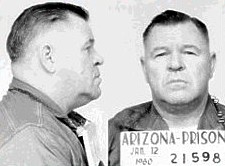
Patrick Mahon McGee
Murderer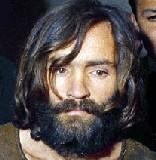 Charles Manson
Murderer · USA · 1969
Charles Milles Manson (born November 12, 1934) was an American criminal and mus…
9 victims
Charles Manson
Murderer · USA · 1969
Charles Milles Manson (born November 12, 1934) was an American criminal and mus…
9 victims
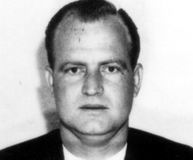 Gary Gene Tison
Murderer · USA · 1967
Gary Gene Tison was serving life sentences at the Arizona state prison. He had…
7 victims
Gary Gene Tison
Murderer · USA · 1967
Gary Gene Tison was serving life sentences at the Arizona state prison. He had…
7 victims
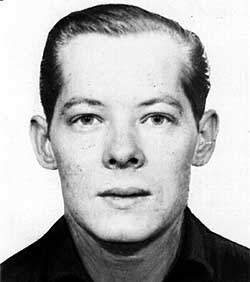 Richard Lee Tingle
Murderer · USA · 1968
Richard Lee Tingle was born out of wedlock in December 1940. He was raised by a…
6 victims
Richard Lee Tingle
Murderer · USA · 1968
Richard Lee Tingle was born out of wedlock in December 1940. He was raised by a…
6 victims
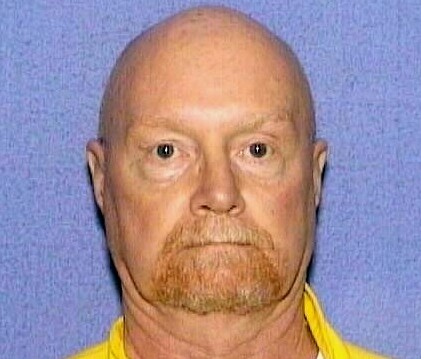 Gary Duane Rardon
Murderer · USA · 1962
Gary Duane Rardon killed a man in 1962 and later served 4 years for manslaughte…
4 victims
Gary Duane Rardon
Murderer · USA · 1962
Gary Duane Rardon killed a man in 1962 and later served 4 years for manslaughte…
4 victims
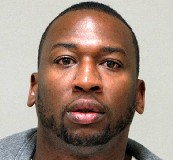 Rodrick Dantzler
Mass murderer · USA · 2011
Rodrick Shonte Dantzler was the suspected gunman in a mass murder in Grand Rapi…
7 victims
Rodrick Dantzler
Mass murderer · USA · 2011
Rodrick Shonte Dantzler was the suspected gunman in a mass murder in Grand Rapi…
7 victims
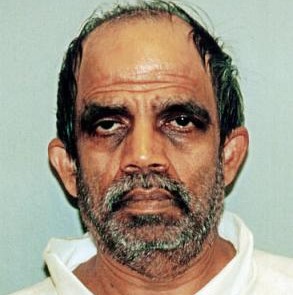 Biswanath Halder
Murderer · USA · 2003
Biswanath Halder was an alumnus of Case Western Reserve University (CWRU) who w…
1 victim
Biswanath Halder
Murderer · USA · 2003
Biswanath Halder was an alumnus of Case Western Reserve University (CWRU) who w…
1 victim
 Linda Carty
Murderer · USA · 2001
Linda Anita Carty (age 42 at crime; DOB: 10-5-1958), defendant; woman possessin…
1 victim
Linda Carty
Murderer · USA · 2001
Linda Anita Carty (age 42 at crime; DOB: 10-5-1958), defendant; woman possessin…
1 victim
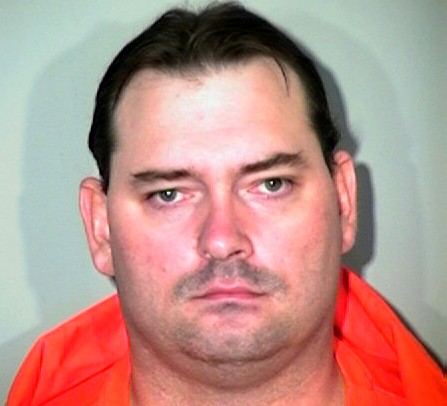 Robert Wayne Murray
Murderer · USA · 1991
Defendant: Robert Wayne Murray Victim(s): Dean Morrison; Jackie Appelhans Victi…
2 victims
Robert Wayne Murray
Murderer · USA · 1991
Defendant: Robert Wayne Murray Victim(s): Dean Morrison; Jackie Appelhans Victi…
2 victims
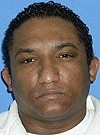 Joseph Lave
Murderer · USA · 1992
Joseph Lave was convicted in connection with the murder of Justin Marquart duri…
2 victims
Joseph Lave
Murderer · USA · 1992
Joseph Lave was convicted in connection with the murder of Justin Marquart duri…
2 victims
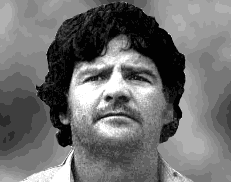 Clifford Olson
Serial killer · Canada · 1980
Clifford Robert Olson was a Canadian serial killer who abducted, sexually abuse…
11 victims
Clifford Olson
Serial killer · Canada · 1980
Clifford Robert Olson was a Canadian serial killer who abducted, sexually abuse…
11 victims
- Gender
- male
- Country
- USA
- Location
- Coconino County, Arizona, USA
- Date of birth
- May 3, 1907
- Age at first offence
- 52
- Characteristics
- robbery
- Victim profile
- Ary J. Best
- Method of murder
- Stabbing with knife
- Date(s) of murder
- July 31, 1959
- Years active
- 1959
- Date of arrest
- Next day
- Status
-
Executed
Executed by asphyxiation-gas in Arizona on March 8, 1963
Case record: Patrick Mahon McGee
Status and outcome
Patrick Mahon McGee was executed by asphyxiation-gas in Arizona on March 8, 1963.
Timeline
- 31 July 1959 — McGee was charged with a felony: Murder in the First Degree of Ary J. Best.
- 31 August 1959 — A preliminary hearing was held in the Justice Court of the Flagstaff Precinct of Coconino County, Arizona; McGee was held to answer without bond to the Superior Court.
- 17 September 1959 — An information charging Murder in the First Degree was filed; McGee entered a plea of not guilty.
- 16 November 1959 — Jury trial date was set and later vacated.
- 30 November 1959 — Jury trial date was vacated.
- 7 December 1959 — McGee was tried before a jury in the Superior Court of Coconino County, State of Arizona, on the charge of First Degree Murder.
- 16 December 1959 — The jury returned a verdict of guilty of Murder in the First Degree and assessed the penalty of death.
- 8 January 1960 — The date of sentencing was set by order of the presiding judge, Jack L. Ogg, of Yavapai County; McGee was sentenced to die in the gas chamber.
- 6 April 1960 — McGee was sentenced to die in the gas chamber at the Arizona State Prison, Florence, Arizona, on this date.
- 16 November 1962 — The United States Court of Appeals for the Ninth Circuit considered and acted upon an application for a stay of execution.
- 30 November 1962 — McGee was stated to have been ordered executed by the respondent, pursuant to judgment and order of the Supreme Court of Arizona which affirmed his sentence of death.
- 8 March 1963 — McGee was executed by asphyxiation-gas in Arizona.
Background
Patrick Mahon McGee was traveling by automobile through Coconino County, Arizona, with Millie Fain, a woman with whom he had been living for approximately eight months, en route to California.
McGee’s relative was Una Miller, his wife, of 1452 Chico, El Monte, California.
McGee was born in Wilburton, Oklahoma, on May 3, 1907.
McGee reported health as good.
McGee’s religion was Protestant.
McGee completed Eighth grade.
McGee’s marital status was married.
McGee reported excessive drinking: Yes.
McGee reported drugs: No.
McGee’s occupation was fruit picker.
Military history information was not available.
FBI number was 64150 (record since June 1923).
Prior charges included:
- charges of vagrancy
- suspicion burglary
- driving motor vehicle while under influence of liquor
- assault and battery
- drunk
- traffic violation
- other charges with fines listed as fined ten to three thousand fifty dollars
- sentenced fifty to one hundred fifty days
McGee was sentenced State Reformatory, Buena Vista, Colorado, in April 1924, for grand larceny (indeterminate sentence).
Latest police: Los Angeles, February 1956: Fugitive, Colorado—escape—no disposition.
The offence
On or about 31 July 1959, McGee was charged with a felony: Murder in the First Degree of Ary J. Best.
The facts surrounding the murder were these.
On 31 July 1959, McGee, also referred to as Patrick McGee, traveled by automobile through Coconino County, Arizona, with Millie Fain toward California.
Ary J. Best, the murder victim, was stated to have assisted their disabled automobile.
At a point approximately twelve miles east of Flagstaff, alongside U.S. Highway 66, McGee stabbed Ary J. Best, an arthritic cripple, four times in the chest and back, without provocation.
McGee was described as having an apparent intent to rob.
As the victim lay dying, and probably unconscious, on the ground, McGee placed the murder weapon—a large hunting knife—in the hand of Millie Fain and told her to stab the victim twice in the neck.
Millie Fain complied and stabbed the mortally wounded man two times in the throat area.
McGee and Millie Fain then robbed the dead man’s pockets and absconded with the victim’s automobile and personal belongings.
No effort was thereafter made to report the matter to the authorities.
McGee and his companion squandered the victim’s money in Flagstaff and Williams.
McGee and Millie Fain then went on a "drinking party" before leaving by train from Williams to California.
Investigation and evidence
Polygraphic examinations were conducted upon Millie Fain by Charles Coates, Special Investigator for the Pima County Attorney’s Office, Tucson.
The results substantiated Millie Fain’s statements regarding solicitation for intercourse rather than rape.
The results were also described as substantiating the motive of robbery on the part of McGee together with the intent to kill.
Arrest and custody
McGee and Millie Fain were arrested in Los Angeles the next morning on 1 August 1959.
At first, McGee denied his guilt.
McGee claimed he had killed Best in resisting the latter’s attempt to rape Millie Fain.
McGee persisted in repeating this version.
At trial, McGee testified that he killed, either:
- in resisting an attempted rape, or
- in resisting an act of solicitation by Millie Fain which reasonably appeared to him to be an act of forcible sexual intercourse.
Millie Fain refuted this version.
Millie Fain claimed and testified that the killing was unprovoked and followed an unsuccessful solicitation of Ary J. Best by her for money.
Millie Fain also testified that the solicitation was at the request and demand of Patrick McGee.
Trial
McGee’s counsel were John H. Grace and William R. Preston, of Flagstaff, Coconino County, Arizona, who were subsequently appointed by the Court to represent McGee, an acknowledged indigent.
On 31 August 1959, McGee held to answer without bond to the Superior Court following a preliminary hearing in the Justice Court of the Flagstaff Precinct of Coconino County, Arizona.
Trial by jury was set for 16 November 1959, later vacated to 30 November 1959, and then reset for the 7th day of December, 1959.
On 7 December 1959, McGee was tried before a jury in the Superior Court of Coconino County, State of Arizona, on the charge of First Degree Murder.
The trial lasted for a period of nine days.
On 16 December 1959, the jury returned a verdict of guilty of Murder in the First Degree and assessed the penalty of death.
The presiding judge was Jack L. Ogg, of Yavapai County, and by order of this judge, the date of sentencing was set for the 8th day of January, 1960, at 10:00 o’clock a.m.
Sentencing
On 8 January 1960, McGee was sentenced to die in the gas chamber.
The sentence was to be carried out in the Arizona State Prison, Florence, Arizona, on the 6th day of April, 1960.
Appeals
After conviction, McGee appealed to the Supreme Court of Arizona in State v. McGEE, 91 Ariz. 101, 370 P.2d 261.
McGee’s conviction and sentence of death were affirmed.
McGee then sought a writ of certiorari from the Supreme Court of the United States to review the decision.
Certiorari was denied.
McGee then filed a petition for writ of habeas corpus in the United States District Court.
In his federal habeas corpus petition, McGee did not state specific grounds for the issuance of the writ, but incorporated by reference a copy of his motion for a rehearing in the Arizona court and a copy of the certificate of stay of execution he obtained from the Supreme Court of Arizona pending his application for certiorari in the United States Supreme Court.
The petition was described as stating: "The specific facts supporting this contention are stated in" the exhibits mentioned.
The court found that neither of those exhibits contained any statement of fact supporting or warranting the issuance of a writ of habeas corpus.
McGee also attached a copy of his petition for writ of certiorari filed in the Supreme Court of the United States, which contained a "Summary Statement Of The Matter Involved."
In that summary statement, McGee listed principal questions involved on the appeal under headings "A" to "G" inclusive.
The alleged errors listed included:
- alleged errors in permitting the case to be tried by the wrong Superior Court judge
- denial of inspection of certain documents and statements of the defendant
- denial of a change of venue due to alleged bias and prejudice in the community
- denial of the defendant’s challenge to the panel
- denial of a new trial on the ground that the verdict was contrary to the weight of the evidence
- denial of a new trial on the ground that the facts did not warrant the death penalty
- errors in the court’s instructions respecting defendant’s confession
The United States Court of Appeals found that none of these related to denial of any constitutional or other federal right.
The opinion identified that McGee said "two are notably outstanding."
One of the outstanding issues was the denial of his application for a change of venue supported by copies of the newspaper circulated in the county where he was tried.
The other outstanding issue was the alleged failure of the trial court to give an instruction as to the voluntariness of the confession, and as to whether, if it was voluntarily given it was true.
McGee complained of the Arizona Supreme Court’s discussion of this question, in which it suggested that the statement was merely an admission and not a confession.
The opinion also addressed McGee’s jurisdictional statement to the Supreme Court of the United States.
In that jurisdictional statement, McGee had 'specially claimed under the Constitution of the United States a title, right, privilege or immunity';
but, in listing the so-called federal question sought to be reviewed, McGee merely listed the same errors previously mentioned, adding:
- a denial of a separate preliminary hearing
- a denial of bail
- a charge that the county attorney in his closing argument improperly stated that 'if the defendant received a life sentence in Arizona it would mean from 10 to 12 years. This is an invasion by the judiciary on the legislative or executive function.'
McGee then concluded that, in affirming the conviction and the decision of the trial court, the Supreme Court of Arizona denied petitioner 'due process and equal protection of the law.'
In the United States Court of Appeals proceeding, McGee’s application sought a stay of execution.
The respondent was Frank Eyman, Superintendent, Arizona State Prison.
The case in the United States Court of Appeals was Misc. No. 1486.
The proceedings occurred in the United States Court of Appeals for the Ninth Circuit, with the opinion rendered by POPE, Circuit Judge, on Nov. 16, 1962.
In the application, it was stated that McGee had been ordered executed by the respondent on the 30th day of November, 1962, pursuant to judgment and order of the Supreme Court of Arizona which affirmed his sentence of death.
The opinion stated it treated the petition as one for a certificate of probable cause and for a stay of execution.
The opinion concluded that a certificate of probable cause was denied, and a stay of execution was also denied.
Other details
McGee’s attorneys for the Ninth Circuit proceeding were John H. Grace, Flagstaff, Ariz., for petitioner.
The opinion stated: "No counsel for respondent."
The opinion included quoted statutory language.
It referenced U.S.C. Title 28, 2253, and described the function of the federal court as strictly limited in habeas corpus proceedings for state prisoners.
The opinion quoted 28 U.S.C. 2241(c)(3): 'The writ of habeas corpus shall not extend to a prisoner unless-- * * * (3) He is in custody in violation of the Constitution or laws or treaties of the United States.'
The opinion also quoted 28 U.S.C. 2254: 'An application for a writ of habeas corpus in behalf of a person in custody pursuant to the judgment of a State court shall not be granted unless it appears that the applicant has exhausted the remedies available in the courts of the State, or that there is either an absence of available State corrective process or the existence of circumstances rendering such process ineffective to protect the rights of the prisoner.'
The opinion cited Sampsell v. People of the State of California and quoted: 'Our function in this type of proceeding is not to correct errors committed in a state trial court. * * * Federal courts must withhold interference with the administration of state criminal justice unless a federal right has been violated.'
The opinion contained footnote material.
One footnote stated: "With respect ot the complaint about a refusal to permit petitioner to inspect his written confession, see Cicenia v. Lagay, 357 U.S. 504 , 510, 78 S.Ct. 1297, 2 L.Ed.2d 1523"
A second footnote stated: "The opinion of the Supreme Court of Arizona Indicates that petitioner did not confess guilt but claimed that he stabbed the deceased in self-defense and admitted he took the deceased's wallet after the stabbing"
A third footnote stated: "In that case this court held taht remarks by the district attorney at the appellant's trial, similar to those complained of in the matter now before me, did not raise a due process question"
A sentencing-related jurist line included: "RESPECTFULLY SUBMITTED this 11 th day of May, 1960. 310 F.2d 230 Patrick Mahon McGEE, Petitioner, v. Frank EYMAN, Superintendent, Arizona State Prison, Respondent. Misc. No. 1486. United States Court of Appeals Ninth Circuit. Nov. 16, 1962."
The case record included that the petitioner’s application for a stay was denied by the United States Court of Appeals.
The offense narrative included that no effort was made thereafter to report the matter to the authorities.
McGee’s stated family address and personal background details were included in the career information.
A line in the career information section indicated: "No drugs - No."
The career information also indicated that the record had: "Charges of vagrancy, suspicion burglary, driving motor vehicle while under influence of liquor, assault and battery, drunk, traffic violation, et al." and that he was fined and sentenced, including an indeterminate sentence at the State Reformatory, Buena Vista, Colorado, in April 1924, for grand larceny.

Spotted an error, or have more information about this case?