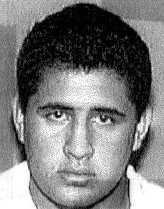
Marco Antonio Montez
Murderer Brian Kevin Rosenfeld
Murderer · USA · 1985
Brian Kevin Rosenfeld Brian Kevin Rosenfeld was sentenced to three concurrent l…
23 victims
Brian Kevin Rosenfeld
Murderer · USA · 1985
Brian Kevin Rosenfeld Brian Kevin Rosenfeld was sentenced to three concurrent l…
23 victims
 Yahweh ben Yahweh
Murderer · USA · 1980
Yahweh ben Yahweh was born and legally named Hulon Mitchell Jr. (October 27, 19…
23 victims
Yahweh ben Yahweh
Murderer · USA · 1980
Yahweh ben Yahweh was born and legally named Hulon Mitchell Jr. (October 27, 19…
23 victims
 Russell Ellwood
Murderer · USA · 1991
Russell Ellwood was a former taxi driver. Authorities suspected him of killing…
20 victims
Russell Ellwood
Murderer · USA · 1991
Russell Ellwood was a former taxi driver. Authorities suspected him of killing…
20 victims
 Michael Apelt
Murderer · USA · 1988
Michael Apelt and his brother, Rudi, came to Arizona from West Germany and bega…
1 victim
Michael Apelt
Murderer · USA · 1988
Michael Apelt and his brother, Rudi, came to Arizona from West Germany and bega…
1 victim
 James Floyd Davis
Murderer · USA · 1995
James Floyd Davis was described as a loner from Ashville, N.C., who had been fi…
3 victims
James Floyd Davis
Murderer · USA · 1995
James Floyd Davis was described as a loner from Ashville, N.C., who had been fi…
3 victims
 Jay Kelly Pinkerton
Homicide · USA · 1979
May 15, 1986 — Jay Kelly Pinkerton was executed by lethal injection in Texas. ·…
2 victims
Jay Kelly Pinkerton
Homicide · USA · 1979
May 15, 1986 — Jay Kelly Pinkerton was executed by lethal injection in Texas. ·…
2 victims
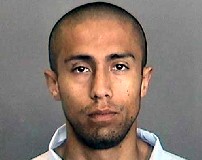 Itzcoatl Ocampo
Serial killer · USA · 2011
Itzcoatl Ocampo was a former Marine accused in Orange County of brutally murder…
6 victims
Itzcoatl Ocampo
Serial killer · USA · 2011
Itzcoatl Ocampo was a former Marine accused in Orange County of brutally murder…
6 victims
- Gender
- male
- Country
- USA
- Location
- Multnomah County, Oregon, USA
- Date of birth
- April 22, 1962
- Age at first offence
- 25
- Characteristics
- rape, abuse, arson, torture, drug addict
- Victim profile
- Candice Straub, 26
- Method of murder
- Strangulation with a sheet
- Date(s) of murder
- June 20, 1987
- Years active
- 1987
- Date of arrest
- July 12, 1987
- Status
-
Sentenced to death
Sentenced to death on June 16, 1988; resentenced to death on August 24, 1992
Case record: Marco Antonio Montez
Background
Marco Antonio Montez was convicted of aggravated murder and sentenced to death, then later resentenced to death. He appealed a judgment denying post-conviction relief. The appeal concerned his claims that counsel in his 1992 penalty-phase retrial provided constitutionally ineffective assistance of counsel.
The offence
On June 20, 1987, Candice Straub, accompanied by two men, rented a room at the Continental Motel in Portland. The next day, firefighters responding to a fire at the motel discovered Straub's nude and bound body on a bed in one of the motel's rooms. Her body had been doused with flammable liquid and set afire. It was determined later that she had been strangled to death.
A few weeks later, defendant Marco Montez told A. E., a woman with whom he had been living in Pocatello, Idaho, that he had helped get rid of the body of a woman in Portland after Tim Aikens, the co-defendant in this case, had strangled her. Edmo reported that statement to the Pocatello police. Defendant was arrested in Pocatello on July 12 on unrelated Idaho charges. The Pocatello police notified the Portland police of his arrest and of Edmo's report.
Portland Detective Goodale flew to Pocatello to interview defendant. In response to Goodale's questions, defendant at first denied any involvement in Straub's murder. He stated that he had met Aikens in Portland and that they had worked together for a day at a cannery. Aikens had met Straub at the cannery, and she had accompanied Aikens and defendant to a drop-in center in Portland when they returned from work. After sleeping for a few hours, the three went to breakfast and to a second hand store before separating. Aikens and Straub went to the Continental Motel; and defendant went to a park, where he remained until Aikens contacted him later. At that time, Aikens told defendant that he had left Straub at the motel and that he wanted to show defendant something there. Defendant, however, declined to go to the motel. Aikens then said that he had a ‘problem,’ after which defendant and Aikens then made plans to leave town.
In response to further questions by Goodale, defendant admitted that he had gone to the motel, where Aikens had showed him Straub's dead body in the bathtub. Aikens told defendant that Straub had refused to have sex with him, that he had hit her, and that she had fallen and hit her head. Defendant stated that he had then left the motel. Defendant stated that Aikens had later admitted setting the motel room afire. Defendant at first denied involvement in the fire, but he later admitted that he had helped Aikens move Straub's body from the bathtub to a bed and had participated in setting the motel room afire. Defendant admitted that it had been his plan to burn the room, but he still denied killing Straub or having sexual relations with her.
Goodale resumed his questioning of defendant. Defendant related more incriminating details about Straub's death, although he still insisted that Aikens alone had killed her. Defendant then returned to his cell, but shortly thereafter he asked a jailer to tell Goodale to return and ‘to bring his tape recorder.’ When Goodale arrived, he again advised defendant of his Miranda rights. Defendant then admitted that he had participated in Straub's murder. He stated that he and Aikens had beaten, raped, and sodomized Straub and that when she had resisted, Aikens pushed his fist into her anus causing her to bleed profusely. They then tied Straub's arms and legs behind her back and gagged her and put her in the bathtub. Defendant stated that he and Aikens became concerned that Straub might report them to the police, and they decided to kill her. After looping a towel around Straub's neck, each man pulled one end until she was dead. They then placed her body on the bed, doused it with lighter fluid, set it afire, and left. Defendant admitted that they burned the motel room to destroy any evidence that could link them to the crime.
Defendant then asked if Goodale knew what would happen to defendant in Oregon. Goodale explained the Oregon homicide laws. Defendant then said that he was willing to plead guilty to murder but hoped that he would not be sentenced to death.
Goodale again spoke with defendant, who stated that Straub had been conscious when he and Aikens carried her into the motel bathroom and placed her in the bathtub. He also admitted that he rather than Aikens had placed his fist in Straub's anus.
Petitioner was charged with three counts of aggravated murder, and one count each of first-degree arson and abuse of a corpse. In 1988, a jury convicted him of the charged crimes and, following a penalty-phase proceeding, sentenced him to death.
Investigation and arrest
Edmo reported Montez's statement to the Pocatello police. Montez was arrested in Pocatello on July 12 on unrelated Idaho charges. Portland Detective Goodale flew to Pocatello to interview defendant after the Pocatello police notified the Portland police of his arrest and of Edmo's report.
Trial
The first trial took place in 1988. In that first trial, petitioner was represented by attorneys Brad Grove and Lynne Dickison. A jury convicted him of three counts of aggravated murder and one count each of first-degree arson and abuse of a corpse. Following a penalty-phase proceeding, the trial court sentenced him to death.
Petitioner did not testify at the 1992 penalty-phase retrial, nor did he allocute—that is, make an unsworn statement to the jury. The jury voted to sentence petitioner to death, and the trial court entered judgment accordingly.
Appeals
On automatic and direct review of the first trial, the Oregon Supreme Court affirmed the convictions and other sentences but reversed the death sentence based on State v. Wagner. In Wagner, the Oregon Supreme Court held that Oregon's death penalty sentencing scheme was constitutionally infirm because it did not include a fourth, general mitigation question.
The case was remanded for a penalty-phase retrial. In the 1992 penalty-phase retrial, on automatic and direct review, the Oregon Supreme Court affirmed petitioner's death sentence, and the United States Supreme Court denied certiorari. Petitioner then filed a petition for post-conviction relief, and the post-conviction court entered a judgment denying relief. This appeal followed.
Sentencing
The first death sentence occurred in 1988 after the penalty-phase proceeding. The Oregon Supreme Court reversed the death sentence on direct review and remanded for a penalty-phase retrial based on State v. Wagner.
At the 1992 penalty-phase retrial, the jury answered three questions:
“(A) Whether the conduct of the defendant that caused the death of the deceased was committed deliberately and with the reasonable expectation that death of the deceased or another would result;
“(B) Whether there is a probability that the defendant would commit criminal acts of violence that would constitute a continuing threat to society; [and]
“ * * * * *
“(D) Whether the defendant should receive a death sentence.”
ORS 163.150(1)(b) (1991) governed the questions. The state was required to prove the affirmative of the first two questions beyond a reasonable doubt, ORS 163.150(1)(d) (1991). The final question framed a discretionary determination for the jury and carried no burden of proof. The court was required to instruct the jury that it must answer “no” to the third question if one or more jurors found any aspect of the defendant's character or background, or any circumstances of the offense, that would justify a sentence less than death.
Post-conviction proceedings and applicable law
Petitioner alleged dozens of ways in which counsel at his initial trial and penalty-phase retrial were ineffective. The post-conviction court rejected each claim in 26 pages of findings and conclusions. On appeal, petitioner raised four assignments of error, all relating to the alleged ineffectiveness of counsel at his 1992 penalty-phase retrial.
The appellate opinion described standards for post-conviction relief under ORS 138.530(1)(a), and evaluated ineffective assistance of counsel under Article I, section 11, of the Oregon Constitution and the corresponding federal standard under Strickland v. Washington. It set out a two-part test requiring proof that counsel failed to exercise reasonable professional skill and judgment and that the failure had a tendency to affect the result.
“First, we must determine whether petitioner demonstrated by a preponderance of the evidence that [his lawyer] failed to exercise reasonable professional skill and judgment. Second, if we conclude that petitioner met that burden, we further must determine whether he proved that counsel's failure had a tendency to affect the result of his trial.”
The opinion also described review principles for findings and tactical decisions, and outlined the jury’s deliberation law as it stood in 1992, including the required effect of a “no” vote.
Claims on appeal and rulings
Denial of a mitigation specialist
Counsel in the 1992 penalty-phase retrial sought appointment of a mitigation specialist. The trial court denied the motion.
Petitioner alleged that counsel were ineffective because they failed to make a record objecting to the trial court’s refusal to grant appointment of a mitigation expert and failed to show prejudice. The post-conviction court found:
“44. Petitioner did not produce evidence proving that his counsel in 1992 acted unreasonably by not making more of a record of the judge's decision denying appointment of a mitigation expert.
45. Trial counsel in 1992 did make a motion for appointment of a mitigation expert. It is not clear why there is no record of this motion in the trial court record.
46. Petitioner did not produce evidence proving that the trial judge should have (or would have, with additional facts) allowed the motion for appointment of a mitigation expert. Just what argument or additional facts might have convinced the judge to grant the motion is unknown.”
In the appellate discussion, the opinion noted testimony from Lynne Dickison that she filed a “formal” motion for appointment of a mitigation expert, including an affidavit explaining the need, and that after denial she submitted additional affidavits:
“MS. DICKISON: * * * I had submitted a request for a different type of investigation services through this court, and I'm gingerly stepping around this, but I submitted additional affidavits to the court after the court rendered its decision. Have those affidavits changed [the court's mind?]
“THE COURT: Everything that has been requested, denied, is filed.
“MS. DICKISON: The court has not changed its mind given the new affidavits?
“THE COURT: Right.”
The appellate court agreed with the post-conviction court that petitioner did not prove counsel performed deficiently in that respect.
Evidence of traumatic sexual experiences
Petitioner argued counsel were ineffective for failing to investigate and present evidence of his traumatic sexual experiences. In post-conviction proceedings, petitioner presented evidence that his mother sexually abused him when he was a child and threatened him if he disclosed the sexual abuse while undergoing residential alcohol treatment as an adolescent at St. John's Hospital in St. Paul, Minnesota. He also introduced evidence that, when he was 19 years old, he had a sexual encounter with his former foster mother.
“58. Trial counsel constructed a reasonable theory of mitigation based on petitioner's history of childhood abuse and Dr. Walker's undisputed expertise in the area of post-traumatic stress disorder [ (PTSD) ], after a thorough investigation of petitioner's family history.
“61. Trial counsel adequately introduced petitioner's mental health and family history through Dr. Walker.
“62. Petitioner did not present credible evidence to prove that trial counsel in 1992 failed to adequately investigate, prepare, and present the defense experts with information concerning petitioner's mental health and family history.
“63. Trial counsel provided Dr. Walker with all available and reliable information about petitioner's mental health and family history.
“64. Petitioner did not present evidence to prove that trial counsel in 1992 failed to provide Dr. Walker with all necessary information concerning petitioner's mental health and family history.”
The appellate court rejected petitioner's claim, relying on evidence that counsel provided all available and reliable information and that petitioner did not disclose sexual abuse to Dr. Walker.
Head trauma, seizure disorder, and organic impairment
Petitioner argued counsel were ineffective for failing to develop evidence of head trauma, seizure disorder, and organic impairment and to present that information to defense experts.
“52. Trial counsel in 1992 adequately investigated the possibility of fetal alcohol syndrome, organic brain damage, and other psychological factors as mitigation.
“53. Trial counsel retained Dr. Lenore Walker as an expert on mitigation issues. Counsel followed through with Dr. Walker's recommendation that petitioner be evaluated by a neuropsychologist.
“54. Trial counsel retained Dr. Les Goldmann to conduct a neuropsychological evaluation, but the evaluation produced no evidence that petitioner suffered from any kind of organic brain damage.
“55. Dr. Goldmann and trial counsel were constrained by the short time frame to prepare for trial and the trial court's unwillingness to set over the 1992 trial date.
“56. Dr. Jacobsen saw no evidence of brain damage, and Dr. Antoinette Appel, a neuropsychologist who trial counsel consulted in 1992, told counsel that she thought a neuropsychological evaluation was unnecessary.
“57. Petitioner did not present credible evidence to prove that he had organic brain damage at the time of the crimes.”
The appellate court found the record supported these findings and rejected the claim.
“No” vote, jury instructions, oral poll, and verdict
Petitioner argued counsel were ineffective for failing to educate the jury that a single “no” vote was sufficient to return a verdict of life imprisonment and for failing to ensure proper instructions on the effect of a “no” vote, among other related allegations.
The opinion described the 1992 jury instructions, including the trial court’s statements about answering “no” to the third question when any juror found an aspect of the defendant’s character or background, or circumstances of the offense, justifying less than death. It also described the effect of a “no” answer when any of the questions required it and that the penalty would be death only if the jury answered yes to all three questions.
The jury deliberated over four days. The jury submitted a written question: “Do all 12 jurors have to agree on question # 3?” The trial judge responded in writing: “In order to answer ‘yes' to any question, 12 of you must agree on that answer.”
After the jury returned its verdict of death, counsel requested the court poll the jury. The court refused to conduct an oral poll but did administer a written poll.
The appellate court rejected claims based on counsel’s tactics and the legal sufficiency of the trial court’s response.
Prior death sentence and death row inmate witnesses
Petitioner argued counsel were ineffective because counsel introduced evidence that he previously had been sentenced to death and was on death row, and advised petitioner to waive objections to the introduction of such evidence. He also challenged counsel’s decisions regarding inmate witnesses, including alleged failure to interview them and failure to object to irrelevant and prejudicial testimony about lengths of sentences, scheduled parole release dates, and circumstances of escapes and attempted escapes.
The opinion described how the issue arose. At a hearing before the penalty-phase retrial commenced, Dickison told the court she intended to file a written motion to exclude all jurors who were aware of the previous death sentence. The court agreed the jury should not consider the previous death sentence and discussed asking jurors whether they had any information about prior court hearings involving petitioner.
As the trial proceeded, Dickison raised the issue of instructing the jury about previous proceedings:
“Judge, while we're waiting, and I've conferred with Mr. Montez about this, it would seem since we're now going into the previous trial anyways, it would seem that the court might want to instruct the jury as to the previous proceedings in this case.”
The court proposed:
“THE COURT: How about this: Members of the jury, as you are now probably aware, Mr. Montez was convicted of Aggravated Murder, as we've discussed, by a jury after a trial in 1988. An appeal was taken-and I'd like to say as required by law, but I don't know whether that's going to flag the results of that prior case, I don't think they're sophisticated enough to understand the mandatory appeal. An appeal was taken as required by law and a new sentencing hearing ordered. You have been impaneled to decide that sentence.”
Lai proposed that jurors be told about the first death sentence:
“Your Honor, I think the defense team with a great deal of reservation feels that it is necessary at this point for the jury also to be informed Mr. Montez was sentenced to death by the first jury, but in some fashion told that they are not to consider that as part of their deliberation, because the evidence presented may or may not be the same as what was presented then.”
The court asked whether Montez agreed to the instruction about the prior death sentence:
“THE COURT: Mr. Montez, have you had sufficient time to speak with your attorneys? You feel adequately advised? You know my reluctance to do this.
“[PETITIONER]: Yes, we will proceed that way.”
The court questioned petitioner about the instruction:
“THE COURT: Now, Mr. Montez, as to my giving this [instruction about the previous death sentence,] do you want me to give it?
“[PETITIONER]: Yes.
“THE COURT: And do you understand that because of your asking for this and not objecting * * *, that in effect your ability to have this matter overturned or reversed based upon my doing this is nonexistent in a real sense?
“[PETITIONER]: I understand that.
“THE COURT: And have you had a sufficient chance to talk to Miss Lai and talk to Miss Dickison so you feel you've gotten the legal advice that's necessary for you to talk to me about this?
“[PETITIONER]: I have, Your Honor.
“THE COURT: Any questions?
“[PETITIONER]: No.”
The jury instruction stated:
“Before we proceed to the next witness, I want to explain something to you in an effort to remove the mystery or any speculation from this matter: As you're all now probably aware, Mr. Montez was convicted of Aggravated Murder, as we've discussed here, by a jury after a trial in 1988. A death sentence was imposed. An appeal was taken, as required by law, and a new sentencing hearing was ordered. You've been impaneled to decide the sentence.
“Now as to your role as the trier of facts, this is a new proceeding, and you will decide the weight to be given the evidence presented here, which may be different than the evidence presented before.
“Now, what happened previously, with the exception of the guilty finding, is not a consideration in this case. I tell you this because I don't want you wondering, and I don't want you to speculating, and I don't want you to misuse the information before you.”
In the post-conviction court, the court found:
“74. Petitioner did not produce evidence proving that his counsel in 1992 unreasonably disclosed that petitioner had previously been on death row.
“75. Petitioner wanted the jury in 1992 to learn that he had been on death row and had generally gotten along well with the other inmates on death row and in general population.
“76. Petitioner did not produce evidence proving that his counsel in 1992 acted unreasonably in preparing for, and in calling, inmates to testify on petitioner's behalf.
“77. It was petitioner's decision to call inmates to testify on his behalf, to show that he was not dangerous or violent in the prison setting.
“78. Petitioner personally selected the inmates that he wanted to testify on his behalf.”
The appellate court rejected petitioner's claims and concluded that counsel’s strategy regarding the prior death sentence and inmate testimony did not demonstrate deficient performance, and that petitioner did not prove prejudice.
Future dangerousness
Petitioner argued counsel were ineffective in preparing and presenting a defense to the sentencing question on risk of future acts of violence.
The opinion discussed petitioner's evidence in post-conviction proceedings. Petitioner introduced the affidavit of Dr. Mark Cunningham, who evaluated petitioner and reviewed records. The affidavit asserted that errors in violence risk assessment were neither inevitable nor unavoidable and that relevant conceptual and research literature was available in 1992. Cunningham concluded that reliable methodology and research data were available at that time.
Petitioner presented the argument that Cunningham's assessment indicated he fit a pattern of lower risk of committing violent acts while incarcerated and on old age parole.
The state responded with Dr. Richard Hulteng’s affidavits and reports. Hulteng disagreed with Cunningham’s premises and conclusions, including Hulteng’s statement that it was not until 1998 that Cunningham would publish his first article advocating the use of institutional violence base rates for capital sentencing. Hulteng stated he had not come across any literature from that period taking the position advocated by Cunningham.
The post-conviction court rejected petitioner’s claim and found:
“65. Petitioner presented the testimony of Dr. Mark Cunningham, through affidavit, on the issue of future dangerousness. The information regarding institutional violence base rates on which Dr. Cunningham relied was not published until six years after petitioner's 1992 resentencing proceeding.
“66. Dr. Richard Hulteng credibly testified by affidavit that there were no experts in 1992 testifying about the prediction of future dangerousness based on actuarial studies and base rates.
“67. Dr. Hulteng credibly testified that petitioner's prior arrest record was significant in predicting whether petitioner would be dangerous in the future, and that Dr. Cunningham failed to take that factor into consideration in forming his opinion.
“68. Dr. Hulteng credibly testified that the testimony on future dangerousness in the 1992 resentencing proceeding * * * was generally consistent with clinical practices and available empirical literature at that time.
“69. Dr. Hulteng credibly testified that Dr. Cunningham's interpretation of how actuarial principles should be applied in a capital sentencing context involves a number of assumptions * * * was not articulated by Dr. Cunningham until after petitioner was sentenced in 1992.
“70. Petitioner failed to prove that trial counsel did not adequately investigate and present evidence on the issue of petitioner's future dangerousness in the 1992 resentencing proceeding.”
The appellate court affirmed and rejected the argument that the post-conviction court applied an erroneous standard.
Allocution
Petitioner argued counsel were ineffective for failing to advise him of his right of allocution at the sentencing hearing, which allegedly led him to forgo speaking before sentence was imposed.
“88. Petitioner's presentation regarding the issue of allocution, including the testimony and evidence of counsel, Lynne Dickison, was not consistent.
“89. The statement of trial counsel, Lynne Dickison, that she did not advise petitioner of his right to allocute is not credible.
“90. The record does not establish that trial counsel did not inform petitioner of his right of allocution.
“91. Petitioner's testimony in this proceeding regarding his remorse for the murder was not credible.
“92. Taking part in allocution would have been inconsistent with petitioner's strategy of not participating in the 1992 resentencing proceeding on ‘so-called’ jurisdictional grounds.
“93. Petitioner testified in this proceeding that he and trial counsel agreed that he should not participate in the resentencing, in order to avoid a possible waiver of a ‘jurisdictional’ argument. Participation in allocution would have been inconsistent with that strategy.
“94. In the 1992 resentencing proceeding, petitioner did not express anything to the trial court which could reasonably be interpreted as a desire to allocute.
“95. Had petitioner been given a specific opportunity to make an unsworn statement in allocution to the jury, it would not have made any positive difference.”
The appellate court held that petitioner failed to meet his burden to show counsel did not inform him of allocution and, in addition, agreed that in 1992 no federal or state constitutional right to make an unsworn statement to the jury was clearly recognized.
Outcome
The appellate court affirmed the judgment denying post-conviction relief.
Spotted an error, or have more information about this case?