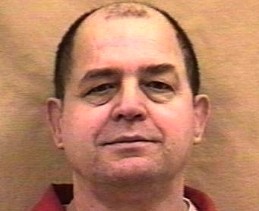
James Floyd Davis
Murderer Brian Kevin Rosenfeld
Murderer · USA · 1985
Brian Kevin Rosenfeld Brian Kevin Rosenfeld was sentenced to three concurrent l…
23 victims
Brian Kevin Rosenfeld
Murderer · USA · 1985
Brian Kevin Rosenfeld Brian Kevin Rosenfeld was sentenced to three concurrent l…
23 victims
 Russell Ellwood
Murderer · USA · 1991
Russell Ellwood was a former taxi driver. Authorities suspected him of killing…
20 victims
Russell Ellwood
Murderer · USA · 1991
Russell Ellwood was a former taxi driver. Authorities suspected him of killing…
20 victims
 Robert Martines Perez
Murderer · USA · 1994
Name: Robert Martines Perez · Other name used in proceedings: Robert Martinez P…
15 victims
Robert Martines Perez
Murderer · USA · 1994
Name: Robert Martines Perez · Other name used in proceedings: Robert Martinez P…
15 victims
 Billy Frank Vickers
Murderer · USA · 1993
Billy Frank Vickers Vickers was executed by lethal injection in Texas on Januar…
14 victims
Billy Frank Vickers
Murderer · USA · 1993
Billy Frank Vickers Vickers was executed by lethal injection in Texas on Januar…
14 victims
 Ernest Basden
Murderer · USA · 1992
Ernest Basden was executed by lethal injection in North Carolina on December 6,…
1 victim
Ernest Basden
Murderer · USA · 1992
Ernest Basden was executed by lethal injection in North Carolina on December 6,…
1 victim
 Leroy Pooler
Murderer · USA · 1995
Leroy Pooler (born 01/27/48) was tried in the Fifteenth Judicial Circuit, Palm…
1 victim
Leroy Pooler
Murderer · USA · 1995
Leroy Pooler (born 01/27/48) was tried in the Fifteenth Judicial Circuit, Palm…
1 victim
 Tina Lunney
Murderer · USA · 2009
Tina Lunney was sentenced to 40 years in prison on August 13, 2013. · July 22,…
1 victim
Tina Lunney
Murderer · USA · 2009
Tina Lunney was sentenced to 40 years in prison on August 13, 2013. · July 22,…
1 victim
 Gregory Van Cleave
Murderer · USA · 1982
Gregory Van Cleave was 20 years old at the time of the murder. He had a bad hom…
1 victim
Gregory Van Cleave
Murderer · USA · 1982
Gregory Van Cleave was 20 years old at the time of the murder. He had a bad hom…
1 victim
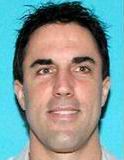 Darren Mack
Murderer · USA · 2006
Darren Mack (born January 31, 1961) became the subject of an international manh…
1 victim
Darren Mack
Murderer · USA · 2006
Darren Mack (born January 31, 1961) became the subject of an international manh…
1 victim
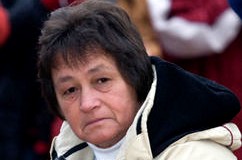 Catherine Andrus
Murderer · Canada · 2009
Catherine Andrus — common-law wife of Michel Leblanc; pleaded guilty to second-…
1 victim
Catherine Andrus
Murderer · Canada · 2009
Catherine Andrus — common-law wife of Michel Leblanc; pleaded guilty to second-…
1 victim
- Gender
- male
- Country
- USA
- Location
- Ashville, North Carolina, USA
- Date of birth
- 1947
- Age at first offence
- 48
- Characteristics
- revenge, shooting rampage
- Victim profile
- Gerald Allman, 52; Frank Knox, 62, and Tony Balogh, 42 (co-workers)
- Method of murder
- Shooting
- Date(s) of murder
- May 17, 1995
- Years active
- 1995
- Date of arrest
- Same day
- Status
-
Sentenced to death
Sentenced to death in 1996
Case record: James Floyd Davis
Background
James Floyd Davis was described as a loner from Ashville, N.C., who had been fired from a plant two days earlier and returned for revenge. He lived alone, had no life beyond work, ate by himself, talked to himself, and picked fights with co-workers. He threatened to "take everyone with him" if he were fired and talked about his guns and knives. At work, he talked to himself and never associated with anyone.
Davis had an abusive, drunken home life. His father threatened to cut his children's throats in their sleep and burn down the house. Davis was regularly beaten with a leather strap that drew blood; if he spoke at the dinner table, he was beaten with a mop handle. Davis was left hungry, and his father locked the freezer and kept the key.
After serving in Vietnam, Davis experienced post-traumatic stress disorder from battle stress during the war. He was wounded and was described as losing his hearing and gaining a chunk of shrapnel in his thigh that still throbbed when the weather turned cold. He spent a week in the hospital recovering from the wounds, and part of the metal remains in his leg. Johnson described Davis as a corporal at one of the 105 mm howitzer bases, described as key targets of the Viet Cong and North Vietnamese during Tet.
After coming home, Davis’ marriage collapsed. He attempted suicide and was diagnosed by a Veterans Administration physician as suffering from paranoid schizophrenia and depression.
The offence
Davis returned to the Union Butterfield tool distribution plant in south Asheville and carried a semiautomatic rifle and a pistol. During a shooting rampage, he shot and killed three men and wounded two others.
Three people were killed and two were wounded in the shooting.
The three people killed were:
- Frank Knox, 62
- Gerald Allman, 52
- Tony Balogh, 42
Davis used an M-1 carbine and a .380-caliber semiautomatic rifle. He fired about 50 shots, killing three people, including two bosses who had fired him two days earlier.
After the shootings, Davis walked out the back door, threw his two guns down, and emptied his pockets of shells. He then lit a cigarette and surrendered to police.
Investigation
Davis’ co-workers knew he was dangerous. They said he kept talking about his guns and knives. Employees testified that plant managers were told that Davis had threatened that if he were fired he would come back and "take management with me." Others cried from worry, and some planned escape routes, witnesses testified.
Arrest
No arrest details were included beyond that Davis stepped outside and surrendered to police.
Trial
Davis was convicted in 1996 of the murders of Frank Knox, 62, Gerald Allman, 52, and Tony Balogh, 42, during the May 17, 1995, shooting rampage at Union Butterfield.
Davis was convicted of three counts of first-degree murder and was placed on death row in Central Prison in Raleigh.
Testimony described Davis as living in isolation, talking to himself, picking fights with co-workers, and threatening to "take everyone with him" if he were fired. The trial also presented that he used a .44 magnum to shoot imaginary groundhogs in his front yard.
Jim Johnson later described a clinical perspective on Davis:
"a throwaway kid with little hope from the beginning. "
Johnson also described professional training and understanding:
"You're trained to remain professional, but you begin to develop an understanding of what leads a person to become what they are."
Ken Rose described the defense position about mental illness:
"Make no mistake, James Davis needs to be confined for the remainder of his life,"
Rose also said:
"I think he's the most mentally ill person on death row today. "
Rose further said the issue of mental illness was not raised early enough:
"However, his defense did not ever raise the issue of his mental illness until well into the trial."
Rose described his view of the need for a medicating or confining outcome:
Sentencing
Davis was sentenced to death in 1996 and remained on death row in Central Prison in Raleigh.
Appeals
The material stated that there was no certainty that Davis would be executed, although he had given up his appeals.
Outcome
Davis was sentenced to death in 1996.
The material also described civil litigation in which two families of the men killed when a fired worker went on a shooting rampage in North Carolina won damages from a jury that found the company was negligent in protecting employees from Davis.
The jury awarded:
- $3.9 million to the family of Gerald Allman, 52
- $4 million to the family of Frank Knox, 62
The families won $7.9 million in total.
David Kirby, who represented the Allman family, said:
"This verdict shows that companies cannot ignore a real, credible threat of workplace violence,"
Kirby also said:
"This man was a ticking time bomb and the management knew it, yet they did nothing to protect their employees."
Aftermath
Davis received a Purple Heart and the Good Conduct Medal in connection with his military service. The Army agreed in November that his medical records were enough proof that he should receive the Purple Heart.
Johnson described the recognition and what it meant to Davis:
"No soldier's service to our country should be ignored,"
Johnson also said:
"A lot of people would say, 'It's just a medal. Forget it.' "
Johnson continued:
"Not to me, it's not. To me, it's the recognition that every soldier deserves. No matter what happened, his service should be recognized."
Johnson described Davis’ reaction:
"meek, humbled by the idea"
Johnson also described Davis’ feelings about the medals:
"It was as if he never expected anyone to do something for him."
Rose discussed getting the medals as a long shot:
"It was a long shot at best. As far as I could tell, there had never been a death row inmate in North Carolina receiving a medal. And I didn't think this would be the first."
The prison reportedly resisted allowing him to receive them, and Rose said:
"They said no, like we expected,"
Rose added:
"It was something that was just too unusual. It would take intervention by someone higher up the ladder."
Johnson said he found someone willing to help in James French, described as a former warden of Central Prison and now deputy director of the state's correction system, who was also a Vietnam veteran wounded during the war and received a Purple Heart.
On July 29, James Davis was unshackled and escorted into a small hearing room just off death row. Johnson and Rose were there, along with two fellow veterans: Ray Shurling of Fayetteville and Ron Miriello of Sanford.
Johnson described the moment he pinned on the medals:
"But when I prepared to pin his medals on, he stood straight up, hands cupped to the side,"
Johnson said he pinned on two medals: the Purple Heart and the Good Conduct award. Johnson stepped back and saluted, and Davis replied with a textbook-sharp salute.
Rose said afterward:
"Jim, you've just pulled off a miracle,"
Johnson replied:
"It wasn't a miracle,"
and continued:
"It was just the right thing to do."
Davis was not allowed to keep the medals and would not be able to touch them again. Johnson described the prison routine:
"His world has returned to the unyielding routine of Unit III in Raleigh."
Rose and the Center for Death Penalty Litigation continued to speak on Davis’ behalf.
Rose said:
"Jim said that regardless of what he had done later, he was a soldier,"
Rose also said:
"And it was important to recognize that sacrifice. "
Rose added:
"In 30 years of working here, I'd never seen anything like it. I'll probably never see it again."
Timeline
- May 17, 1995 — Davis carried out a shooting rampage at the Union Butterfield tool distribution plant in south Asheville, killing Frank Knox, 62; Gerald Allman, 52; and Tony Balogh, 42, and wounding two others.
- 1996 — Davis was convicted of three counts of first-degree murder and sentenced to death in 1996.
- July 29 — Davis was unshackled and escorted into a small hearing room just off death row for a hearing in which the Purple Heart and the Good Conduct award were pinned on him.
- November — The Army agreed that Davis’ medical records were enough proof that he should receive the Purple Heart.
- Sept. 5, 2009 — The material included a report dated Sept. 5, 2009, describing Davis’ continued situation.
Other details
Davis was described as being 47 years old when he carried a semiautomatic rifle and a pistol during the shooting rampage in spring 1995, and later described as looking far removed from the wild-eyed loner and as now 62 years old in the later report.
The material described Davis’ surrender following the shootings by noting he stepped outside and surrendered to police, after which his co-workers’ prior warnings about threats and weapons were part of the case narrative.
The civil trial centered on whether company officials properly protected employees from Davis, who had been fired two days earlier because of a string of violent incidents.
Spotted an error, or have more information about this case?