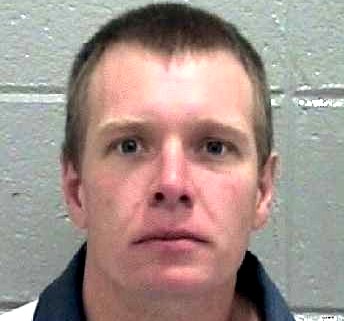
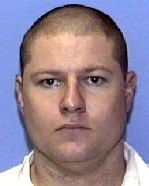
Ward Anthony Brockman
Murderer Brian Kevin Rosenfeld
Murderer · USA · 1985
Brian Kevin Rosenfeld Brian Kevin Rosenfeld was sentenced to three concurrent l…
23 victims
Brian Kevin Rosenfeld
Murderer · USA · 1985
Brian Kevin Rosenfeld Brian Kevin Rosenfeld was sentenced to three concurrent l…
23 victims
 Yahweh ben Yahweh
Murderer · USA · 1980
Yahweh ben Yahweh was born and legally named Hulon Mitchell Jr. (October 27, 19…
23 victims
Yahweh ben Yahweh
Murderer · USA · 1980
Yahweh ben Yahweh was born and legally named Hulon Mitchell Jr. (October 27, 19…
23 victims
 Russell Ellwood
Murderer · USA · 1991
Russell Ellwood was a former taxi driver. Authorities suspected him of killing…
20 victims
Russell Ellwood
Murderer · USA · 1991
Russell Ellwood was a former taxi driver. Authorities suspected him of killing…
20 victims
 Robert Martines Perez
Murderer · USA · 1994
Name: Robert Martines Perez · Other name used in proceedings: Robert Martinez P…
15 victims
Robert Martines Perez
Murderer · USA · 1994
Name: Robert Martines Perez · Other name used in proceedings: Robert Martinez P…
15 victims
 Patrick Prendergast
Murderer · USA · 1893
Patrick Prendergast was born in Ireland. His grandfather was reported to have d…
1 victim
Patrick Prendergast
Murderer · USA · 1893
Patrick Prendergast was born in Ireland. His grandfather was reported to have d…
1 victim
 Jeffrey Landrigan
Murderer · USA · 1982
Jeffrey Landrigan In December 1989, Chester Dean Dyer was found dead in his apa…
2 victims
Jeffrey Landrigan
Murderer · USA · 1982
Jeffrey Landrigan In December 1989, Chester Dean Dyer was found dead in his apa…
2 victims
 Oscar Franklin Smith
Murderer · USA · 1989
Oscar Franklin (Frank) Smith was the defendant. He was sentenced to death by a…
3 victims
Oscar Franklin Smith
Murderer · USA · 1989
Oscar Franklin (Frank) Smith was the defendant. He was sentenced to death by a…
3 victims
 Ma Jiajue
Mass murderer · China · 2004
Ma Jiajue was executed by firing squad on June 16, 2004. Ma Jiajue had a Guangx…
4 victims
Ma Jiajue
Mass murderer · China · 2004
Ma Jiajue was executed by firing squad on June 16, 2004. Ma Jiajue had a Guangx…
4 victims
 Reyes Miranda
Murderer · USA · 1987
Reyes Miranda was born on 12/20/59. He was convicted in state court of murder a…
1 victim
Reyes Miranda
Murderer · USA · 1987
Reyes Miranda was born on 12/20/59. He was convicted in state court of murder a…
1 victim
- Gender
- male
- Country
- USA
- Location
- Muscogee County, Georgia, USA
- Date of birth
- 1971
- Age at first offence
- 19
- Characteristics
- armed robbery, murder for hire, rape
- Victim profile
- A service station attendant
- Method of murder
- Shooting
- Date(s) of murder
- June 27, 1990
- Years active
- 1990
- Date of arrest
- —
- Status
-
Sentenced to death
Sentenced to death on March 12, 1994
Case details
Ward Anthony Brockman, age 25, was sentenced to death on March 12, 1994.
Timeline
- June 27, 1990 — Brockman and three others killed a service station attendant during an attempted armed robbery.
- March 12, 1994 — Brockman was sentenced to death.
- November 8, 1993 — The case was decided.
- December 8, 1993 — Reconsideration was denied.
The offence
Brockman and three accomplices allegedly killed a service station attendant during an attempted armed robbery. The State contended Brockman was the triggerman.
The State contended the incident was one of several armed robberies and attempted armed robberies committed by Brockman in a crime spree following Brockman's theft of a Chevrolet Camaro.
Investigation
The trial court found that Brockman and his accomplices were arrested following a high-speed chase into Phenix City, Alabama. The chase ended at the apartment of Brockman’s female companion, where police used tear gas to force Brockman out of the attic.
Police transported Brockman and his accomplices to the local jail.
Among the evidence recovered by the police was an "agenda," or list of things to do. During the videotaped interrogation, Brockman confirmed that the "agenda" included the theft of a motor vehicle and the commission of armed robberies.
Arrest
Brockman and his accomplices were arrested after a high-speed chase into Phenix City, Alabama.
Trial
Statement and confession admissibility; right to counsel
Brockman contended the trial court erred by finding that his statement and confession were admissible notwithstanding his invocation of the right to counsel.
After arrest:
- Detective Boren of the Columbus Police Department introduced himself to Brockman, told him he was interviewing the other three suspects but would talk to him later, and left.
- Officer White of the Muscogee County Sheriff’s Department stayed with Brockman.
- While White helped him clean insulation from the attic off his face, Brockman began asking White about how the police had known it was Brockman and his accomplices in the vehicle and “chit chatted” about the chase. White testified that he asked Brockman no questions and that all conversation originated from Brockman.
Brockman’s statements during this period included:
- Brockman bragged that had he been driving instead of an accomplice, the police would not have caught them because he was the better driver.
- Brockman stated that the police were "lucky" because at one point he started to "stick a shotgun out the window and take a shot at y'all."
Boren returned and advised Brockman, for the first time since his arrest, of his Miranda rights (Miranda v. Arizona, 384 U. S. 436 (86 SC 1602, 16 LE2d 694) (1966)).
When Brockman stated that he "might" want to talk to an attorney, Boren told him to make up his mind, and left the room.
Shortly thereafter, Brockman asked Officer White about a piece of paper Boren had been carrying and White answered that he did not know. Within minutes of White's response, Brockman requested to speak again to Boren. Upon his return, Boren asked Brockman what he wanted. White testified that Brockman answered, "I need to talk to you." Brockman then proceeded to question Boren about evidence the police had against him and told Boren the others' statements should be discounted because they did not know what had actually transpired.
Boren testified that he did not question Brockman about the case and instead inquired only whether Brockman would waive extradition to Georgia. Brockman agreed and was transported to the Columbus Police Department.
At that time (approximately three hours after Boren first spoke to Brockman), Boren re-advised Brockman of his rights and obtained a written waiver. Brockman gave:
- a brief incriminating statement, followed by
- a statement videotaped by the police.
Brockman testified that he told Officer White that he wanted a lawyer, repeated his request when Boren informed him of his Miranda rights, and asked for a lawyer when Boren inquired about waiving extradition.
Court’s rulings
- As to incriminating statements Brockman made to Officer White: the trial court was authorized to conclude that Brockman had not requested counsel at the time the statements were made. Hence, the statements were not inadmissible on Brockman's asserted basis that they were elicited after he had invoked his right to counsel.
- The court noted that no ruling was requested as to whether these statements were made in response to “interrogation” by White prior to which the warnings required by Miranda v. Arizona should have been given (see Rhode Island v. Innis, 446 U. S. 291 (100 SC 1682, 64 LE2d 297) (1980); Turner v. State, 199 Ga. App. 836 (3) (406 SE2d 512) (1991)).
- As to the statement to Boren that he “might” want to talk to an attorney: the court treated it as at least an equivocal invocation of the right to counsel. The contention was that when the interrogation began later, Brockman’s desires about counsel were not sufficiently clarified (Hall v. State, 255 Ga. 267 (2) (336 SE2d 812) (1985)).
- The court stated that even where a suspect makes an unequivocal request for counsel, a suspect may be interrogated further if he initiates further discussions and knowingly and intelligently waives his Miranda rights (Edwards v. Arizona, 451 U. S. 477 (101 SC 1880, 68 LE2d 378) (1981)). The court found that what happened here satisfied those requirements (Guimond v. State, 259 Ga. 752, 754 (2) (386 SE2d 158) (1989); Tatum v. State, 203 Ga. App. 892 (1) (418 SE2d 152) (1992)).
- As to the videotaped confession: Brockman was advised of his Miranda rights at the outset, and he waived them on tape. Near the end of the interview, Brockman referred to his original intention not to talk to police until he first consulted an attorney, explaining why he was shouting at his accomplices at the scene of the arrest and ordering them not to talk. The court concluded Brockman's reference to his previous state of mind was not a request for counsel, equivocal or otherwise (Hall v. State, supra at 270).
Severance of Counts 3 and 4
The State contended the trial court erred by granting Brockman's motion to sever Counts 3 and 4.
- Count 3 alleged the commission of an armed robbery earlier the same day as the attempted armed robbery and murder alleged in Counts 1 and 2.
- Count 4 alleged the theft of the motor vehicle used in the commission of the crimes alleged in the other three counts.
Counts 3 and 4 had been joined to Counts 1 and 2 as part of a "series of acts connected together or constituting parts of a single scheme or plan" (Gober v. State, 247 Ga. 652, 653 (278 SE2d 386) (1981)).
The court concluded that in such cases, the trial court may order severance (Gober v. State, supra). The appellate court found that the State had not shown any prejudice and found no abuse of discretion.
Admission of similar act evidence; theft of the Chevrolet Camaro
The State contended the trial court erred by ruling that the State could not prove as a similar act the theft of the Chevrolet Camaro.
The trial court had ruled:
- three extrinsic armed robberies and attempted armed robberies committed within a two-day period in and around the Columbus area would be admissible; but
- the theft of the Camaro four days before the murder would not be admissible, apparently because the theft of an automobile was not sufficiently similar to an armed robbery to warrant its admission.
The appellate court stated that the issue of admissibility of extrinsic transactions was not one of “mere similarity” and instead concerned relevance to the issues in the trial of the case (Williams v. State, 251 Ga. 749, 784 (312 SE2d 40) (1983); Ward v. State, 262 Ga. 293, 295 (2) (417 SE2d 130) (1992)).
The appellate court found that:
- the stolen Camaro was used in three of the four armed robberies and attempted armed robberies committed within a short period of time,
- the car was involved in the high-speed chase from Columbus to the Phenix City apartment where Brockman and the others were arrested,
- and Brockman confirmed during the videotaped interrogation that the “agenda” included the theft of a motor vehicle and the commission of armed robberies.
The appellate court held that the theft of the Camaro was part of a larger plan or scheme that included the commission of the attempted armed robbery on trial.
Therefore, the trial court erred by concluding the theft of the Camaro was not sufficiently similar or logically connected to the crimes on trial to be admissible (Todd v. State, 261 Ga. 766 (7) (410 SE2d 725) (1991)).
The appellate court left open the issue of the trial court’s discretion to exclude relevant evidence “if its probative value is substantially outweighed by the danger of unfair prejudice, [etc.],” because such was not the basis of the trial court’s ruling (Hicks v. State, 256 Ga. 715, 720-721 (13) (352 SE2d 762) (1987)).
Other details
- Brockman v. The State. S93A0609. (263 Ga. 637) (436 SE2d 316) (1993).
- The case was before Judge Followill.
- The justice authoring the opinion was HUNSTEIN.
- Interim appellate review occurred in a case in which the State sought a death penalty.
- Muscogee Superior Court is identified in the case information.
- Hagler & Hyles, Richard C. Hagler and M. Stephen Hyles are named as counsel for appellant.
- The decision date is “DECIDED NOVEMBER 8, 1993” and “RECONSIDERATION DENIED DECEMBER 8, 1993.”
Spotted an error, or have more information about this case?