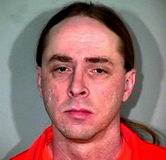
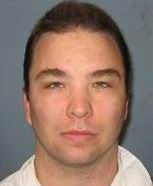
Jeffrey Landrigan
Murderer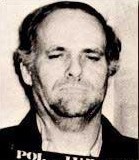 Ervil LeBaron
Murderer · USA · 1972
Ervil Morrell LeBaron (1925 to August 16, 1981) was the leader of a polygamous…
35 victims
Ervil LeBaron
Murderer · USA · 1972
Ervil Morrell LeBaron (1925 to August 16, 1981) was the leader of a polygamous…
35 victims
 Brian Kevin Rosenfeld
Murderer · USA · 1985
Brian Kevin Rosenfeld Brian Kevin Rosenfeld was sentenced to three concurrent l…
23 victims
Brian Kevin Rosenfeld
Murderer · USA · 1985
Brian Kevin Rosenfeld Brian Kevin Rosenfeld was sentenced to three concurrent l…
23 victims
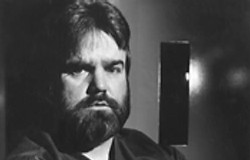 Marvin Gray
Murderer · USA · 1975
Marvin Gray was convicted killer who claimed responsibility for 23 slayings and…
23 victims
Marvin Gray
Murderer · USA · 1975
Marvin Gray was convicted killer who claimed responsibility for 23 slayings and…
23 victims
 Yahweh ben Yahweh
Murderer · USA · 1980
Yahweh ben Yahweh was born and legally named Hulon Mitchell Jr. (October 27, 19…
23 victims
Yahweh ben Yahweh
Murderer · USA · 1980
Yahweh ben Yahweh was born and legally named Hulon Mitchell Jr. (October 27, 19…
23 victims
 Russell Ellwood
Murderer · USA · 1991
Russell Ellwood was a former taxi driver. Authorities suspected him of killing…
20 victims
Russell Ellwood
Murderer · USA · 1991
Russell Ellwood was a former taxi driver. Authorities suspected him of killing…
20 victims
 Karl Hau
Murderer · Germany · 1906
Karl Hau was accused of the murder of his mother-in-law, Frau Josephine Molitor…
1 victim
Karl Hau
Murderer · Germany · 1906
Karl Hau was accused of the murder of his mother-in-law, Frau Josephine Molitor…
1 victim
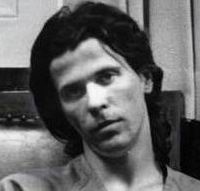 Michael Francis Beuke
Murderer · USA · 1983
Michael Francis Beuke was known as the “mad hitchhiker” in publicity surroundin…
1 victim
Michael Francis Beuke
Murderer · USA · 1983
Michael Francis Beuke was known as the “mad hitchhiker” in publicity surroundin…
1 victim
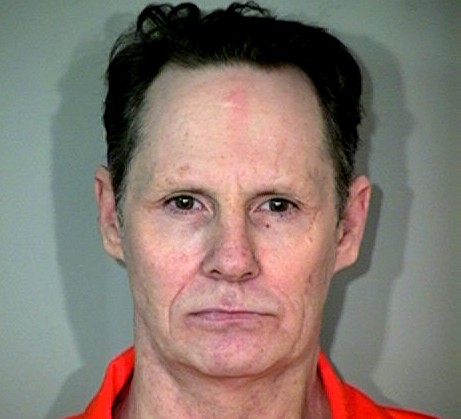 Robert Douglas Smith
Murderer · USA · 1980
Robert Douglas Smith was convicted in Tucson following a joint trial in which h…
1 victim
Robert Douglas Smith
Murderer · USA · 1980
Robert Douglas Smith was convicted in Tucson following a joint trial in which h…
1 victim
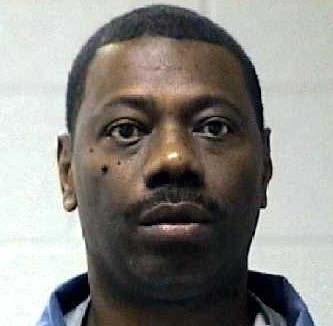 Timothy Carl Dawson
Murderer · USA · 1998
Timothy Carl Dawson was sentenced to life imprisonment without parole on Novemb…
4 victims
Timothy Carl Dawson
Murderer · USA · 1998
Timothy Carl Dawson was sentenced to life imprisonment without parole on Novemb…
4 victims
 Mark Aaron Brown
Murderer · USA · 1994
Mark Aaron Brown (also referred to as Mark A. Brown) was born on November 13, 1…
2 victims
Mark Aaron Brown
Murderer · USA · 1994
Mark Aaron Brown (also referred to as Mark A. Brown) was born on November 13, 1…
2 victims
 Ronnie Lee Conner
Murderer · USA · 1990
Ronnie Lee Conner was convicted of capital murder for the kidnap, robbery and m…
1 victim
Ronnie Lee Conner
Murderer · USA · 1990
Ronnie Lee Conner was convicted of capital murder for the kidnap, robbery and m…
1 victim
- Gender
- male
- Country
- USA
- Location
- Oklahoma/Arizona, USA
- Date of birth
- March 14, 1960
- Age at first offence
- 22
- Characteristics
- alcohol, drugs, robbery
- Victim profile
- Greg Brown (a childhood friend) / Chester Dean Dryer, 42
- Method of murder
- St abbing with knife / Strangulation with an electrical cord
- Date(s) of murder
- August 24, 1982 / December 13, 1989
- Years active
- 1982–1989
- Date of arrest
- December 20, 1989
- Status
-
Executed
Executed by lethal injection in Arizona on October 26, 2010
Defendant
Jeffrey Landrigan
Background
In December 1989, Chester Dean Dyer was found dead in his apartment by a co-worker who went to Dyer’s residence because the co-worker was concerned about his failure to appear for work. Dyer was found face down with an electrical cord at the front of his throat. The victim had lacerations about his face and puncture wounds in the upper back. Dyer’s death was determined to have been caused by strangulation.
Jeffrey Landrigan was arrested on unrelated charges on December 20, 1989. Police later developed numerous items of evidence that tied Landrigan to the killing of Dyer.
At sentencing, counsel attempted to present the testimony of Landrigan’s ex-wife and birth mother as mitigating evidence. But at Landrigan’s request, both women refused to testify. When the trial judge asked why the witnesses refused, Landrigan’s counsel responded that "it's at my client's wishes." When counsel tried to explain that Landrigan had worked in a legitimate job to provide for his family, Landrigan interrupted and stated "if I wanted this to be heard, I'd have my wife say it." When counsel characterized Landrigan's first murder as having elements of self-defense, Landrigan interrupted and clarified: "He didn't grab me. I stabbed him." Responding to counsel's statement implying that the prison stabbing involved self-defense because the assaulted inmate knew Landrigan's first murder victim, Landrigan interrupted to clarify that the inmate was not acquainted with his first victim, but just "a guy I got in an argument with. I stabbed him 14 times. It was lucky he lived."
At the conclusion of the sentencing hearing, the judge asked Landrigan if he had anything to say. Landrigan made a brief statement that concluded, "I think if you want to give me the death penalty, just bring it right on. I'm ready for it."
In later appeals, Landrigan alleged that his lawyers had failed to explore mitigation evidence.
The offence
Chester Dean Dyer was murdered in his apartment.
During the period leading up to the discovery of Dyer’s death, Dyer telephoned Michael Shaw at work on December 13, 1989, to let him know he had talked "Jeff" into coming to his apartment and was having sexual relations with Jeff.
An Arizona jury found Landrigan guilty of theft, second-degree burglary, and felony murder for having caused the victim’s death in the course of a burglary.
Earlier criminal conduct also involved murder, with trial material describing Landrigan as "aka Billy Patrick Wayne Hill" and describing conviction and sentencing for the fatal stabbing of his best friend, Greg Brown, after they and some friends had smoked marijuana and drank whiskey at a trailer park in Dewey, Oklahoma, on August 24, 1982.
According to testimony presented at trial, Landrigan, accompanied by his wife and son, arrived at the trailer home of Gordon Aiken at about 8 p.m. that evening. Soon after they arrived, Landrigan, his family and Aiken went to purchase a fifth of whiskey. On their way back to the trailer park, the group picked up Landrigan's brother-in-law, Robert Martinez. When they returned to the trailer, Landrigan, Greg Brown, David Detjan and Donna Favier began drinking whiskey and smoking marijuana cigarettes. Landrigan and Greg Brown began calling one another a "punk," and began arguing whether Landrigan could beat the victim in a fight. As Landrigan started to leave, Greg Brown pushed him against the trailer wall, and told Landrigan, "if you want to settle the argument, we can take it outside." Brown went outside, followed by Landrigan. According to Aiken's testimony, Landrigan was holding a knife behind his back. Aiken testified he rushed to a bedroom to find his rifle. In the meantime, however, Landrigan lunged at Brown and stabbed him in the chest. Aiken returned to the living room with the rifle. Detjan took the rifle, pointed it at Landrigan and told him to "back up or I'm going to blow your head off." Landrigan escaped between two cars as his victim collapsed on the ground. Landrigan ran to the machine shop of Alvin Burns and told Burns that he had "wasted a guy." He later told Washington County Undersheriff Jim Eppler, "Jim, I tried to kill the m____ f____. I don't take that shit off nobody. I cut him twice. I think I cut him twice."
Landrigan testified that as the men continued to drink, he could see that what began as friendly teasing was now making the victim angry. Landrigan testified that as he was leaving, the victim grabbed him by the throat and threatened to "whip my ass." Landrigan said the men went outside. He also testified that he attempted to go back into the trailer, but someone inside pointed the shotgun in his direction. Landrigan jumped at Brown, but did not know he had a knife in his hand when he hit the victim. However, Brown did have a knife as he approached Landrigan, according to Landrigan's testimony.
In 1986, while in custody for Greg Brown's murder, Landrigan repeatedly stabbed another inmate and was subsequently convicted of assault and battery with a deadly weapon.
Three years later, Landrigan escaped from prison and murdered Chester Dean Dyer in Arizona.
Investigation
When Dyer’s co-worker went to Dyer’s residence, the co-worker found Dyer dead in his apartment.
When Landrigan was arrested, he was wearing a shirt that belonged to the victim. Seven fingerprints taken from the scene matched Landrigan. The impression in the sugar matched Landrigan’s sneaker, down to a small cut on the sole. Tests also revealed that a small amount of blood had seeped into the sneaker. The blood matched that found on the shirt worn by the victim.
A deck of pornographic playing cards were strewn over the bed and the ace of hearts was dramatically propped up on Dyer's back.
Medical testimony at the presentence hearing indicated that the victim probably was strangled after being rendered unconscious from blows to the head with a blunt instrument.
Acquaintances testified that the apartment usually was neat. When the body was found, however, the apartment was in disarray. Drawers and closets were open; clothes and newspapers were strewn on the floor. The remnants of a Christmas present lay open and empty at the foot of the bed. In the kitchen area were two plates, two forks, a bread wrapper, luncheon meat, cheese wrappers, and an open jar of spoiled mayonnaise. A five-pound bag of sugar was spilled on the floor. A clear impression of the sole of a sneaker appeared in the sugar. Neither the paycheck nor its proceeds were located. Although the apartment had been ransacked, nothing else seemed to be missing.
Partial bloody shoeprints were on the tile floor. Blood smears were found in the kitchen and bathroom.
When defendant first was questioned, he denied knowing the victim or ever having been to his apartment. When arrested, however, he was wearing a shirt that belonged to the victim.
During telephone conversations, Dyer’s friend Michael received three phone calls from the victim on Wednesday, December 13, 1989. During the first, the victim said he had picked up Jeff, that they were at the apartment drinking beer, and he wanted to know whether Michael was coming over to “party.” Approximately 15 minutes later, the victim called a second time and said that he was in the middle of sexual intercourse with Jeff. Shortly thereafter, the victim called to ask whether Michael could get Jeff a job. Jeff spoke with Michael about employment, and asked if he was going to come over. Michael said no. During one of these conversations, the victim indicated that he had picked up his paycheck that day. The victim failed to show up for work the following day, and calls to him went unanswered.
After the victim failed to show up for work, a co-worker and two others went to the victim's apartment and found him dead on Friday.
According to media accounts at the time, Landrigan told police that he had beaten Dyer after Dyer made sexual advances, but that another man had done the killing. Landrigan was offered a plea deal to second-degree murder but opted to go to trial.
Landrigan’s ex-girlfriend testified that she had three telephone conversations with him in December of 1989. During one of those, defendant told her that he was “getting along” in Phoenix by “robbing.” Defendant placed the last call to her from jail sometime around Christmas. He said that he had “killed a guy ... with his hands” about a week before.
Arrest
Police arrested Landrigan on unrelated charges on December 20, 1989.
At sentencing, in court-related discussion of Landrigan’s background, Landrigan was an escapee from an Oklahoma prison at the time of the Arizona incident.
Trial
Trial for Greg Brown murder (Oklahoma)
The material described Landrigan being convicted of first degree murder and sentenced to death, but the conviction was overturned on appeal and Landrigan entered a plea agreement to second-degree murder and a 20-year prison term for the fatal stabbing of Greg Brown after marijuana and whiskey at a trailer park in Dewey, Oklahoma, on August 24, 1982.
The material also described the trial court issuing instructions on both murder in the first degree and the lesser included offense of manslaughter in the first degree.
Trial for Chester Dean Dyer murder (Arizona)
At trial, the jury found Landrigan guilty of theft, second-degree burglary, and felony murder for having caused the victim's death “in the course of and in furtherance of” the burglary.
The jury determined Landrigan previously had been convicted in Oklahoma of assault and battery with a deadly weapon, second-degree murder, and possession of marijuana.
The trial judge found two statutory aggravating circumstances under A.R.S. § 13-703(F): that Landrigan was previously convicted of a felony involving the use or threat of violence on another person; and, that Landrigan committed the offense in expectation of the receipt of anything of pecuniary value.
In making the latter finding, the trial judge noted that the victim's apartment had been ransacked and it appeared the culprit was looking for something.
The trial judge found no statutory mitigating circumstances sufficient to call for leniency.
As for non-statutory mitigating circumstances, she identified family love and absence of premeditation. She stated, however, that the mitigating factors did not outweigh the aggravating circumstances.
The material included analysis of motions for acquittal and new trial, and appellate discussion of the evidence supporting burglary and felony murder. It also included discussion of the trial judge’s failure to sua sponte instruct the jury on lesser degrees of homicide, and equal protection and Eighth Amendment arguments.
The material also included verbatim quotations from the sentencing judge and from Landrigan during the sentencing hearing.
At sentencing, the trial judge stated:
... Mr. Landrigan appears to be somewhat of an exceptional human being. It appears that Mr. Landrigan is a person who has no scruples and no regard for human life and human beings and the right to live and enjoy life to the best of their ability, whatever their chosen lifestyle might be. Mr. Landrigan appears to be an amoral person.
Landrigan made the following statements during the sentencing hearing:
Yeah. I'd like to point out a few things about how I feel about the way this [expletive], this whole scenario went down. I think that it's pretty [expletive]ing ridiculous to let a fagot (sic) be the one to determine my fate, about how they come across in his defense, about I was supposedly [expletive]ing this dude. This never happened. I think the whole thing stinks. I think if you want to give me the death penalty, just bring it right on. I'm ready for it.
In a sentencing hearing exchange:
THE DEFENDANT: See, also, Your Honor, there's a few things he got wrong here again. I'd like to clear them up.
THE COURT: Please do, Mr. Landrigan.
THE DEFENDANT: When we left the trailer, [the victim] went out of the trailer first. My wife was between us. I pulled my knife out, then I was the one who pushed her aside and jumped him and stabbed him. He didn't grab me. I stabbed him.
Regarding the aggravated assault committed in prison on the prior murder charge:
THE DEFENDANT: Yeah, something else that was just said about the guy that was in prison. That wasn't [the murder victim's] dad's friend or nothing like that. It was a guy I got in an argument with. I stabbed him 14 times. It was lucky he lived. But two weeks later they found him hung in his cell. He was dead. It wasn't nothing like it was presented.
Sentencing
Landrigan was sentenced to an aggravated term of 20 years on the burglary count, to six months in the county jail for theft, and to death for murder.
The trial judge imposed the death sentence and made findings on aggravating and mitigating circumstances, including statutory aggravators under A.R.S. § 13-703(F) and non-statutory mitigators of family love and absence of premeditation.
The material also included a description of a federal habeas case and discussions of ineffective assistance of counsel related to mitigating evidence investigation and presentation.
Appeals
Arizona direct appeal
The material identified:
- State v. Landrigan, 176 Ariz. 1, 859 P.2d 111 (1993).
The material described that defendant was convicted of first degree murder and sentenced to death; automatic appeal was taken. The Supreme Court held that: (1) evidence supported conviction; (2) evidence supported finding of aggravating factors; and (3) defendant had not received ineffective assistance of counsel. The convictions and sentences were affirmed.
The material included discussion of challenges to jury instructions on lesser degrees of homicide, equal protection, and Eighth Amendment issues, along with assistance of counsel issues about mitigation evidence.
Federal habeas and Supreme Court proceeding
The material included:
- Schriro v. Landrigan, 550 U.S. 465, 127 S.Ct. 1933 (2007) (Habeas).
It described background and holdings in the case, including:
- Defense counsel's failure to present mitigating evidence during sentencing phase did not deprive petitioner of effective assistance of counsel.
- Arizona state courts' determination that counsel's failure to present mitigating evidence during sentencing phase did not amount to ineffective assistance of counsel was not an unreasonable application of clearly established federal law.
- Habeas review on a claim that petitioner failed to make informed and knowing decision not to present mitigating evidence was barred.
- Claimed ineffectiveness of counsel in failing to adequately investigate and develop potential mitigating evidence was not prejudicial.
It stated: Reversed and remanded.
It also included Justice Stevens’ dissenting opinion and quotations about mitigating evidence.
Outcome
Landrigan was executed by lethal injection in Arizona on October 26, 2010.
Multiple accounts in the material stated that the U.S. Supreme Court lifted a lower court’s injunction blocking lethal injection, leading to the execution.
The last words included:
- "Well, I'd like to say thank you to my family for being here and all my friends, and Boomer Sooner"
An Arizona Republic-reported detail in the material indicated Landrigan’s last words were offered in a strong voice and with a heavy accent from his native Oklahoma, and that "Boomer Sooner" referred to the University of Oklahoma Sooners.
The material also described execution timing as:
- Death was pronounced at 10:26 p.m.
- The execution occurred at 10:26 p.m. Mountain time.
- The curtain opened into the execution room at 10:14 p.m.
It also stated Landrigan had been on Arizona’s death row for 20 years for the 1989 murder of Chester Dean Dyer in Phoenix, and that the execution was the first in Arizona since May 2007.
Aftermath
The material included discussion of legal maneuvering related to sodium thiopental and the execution protocol, including:
- Arizona’s drug supply issue for sodium thiopental.
- Arizona said it got sodium thiopental from Great Britain.
- A federal judge demanded that the state immediately and publicly disclose its source for the drug.
- The U.S. Supreme Court stated: "There was no showing that the drug was unlawfully obtained, nor was there an offer of proof to that effect," and also: "speculation cannot substitute for evidence that the use of the drug is 'sure or very likely to cause serious illness and needless suffering.'"
The material also included discussion of last-minute appeals focusing on the origins of the drugs used in Arizona’s three-drug execution protocol and barbiturates used in executions.
Other details
People named in the material
Victims:
- Chester Dean Dyer
Other individuals mentioned in relation to the Dyer killing and associated evidence:
- Michael Shaw
- co-worker (name not provided)
- Landrigan’s ex-wife
- Landrigan’s birth mother
- Landrigan’s mother (also referenced in background and mitigation discussions)
- Landrigan’s biological father
- Landrigan’s ex-girlfriend
- Detective or other roles not established in the provided material segments
Other individuals named in relation to the earlier Greg Brown stabbing:
- Greg Brown
- Gordon Aiken
- Robert Martinez
- David Detjan
- Donna Favier
- Alvin Burns
- Jim Eppler
Aliases and identifiers
The material described Jeffrey Landrigan as:
- Jeffrey Timothy Landrigan
- aka Billy Patrick Wayne Hill
- Jeffrey Timothy Landrigan a/k/a Jeffrey Dale Page
Prison and custody details mentioned
The material stated:
- Landrigan was an escapee from an Oklahoma prison at the time of the Arizona incident.
Timeline
- August 24, 1982 — Landrigan stabbed his best friend Greg Brown after they and some friends had smoked marijuana and drank whiskey at a trailer park in Dewey, Oklahoma.
- December 13, 1989 — Chester Dean Dyer telephoned Michael Shaw at work and said he had talked "Jeff" into coming to his apartment and was having sexual relations with Jeff.
- December 15, 1989 — Chester Dean Dyer was found dead in his apartment.
- December 20, 1989 — Police arrested Landrigan on unrelated charges.
- May 1, 1990 — Start of trial.
- June 28, 1990 — Jury verdict.
- October 25, 1990 — Sentencing.
- January 31, 1995 — Landrigan filed a petition for state postconviction relief and alleged counsel’s failure to explore additional grounds for arguing mitigation evidence.
- June 19, 1996 — The Arizona Supreme Court denied Landrigan’s petition for review.
- October 26, 2010 — Executed by lethal injection in Arizona.
- October 27, 2010 — Reports in the material stated execution after the Supreme Court lifted a stay and described execution timing and last words.
Spotted an error, or have more information about this case?