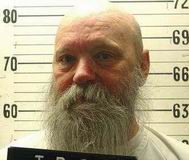
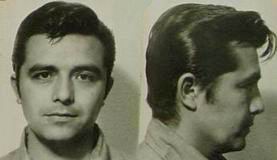
Oscar Franklin Smith
Murderer Brian Kevin Rosenfeld
Murderer · USA · 1985
Brian Kevin Rosenfeld Brian Kevin Rosenfeld was sentenced to three concurrent l…
23 victims
Brian Kevin Rosenfeld
Murderer · USA · 1985
Brian Kevin Rosenfeld Brian Kevin Rosenfeld was sentenced to three concurrent l…
23 victims
 Yahweh ben Yahweh
Murderer · USA · 1980
Yahweh ben Yahweh was born and legally named Hulon Mitchell Jr. (October 27, 19…
23 victims
Yahweh ben Yahweh
Murderer · USA · 1980
Yahweh ben Yahweh was born and legally named Hulon Mitchell Jr. (October 27, 19…
23 victims
 Russell Ellwood
Murderer · USA · 1991
Russell Ellwood was a former taxi driver. Authorities suspected him of killing…
20 victims
Russell Ellwood
Murderer · USA · 1991
Russell Ellwood was a former taxi driver. Authorities suspected him of killing…
20 victims
 Robert Martines Perez
Murderer · USA · 1994
Name: Robert Martines Perez · Other name used in proceedings: Robert Martinez P…
15 victims
Robert Martines Perez
Murderer · USA · 1994
Name: Robert Martines Perez · Other name used in proceedings: Robert Martinez P…
15 victims
 Peter Contos
Murderer · USA · 1997
Peter Contos was convicted on three indictments charging murder in the first de…
3 victims
Peter Contos
Murderer · USA · 1997
Peter Contos was convicted on three indictments charging murder in the first de…
3 victims
 William Robert Jones
Murderer · USA · 1986
William Robert Jones was executed by lethal injection in Missouri on November 2…
1 victim
William Robert Jones
Murderer · USA · 1986
William Robert Jones was executed by lethal injection in Missouri on November 2…
1 victim
 Joseph Albert Guay
Mass murderer · In the Air - Canada · 1949
Joseph Albert Guay (born 1917) was a resident of Quebec City who was responsibl…
23 victims
Joseph Albert Guay
Mass murderer · In the Air - Canada · 1949
Joseph Albert Guay (born 1917) was a resident of Quebec City who was responsibl…
23 victims
- Gender
- male
- Country
- USA
- Location
- Davidson County, Tennessee, USA
- Date of birth
- March 25, 1950
- Age at first offence
- 39
- Characteristics
- parricide, torture
- Victim profile
- H is estranged wife, Judy Robirds Smith, 35, and her sons, Jason and Chad Burnett, 13 and 16
- Method of murder
- Stabbing with knife - Shooting
- Date(s) of murder
- October 1, 1989
- Years active
- 1989
- Date of arrest
- November 6, 1989
- Status
-
Sentenced to death
Sentenced to death on July 26, 1990
Case record: Oscar Franklin Smith
Parties
Oscar Franklin (Frank) Smith was the defendant. He was sentenced to death by a Davidson County jury in 1990.
The victims were his estranged wife, Judith (Judy) Lynn Smith, age 35, and her two sons by a previous marriage: Chad Burnett, age 16, and Jason Burnett, age 13.
Timeline
- August 8, 1985 — Oscar Franklin Smith and Judy Smith were married.
- December 1986 — Judy and Frank Smith had twin boys, Chris and Casey.
- June 1989 — The Smiths separated, and a divorce action was pending at the time of the murders.
- June 17, 1989 — A warrant issued charging Oscar Smith with aggravated assault of Jason Burnett.
- August 1, 1989 — A warrant issued charging Oscar Smith with aggravated assault of Judy Smith.
- August 1989 — Judy returned to the trailer to retrieve clothes; Smith tied her up, raped her, ran a knife across her throat, and told her he was going to kill her.
- October 1, 1989 — A 911 emergency call was received at approximately 11:20 p.m. from 324 Lutie Street, Judy Smith’s home.
- October 2, 1989 — The bodies of Judy, Jason, and Chad were discovered at 3:00 p.m.; officers dispatched to the scene on October 1 left after determining it was a false call.
- April 1983 — Smith was hospitalized for depression.
- November 6, 1989 — Smith was charged with the crime over a month after an interview.
- November 18, 1993 — Supreme Court of Tennessee opinion issued: STATE OF TENNESSEE v. OSCAR FRANKLIN SMITH, Defendant-Appellant.
- October 13, 1991 — Law enforcement conducted a search of Smith’s residence pursuant to a search warrant.
- July 26, 1990 — Smith was sentenced to death.
- February 23, 1994 — The death sentence would be carried out unless otherwise ordered by the court or other proper authority.
The offence
The jury found Smith guilty of the triple murders of his estranged wife and her two sons by a previous marriage.
The jury found Smith guilty of:
- The premeditated first degree murder of Judy Smith.
- The premeditated first degree murder of Chad Burnett.
- The premeditated first degree murder of Jason Burnett.
Evidence described the killings as brutal and violent. Judy Smith’s body was found on a bed in the front bedroom with blood splattered on the panelled wall next to the bed. The record described that Judy had been shot in the left arm and the neck, with the neck wound fired from a range within two feet and severing her spinal cord, producing instant paralysis, rapid unconsciousness, and death; shortly after death her neck had been slashed, and she had been stabbed with a knife and with a weapon resembling an awl or ice pick. The medical examiner opined that both Judy and Chad had died from multiple gunshot and stab wounds.
Chad Burnett’s body was found lying face up on the kitchen floor. The room was described as a wreck with the phone ripped off the wall and large quantities of blood on the floor and wall. An awl was found in the room. The record described that Chad had been shot three times (right shoulder, upper chest, and inside left eyebrow), with the last two wounds being contact wounds and fatal. The record further described he had been stabbed several times in his chest, back and abdomen with a sharp needle-like weapon (such as an ice pick or awl) and with a knife; his neck had been slashed and he had defensive wounds on his hands. The record stated that all injuries had occurred before death. The medical examiner opined Chad had died from multiple gunshot and stab wounds.
Jason Burnett’s body was found lying on his left side on the floor at the foot of the bed on which his mother lay. The record stated he had not been shot. It described numerous defensive wounds on his hands, his neck being slashed, and his being stabbed in the chest and abdomen, with two wounds to the abdomen being fatal because they cut major veins; the small bowel protruded from his body through these wounds. The record stated all of Jason’s injuries occurred before death and that he bled to death over several minutes as a result of the multiple stab wounds.
The record stated there were no signs of forcible entry into the house, and that the back door had been left open. It also described signs of a struggle, particularly in the kitchen, where a leg had been broken off the table. A .22 caliber cartridge was found on the rug in the den. An identical type of bullet was removed from the bodies of Judy and Chad; ballistics experts determined Judy and Chad had been shot with the same gun. Bullet holes were described in the walls of the front bedroom and the den, and a path of splattered blood was described leading from the den down the hall to the kitchen. Drops of blood in the bathroom indicated someone had cleaned up in that room.
The record stated the killings occurred at approximately 11:20 p.m. on Sunday, October 1, 1989.
Investigation
A key piece of evidence was a recording of a 911 call. On the tape, later technically enhanced and played at trial, a young male voice identified at trial as that of Jason Burnett cried, "Help me!" In the background another male identified as Chad Burnett shouted, "Frank, no. God, help me!" The call ended abruptly with Jason stating "324 Lutie Street."
Officers dispatched to the scene arrived five minutes later. They knocked on the front door and received no answer. Everything appeared quiet, and the officers assessed the situation as a "false call" and left. Bodies were discovered at 3:00 p.m. the next day.
When police first entered Judy Smith’s house, they found a bloody palm print on the sheet beside Judy’s body. A latent fingerprint examiner testified that it matched the palm print of Smith’s left hand, and it had been missing the two middle fingers.
Other circumstantial evidence described included:
- A brown cotton work glove found in the front bedroom resembling gloves Smith used in his work.
- Smith’s ownership of a .22 caliber revolver and his being known to carry a large knife.
- Smith’s craft of leatherworking, in which an awl is used to punch holes or mark guidelines in leather.
The record also addressed evidence regarding life insurance:
- In March 1989, Smith took out a life insurance policy with American General on Judy for $20,000 and the boys for $10,000 each.
- In February 1989, Smith took out a $20,000 policy on Judy and insured the boys for $5,000 each with Liberty National.
- Smith earlier took out a policy on Judy for $10,000 and the boys for $4,000 each with United Insurance. The record stated Smith was beneficiary of $88,000 of life insurance on the lives of Judy and her two sons.
Prior incidents and threats
Testimony described that Judy Smith, Chad and Jason were afraid of the defendant.
The record described a June 1989 fight at the defendant’s trailer on his family’s farm in Pleasant View, Tennessee. The record described that Smith had bitten Jason on the back and held a gun to his head, ordered Judy and the older boys out of the trailer, and threatened to kill Judy if she tried to take the car or the twins or if she took out a warrant or notified the police.
In August 1989, when Judy returned to retrieve clothes, the record stated Smith had tied her up, raped her, ran a knife across her throat and told her he was going to kill her.
The record described threats made by phone in summer 1989 at the Waffle House where Judy worked:
- A fellow employee testified that Smith threatened to kill Judy during numerous phone calls at Judy’s request.
- The record stated he told Judy he would shoot her and stab her.
- The record stated he threatened to kill Chad and Jason because "she was better to them than . . . she was his twins."
- The record stated the last of these calls occurred in August 1989.
The record also described statements made when Smith was picking up the twins for visitation two or three weeks before the murders, including:
- Smith told Judy’s father, "You tell Judy that I've been playing with her with kid gloves, but now the gloves are coming off."
- Smith also said he would kill Judy if she ever left him.
A co-worker at Maintenance Service Corporation in Lavergne testified that in early summer 1988 Smith offered to kill his wife if in turn the co-worker would kill Judy. Two weeks later the co-worker testified Smith said they could plan the killings so each man would be out of town when the other killed his wife. One month before Judy and her sons were killed, the record stated Smith asked another co-worker if he knew anyone who would kill Smith’s family. Two weeks later Smith told the same co-worker he would offer $20,000 to have someone kill Judy and his two stepsons, and the record stated Smith specified that his twins were not to be killed.
Arrest and interviews
The record described an early investigation on October 2, 1989, involving Detective Mike Smith of the Metropolitan Police Department and Detective Don Bennett, and it described steps taken to locate Smith and ascertain the whereabouts of the twins and information about Judy Smith’s activities over the past few days.
Around 4:30-5:00 p.m., Bennett and two other officers drove to Smith’s home, where they saw Smith and his family standing in the front yard. Upon verifying the twins were with Smith, Bennett informed him Metro officers were coming to Springfield to talk with him and requested Smith ride with him to the interstate a short distance away to talk with Nashville police.
The record stated Bennett told Smith "on the front end" that Smith was not under arrest and that the officers "needed to talk with him." Bennett testified that if Smith refused to accompany him, he would have been allowed to go. At the suppression hearing, Smith acknowledged he knew he was not under arrest or in custody and voluntarily got into the back of one of the sheriff’s cars.
At 7:10 p.m., they met Detectives E. J. Bernard and Mike Smith. It was decided Metro officers would talk with Smith at the offices of the Detective Division of the Sheriff’s Department in Springfield. The record stated Smith agreed to talk with officers in Springfield rather than at the interchange.
Officers arrived at the Detective Division around 7:25 p.m. Smith was interviewed by Smith and Bernard in a private office. Detective Smith testified that he did not give Smith Miranda warnings because "he wasn't in custody at the time." Smith testified that Smith was not a suspect, only being interviewed to verify whereabouts of himself and his twins, and that if Smith had asked at any time to leave, he would have been taken home. The record stated Smith was calm and cooperative and agreed to talk for about thirty-five minutes, and he signed a form giving consent to search his house and vehicle. The record stated detectives did not inform Smith of the deaths of his wife and stepsons until late in the interview. Questioning was terminated when Smith asked to talk with an attorney, and Smith was allowed to return home about 8:30 p.m. The record stated Smith was not charged until November 6, 1989.
The record also described that when picked up for interview by law enforcement officers on the evening of October 2, Smith did not ask why he was being questioned and spoke of his wife in the past tense before being told of her death. When told of the deaths, Smith asked no questions and displayed little emotion; officers noticed abrasions on his hand, elbow, back and shoulder blade.
Trial
Conviction
A Davidson County jury found Smith guilty of the triple murders of his estranged wife Judy Smith and her two sons, Jason Burnett and Chad Burnett.
The jury found:
- Two aggravating circumstances in the premeditated first degree murder of Judy Smith.
- Four aggravating circumstances in the premeditated first degree murders of Chad and Jason Burnett. The jury sentenced Smith to death on the murder counts for all three victims.
Alleged trial errors raised on appeal
Smith asserted 20 errors made by the trial court, including:
- sufficiency of the convicting evidence;
- sufficiency of the evidence of the four aggravating circumstances;
- admission of testimony regarding the "alternative light source" technique of fingerprint identification;
- admission of the tape recordings and purported transcript of a 911 emergency telephone call allegedly made from the victim’s residence just prior to the murders.
Defendant’s account
Smith testified to an alibi defense through his testimony and witnesses. He said that on October 1, 1989, he drove to Nashville and met Judy, Chad, Jason and the twins for breakfast at Shoney’s restaurant. After breakfast they went to the Lutie Street residence where Chad and Jason babysat the twins while Smith and Judy looked for a used car for Judy. Smith testified they later ate dinner at the Gold Rush restaurant and stopped for coffee at another Waffle House at I-24 and Harding Place until 9:30 p.m. The record stated that Chad and Jason came out to Smith’s car with the twins; Smith drove the twins back to his home in Pleasant View about 31 miles from Judy’s home.
The record stated Judy called her sister about 10:30 p.m. and told her that Frank had taken the twins so that he could watch them the next day to give her time to look for a car.
A witness—the son-in-law of Judy Smith’s neighbor at 318 Lutie Street—testified he saw Smith’s white LTD parked at Judy’s house around 11:00 or 11:15 that night.
Smith testified that he had to travel for his work the next day and that his employer instructed him to leave Monday morning, but he requested permission to leave Sunday, stay overnight, then go to the customer’s plant. The record stated that sometime during the early morning hours of Monday, October 2, Smith made a 260-300 mile trip to Morehead in his white LTD, repaired the machine at the customer’s plant at 8:00 EST on Monday, and returned to Pleasant View that afternoon.
When interviewed on October 2, the record stated Smith asked no questions once he learned of the deaths and displayed little emotion. Smith’s defense witnesses testified he had been at his home in Pleasant View from 10:00 until 11:15 p.m., then drove directly to Morehead, Kentucky. Smith testified he suffered abrasions when his dog jumped on him upon his return home Monday afternoon.
Smith denied committing the murders, threatening his wife, and assaulting Judy and Jason. He claimed he was being framed and insisted he and his wife were reconciling. Smith and witnesses denied he owned an awl, a .22 caliber revolver, or a knife large enough to have caused the victims’ wounds. He denied trying to hire someone to kill his wife and said he had no idea how the bloody palm print missing two fingers came to be on the sheet next to Judy’s body. He denied being at Judy Smith’s residence on Lutie Street at 11:22 p.m. on October 1, 1989.
State’s theory
The State’s theory stated Smith planned the homicides. It described a plan in which he left the twins with his mother around 10:30 p.m., made the thirty minute drive back to Judy’s home, committed the killings, and then drove to Morehead, Kentucky.
The jury rejected Smith’s alibi and found him guilty of three counts of premeditated first degree murder.
Sentencing
At sentencing, the State presented records of the three murder convictions, photographs of Chad and Jason Burnett’s bodies, and the testimony of the assistant Davidson County Medical Examiner concerning the suffering of the victims. Smith presented personnel and an inmate from the Davidson County Jail, where he had been incarcerated since his arrest, to testify he had been a good prisoner. Several co-workers testified he was a good employee. Smith’s mother and his daughter from a previous marriage testified about his character and the fact he had a severely retarded teenage son who depended emotionally on him.
The record described evidence that Smith had suffered a "nervous breakdown" while on a business trip to Utah in the past and had been hospitalized for depression in April 1983. The psychiatrist who treated him testified Smith exhibited symptoms of paranoia or hypervigilance and had an adjustment reaction. Dr. Gillian Blair, a clinical psychologist, evaluated Smith in November 1989 and diagnosed him as suffering from a paranoid personality disorder, chronic depressive neurosis and a paranoid delusional disorder; she described his family as dysfunctional and stated his father was a diagnosed paranoid schizophrenic. Dr. Blair felt Smith would pose no danger in the highly structured environment of prison.
In rebuttal, the State presented testimony of Dr. Leonard Morgan, a clinical psychologist from the Dede Wallace Center, who examined Smith to determine his competency to stand trial. Dr. Morgan opined Smith was not suffering from any mental illness, only personality disorder, and was not delusional. He stated Smith told him he did not want to use an insanity defense because he would have trouble later getting a home loan.
The jury imposed the death penalty on each of the three murder convictions.
Appeals
Smith appealed to the Supreme Court of Tennessee.
Sufficiency of the evidence
The Supreme Court stated it found no merit to Smith’s challenge to the sufficiency of the evidence. The court stated the jury rejected Smith’s alibi story and chose to believe a disinterested witness who identified Smith’s car in Judy Smith’s driveway around 11:00 or 11:15. The court described that witnesses identified voices on the 911 emergency call at 11:22 p.m. as that of Jason Burnett crying "Help me!" and that of his older brother Chad shouting "Frank, no. God, help me!" and that the call ended abruptly with Jason stating "324 Lutie Street." The court described the bloody palm print found on the sheet beside Judy’s body and said it matched Smith’s left hand with two middle fingers missing. It also stated evidence showed Smith had threatened the victims prior to the murders.
Admission of Smith’s statement
The court addressed Smith’s argument that his statement to police should have been suppressed due to failure to advise him of constitutional rights under Miranda v. Arizona. The court described the trial court’s finding that Miranda did not apply because Smith was not in custody and officers were making a general preliminary investigation. The Supreme Court found the trial court did not err in refusing to suppress the statement.
The court also addressed Smith’s argument regarding Detective Bernard’s testimony at trial about the substance of Smith’s statement and found the trial court did not err in allowing Bernard to testify and that the record did not show rights violations.
Search of Smith’s residence
The court addressed Smith’s argument that the trial court erred in denying his motion to suppress evidence from a search of his residence pursuant to a search warrant conducted on October 13, 1991. The court addressed and rejected arguments including:
- probable cause and nexus between crimes, evidence sought, and the place to be searched;
- particularity regarding Smith’s address and his father’s birth date error;
- authority for execution of the warrant in Robertson County.
The Supreme Court concluded the trial court correctly held the search warrant was validly executed.
Victim fear testimony
The court addressed Smith’s challenge to testimony by Don Robirds, Teresa Zastrow, and Billy Fields that Judy Smith expressed fear of Smith during their separation. The court stated that the evidence was admissible to show the declarant’s state of mind under the state of mind hearsay exception, but it also stated Judy’s state of mind was not directly probative on whether Smith murdered her and her sons. The court found any error in admission harmless beyond a reasonable doubt.
Prior assaults evidence as excited utterances
The court addressed testimony by Teresa Zastrow describing what Judy told her about arguments, a fight, assault, threats, rape, and stabbing events during separation and afterward. The court described these statements as admitted as excited utterances under Tenn. R. Evid. 803(2). It stated the trial court did not err in concluding Judy was under the stress of excitement when she made the statements. The court also addressed relevance and Tenn. R. Evid. 404(b) and concluded the evidence was admissible to show motive for the killings, not merely character.
Other hearsay and evidence about threats
The court addressed Billy Fields’s testimony that Judy told him not to come by her house on Sunday because she was afraid his being there might cause a conflict; it found the statement admissible and relevant to show Judy’s plans for Sunday and explain why Fields did not see her that day.
The court also addressed testimony by Sheila Gunther about Judy’s future plans and Gunther’s testimony that Smith threatened the victims in numerous phone calls in summer 1989. The court concluded any error was harmless regarding one piece of evidence and found the threats relevant to show malice, premeditation and Smith’s state of mind.
Photographs
The court addressed Smith’s arguments about admission of photographs at the guilt-innocence and sentencing phases. It found no error in admitting four photographs at the guilt phase and found no abuse of discretion in admitting color photographs at the sentencing phase used to illustrate Dr. Harlan’s testimony and related to torture/depravity.
Fingerprint alternate light source
The court addressed Smith’s challenge to admission of testimony by Sgt. Johnny Hunter regarding an "alternate light source technique" used to identify the palm print found on the sheet. The court described how the alternate light source works and found it was a tool used to make fingerprints clearer for examination and comparison. It found the trial court did not err under Tenn. R. Evid. 702 and 703.
911 tape and transcript
The court addressed the admissibility of the 911 tape recording and transcript. It found the tape and transcript were admissible, and it addressed disputes about what was heard and the enhancement process by the FBI. The court stated the trial court instructed the jury that the tape, not the transcript, was evidence, and that if discrepancies were found, jurors should rely on hearing and understanding of the tape and disregard inaccurate transcript portions.
Aggravating circumstances and constitutionality
The Supreme Court addressed multiple arguments about statutory aggravating circumstances and the application of the death penalty, including:
- aggravating circumstance of especially heinous, atrocious or cruel in that it involved torture or depravity of mind (T.C.A. § 39-2-203(i)(5) (1982));
- aggravating circumstance of murder to avoid or prevent lawful arrest or prosecution (T.C.A. § 39-2-203(i)(6) (1982));
- aggravating circumstance that murders occurred while defendant was engaged in commission of the murder of Judy Smith (T.C.A. § 39-2-203(i)(7) (1982));
- the mass murder aggravating circumstance (T.C.A. § 39-2-203(i)(12) (1982));
- constitutionality challenges to Tennessee’s death penalty statute.
The court concluded it found no error in the guilt phase or sentencing phase and affirmed the death sentence.
Outcome
The Supreme Court of Tennessee affirmed the conviction and death sentence.
The court stated:
- it found the sentence of death was not imposed in an arbitrary fashion;
- the evidence supported the jury’s findings of the statutory aggravating circumstances;
- the evidence supported the jury’s finding of the absence of any mitigating circumstances sufficiently substantial to outweigh the aggravating circumstances so found;
- comparative proportionality review found the death sentence was neither excessive nor disproportionate to the penalty imposed in similar cases.
The court stated the sentence of death would be carried out as provided by law on the 23rd day of February, 1994, unless otherwise ordered by the court or other proper authority. Costs were adjudged against the defendant.
Other details
Insults about "McDonald's Massacre" remark
The court addressed Smith’s argument about admission of his alleged comment concerning the "McDonald's Massacre" in California. Clinton Curtis testified that during a break around nine o’clock he and Smith discussed banning automatic weapons, that Curtis remarked incidents like that in California where a man shot a number of people in a McDonald's restaurant, and that Smith remarked in response "that you never know when one of us could snap and do something like that." The court found any error harmless.
Meat packing plant cross-examination
The court addressed allowing cross-examination about Smith’s prior employment in a meat packing plant. It described Smith’s duties in a processing room or killing room, cutting usable parts of animals and separating diaphragm, liver, and kidneys, including intestinal parts and stomach contents. The court stated the evidence was relevant because Jason’s intestines were pulled from his body and found any prejudice from one use of the phrase "killing room" harmless.
Jury and justices
The opinion recorded concurrence and separate opinions:
- FRANK F. DROWOTA, III, JUSTICE; Concur: O'Brien and Anderson, JJ.
- Reid, C.J. (separate concurring opinion).
- Daughtrey, J. (separate concurring opinion).
The concurring opinions addressed issues including torture/depravity, mass murder aggravator concerns, and comparative proportionality.
Insanity defense comment
During the sentencing evidence, Dr. Leonard Morgan testified Smith told him he did not want to use an insanity defense because he would have trouble later getting a home loan.
Spotted an error, or have more information about this case?