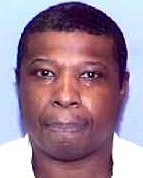
Denard Manns
Murderer Russell Ellwood
Murderer · USA · 1991
Russell Ellwood was a former taxi driver. Authorities suspected him of killing…
20 victims
Russell Ellwood
Murderer · USA · 1991
Russell Ellwood was a former taxi driver. Authorities suspected him of killing…
20 victims
 Robert Martines Perez
Murderer · USA · 1994
Name: Robert Martines Perez · Other name used in proceedings: Robert Martinez P…
15 victims
Robert Martines Perez
Murderer · USA · 1994
Name: Robert Martines Perez · Other name used in proceedings: Robert Martinez P…
15 victims
 Billy Frank Vickers
Murderer · USA · 1993
Billy Frank Vickers Vickers was executed by lethal injection in Texas on Januar…
14 victims
Billy Frank Vickers
Murderer · USA · 1993
Billy Frank Vickers Vickers was executed by lethal injection in Texas on Januar…
14 victims
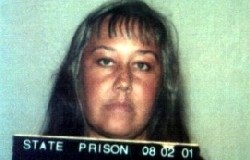 Sandi Nieves
Mass murderer · USA · 1998
Sandi Dawn Nieves was convicted of first-degree murders of four of her children…
4 victims
Sandi Nieves
Mass murderer · USA · 1998
Sandi Dawn Nieves was convicted of first-degree murders of four of her children…
4 victims
 Joseph Wesbecker
Mass murderer · USA · 1989
Joseph Wesbecker committed suicide by shooting himself on September 14, 1989, a…
8 victims
Joseph Wesbecker
Mass murderer · USA · 1989
Joseph Wesbecker committed suicide by shooting himself on September 14, 1989, a…
8 victims
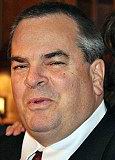 Albert Peterson
Murderer · USA · 2012
Albert Peterson shot dead his wife and two sons hours after going to church bec…
3 victims
Albert Peterson
Murderer · USA · 2012
Albert Peterson shot dead his wife and two sons hours after going to church bec…
3 victims
 Andrew Yellowbear
Murderer · USA · 2004
Andrew John Yellowbear Jr. (born September 5, 1974) was the defendant in a Wyom…
1 victim
Andrew Yellowbear
Murderer · USA · 2004
Andrew John Yellowbear Jr. (born September 5, 1974) was the defendant in a Wyom…
1 victim
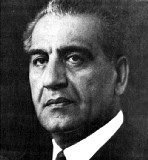 Gourgen Yanikian
Murderer · USA · 1973
Gourgen Mkrtich (Megerdich) Yanikian was an Armenian author, engineer, and an A…
2 victims
Gourgen Yanikian
Murderer · USA · 1973
Gourgen Mkrtich (Megerdich) Yanikian was an Armenian author, engineer, and an A…
2 victims
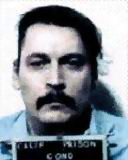 Dean Phillip Carter
Spree killer · USA · 1984
Dean Phillip Carter was sentenced to death in 1985. He was an inmate at San Que…
5 victims
Dean Phillip Carter
Spree killer · USA · 1984
Dean Phillip Carter was sentenced to death in 1985. He was an inmate at San Que…
5 victims
- Gender
- male
- Country
- USA
- Location
- Bell County, Texas, USA
- Date of birth
- December 22, 1965
- Age at first offence
- 33
- Characteristics
- rape, robbery, armed robbery, drug addict, abuse
- Victim profile
- Michelle Robson (female, 26)
- Method of murder
- Shooting (.22 caliber gun)
- Date(s) of murder
- November 18, 1998
- Years active
- 1998
- Date of arrest
- December 8, 1998
- Status
-
Executed
Executed by lethal injection in Texas on November 13, 2008
Case record: Denard Manns
Timeline
- 1998-11-18 — Denard Manns entered the home of Michelle Robson in Killeen and sexually assaulted her, then shot her in the head and chest, resulting in her death; he took credit cards and cash and fled in her vehicle.
- 1998-11-19 — Michelle Robson was found dead in a bathtub in her Killeen home; she had been shot five times with a .22 caliber gun.
- 1998-12-08 — Manns was arrested.
- 2000-01-21 — Manns entered a plea of not guilty.
- 2002-01-18 — The State’s motion to amend the indictment was granted.
- 2002-02-04 — Jury selection for Manns’ trial started.
- 2002-02-25 — The trial for Manns began.
- 2002-02-28 — The jury found Manns guilty.
- 2002-03-01 — Manns was sentenced to death by Judge Joe Carroll of the 27th District.
- 2002-05-07 — Manns filed a direct appeal raising six points of error.
- 2003-11-10 — Manns filed an application for state writ of habeas corpus.
- 2003-12-17 — The Texas Court of Criminal Appeals affirmed the conviction and sentence.
- 2004-01-12 — A mandate was issued from the Court of Criminal Appeals.
- 2004-07-14 — The convicting court recommended the denial of relief on his claims.
- 2004-09-29 — The Texas Court of Criminal Appeals denied relief.
- 2005-09-29 — Manns filed a federal habeas corpus petition in U.S. District Court.
- 2005-10-15 — Manns filed a supplemental Writ.
- 2005-12-01 — Manns filed a motion in district court to “extinguish” the writ.
- 2005-12-07 — Judge Smith denied Manns’ motion to extinguish.
- 2006-04-21 — The U.S. District Court dismissed the habeas petition.
- 2006-08-22 — The U.S. District Court denied a certificate of appealability.
- 2007-01-09 — Manns filed an application for COA in the Fifth U.S. Circuit Court of Appeals.
- 2007-06-04 — The Fifth Circuit Court affirmed the denial of habeas relief.
- 2007-06-12 — Trial Court Judge Joe Carroll set execution for Jan 24, 2008.
- 2007-07-06 — Manns petitioned the U.S. Supreme Court for certiorari review.
- 2007-09-25 — Certiorari granted in Baze v. Kentucky.
- 2008-01-07 — The U.S. Supreme Court denied certiorari review.
- 2008-04-16 — Baze decision held that lethal injection protocol is constitutional.
- 2008-08-13 — Execution date set for Nov. 13, 2008.
- 2008-11-13 — Manns was executed by lethal injection in Texas; he was pronounced dead at 6:24 p.m.
Background
Denard Sha Manns was a Black male. He was listed as 42 at the time of execution. He had been born in New York, New York. He had black hair and brown eyes, and was listed as 5' 09" and 230 pounds.
He worked as a barber and laborer and had 12 years of education.
Manns was previously imprisoned in New York. He incurred 17 disciplinary infractions during a two-year period of incarceration, and was disciplined fifteen times during a second period of incarceration.
While he was in the Bell County Jail awaiting trial for the robbery and murder of Michelle Robson, he swung his fist at a jailer during a routine search for contraband; when the jailer blocked the swing, Manns threatened to kill the jailer and threatened other officers. He was also disciplined for possessing a razor-sharp metal object hidden in his mattress.
The offence
On November 18, 1998, in Killeen, Manns entered the home of Michelle Robson, a 26-year-old white female. He sexually assaulted Robson and then shot her in the head and chest, resulting in her death.
On November 19, 1998, Robson was found dead in a bathtub in her Killeen home. She had been shot five times with a .22 caliber gun.
There was no sign of forced entry, and investigators treated this as indicating that the murderer likely was someone the victim knew.
After the shooting, Manns took credit cards and cash from the residence and fled in the victim's vehicle.
Robson was a U.S. Army Combat Medic with the 21st Combat Support Hospital at Fort Hood.
Robson was found wearing a black brassiere with semen stains on it. DNA testing showed that DNA from the semen stains matched Manns’ DNA.
Investigators believed the victim likely at least recognized her killer because there was no indication of a break-in at the apartment where she lived with her husband.
Manns was indicted in Texas state court for the November 1998 death of Michele Christine Robson. The indictment charged Manns with capital murder and alleged that Manns intentionally caused Christine’s death in the course of committing or attempting to commit robbery, kidnapping, and aggravated sexual assault.
In describing the physical evidence, the appellate decision stated that the victim suffered five gunshot wounds from a .22 caliber gun.
Investigation
Eric Williams owned a .22 caliber pistol. Eric Williams found a bullet on the floor in front of his dresser after a short time on November 18. He called Bamberg, who had no explanation for the bullet’s presence. A short time later, Manns arrived and told Williams that he had been at the residence earlier that day.
When Williams learned that Robson had been killed with a .22, he turned his gun over to the police.
A firearms expert determined that at least one of the bullets recovered from the victim's body was fired from Williams’ gun; the other bullets could not be excluded as having come from the gun.
Fingerprint testing revealed fingerprints from Williams and one fingerprint from Manns. No fingerprints from Bamberg were found on the gun.
Robson was found wearing a black brassiere with semen stains. The appellate decision stated that the probability of another person matching the DNA profile was one in 869,600,000,000 for black persons, and even lower for persons of Caucasian or Hispanic descent.
On November 19, Manns went to the residence of a friend, Barbara Feazell. Manns left a jacket at the home; Feazell later turned the jacket over to law enforcement investigators. In one of the pockets was a cigarette butt containing Manns’ DNA. A witness, Kellie Lynn Meyer, identified the jacket as belonging to the victim.
While Manns was at Feazell’s, several rings fell out of his pants pocket. One of these rings was turned over to the police. A Von Maur department store receipt showed that the victim purchased a ring with markings consistent with the ring that had been turned over.
The appellate decision also described incriminating statements made to a third party while awaiting parole-related proceedings. Richard Ray Broome was in the county jail awaiting parole revocation proceedings and was known as a “jail house lawyer.” Manns asked Broome for his opinion about the proceedings connected with this case. Manns told Broome that the government had a gun with his fingerprint on it and later clarified that the gun was a .22. Manns further said that the government had the gun that killed a woman but could not prove it because a .22 caliber bullet shatters when it hits the bone. Manns stated that the fact that the murder weapon was a .22 was not published in the media.
Later, Manns showed Broome a letter from Bamberg and said:
“This is the man that handed me to them on a silver platter after I shot the woman.”
Investigators believed Robson recognized her killer because there was no sign of forced entry.
The appellate decision also stated that Michelle Robson was found dead in a bathtub on November 19, 1998.
Arrest
Manns was arrested on December 8, 1998.
Trial
The procedural history recorded:
- 1998-11-18 — Manns raped, murdered and robbed Michele Robson.
- 1998-12-08 — Manns was arrested.
- 2002-03-01 — Manns was sentenced to death by Judge Joe Carroll of 27th District.
Appellate decision language stated that appellant was convicted in February 2002 of capital murder and that, pursuant to the jury's answers to punishment special issues, the trial judge sentenced appellant to death. It stated that direct appeal to the court was automatic.
The appellate decision noted appellant raised six points of error and that the court would affirm.
Factual sufficiency and evidence connecting Manns to the murder
The appellate decision described the evidence tying Manns to the murder as including:
- His proximity to the victim;
- His access to, and fingerprint on, the murder weapon;
- His DNA on the victim's brassiere;
- His possession of the victim's jacket;
- His possession of the victim's ring; and
- His admission of guilt to a third party.
The appellate decision stated that there was no sign of forced entry and that at one time appellant lived with his half-brother, Bamberg, and his cousin Eric Williams, who lived two doors down from the victim. It stated that the victim suffered five gunshot wounds from a .22 caliber gun, that Eric Williams owned a .22, and that both Bamberg and appellant knew where the gun was kept.
The appellate decision stated that about 8:30 or 9:00 in the evening on November 18 Williams found a bullet on the floor in front of his dresser, called Bamberg, and shortly thereafter appellant arrived and told Williams he had been at the residence earlier that day. It stated that when Williams learned the victim had been killed with a .22, he turned his gun over to the police, and that a firearms expert determined at least one bullet from the victim's body was fired from Williams's gun.
The appellate decision also addressed DNA evidence showing DNA from semen stains matched appellant's DNA and described a probability figure for matching the DNA profile.
Confession and statements to Broome
The appellate decision described the conversation with Broome and the statements given to him, including the .22 clarification and the comment about bullet shattering. It repeated Manns’ statement identifying Bamberg as the person who handed him to police:
Appellant’s testimony and the case against an alternative suspect
The appellate decision stated that appellant testified he did not commit the murder; he testified that he obtained the victim's jacket from an acquaintance who committed burglaries in the neighborhood; he testified that he obtained a film canister full of gold jewelry from a drug addict; and he testified that he had taken Williams's gun away from some of Bamberg's friends who were trying to shoot it. The appellate decision also stated that appellant testified he had never been inside the victim's apartment and had never had sex with her.
The appellate decision stated that the only contrary proof appellant pointed to was the suggestion that Bamberg committed the crime.
It described evidence that Bamberg had access to the murder weapon, that Bamberg's fingerprints were not found on it, that Bamberg's DNA might be similar though half-brother relationship meant half the DNA would come from a different source, and that Bamberg was not linked to the victim's jacket or ring and did not confess to a third party.
The appellate decision overruled point of error six and held the evidence was factually sufficient.
Broome’s testimony and Sixth Amendment issue
In point of error one, appellant complained that Broome's testimony violated his Sixth Amendment right to counsel because Broome was a state agent who deliberately elicited appellant's incriminating statements.
The appellate decision held there was no violation because Broome was not an agent of the State when he conversed with appellant about appellant's pending prosecution.
The appellate decision included background about Broome’s parole and convictions, including that Broome was on parole for unauthorized use of a motor vehicle, that his parole was revoked after being arrested for violating parole, that he was later convicted of possession of methamphetamine and sentenced to twelve years, that he was subsequently paroled, and that on September 2, 1999 he was arrested for driving while intoxicated (misdemeanor) and for a parole-violation warrant.
It stated that Broome began negotiating with the District Attorney's office and the Temple Police Department regarding information he claimed to possess regarding drug cases. It described arrangements for a meeting between Broome, an assistant district attorney, and members of the Temple Police Organized Crime Unit. It stated that Broome supplied some information but that he was not promised anything and was not asked to obtain any additional information.
The appellate decision stated a letter written by Broome dated February 3, 2000, in which Broome stated desired terms. It also recorded a set of conditions described in that letter:
- release him on the street,
- pay his attorney,
- pay him $500,
- reinstate his driver's license,
- give him clothes, and
- give him a say about whom he would testify against.
It stated none of these conditions were met.
The appellate decision described that during February and March of 2000 Broome shared a cell with appellant; Broome was brought to the District Attorney’s office on February 24; and Curry was given the task of taking Broome’s statement.
It described testimony that Curry made no promises or offers and that Curry did not ask Broome to elicit any more information. It described an admonition given to inmates with pending cases to contact the District Attorney's office through their attorney if they needed further contact.
It recorded that misunderstanding occurred about whether the February 24th interview had been authorized by Broome’s attorney. It stated that Broome then wrote a letter to Curry complaining Curry had misled him. In the letter, Broome further stated:
“Also, the information you requested me to obtain I have.”
The appellate decision stated Broome explained at trial that this statement was a lie and that he made it because he was mad and because he had read a case in the law library that held “if you were asked to do this then they couldn't use you to testify.” The appellate decision also recorded that Broome had written the number of the case on the front of the envelope containing the letter.
Sentencing
On March 1, 2002, Manns was sentenced to death by Judge Joe Carroll of the 27th District.
The reporting also stated that after conviction, Manns refused to appear in court at the punishment phase of his trial. One of his trial attorneys, Frank Holbrook, recalled:
“He said he didn't want to.” “He was taking a nap.” “He was a very unusual person.”
Appeals
Manns filed a direct appeal raising six points of error on May 7, 2003.
A state writ of habeas corpus application was filed on November 10, 2003.
The Texas Court of Criminal Appeals affirmed the conviction and sentence on December 17, 2003.
A mandate was issued January 12, 2004. The convicting court recommended denial of relief on July 14, 2004. The Texas Court of Criminal Appeals denied relief on September 29, 2004.
Manns filed a federal habeas corpus petition in U.S. District Court on September 29, 2005 and a supplemental Writ on October 15, 2005.
Manns filed a motion in district court to “extinguish” the writ on December 1, 2005. Judge Smith denied the motion on December 7, 2005.
The U.S. District Court dismissed the habeas petition on April 21, 2006, and denied a certificate of appealability on August 22, 2006.
Manns filed an application for a COA in the Fifth U.S. Circuit Court of Appeals on January 9, 2007. The Fifth Circuit Court affirmed the denial of habeas relief on June 4, 2007.
Manns petitioned the U.S. Supreme Court for certiorari review on July 6, 2007. Certiorari was granted in Baze v. Kentucky on September 25, 2007, and the U.S. Supreme Court denied certiorari review on January 7, 2008.
Outcome
Manns was executed by lethal injection in Texas on November 13, 2008.
The reporting recorded:
- he was pronounced dead at 6:24 p.m.;
- he uttered a prayer three times and made a statement that appeared to be:
- he criticized his trial attorneys for what he said was an unfair trial and criticized an appeals lawyer for "purposely bringing up claims that did not exist," and thanked another lawyer for taking on his appeal after he was supposed to be off the case,
- he said:
“I'm ready for the transition.”
“From Allah he came and from Allah he shall return,”
Before the execution, he was described as not having last-day appeals and as having had a petition to the Texas Board of Pardons and Paroles refused.
He made a statement to the Associated Press when asked if he knew who committed the murder:
“That's not for me to discuss. Police get paid to ask those questions and find out. I would never tell them.”
He also said in another interview from death row:
“I know for a fact they weren't going to give me a fair break anyway,” and he disputed DNA evidence saying: “That's impossible. It can't be mine.”
He also told the Associated Press from death row when asked who he thought committed the murder:
“That's not for me to discuss. People get paid to ask those questions and find out. I would never tell them.”
In his last statement, he said: and he repeated it as the lethal drugs entered his body.
Other details
People and relationships mentioned
- Michelle Robson (also referred to as Michele Christine Robson), victim; 26-year-old U.S. Army Combat Medic.
- Denard Sha Manns, defendant.
- Eric Williams, cousin of Manns and owner of a .22-caliber pistol.
- Bamberg, Manns’ half-brother and one of the earlier suspects discussed in the appellate opinion (named as Bamberg in the appellate reasoning).
- Clay Wellenstein, Robson’s husband.
- Tina Rorabaugh, Robson’s childhood friend.
- Frank Holbrook, one of Manns’ trial attorneys.
- Murff Bledsoe, Bell County prosecutor who handled the case.
- Barbara Feazell, friend of Manns’ where Manns left a jacket.
- Kellie Lynn Meyer, friend of the victim who identified the jacket as belonging to the victim.
- Richard Ray Broome, jail house lawyer in the county jail; third-party who testified about statements by Manns.
Criminal history and punishment evidence
The procedural history and reporting also described a criminal history in New York including that:
- Manns was indicted in 1992 in the Bronx for fifteen counts of robbery and pled guilty to two counts.
- Manns admitted to robbing about ten people.
- Manns had prior convictions for disorderly conduct, attempted criminal mischief, criminal mischief, petty larceny, possession of a controlled substance (twice), unauthorized use of a motor vehicle, two counts of attempted robbery, and three counts of robbery.
- He was imprisoned twice in New York; during the first period of incarceration for two years he incurred 17 disciplinary infractions, and during the second period he was disciplined fifteen times.
- He was paroled in 1998 after being released from a five- to 10-year sentence for armed robbery.
The reporting stated that while Manns was in the Bell County Jail, he threatened to kill a jailer during a routine contraband search and threatened other officers, and that he possessed a razor-sharp metal object hidden in his mattress.
Spotted an error, or have more information about this case?