
Fletcher Mann
Murderer Ervil LeBaron
Murderer · USA · 1972
Ervil Morrell LeBaron (1925 to August 16, 1981) was the leader of a polygamous…
35 victims
Ervil LeBaron
Murderer · USA · 1972
Ervil Morrell LeBaron (1925 to August 16, 1981) was the leader of a polygamous…
35 victims
 Brian Kevin Rosenfeld
Murderer · USA · 1985
Brian Kevin Rosenfeld Brian Kevin Rosenfeld was sentenced to three concurrent l…
23 victims
Brian Kevin Rosenfeld
Murderer · USA · 1985
Brian Kevin Rosenfeld Brian Kevin Rosenfeld was sentenced to three concurrent l…
23 victims
 Marvin Gray
Murderer · USA · 1975
Marvin Gray was convicted killer who claimed responsibility for 23 slayings and…
23 victims
Marvin Gray
Murderer · USA · 1975
Marvin Gray was convicted killer who claimed responsibility for 23 slayings and…
23 victims
 Yahweh ben Yahweh
Murderer · USA · 1980
Yahweh ben Yahweh was born and legally named Hulon Mitchell Jr. (October 27, 19…
23 victims
Yahweh ben Yahweh
Murderer · USA · 1980
Yahweh ben Yahweh was born and legally named Hulon Mitchell Jr. (October 27, 19…
23 victims
 Mark Howard McClain
Murderer · USA · 1994
Mark Howard McClain was a white male. He was known by the aliases “A.K.A. MALAC…
1 victim
Mark Howard McClain
Murderer · USA · 1994
Mark Howard McClain was a white male. He was known by the aliases “A.K.A. MALAC…
1 victim
 William Hare
Serial killer · United Kingdom · 1827
William Hare and Brendan “Dynes” Burke committed serial murders in Edinburgh, S…
17 victims
William Hare
Serial killer · United Kingdom · 1827
William Hare and Brendan “Dynes” Burke committed serial murders in Edinburgh, S…
17 victims
 Maxim Petrov
Serial killer · Russia · 1999
Maxim Vladimirovich Petrov (born 1966) (Russian: Максим Петров) was a Russian d…
19 victims
Maxim Petrov
Serial killer · Russia · 1999
Maxim Vladimirovich Petrov (born 1966) (Russian: Максим Петров) was a Russian d…
19 victims
 Yvette Taylor
Murderer · USA · 2012
Yvette Taylor was a Martinez, Georgia woman. She was the roommate of Theodore C…
1 victim
Yvette Taylor
Murderer · USA · 2012
Yvette Taylor was a Martinez, Georgia woman. She was the roommate of Theodore C…
1 victim
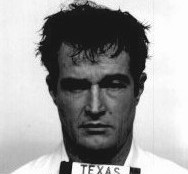 Thomas Andy Barefoot
Murderer · USA · 1978
Thomas Andy Barefoot (offender; also identified as Thomas Barefoot #621) was ex…
1 victim
Thomas Andy Barefoot
Murderer · USA · 1978
Thomas Andy Barefoot (offender; also identified as Thomas Barefoot #621) was ex…
1 victim
 Russell Williams
Murderer · Canada · 2009
Russell Williams (born March 7, 1963) was convicted murderer and rapist and a f…
2 victims
Russell Williams
Murderer · Canada · 2009
Russell Williams (born March 7, 1963) was convicted murderer and rapist and a f…
2 victims
- Gender
- male
- Country
- USA
- Location
- Dallas County, Texas, USA
- Date of birth
- April 7, 1961
- Age at first offence
- 19
- Characteristics
- robbery, rape, drugs
- Victim profile
- Christopher Lee Bates, 22, and Barbara Hoppe, 22
- Method of murder
- Shooting - Strangulation
- Date(s) of murder
- September 11, 1980
- Years active
- 1980
- Date of arrest
- —
- Status
-
Sentenced to death
Executed by lethal injection in Texas on June 1, 1995; Texas death sentence was affirmed on appeal in the federal habeas corpus proceeding (Fletcher Thomas Mann, Petitioner-Appellant, v. Wayne Scott, Director Texas Department of Criminal Justice, Institutional Division, Respondent-Appellee).
Case record: Fletcher Mann
Status
Fletcher Thomas Mann was executed by lethal injection in Texas on June 1, 1995.
Background
Fletcher Thomas Mann was a Texas death row inmate convicted of capital murder. He was identified as “Mann, Fletcher Thomas #705.” At the time of his execution, he was 34.
Mann’s jury convicted him in one hour and sentenced him to death in two hours.
Mann’s defense attorneys called no witnesses for him.
Mann expressed admiration for Charles Manson while bragging about the killings to other inmates on death row.
Mann and his attorneys made attempts through the appeals process to keep him from receiving the death penalty, and they made arguments that reached the Supreme Court, including an argument that being on death row for 13 years amounted to cruel and unusual punishment.
Gov. George W. Bush refused to delay the execution by 30 days so Mann’s family could attend a high school graduation in Kentucky.
Mann refused interviews requested before his death and expressed little to no anxiety about the upcoming execution event, saying: “If it’s going to happen, it’s going to happen,” and, “What can I do? They’ve got you chained down. It can’t hurt. I go to church every Sunday.”
The offence
In the early evening hours of September 11, 1980, Mann and Martin David Verbrugge knocked on the door of a Dallas apartment shared by Christopher Bates and Robert Matzig, where Bates and Matzig were watching a football game with their friend Barbara Hoppe.
When Matzig answered the door, Mann and Verbrugge brandished pistols and forced their way inside. Bates and Matzig were instructed to lie on their stomachs on the living room floor and were bound at the arms and legs.
Mann and Verbrugge went through their pockets and took their money.
Barbara Hoppe was taken into the bedroom, where she was beaten, raped and stabbed to death.
Mann exited the bedroom and pointed a gun at the back of Matzig’s head. Matzig pleaded for his life and offered to write Mann a check for the full amount in his account.
Mann and Verbrugge agreed and ordered Matzig to write several smaller checks and cash them at local grocery stores.
Over the next several hours, the four men drove around Dallas in Matzig’s car, attempting to cash Matzig’s checks. Bates and Matzig were held under gunpoint the entire time.
Due to the late hour, Matzig was able to cash only about $75.00 worth of checks. Matzig wrote a final check in the amount of $1,000 which was to be cashed by Mann or Verbrugge the following morning.
Mann directed Matzig to drive to a secluded area. When Mann and Verbrugge alighted from the car, Matzig attempted to drive away, but the car stalled.
Mann and Verbrugge forced Matzig and Bates from the vehicle, took them into the woods, and ordered them to lie on their stomachs.
Matzig saw Mann standing over Bates’ head, preparing to shoot. Matzig tried to run away, but he tripped and fell.
Bates was shot in the back of the head with a .38 revolver.
Matzig was shot in the neck with a .38 revolver and was severely wounded, but still alive. Matzig heard the gunshots but did not see who pulled the trigger.
Mann and Verbrugge fled the scene in Matzig’s car. Meanwhile, Matzig crawled to a nearby bulk mail center and was rescued. Fearing that Matzig was not dead, Mann and Verbrugge returned to the scene to finish the job; however, the authorities had already arrived, and the two fled once again.
Mann was charged with murdering Bates in the course of robbing Matzig, a capital crime under Texas law. The Texas Penal Code provision cited in the federal appellate opinion was TEX.PENAL CODE ANN. Sec. 19.03(a)(2) (West 1994).
The federal appellate opinion also set out that TEX.PENAL CODE ANN. Sec. 19.03 (West 1994) stated: “(a) A person commits an offense if he commits murder as defined under Section 19.02(b)(1) and: .... (2) the person intentionally commits the murder in the course of committing or attempting to commit ... kidnapping, burglary, robbery, aggravated sexual assault, arson, or obstruction or retaliation.... TEX.PENAL CODE ANN. Sec. 19.03 (West 1994).”
Mann told the police that he also raped, stabbed and strangled Barbara Hoppe, 22, and shot and wounded Robert Matzig, and that he killed Christopher Lee Bates, 22. Mann shot and killed Bates and raped, stabbed and strangled Hoppe.
A separate description in the materials stated that Fletcher Thomas Mann was executed for murdering two people in Dallas in 1980, and that Mann shot 22-year-old Christopher Lee Bates and raped, stabbed and strangled 22-year-old Barbara Hoppe. That description also stated that Mann’s accomplice was Martin Verbrugge, and that the two men broke into an apartment in search of money and cocaine.
Investigation
The federal appellate opinion described that the Dallas police learned that Mann was being held in custody in Bulitt County, Kentucky, on an unrelated rape charge.
Detective Gholston of the Dallas Police Department traveled to Kentucky to serve arrest warrants on Mann and to attempt to interview him.
Arrest
Mann was held in custody in Bulitt County, Kentucky on an unrelated rape charge before being transported for handling of the Texas charges. The Kentucky court appointed a local attorney, Sean Delahanty, to represent Mann at the arraignment.
Trial
Mann v. State resulted in his conviction and death sentence by a Texas jury.
Mann’s conviction was affirmed by the Texas Court of Criminal Appeals on October 22, 1986: Mann v. State, 718 S.W.2d 741 (Tex.Crim.App.1986).
Special issues and sentencing
Pursuant to article 37.071 of the Texas Code of Criminal Procedure, the jury answered each of three special issues in the affirmative and Mann was sentenced to death by lethal injection.
The federal appellate opinion quoted the three special issues in relevant part from article 37.071 as follows (as quoted in the materials):
“The three special issues are set forth in article 37.071 of the Texas Code of Criminal Procedure which, at the time of Mann's offense, read in relevant part: Procedure in a capital case (a) Upon a finding that the defendant is guilty of a capital offense, the court shall conduct a separate sentencing proceeding to determine whether the defendant shall be sentenced to death or life imprisonment. The proceeding shall be conducted in the trial court before the trial jury as soon as practicable. In the proceeding, evidence may be presented as to any matter that the court deems relevant to sentence. This subsection shall not be construed to authorized the introduction of any evidence secured in violation of the Constitution of the United States or of the State of Texas. The state and the defendant or his counsel shall be permitted to present argument for or against sentence of death. (b) On conclusion of the presentation of the evidence, the court shall submit the following issues to the jury: (1) whether the conduct of the defendant that caused the death of the decedent was committed deliberately and with the reasonable expectation that the death of the deceased or another would result; (2) whether there is a probability that the defendant would commit criminal acts of violence that would constitute a continuing threat to society; and (3) if raised by the evidence, whether the conduct of the defendant in killing the deceased was unreasonable in response to the provocation, if any, by the deceased. .... (e) if the jury returns an affirmative finding on each issue submitted under this article, the court shall sentence the defendant to death. If the jury returns a negative finding on any issue submitted under this article, the court shall sentence the defendant to confinement in the Texas Department of Corrections for life.... TEX.CODE CRIM.PROC.ANN. art. 37.071 (West 1981).”
Defense lawyers called no witnesses.
Confession
The federal appellate opinion described issues raised about Mann’s confession and its admission.
The materials described a period in which the Dallas police learned Mann was held in Kentucky and that Detective Gholston read Mann his Miranda rights and sought to speak with him. The federal appellate opinion described conflicting trial testimony about what conversation took place during a trip to Louisville.
The federal appellate opinion stated that there were undisputed facts including: Detective Gholston asked Mann if he would like to make a statement and Mann responded affirmatively; Detective Gholston read Miranda rights and asked if Mann understood them including the right to counsel; Mann stated he understood each Miranda right; Mann made an oral confession which Popplewell simultaneously transcribed in longhand; Popplewell typed the confession and presented it to Mann; the typed confession was read aloud to Mann to ensure its accuracy; the top of each page contained recitations of Miranda warnings and waiver statements; Mann read the confession and signed each of the four pages.
The materials included the wording on the voluntary statement form top of each page:
“I am giving this statement to J.M. Gholston I.D. 2297, who has identified himself as Peace Officer of the City of Dallas, Texas, and he has duly warned me that I have the following rights: that I have the right to remain silent and not make any statement at all; that any statement I make may be used against me at my trial; that any statement I make may be used as evidence against me in court; that I have the right to have a lawyer present to advise me prior to and during any questioning; that if I am unable to employ a lawyer, I have the right to have a lawyer appointed to advise me prior to and during any questioning and that I have the right to terminate the interview at any time. Prior to and during the making of the statement, I have and do hereby knowingly, intelligently, and voluntarily waive the above explained rights and I do make the following voluntary statement to the aforementioned person of my own free will and without any promises or offers of leniency or favors, and without compulsion or persuasion by any person or persons whomsoever: ....”
The federal appellate opinion quoted part of Mann’s confession, describing events after driving around town attempting to cash checks:
“I told them no, and to drive where I told them, because I knew the roads. And [Verbrugge] raised up to the passenger seat and told me--you know what we are going to have to do. And I said, yea. Then [Matzig and Bates] started to--they knew what we were going to do and were saying--please don't do it to us, we won't say nothing. Then I told him to stop the jeep right there and told them to get out. Then [Verbrugge] said you take care of them cause I took care of the woman....”
At the suppression hearing that preceded trial, the federal appellate opinion included oral findings by “THE COURT” (verbatim excerpt) that the confession was admitted, including:
THE COURT: All right. First off, the Court will observe that all of the testimony establishes that the confession was freely and voluntarily given. Further, it will be the ruling of the Court that the giving of the confession was not tainted in any way by any conduct of any law enforcement officer. Further, the Court will find specifically that, under the believable testimony, that [sic] the confession was obtained from the defendant at a time in which he was voluntarily willing to talk and was not requesting an attorney or objecting to being interrogated. . . . . * * * I'm going to allow the statement to be admitted for the jury's consideration.
The materials also contained a voir dire transcript excerpt (representative of excluded venire member Tingle):
Q. All right. Now, when you say I don't think I could, I know that's just a way of saying it, but we need something clear and unequivocal. Are you saying, "I could not take that oath"? Because if you can take the oath to base your verdict strictly on the evidence, then we're right back to square one. See, if you can take the oath to base your verdict just on the evidence, then you're saying that "Even though I feel like he should not die, I can go on and answer the question. I can compute the answers and come up with them and reach them." So if you tell us that you cannot take that oath, then you're not qualified and that would be--that would be it.
A. I can't take that oath.
Q. Fine. Are you firm and fixed on that, then?
A. Yes. ....
Q. And so that no matter what degree of evidence they produced you could never answer the question "yes"?
A. If I thought he should live and be imprisoned, I could not give him the death penalty.
Appeals
Direct review and Supreme Court
The materials stated that the United States Supreme Court denied certiorari on April 6, 1987: Mann v. Texas, 481 U.S. 1007, 107 S.Ct. 1633, 95 L.Ed.2d 206 (1987).
Federal habeas corpus proceeding (Fifth Circuit)
In the federal appellate proceeding, the case title was: “Fletcher Thomas Mann, Petitioner-Appellant, v. Wayne Scott, Director Texas Department of Criminal Justice, Institutional Division, Respondent-Appellee.”
The federal appellate opinion described the procedural history including petitions for writs of habeas corpus and stays, as well as a motion for relief from judgment under Rule 60(b) and the exhaustion of claims in state court.
The federal appellate opinion stated that the appeal was affirmed, concluding: “we AFFIRM the judgment of the district court.”
Procedural posture and dated procedural events mentioned
- October 22, 1986 — Texas Court of Criminal Appeals affirmed conviction: Mann v.
- April 6, 1987 — United States Supreme Court denied certiorari: Mann v. Texas, 481 U.S. 1007 (1987).
- June 23, 1987 — Texas Court of Criminal Appeals denied Mann’s petition for a writ of habeas corpus in an unpublished opinion.
- April 6, 1987 — Supreme Court denied certiorari.
- May 1988? — not provided; however the materials indicated timeliness issues and subsequent filings.
- June 17, 1988 — Mann filed a Rule 60(b) motion in federal court.
- July 12, 1988 — Mann filed a petition with the state trial court.
- November 10, 1988 — the federal district court lifted its stay of Mann’s execution.
- January 10, 1989 — Texas Court of Criminal Appeals denied relief on the recommendation of the state trial court in an unpublished opinion.
- September 7, 1993 — following de novo review, the federal district court entered final judgment denying relief.
- December 21, 1994 — the Fifth Circuit opinion is dated in the title line: “December 21, 1994 Appeal...”
- April 6, 1987 — certiorari denial repeated in the materials.
Grounds raised in the federal habeas proceeding
The federal appellate opinion described eight arguments raised in Mann’s petition, including: alleged violation of the Sixth Amendment right to counsel regarding his confession; failure to instruct the jury on a lesser included offense of murder; Penry-related claim about mitigating evidence; juror exclusion issues; alleged prosecutorial definition of “deliberate”; ineffective assistance of counsel; Caldwell v. Mississippi claim; and failure to hold an evidentiary hearing.
The federal appellate opinion concluded that Mann’s Sixth Amendment claim failed, that failure to provide a lesser included offense instruction did not violate his constitutional rights, that the Penry claim was procedurally barred, that juror exclusion arguments failed, that the “deliberate” argument failed, that ineffective assistance arguments failed, that there was no Caldwell violation, and that no evidentiary hearing was required.
The federal appellate opinion specifically affirmed denial of habeas relief, stating “AFFIRM the judgment of the district court.”
Sentencing
Mann was sentenced to death by lethal injection after the jury answered each of the three special issues in the affirmative pursuant to article 37.071.
The federal appellate opinion stated that the jury answered each of three special issues in the affirmative and that Mann was sentenced to death by lethal injection.
Outcome
The federal appellate court affirmed the district court’s denial of Mann’s petition for a writ of habeas corpus.
Mann was executed by lethal injection in Texas on June 1, 1995.
Aftermath
At the time of his execution, Mann’s mother and two sisters were present.
Witnesses could hear wails and cries of the women during the period the lethal dosage was being given.
One woman said, “God bless you, Tommy,” and another woman said, “I love you, little brother.”
Mann’s last statement was: “I would like to tell my family I love them. My attorneys did their best. All of my brothers on death row, those who died and those who are still there, to hang in there. And that's all I have to say.”
The lethal injection was administered at 12:13 a.m. and Mann was pronounced dead seven minutes later.
A separate description included that Mann expressed love for his family and gratitude to his lawyers before he was executed just after midnight and quoted: “I would like to tell my family I love them," and “My attorneys did their best. All my brothers on death row, those who died and those who are still there, hang in there.”
The materials also stated that Mann was the ninth convicted killer to be executed in Texas in 1995 and the 94th since Texas resumed carrying out capital punishment in 1982.

Spotted an error, or have more information about this case?