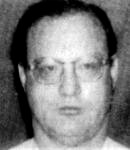
Joseph Wesbecker
Mass murderer Gameel Al-Batouti
Mass murderer · USA · 1999
Gameel Al-Batouti (also rendered “Gamil ElBatouty” or “El Batouty” in U.S. offi…
216 victims
Gameel Al-Batouti
Mass murderer · USA · 1999
Gameel Al-Batouti (also rendered “Gamil ElBatouty” or “El Batouty” in U.S. offi…
216 victims
 Timothy McVeigh
Mass murderer · USA · 1995
Timothy James McVeigh (April 23, 1968 – June 11, 2001) was a United States Army…
168 victims
Timothy McVeigh
Mass murderer · USA · 1995
Timothy James McVeigh (April 23, 1968 – June 11, 2001) was a United States Army…
168 victims
 Julio Gonzalez
Mass murderer · USA · 1990
Julio Gonzalez was sentenced to 174 twenty-five-year sentences (a total of 4,35…
87 victims
Julio Gonzalez
Mass murderer · USA · 1990
Julio Gonzalez was sentenced to 174 twenty-five-year sentences (a total of 4,35…
87 victims
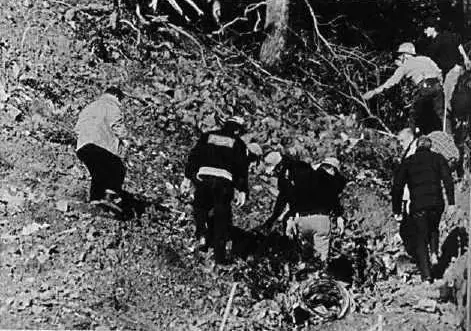 David Burke
Mass murderer · USA · 1987
David Augustus Burke (May 18, 1952–December 7, 1987) was an employee of USAir,…
43 victims
David Burke
Mass murderer · USA · 1987
David Augustus Burke (May 18, 1952–December 7, 1987) was an employee of USAir,…
43 victims
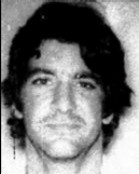 George Jo Hennard
Mass murderer · USA · 1991
George Jo Hennard carried out a mass killing at a Luby’s Cafeteria in Killeen,…
23 victims
George Jo Hennard
Mass murderer · USA · 1991
George Jo Hennard carried out a mass killing at a Luby’s Cafeteria in Killeen,…
23 victims
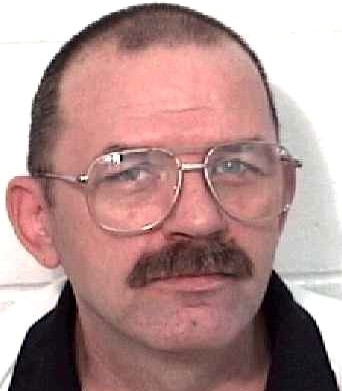 William Earl Lynd
Murderer · USA · 1988
William Earl Lynd was convicted in Berrien County of kidnapping with bodily inj…
2 victims
William Earl Lynd
Murderer · USA · 1988
William Earl Lynd was convicted in Berrien County of kidnapping with bodily inj…
2 victims
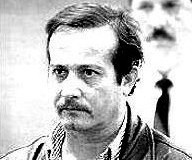 Ricardo Caputo
Serial killer · USA / Mexico · 1971
Ricardo Caputo was known to authorities as "The Lady Killer." He was sentenced…
4 victims
Ricardo Caputo
Serial killer · USA / Mexico · 1971
Ricardo Caputo was known to authorities as "The Lady Killer." He was sentenced…
4 victims
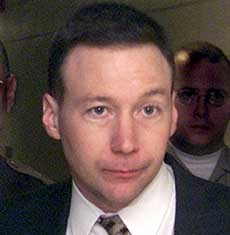 David Camm
Justice miscarriage · USA · 2000
David R. Camm was a former Indiana State Trooper who was acquitted after three…
0 victims
David Camm
Justice miscarriage · USA · 2000
David R. Camm was a former Indiana State Trooper who was acquitted after three…
0 victims
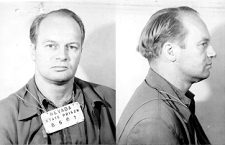 Clayton Fouquette
Murderer · USA · 1948
Defendant: Clayton Octave Fouquette · Occupation (at death): Plumber · Age (at…
1 victim
Clayton Fouquette
Murderer · USA · 1948
Defendant: Clayton Octave Fouquette · Occupation (at death): Plumber · Age (at…
1 victim
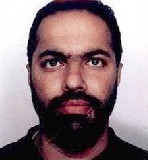 Maninder Pal Singh Kohli
Murderer · United Kingdom · 2003
Maninder Pal Singh Kohli murdered Hannah Foster, a 17-year-old British student,…
1 victim
Maninder Pal Singh Kohli
Murderer · United Kingdom · 2003
Maninder Pal Singh Kohli murdered Hannah Foster, a 17-year-old British student,…
1 victim
- Gender
- male
- Country
- USA
- Location
- Louisville, Kentucky, USA
- Date of birth
- April 27, 1942
- Age at first offence
- 47
- Characteristics
- revenge, history of mental illness, armed robbery, drugs
- Victim profile
- Richard O. Barger, 54 / Kenneth Fentress, 45 / William Ganote, 46 / James G. Husband, 47 / Sharon L. L. Needy, 49 / Paul Sallee, 59 / Lloyd White, 42 / James F. Wible Sr., 56 (co-workers)
- Method of murder
- Shooting (AK-47 semiautomatic rifle and several other firearms)
- Date(s) of murder
- September 14, 1989
- Years active
- 1989
- Date of arrest
- —
- Status
-
Died in custody
Committed suicide by shooting himself the same day; at 8:30 a.m. on September 14, 1989 Joseph Wesbecker entered the Kentucky printing plant where he worked, killed eight people and injured twelve, then fatally shot himself to end his shooting spree.
Outcome
Joseph Wesbecker committed suicide by shooting himself on September 14, 1989, after entering Standard Gravure and killing eight people and injuring twelve during a shooting spree.
Background
Standard Gravure was a major Louisville, Kentucky printing company founded in 1922. Reduced revenues led to an employee wage freeze in 1982, and in 1986 the company was sold. Standard Gravure’s customers were retailers, many of which were in the process of going out of business, and paper shortages were occurring in the marketplace. The period was described as one of cutbacks, stress and difficulty.
Joseph Wesbecker worked at Standard Gravure. In the spring of 1989, he went on disability leave from his job at Standard Gravure. He was diagnosed with depression and attempted suicide multiple times.
Wesbecker worked for Standard Gravure for 17 years and had been on disability leave since spring due to mental illness. He was born on April 27, 1942. His father died when he was one year old and his mother was 16. He was married twice and had two sons. His marriages’ failure was attributed to stresses he suffered at his workplace.
Wesbecker was assigned to a mechanical folder after the selling of Standard Gravure and management change in 1986. He complained about stress and overstrainment and asked to be placed back at his old job, but the request was declined. He grew hostile toward the new management, grew wary of conspiracies aimed to harass him, and began to complain about policy changes at the company. He also complained that exposure to toluene at work caused memory loss, dizziness and “blackout spells”.
Wesbecker filed a complaint with the Jefferson County Human Relations Commission. He charged that he was harassed and discriminated against for his psychological state and deliberately put under stressful conditions. An examination diagnosed that he suffered from depression and manic depression, substantiating his claim of discrimination, and he was put on Prozac. In August 1988, he stopped working and was put on long-term disability leave in February 1989, though there was also an agreement to re-employ him as soon as he recovered sufficiently.
Between August 1988 and May 1989, Wesbecker bought several weapons, including the AK-47 and pistol he later used in the shooting. Shortly before the shooting, he reportedly received a letter from the company announcing cancellation of his disability income. Psychiatric records indicated long history of mental illness; he was treated in hospitals at least three times between 1978 and 1987. He was diagnosed with alternating episodes of deep depression and manic depression and experienced confusion, anger and anxiety, with multiple suicide attempts. Hospital records suggested he posed a threat to himself and others.
CBS’s 60 Minutes reported the following quoted conversation from Wesbecker’s medical records:
“In 1984, five years before he took Prozac, Wesbecker's medical records show that he had this conversation with a doctor. Have you ever felt like harming someone else? 'Yes,' Wesbecker said. Who? 'My foreman.' When? 'At work.' The same medical records show Wesbecker had already attempted suicide 12 to 15 times.”
In the years prior to the shooting, he threatened to “kill a bunch of people” or to bomb Standard Gravure. At one point he considered hiring an assassin to kill several executives. He discussed these matters with his wife before their divorce. After leaving Standard Gravure in August 1988, he told other workers he would come back, wipe out the place and get even with the company. Shortly before the shooting, he told one of his aunts he was upset about things at work and said “they will get paid back,” but she did not take the threat too seriously because he said these things all the time.
People
Joseph Wesbecker
Joseph Wesbecker was the person who carried out the shooting at Standard Gravure and then committed suicide.
He was nicknamed “Rocky” by his colleagues. Police described him as being on permanent disability and being treated for mental disorders, and he reportedly had threatened the company.
Victims and injured people
The shooting resulted in eight people killed and twelve people injured, and one person suffered a heart attack.
Killed:
- Richard O. Barger, 54
- Kenneth Fentress, 45
- William Ganote, 46
- James G. Husband, 47
- Sharon L. L. Needy, 49
- Paul Sallee, 59
- Lloyd White, 42
- James F. Wible Sr., 56
Injured (as described):
- Forrest Conrad
- Paula Warman
- John Stein, who was shot in the head and abdomen
- Stanley Hatfield
- David Sadenfaden
- James Tingle
- Kenneth Fentress, 45 (fatally wounded)
Additional described injured/wounded:
- One person remained in critical condition late on September 14, 1989
- One person suffered a heart attack
- A total description included “injured 12” and also “wounding 13” in contemporaneous reporting fragments
Investigation
Aftermath details included civil litigation against Eli Lilly and Company related to Prozac. The wounded and families of those killed filed a lawsuit claiming that Wesbecker’s use of Prozac contributed to his actions. The jury decided 9-3 for Lilly. Later it was revealed that Lilly had arranged a clandestine settlement with the plaintiffs in exchange for setting legal precedent. The matter was referenced as Fentress v. Eli Lilly.
Police searched Wesbecker’s house and recovered a shotgun, a Colt 9-millimeter revolver, a .32 revolver and a starter’s pistol. Investigators also found Wesbecker’s will and a copy of Time Magazine on the kitchen table featuring an article about Patrick Purdy, who had killed five children and injured thirty others with a Type 56 assault rifle at a school in Stockton, California earlier the same year.
When police tested the weapons found at the plant, they determined that the rifleman had not made simple adjustments to make them fully automatic. Importing fully automatic weapons had been banned more than two decades earlier, and an elaborate Federal registration and transfer procedure was described as being required for weapons still in circulation.
Police said the AK-47 was a Chinese-made semiautomatic AK-47 derivative. They also said it had copper-cased 7.62-millimeter bullets, described as standard military issue for Eastern bloc nations. Police chief Richard Dotson was quoted describing the bullets:
“This is a killer bullet,” Chief Dotson said.
Arrest / Detention
No arrest or detention was described.
Trial
A jury decided 9-3 for Eli Lilly and Company in litigation relating to Prozac.
Sentencing / Appeals
No criminal sentencing or appeals were described. The only described adjudication was the jury decision in the civil case.
Timeline
- September 14, 1989 (8:30 a.m.) — Joseph Wesbecker entered Standard Gravure armed with multiple firearms, began firing at employees, killed eight and wounded twelve, and then committed suicide after about half an hour.
- May 1987 — Wesbecker filed a complaint with the Jefferson County Human Relations Commission charging harassment and discrimination for his psychological state and stressful conditions.
- August 1989 — Wesbecker started taking Prozac less than a month before the shooting.
- January — A settlement was reached in the Human Relations Commission process, with the commission mediating.
- February 1989 — Wesbecker was put on long-term disability leave.
The offence
At 8:30 a.m. on September 14, 1989, Joseph Wesbecker entered Standard Gravure, his former workplace, armed with an AK-47 semiautomatic rifle, two MAC-10s and other pistols. He parked his car in front of the main entrance and entered the plant carrying an AK-47 derivative, a SIG Sauer 9mm pistol and a duffel bag containing two MAC-11s, a .38 caliber Smith & Wesson revolver, a bayonet and hundreds of rounds of ammunition.
He took an elevator to the executive reception area on the third floor and began firing at receptionists Sharon Needy and Angela Bowman, killing Sharon Needy and leaving Angela Bowman paralyzed by a shot in the back.
He searched for Michael Shea, president of Standard Gravure, and other supervisors and bosses, and walked through hallways shooting at people. He killed James Husband and injured Forrest Conrad, Paula Warman and John Stein, described as being shot in the head and abdomen. He then headed to the pressroom and killed Paul Sallee.
He wounded two electricians from Marine Electric, Stanley Hatfield and David Sadenfaden, and left the duffel bag under a stairwell. He walked down to the basement and encountered pressman John Tingle, who greeted his colleague by asking what was happening. Wesbecker replied:
“Hi John...I told them I'd be back. Get away from me.”
After Tingle had gone out of the way, Wesbecker continued, shooting Richard Barger in the back and killing him. Witnesses described that Wesbecker approached Barger’s body and apologized, apparently killing him accidentally because he did not see whom he was shooting at.
Back on the press floor, Wesbecker shot at anyone in his way, killing James Wible and Lloyd White. He entered the break room where he emptied his magazine, hit all seven workers present, and killed William Ganote with a shot to the head. Wesbecker reloaded and resumed firing, fatally wounding Kenneth Fentress.
When Wesbecker stepped out to the pressroom, he pulled his SIG Sauer, put it under his chin, and shot himself, ending the spree. The shooting spree lasted about half an hour and about forty rounds of ammunition were fired, resulting in eight people dead and twelve wounded. Additionally, one person suffered a heart attack.
Before the offence, co-workers and others described Wesbecker’s behavior as argumentative, confrontational and paranoid. A co-worker, Joe White, was quoted:
“This guy's been talking about this for a year. He's been talking about guns and Soldier of Fortune magazine. He's paranoid, and he thought everyone was after him.”
John Tingle recalled Wesbecker’s earlier encounter at the beginning of the rampage. Tingle recalled that Wesbecker said:
“I told them I'd be back. Get out of my way, John.”
Tingle also recalled saying, “‘How are you, Rock?’” and that Wesbecker responded:
“Fine, John. Back off and get out of my way.”
Mayor Jerry Abramson accompanied searchers. Abramson was quoted:
“It looks like a battle zone,”
and also: “With the blood and the people involved, there were bodies lying across staircases. It was just frightening.”
Abramson also said searchers found “a fellow sitting in a corner who was just shuddering in fear. He hadn't been shot, but he was in shock.”
A police chief Richard Dotson was quoted during the events’ coverage, holding up the AK-47 and one of the two MAC-11 semiautomatic machine pistols, saying:
“You don't need these kinds of weapons unless you're a police officer or a criminal,”
Police said Wesbecker was being treated for mental disorders and had been on permanent disability leave from the plant. Police said he threatened the company.
Aftermath
Wesbecker was buried in Cave Hill Cemetery in Louisville.
The murders and subsequent lawsuit against Eli Lilly & Co were covered in the book The Power to Harm: Mind, Murder, and Drugs on Trial (Allen Lane and Penguin 1996) by investigative journalist John Cornwell.
A report fragment described Standard Gravure as closing until Saturday afternoon, and Michael Shea was described as saying the company and its 360 employees were in shock. In relation to whether he knew of threats, Michael Shea was quoted:
“I'm at a loss to speculate on anything,”
and: “What's going through my mind right now is sympathy and caring for the people who are involved.”
Mildred Higgs, Wesbecker’s aunt, was quoted describing resentments:
“They done him dirty,”
A woman at a house where Wesbecker’s mother was staying was quoted:
“We're just in shock like everybody else,”
and also: “We had to find out over the television. No one called us. I guess he was just a sick person. That's all.”
A statement fragment by one of the employees after the shooting described Wesbecker’s prior talk and perceived paranoia:
Spotted an error, or have more information about this case?