
Nollie Lee Martin
Murderer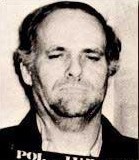 Ervil LeBaron
Murderer · USA · 1972
Ervil Morrell LeBaron (1925 to August 16, 1981) was the leader of a polygamous…
35 victims
Ervil LeBaron
Murderer · USA · 1972
Ervil Morrell LeBaron (1925 to August 16, 1981) was the leader of a polygamous…
35 victims
 Brian Kevin Rosenfeld
Murderer · USA · 1985
Brian Kevin Rosenfeld Brian Kevin Rosenfeld was sentenced to three concurrent l…
23 victims
Brian Kevin Rosenfeld
Murderer · USA · 1985
Brian Kevin Rosenfeld Brian Kevin Rosenfeld was sentenced to three concurrent l…
23 victims
 Marvin Gray
Murderer · USA · 1975
Marvin Gray was convicted killer who claimed responsibility for 23 slayings and…
23 victims
Marvin Gray
Murderer · USA · 1975
Marvin Gray was convicted killer who claimed responsibility for 23 slayings and…
23 victims
 Yahweh ben Yahweh
Murderer · USA · 1980
Yahweh ben Yahweh was born and legally named Hulon Mitchell Jr. (October 27, 19…
23 victims
Yahweh ben Yahweh
Murderer · USA · 1980
Yahweh ben Yahweh was born and legally named Hulon Mitchell Jr. (October 27, 19…
23 victims
 Benjamin Stone
Murderer · USA · 1995
Benjamin Stone was executed by lethal injection in Texas on September 25, 1997.…
2 victims
Benjamin Stone
Murderer · USA · 1995
Benjamin Stone was executed by lethal injection in Texas on September 25, 1997.…
2 victims
 Odell Barnes
Murderer · USA · 1989
Defendant: Odell Barnes (also referred to as Odell Barnes Jr.) · Date of birth:…
1 victim
Odell Barnes
Murderer · USA · 1989
Defendant: Odell Barnes (also referred to as Odell Barnes Jr.) · Date of birth:…
1 victim
 Vasiliy Kulik
Serial killer · Russia · 1984
Vasiliy Kulik was a Russian serial killer. He was responsible for the murders o…
13 victims
Vasiliy Kulik
Serial killer · Russia · 1984
Vasiliy Kulik was a Russian serial killer. He was responsible for the murders o…
13 victims
 Mary Ann Holder
Mass murderer · USA · 2011
Mary Ann Holder carried out a shooting spree and committed suicide by shooting…
5 victims
Mary Ann Holder
Mass murderer · USA · 2011
Mary Ann Holder carried out a shooting spree and committed suicide by shooting…
5 victims
 Catherine Andrus
Murderer · Canada · 2009
Catherine Andrus — common-law wife of Michel Leblanc; pleaded guilty to second-…
1 victim
Catherine Andrus
Murderer · Canada · 2009
Catherine Andrus — common-law wife of Michel Leblanc; pleaded guilty to second-…
1 victim
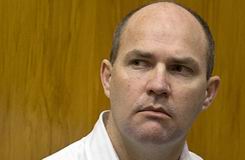 Jeremy McLaughlin
Homicide - Murderer · New Zealand · 1995
Jeremy George Edward McLaughlin (35) — defendant · Jade Bayliss (13) — victim;…
2 victims
Jeremy McLaughlin
Homicide - Murderer · New Zealand · 1995
Jeremy George Edward McLaughlin (35) — defendant · Jade Bayliss (13) — victim;…
2 victims
- Gender
- male
- Country
- USA
- Location
- Palm Beach County, Florida, USA
- Date of birth
- 1949
- Age at first offence
- 28
- Characteristics
- kidnapping, rape, robbery
- Victim profile
- Patricia Greenfield, 19 (convenience store clerk)
- Method of murder
- St abbing with knife
- Date(s) of murder
- June 25, 1977
- Years active
- 1977
- Date of arrest
- J uly 4, 1977
- Status
-
Executed
Executed by electrocution in Florida on May 12, 1992
Case details
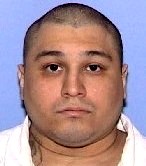
Nollie Lee Martin was executed by electrocution in Florida on May 12, 1992.
Martin was convicted in Palm Beach County, Florida, of first-degree murder, kidnapping, armed robbery, and forcible sexual battery, and he was sentenced to death.
Background
Martin was tried in Florida on a first-degree murder, kidnapping, armed robbery, and forcible sexual battery indictment connected to the murder of a 19-year-old George Washington University student, Patricia Greenfield, who was working at a Delray Beach convenience store.
After exhausting state remedies, Martin filed in federal district court a petition for a writ of habeas corpus pursuant to 28 U.S.C. Sec. 2254. The district court denied the petition, and Martin appealed.
The offence
On June 25, 1977, just before 10 p.m., two men entered a convenience store in Delray Beach, Florida, where Patricia Greenfield, a college student, was employed.
The men, later identified as Nollie Lee Martin and Gary Forbes, robbed Greenfield at knife point of approximately ninety dollars and two cases of beer, and abducted her from the store. They drove her back to Martin’s apartment, blindfolding her along the way with Martin’s shirt. Both men committed forcible sexual battery on her at the apartment.
Martin and Forbes then transported Greenfield away from the apartment, keeping her blindfolded and assuring her that she would be released at a remote area. After driving some distance in an aimless fashion, they arrived at the vicinity of the Lantana Dump. Martin walked the victim away from the sight of Forbes.
According to Forbes, Martin stated that he attempted to strangle or suffocate the victim with a short piece of rope, but that she recovered her breath each time he thought she had succumbed. Martin then stabbed her several times in the throat.
The autopsy revealed that Greenfield died of the stab wounds, and that a struggle probably preceded her death.
Investigation
On the afternoon of July 4, 1977, Martin and Forbes were arrested by detectives from the Palm Beach County Sheriff’s Office on charges unrelated to the Greenfield murder.
Confessions
July 4, 1977 confession
Later that day, under police interrogation, Martin confessed to having killed Patricia Greenfield.
Martin was arrested at about 2:30 p.m. on July 4, and he was interrogated, off and on, from then until 7:55 p.m., when he finally confessed.
It was undisputed that Martin was read and waived his Miranda rights prior to the start of the interrogation.
At one point, Martin asked whether the questioning could wait until the next day.
L.K. Glover, one of the two Palm Beach County detectives present when Martin made his request, testified at the suppression hearing:
Q. Wasn't there a point in the interview before Mr. Scarola arrived where Mr. Martin expressed a desire to stop talking and to take up the conversation again the next day?
A. I don't recall that. It is possible. It seem to me like he did say something about waiting until the next day and I don'know how it was continued.
Q. Well, did Anderson then just keep questioning him after that, isn't that how it was continued?
A. It is possible.
The other detective present, John J. Anderson, stated:
Q. Now, at some point during the interrogation, didn't Nollie Martin say to you he did not want to make a statement?
A. Not that I recall, no, sir.
Q. Did he say to you, "I don't want to make a statement today, I'll talk to you tomorrow?"
A. He said something about, "Can't we wait until tomorrow?"
Q. Okay. In response to that, you just kept questioning him, didn't you?
A. Yes, sir. I said, "Let's go on."
The appellate analysis held that the July 4 interrogation violated Miranda and Mosley because Martin’s request to “wait until tomorrow” was treated as an equivocal invocation requiring clarification, but Detective Anderson continued the interrogation instead of attempting to clarify Martin’s intent. The court held the July 4 confession was inadmissible under Miranda. The court also held the July 4 confession was voluntary.
The court concluded:
We hold that this violated the dictates of Miranda and Mosley, and that the July 4 confession thus was inadmissible.
And separately:
We therefore hold that, despite its inadmissibility under Miranda, Martin's July 4 confession was voluntary.
July 11, 1977 confession
On July 11, 1977, Martin again confessed to the murder.
Martin later challenged the admissibility and constitutional validity of both confessions. The appellate analysis addressed whether the July 4 Miranda violation required exclusion of the July 11 confession, and it also addressed whether the July 11 confession was obtained in violation of Miranda and the Sixth Amendment right to counsel, and whether it was involuntary.
The court held that the July 4 Miranda violation did not automatically require exclusion of the July 11 confession under the “fruit of the poisonous tree” doctrine or the “cat out of the bag” rule, because the July 4 confession was voluntary and because there was no actual coercion violating the Fifth Amendment.
Arrest and pre-trial proceedings
After the July 4 arrest on charges unrelated to the Greenfield murder, Martin later confessed to the Greenfield killing.
Martin was indicted for first-degree murder, kidnapping, armed robbery, and forcible sexual battery.
He pleaded not guilty and filed a notice of intent to rely on the defense of insanity.
A pre-trial motion to suppress Martin’s July 4 and July 11 confessions was denied.
Martin was found competent to stand trial and was tried before a jury.
Trial
The jury convicted Martin on all counts and recommended the death penalty.
The trial court sentenced Martin to death.
The Supreme Court of Florida affirmed Martin’s conviction and death sentence on direct appeal: Martin v. State, 420 So.2d 583 (Fla.1982), cert. denied, 460 U.S. 1056, 103 S.Ct. 1508, 75 L.Ed.2d 937 (1983).
A motion for post-conviction relief pursuant to Florida Rule of Criminal Procedure 3.850 was denied without an evidentiary hearing, and the denial was affirmed: Martin v. State, 455 So.2d 370 (Fla.1984).
Appeals and legal arguments in federal court
Martin filed a habeas corpus petition in the United States District Court for the Southern District of Florida. The district court denied the petition, and the appeal proceeded to the United States Court of Appeals, Eleventh Circuit.
The appeal argued the following grounds, as enumerated in the appellate opinion:
- Martin argued that his July 4, 1977 confession was obtained in violation of Miranda v. Arizona.
- Martin argued that his July 4 confession was involuntary.
- Martin argued that his July 11, 1977 confession was obtained in violation of Miranda.
- Martin argued that his July 11 confession was obtained in violation of his Sixth Amendment right of counsel.
- Martin argued that his July 11 confession was involuntary.
- Martin argued that the state trial court committed constitutional error by refusing to appoint an additional mental health expert to assist his defense.
- Martin argued that the state trial court violated Lockett v. Ohio by excluding or refusing to consider certain evidence concerning the deterrent effect of the death penalty at sentencing.
- Martin argued that the state trial court committed constitutional error by excluding, at trial and at sentencing, certain jail records.
- Martin argued that his Sixth Amendment right of confrontation was violated when a deposition was read into evidence at sentencing without a prior showing of the witness’ unavailability.
- Martin argued that his Sixth, Eighth, and Fourteenth Amendment rights were violated by the use of a death-qualified jury at trial.
The appellate court affirmed. The denial of the habeas corpus petition was affirmed and the murder conviction was not reversed on the confession issue.
Confession admissibility and related rulings
“Fruit of the Poisonous Tree” and “Cat Out of the Bag”
The appellate court addressed Oregon v. Elstad and held that:
- the July 4 Miranda violation did not automatically require exclusion of the July 11 confession under the “fruit of the poisonous tree” doctrine, and
- the “cat out of the bag” rule did not require exclusion either.
Miranda adequacy for July 11 confession
The appellate court addressed Martin’s contention that the July 11 confession violated Miranda because he was not fully rewarned.
A tape recording of the July 11 interrogation showed that at the beginning of the interrogation, Detective Glover told Martin:
Q. All right, Lee . I will remind you of your constitutional rights. You know that you don't have to talk to me. You have an attorney who says that he wishes for you to talk to no one but you're going to talk to me of your own free will and because you want to, is that correct?
A. Right.
Glover testified at the suppression hearing that Martin received no other warnings before the start of the July 11 interrogation, and that the only time Glover fully warned Martin was one week earlier, on July 4.
The appellate court concluded that complete Miranda warnings on July 11 were not required because Martin had been fully warned and knowingly waived them prior to July 4, and he indicated he still understood those rights on July 11. The appellate court relied on Biddy v. Diamond and California v. Prysock and held the July 11 confession was not obtained in violation of Miranda.
Sixth Amendment right to counsel for July 11 confession
The appellate court addressed Martin’s claim that the July 11 confession was obtained in violation of his Sixth Amendment right to counsel.
It was undisputed that Martin was represented by counsel and that counsel instructed Martin and jail personnel that Martin was not to make any statements to police without counsel’s permission.
Despite these admonitions, Martin sent the captain of the jail a note requesting to speak with Christie Dietert, his parole supervisor, and Detective Glover.
The captain reminded Martin that his lawyer did not want him to speak with anyone without the lawyer’s permission. Martin replied that he knew.
The captain wrote at the bottom of Martin’s note: “has been told that his attorney, I guess, doesn't want him to talk to anyone,” and both Martin and the captain signed the note.
Martin told the captain he still wanted to see Dietert and Glover. At Martin’s request, the captain first tried to reach Dietert. When she could not be located, the captain telephoned Glover. Martin told Glover he wanted to see him.
Dietert was notified of Martin’s request and came to the jail to speak with him. During this conversation, which took place in an office at the jail, Martin physically assaulted Dietert in an attempt to take her as a hostage. The jail guards burst into the room and forcibly subdued Martin, leaving him with a gash on his forehead. Martin was taken to a small holding cell, and a few moments later Detective Glover met with him and took his second confession to the Patricia Greenfield murder.
The appellate court found that the state met its burden of showing intentional relinquishment or abandonment of the right to counsel, and it held the July 11 confession was not obtained in violation of Martin’s right to counsel.
It also held the July 11 confession was voluntary and admissible.
Harmless error regarding the July 4 confession
The appellate court addressed whether the erroneous admission of the July 4 confession required reversal of the murder conviction, applying Chapman v. California’s harmless error standard.
After reviewing the record, the appellate court held that the erroneous admission of Martin’s July 4 confession could not have contributed to his murder conviction beyond a reasonable doubt. The court emphasized:
- The July 4 confession was cumulative of evidence in the July 11 confession, and the July 11 confession included a more detailed description of the murder.
- The jury also had testimony from Martin’s accomplice, Gary Forbes, which gave a lengthy account of the robbery, kidnapping, and sexual battery of Patricia Greenfield, including how Martin armed with a knife led the blindfolded young woman down a dirt road at the Lantana Dump and returned fifteen or twenty minutes later saying he had killed Greenfield by stabbing her in the throat.
- The jury heard unrebutted testimony of a state pathologist that Greenfield died from multiple stab wounds in the throat.
The court addressed Martin’s argument that the July 4 confession was harmful because the jury and the sentencing judge relied on it as evidence of his sanity, but it concluded the sentencing order rejected insanity claims based on other evidence and that there was no possibility that absent the July 4 confession either the jury or sentencing judge would have found Martin insane.
The appellate court therefore declined to reverse the murder conviction on the confession ground.
Sentencing-related constitutional claims
Refusal to appoint an additional mental health expert
The appellate court addressed Martin’s claim that the trial court erred by refusing to appoint an additional mental health expert, Dr. Theodore Blau, a neuropsychologist, for organic brain damage.
Martin asserted he was deprived of Dr. Blau’s assistance due to indigency.
The appellate court noted that Martin had been examined prior to trial by seven mental health experts, including four psychiatrists, two psychologists, and a neurologist, all of whom were either court-appointed or recruited by the defense.
Two experts testified at trial that Martin was insane at the time the murder was committed.
The appellate court held that the examination of Martin by seven independent or defense-recruited mental health experts met minimum constitutional standards under Ake v. Oklahoma, and it rejected Martin’s claim that the additional expert was constitutionally required.
Exclusion of evidence about deterrent effect of the death penalty
Martin argued that the trial court violated Lockett v. Ohio by excluding or refusing to consider evidence concerning the deterrent effect of the death penalty at sentencing.
The evidence consisted of testimony of law professor Hans Zeisel of the University of Chicago. Zeisel sought to tell the jury:
- In general, the death penalty has no proven deterrent effect; and
- In particular, the death penalty does not deter the mentally ill.
The trial court allowed Zeisel to testify regarding lack of general deterrent effect but refused testimony about deterrent effect on the mentally ill.
The court instructed the jury:
During this phase of the trial I have permitted some testimony by a professor having to do with the question of whether or not the death penalty deters. You are instructed that the determination of whether or not one state has such a penalty is the exclusive prerogative of the people of that state as reflected in their legislative action. It is the duty of judges, lawyers and juries to follow such legislative enactments as long as they are constitutional.
The appellate court held the trial court did not violate Lockett.
The appellate court reasoned that evidence about deterrence was not designed to help the sentencer focus on the unique characteristics of the particular capital defendant or crime, and it distinguished such evidence from character, record, or circumstances evidence that Lockett and Eddings required to be admitted.
Other remaining claims
The appellate court addressed three remaining claims without extended discussion:
- Exclusion of certain jail records: Martin argued they were relevant to his insanity defense and mitigation because they showed he was tremulous while in jail, he attempted suicide while in jail, and the dosages of antipsychotic medication given as prescribed by Dr. Vaughn. The appellate court held any evidentiary error was not of constitutional dimension and noted the sentencing proceeding did not exclude the records; defense counsel declined to introduce them after being told the court would require all parts including those relating to Martin’s attack on Christie Dietert.
- Confrontation clause claim involving deposition: Martin argued that admitting a pretrial deposition of Dr. Scherer at sentencing violated the Sixth Amendment because unavailability was not shown. The appellate court rejected the claim because defense counsel did not object on that ground and because it found no “plain error.”
- Death-qualified jury: Martin argued that using a death-qualified jury violated the Sixth, Eighth, and Fourteenth Amendments. The appellate court rejected the argument based on controlling precedent.
Outcome
The judgment denying Martin’s petition for a writ of habeas corpus was affirmed.
Aftermath
Martin was executed by electrocution in Florida on May 12, 1992.
Spotted an error, or have more information about this case?