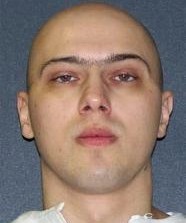
Joshua Maxwell
Murderer Russell Ellwood
Murderer · USA · 1991
Russell Ellwood was a former taxi driver. Authorities suspected him of killing…
20 victims
Russell Ellwood
Murderer · USA · 1991
Russell Ellwood was a former taxi driver. Authorities suspected him of killing…
20 victims
 Robert Martines Perez
Murderer · USA · 1994
Name: Robert Martines Perez · Other name used in proceedings: Robert Martinez P…
15 victims
Robert Martines Perez
Murderer · USA · 1994
Name: Robert Martines Perez · Other name used in proceedings: Robert Martinez P…
15 victims
 Billy Frank Vickers
Murderer · USA · 1993
Billy Frank Vickers Vickers was executed by lethal injection in Texas on Januar…
14 victims
Billy Frank Vickers
Murderer · USA · 1993
Billy Frank Vickers Vickers was executed by lethal injection in Texas on Januar…
14 victims
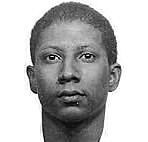 Kenneth Dunn
Murderer · USA · 1980
Kenneth Dwayne Dunn, a Texas death row inmate, was executed by lethal injection…
1 victim
Kenneth Dunn
Murderer · USA · 1980
Kenneth Dwayne Dunn, a Texas death row inmate, was executed by lethal injection…
1 victim
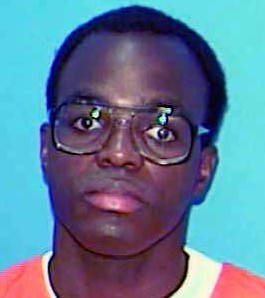 Arthur Barnhill
Murderer · USA · 1995
Arthur Barnhill was convicted and sentenced to death for the 08/06/95 murder of…
1 victim
Arthur Barnhill
Murderer · USA · 1995
Arthur Barnhill was convicted and sentenced to death for the 08/06/95 murder of…
1 victim
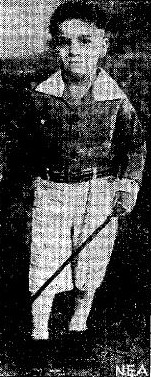 Peter Kudzinowski
Serial killer · USA · 1924
Peter Kudzinowski (1903 – December 21, 1929) was a serial killer who committed…
3 victims
Peter Kudzinowski
Serial killer · USA · 1924
Peter Kudzinowski (1903 – December 21, 1929) was a serial killer who committed…
3 victims
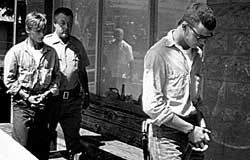 Thomas Eugene Braun
Spree killer · USA · 1967
Thomas Eugene Braun was sentenced to death in California. · Thomas Eugene Braun…
4 victims
Thomas Eugene Braun
Spree killer · USA · 1967
Thomas Eugene Braun was sentenced to death in California. · Thomas Eugene Braun…
4 victims
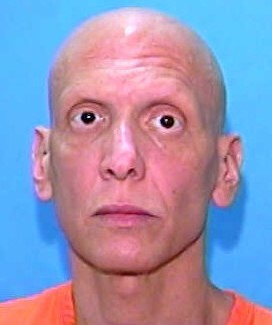 Manuel Pardo
Spree killer · USA · 1986
Manuel Pardo, Jr. was a former police officer who was convicted of nine counts…
9 victims
Manuel Pardo
Spree killer · USA · 1986
Manuel Pardo, Jr. was a former police officer who was convicted of nine counts…
9 victims
- Gender
- male
- Country
- USA
- Location
- Indiana/ Texas, USA
- Date of birth
- May 17, 1978
- Age at first offence
- 22
- Characteristics
- robbery, kidnapping, gang
- Victim profile
- Robbie Bott (male, 45) / Rudolfo Lopes, 45 ( sheriff's sergeant )
- Method of murder
- Shooting (.9 mm handgun)
- Date(s) of murder
- September 11/October 11, 2000
- Years active
- 2000
- Date of arrest
- October 17, 2000
- Status
-
Executed
Executed by lethal injection in Texas on March 11, 2010
Case summary
Joshua Maxwell was convicted of capital murder and sentenced to death for the robbery, kidnaping and murder of Rudolfo Lopes. The conviction resulted from a Bexar County jury’s findings that Lopes was killed in the course of committing a robbery or kidnapping, and the trial court imposed the death penalty after the jury answered special issues regarding future dangerousness and mitigation.
Background
Joshua Maxwell was a white male. He had brown hair and blue eyes. He was 31 at the time of execution and 31 at the time of later reporting. He was described as having been educated for 10 years and working as a laborer. His native county was Marion County, Indiana, and the county of offense was Bexar.
Maxwell had a prior prison record in Indiana: Indiana Department of Corrections #925717 on a 5-year sentence for 1 count theft. He was released on parole on 03/03/2000 to Marion County, Indiana.
The offence
Murder of Rudolfo Lopes
Rudolfo Lopes, a sergeant with the Bexar County Sheriff’s Department, was murdered in San Antonio on or about October 11, 2000. His body was discovered on Oct. 12 in a field behind a northeast San Antonio strip center. Lopes’ body was found blindfolded, with his hands bound together. Police found a spent shell casing near the body.
The medical examiner determined that Lopes’ death was caused by a single gunshot wound to the top of his head from a 9-millimeter bullet. The bullet entered the top of Lopes’ head, exited his chin, re-entered his body through his chest, and lodged between his sternum and his heart.
Lopes’ wife testified that Lopes was scheduled to work at the Bexar County Jail from 10:00 a.m. to 9:00 p.m. on October 11. Lopes left for work on the morning of Oct 11 in his gold four-door Chevrolet pickup and never returned home that night. Lopes often carried a briefcase and wore a gold chain necklace with a cross and anchor pendant. Lopes normally carried a Glock pistol issued by the Sheriff’s Department.
A woman who lived in a residential area behind the strip center stated that between 9 and 10 on the night of the killing, she heard a loud gunshot.
Attempted theft using Lopes’ ATM card
Evidence showed that shortly after 7 p.m. on October 11, someone using Lopes’ ATM card made two successful cash withdrawals—$300 and $100—from the Southwest Military Branch of the Security Service Federal Credit Union. Surveillance camera evidence showed a woman leaning out of the driver’s side of a vehicle using the ATM. Records showed that the person using the card attempted to withdraw more money from Lopes’s checking and savings accounts, but the transactions were denied.
Witness observations near the strip center
Charles Dudley, the owner of a martial arts school in a northeast San Antonio strip center, testified that he left work with his family about 9:00 p.m. on October 11. Dudley observed a gold Chevrolet pickup truck driving to the back of the strip center and parked it next to a hole in the privacy fence separating the strip center from an adjacent field. He stated that Dudley observed a woman with long, bushy hair and glasses sitting in the driver’s seat and a man slumped down in the passenger seat. Dudley observed that as he drove by, the man and woman stared straight ahead. Dudley later drove past again with his headlights on and observed them continuing to sit in the truck staring straight ahead.
Debra Guzman testified that she and her husband were watching the Presidential Debate on the evening of October 11. She heard one loud gunshot between 9:00 and 10:00 p.m.
Recovery and forensic findings
Police found a spent shell casing on the ground near Lopes’ body. The report also stated that Lopes’ body was face down with his arms inside his shirt and his hands bound together, including a white cotton cord tied around one of his wrists and both wrists tightly bound with a clear telephone cord.
Investigation
ATM withdrawals traced to a pickup
An investigations officer with the Security Service Federal Credit Union testified that Lopes had a checking account, a savings account, an ATM card, and a Visa card at the credit union. Records showed that shortly after 7:00 p.m. on October 11, two successful withdrawals of $300 and $100 were made, and an attempt to withdraw more money was denied.
A surveillance camera photographed a woman leaning out of the driver’s side of a vehicle using the ATM.
Vehicle identified and abandoned vehicle evidence
After the murder, police discovered a gray Chevrolet Corsica with Florida license plates that was ticketed at Windsor Park Mall in San Antonio for overnight parking at 4:15 a.m. on October 12. The abandoned vehicle continued to receive parking tickets until it was reported to police on October 15. Police discovered that the vehicle identification number and license plate did not match and that the vehicle was “flagged” from out of state in reference to another homicide case.
Inside the car, letters contained references to Maxwell and McFarland, and police found a package of cigarettes, photographs of McFarland and Maxwell, a “Scotsman Inn” hotel receipt with the name “Trina Dorris,” and a dead lizard.
Armed chase and identification in San Francisco
On October 17, police officers in downtown San Francisco, California, attempted to stop Maxwell and his passenger, Tess McFarland, in a gold pickup truck after it sped through an intersection and almost hit a pedestrian. Police officers stopped the truck, exited their vehicle, approached the truck from the rear, and asked the male driver to turn off his engine. The driver drove away and led officers on a chase through downtown San Francisco.
Halfway through the chase, the driver shot at the officers. The bullet hit the windshield and came within inches of striking Officer Juarez. Glass from the windshield sprayed the inside of the police car and scratched Officer Pena’s eyes. Additional police officers joined in the chase. The driver continued shooting and police returned fire. The chase ended when the truck became stuck in traffic.
During the chase, Officer Richard Seidell testified that at one point the driver “reached out with his left arm and hand and raised his middle finger and flipped us off.” McFarland suffered a neck injury during the chase.
The truck was identified as Lopes’ vehicle. The driver and passenger were identified as Joshua Maxwell and Tess McFarland. Maxwell was wearing a gold-chain necklace when he was apprehended.
Items found in Lopes’ truck after apprehension
Police searched the truck and found Lopes’ badge, Lopes’ credit card from the Security Federal Credit Union, and a State of Indiana identification card for “Trina Dorris” with McFarland’s picture. Police also found in the truck Lopes’ Glock pistol, a Chinese 9-millimeter pistol, and a briefcase.
A firearms examiner testified that the Chinese 9-millimeter pistol found in Lopes’ truck was the weapon that fired the bullet recovered from Lopes’ chest and the shell casing found near his body.
Arrest
Maxwell and Tess McFarland were arrested after the police chase and running gun battle through downtown San Francisco on October 17, 2000. At the time of arrest, Maxwell was wearing a gold-chain necklace.
Other relevant incidents and conduct while detained
While Maxwell was in the Bexar County Jail awaiting trial for killing Lopes, he threatened to kill a jail guard just like he had killed Lopes. Maxwell mimicked how Lopes had begged for his life, repeatedly stating: “Please don’t kill me.”
A jail guard testified that Maxwell described his response to Lopes: “Shut up, . . . I’m going to kill you anyway.”
Detention officers also testified about an incident on September 1, 2001, involving cell door banging and threats directed at Robinson. Robinson testified that Maxwell called Robinson a “black, mother-fucking nigger” and said that he would “bust [Robinson’s] face if he could get out of his cell.” Robinson further testified that Maxwell said “if he could get out of that cell, he’d kill [Robinson], just like he had killed [his] home boy, Lopes.” Robinson’s testimony stated he told Maxwell to calm down and went back into the office where Busby was located. Robinson testified that Maxwell then mimicked how Lopes had begged for his life, stating repeatedly, “Please don’t kill me.” Robinson testified Maxwell then used a stronger, higher, and more authoritarian voice when describing his response: “Shut up, bitch . . . I’m going to kill you anyway.”
Busby’s testimony confirmed Robinson’s version of events and added that another inmate yelled something at Maxwell after Maxwell mimicked Lopes and Maxwell replied, “I don’t care what I said.”
Defense witness Sergeant David Ryker testified that he investigated the incident at the Bexar County Jail on September 1 and that Maxwell made no mention of Lopes and told Ryker that Robinson was harassing him.
The record also included testimony by Bexar County Deputy Sheriff Daniel Grasser that he could not locate the shoes Maxwell was wearing when he was arrested in San Francisco.
Punishment-related evidence (other crimes and prison conduct)
During the punishment phase, the State introduced evidence that Maxwell had robbed and murdered a man in Mooresville, Indiana, about a month before killing Lopes.
Evidence showed that on September 10 and 11, 2000, Maxwell and McFarland kidnapped Robbie Bott and forced Bott to buy big-ticket items at department stores and to withdraw cash from automatic teller machines. The early morning of September 12, Bott’s car was found abandoned and aflame about fifteen minutes from his Mooresville home. Bott’s charred, hogtied body was found in the trunk. The autopsy showed that Bott had been killed by a shot to the torso.
Punishment phase evidence also described Maxwell’s juvenile and adult criminal history and his alleged gang membership. From age thirteen in 1991, Maxwell had juvenile court adjudications for resisting law enforcement, auto thefts, theft, criminal mischief, escape, disorderly conduct, and residential entry. After Maxwell left the juvenile system in 1994, he developed an adult criminal record for auto theft, firearm possession, criminal trespass, and marijuana possession. In 1997, he pleaded guilty to a felony theft charge in Marion County, Indiana, and received a three-year sentence that ran concurrently with a three-year sentence for attempted theft in Johnson County, Indiana. Evidence stated that when he killed Bott in September 2000, Maxwell had been out of prison about five months.
Additional punishment phase evidence stated Maxwell broke into his sister’s house in Marion County, Indiana, and stole jewelry, clothing, and shoes, and then tried to pawn the items. The mother of one of Maxwell’s daughters acknowledged that she had taken out a restraining order against Maxwell and that he had never supported his daughter financially. Maxwell’s mother acknowledged that her son had stolen jewelry, guns, and a car from his family.
The evidence also stated that before McFarland and Maxwell left Indiana in September 2000, they left McFarland’s infant son with Maxwell’s mother. They promised to retrieve the child in a few days but never returned.
Procedural history and appeals
Indictment and trial
- Jan. 4, 2001 — a Bexar County grand jury indicted Maxwell for capital murder.
- March 12, 2002 — after a punishment hearing, the court sentenced Maxwell to death.
State habeas and direct appeal
- May 21, 2004 — Maxwell filed his application for state habeas corpus relief.
- Nov. 17, 2004 — Texas Court of Criminal Appeals affirmed the conviction and sentence.
- Oct. 4, 2006 — Texas Court of Criminal Appeals denied habeas corpus relief.
Federal habeas and appeal
- Sept. 21, 2007 — petition for federal habeas corpus relief filed in U.S. District Court.
- July 30, 2008 — U.S. District Court denied federal habeas corpus relief.
- Aug. 27, 2008 — U.S. District Court denied Maxwell’s request for reconsideration.
- Sept. 18, 2009 — United States Court of Appeals affirmed denial.
Supreme Court
- March 1, 2010 — the U.S. Supreme Court denied writ of certiorari.
Trial holdings (direct appeal)
The Texas Court of Criminal Appeals affirmed the conviction and sentence. It held, among other points, that:
- evidence was legally and factually sufficient to support the capital murder conviction;
- venire members who indicated during voir dire that they could not impose the death penalty were challengeable for cause;
- administration of the jury oath at the beginning of trial that varied slightly from the statutorily mandated language was not reversible error;
- evidence that defendant fled from police during a routine traffic stop and engaged in a high-speed chase was admissible as indicative of guilt;
- unauthorized use of a motor vehicle and unlawfully carrying a weapon were not lesser-included offenses of capital murder;
- defendant was not entitled to jury instruction on lesser-included offenses of robbery and theft;
- juror improper contact with her brother during punishment phase did not warrant mistrial;
- evidence that defendant had robbed and murdered a man in another state about a month prior was admissible at the punishment phase;
- evidence supported the future dangerousness special issue.
Habeas proceedings (federal certificate of appealability)
In a 2009 habeas-related decision, the Court of Appeals denied a certificate of appealability. It addressed arguments about:
- jury instructions requiring unanimity regarding predicate felonies;
- alleged vagueness of punishment phase instructions;
- the sufficiency of jury instruction requirements and ineffective assistance of counsel related to those instructions.
The Court of Appeals concluded Maxwell had not made a substantial showing of the denial of a constitutional right and denied a COA.
Outcome
Joshua Maxwell was executed by lethal injection in Texas on March 11, 2010.
At the time of execution, reports stated that Maxwell repeatedly apologized to the families of his victims during his final remarks. It was stated that he was pronounced dead at 6:27 p.m. and that the lethal dose began flowing through his body nine minutes earlier.
Verbatim final words and remarks included:
- Joshua Maxwell said: “I hurt a lot of people with the decisions I made,” and “I can't be more sorry than I am right now.”
- Joshua Maxwell said: “I hurt a lot of people with decisions I made.”
- Joshua Maxwell said: “This person who did that 10 years ago isn't the same person you see today,” and “I hurt a lot of people with decisions I made.”
- Joshua Maxwell said: “I want to address you. I am sorry,” and “I don't know who you are. I am sorry. I put you through some things that I can't take back.”
- Joshua Maxwell told his son: “I hurt the Lopes family. Let this be a lesson,” and “Your decisions affect everybody. Look after your sister for me.”
- Joshua Maxwell’s son, Dylan, told him: “I love you.”
- Joshua Maxwell said: “The U.S. Supreme Court declined to hear his appeal March 1,” was mentioned as part of the procedural account.
- In the jail incident testimony, Maxwell’s threats and imitation were quoted as: “Please don't kill me,” “Shut up, bitch . . . I'm going to kill you anyway,” and “I don't care what I said.”
- In another quoted testimony, the response attributed to Maxwell was: “Shut up, . . . I’m going to kill you anyway.”
Other details
Co-defendants
The case summary identified two co-defendants: Frank Gramm and Tess McFarland. The record also stated that Maxwell’s girlfriend accomplice, 30 year-old Tessie McFarland of Indianapolis, was serving a life sentence at a women’s prison in Texas.
Kidnapping and killing of Robbie Bott (Indiana)
The record described that on September 10 and 11, 2000, Robbie Bott was confined, property was stolen from his residence, he was forced to buy items for them at a Meijer store, and he was killed by shooting him in the face and strangling him, and was placed in the trunk of his car and burned. Bott’s body was found in Marion County, Indiana, on September 12, 2000, in the trunk of a Mercury Cougar automobile set on fire. It was also stated that Bott’s hands and feet were bound together behind his back, and that the medical examiner did not recover a bullet from Bott’s body during the autopsy.
ATM, video, and forensic linkage
Police search in Indianapolis found items belonging to Bott including wallet, identification, credit cards, and bank statements. Maxwell’s fingerprints matched the fingerprints on a vodka bottle and a wine bottle in the kitchen, and on a sales receipt in Bott’s wallet. McFarland’s fingerprints matched the fingerprints on the refrigerator door, a videotape, and a pizza box. A pizza delivery slip found in Bott’s bedroom contained Maxwell’s name and an address of a house in nearby Indianapolis where Maxwell had been staying with McFarland.
Substances that appeared to be blood and vomit trailed from the basement to the outside of the Indianapolis residence, and the basement smelled strongly of chemicals and contained empty gallon jugs of muriatic acid. A spent cartridge casing was recovered from an overturned wooden wardrobe cabinet in the basement, and a spent bullet was recovered from a sweater inside the wardrobe cabinet.
A firearms examiner testified that the gun that fired the spent bullet and spent cartridge casing was the same gun that was used to kill Lopes in this case. Police also found a videotape depicting Maxwell admitting involvement in a murder, including statements that he forced a man to take him on a shopping spree, stole items from his house, killed him, put him in his car, and burned him.
Video confession procedure details (San Francisco)
It was stated that in San Francisco Maxwell was offered a soda or water, paramedics treated an abrasion from the crash, and then Inspector Kelly Carroll informed Maxwell he would stay with Maxwell until other inspectors arrived for an interview. It was stated that Carroll did not question Maxwell about the alleged crimes during a short conversation before Inspector Tony Camilleri advised Maxwell of his Miranda rights.
The record stated that Maxwell agreed to speak with officers and gave a taped interview, and that less than two hours later he gave a second videotaped confession to Inspector Casillas that was essentially the same as the first. About two hours after the second confession, Maxwell discussed the case via speaker phone with Captain Joel Rush of the Speedway, Indiana, Police Department, and San Francisco police videotaped this confession as well. The State offered the three videotapes of Maxwell confessing. Maxwell filed a motion to suppress the videotaped confessions, and the trial court denied the motion. Over Maxwell’s objection, the court admitted the videotapes.
Quotations related to jury instruction and voir dire
The direct appeal record included verbatim voir dire exchanges regarding jurors’ views on the death penalty. For example:
- Ofelia Hernandez testified: “It's not the way I feel, its just that I would not-I don't-I can't-it is very hard to decide if it is a yes or a no. Yes, I want the death penalty, the capital for what they did. But then, I, in my heart I feel that-” and “I don't think that I would be able to decide that,” and “Let God be the judge of that.”
- Amy Martinez Whitehead said: “I don't believe in it under any circumstances.” and “I would not.” and “I could not.”
- Charlie McNeil said: “I would have to say no.” and later: “I would like to correct myself. The way you explained them, broken them down to me, and knowing my honest beliefs on this, I am going to have to say no, I guess.”
- Holguin and the trial court included exchanges such as: “THE COURT: Are you saying you are not able to ever assess a death penalty for an intentional killing during the commission of a robbery, or during the commission of a kidnapping? [HOLGUIN]: That I could not- [HOLGUIN]: No, no.” and: “THE COURT: Consider it. [HOLGUIN]: No, no.”
- Gignac stated: “My belief is, I don't feel I could judge. I am not God and I cannot say whether a person should live or die. I wouldn't go out an[d] hurt somebody and I don't-I couldn't do that to the worst people in the world, even if that person murdered somebody personal to me, to my family.” and “Yes, sir.”
- Gee stated: “I do have strong feelings on capital punishment. And, bottom line, I do not feel I could, in all good faith on my part-I cannot assign death to anybody.”
- Juror oaths included trial court language and the corrected oath that began: “All right. Would all of you please stand and raise your right hand? Do you and each of you solemnly swear that in the case of the State of Texas against the defendant, Joshua Maxwell, you will a true verdict render, according to the law and the evidence, so help you God?”
Juror misconduct details
During the punishment phase, Juror Morgan Miles called her brother, Robert Lee, an attorney in Dallas, and asked what “403” meant. Miles and Cox discussed it, Lee informed her about improper outside information, and a message was recorded. The record included verbatim statements from Lee such as: “Hold on. Hold on. Hold on.” and “Did anyone instruct you that you're not suppose[d] to be getting any information outside the courtroom?” and “You need to bring whatever issues you have to the judge's attention.”
Trial court admonition regarding media and discussion
The trial court admonished jurors again not to discuss the case with other people and not to watch or read any media reports about the case.
Spotted an error, or have more information about this case?