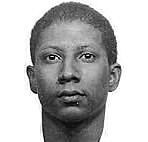
Kenneth Dunn
Murderer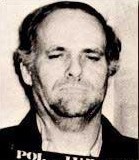 Ervil LeBaron
Murderer · USA · 1972
Ervil Morrell LeBaron (1925 to August 16, 1981) was the leader of a polygamous…
35 victims
Ervil LeBaron
Murderer · USA · 1972
Ervil Morrell LeBaron (1925 to August 16, 1981) was the leader of a polygamous…
35 victims
 Brian Kevin Rosenfeld
Murderer · USA · 1985
Brian Kevin Rosenfeld Brian Kevin Rosenfeld was sentenced to three concurrent l…
23 victims
Brian Kevin Rosenfeld
Murderer · USA · 1985
Brian Kevin Rosenfeld Brian Kevin Rosenfeld was sentenced to three concurrent l…
23 victims
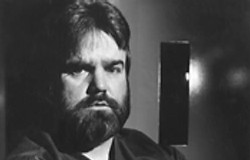 Marvin Gray
Murderer · USA · 1975
Marvin Gray was convicted killer who claimed responsibility for 23 slayings and…
23 victims
Marvin Gray
Murderer · USA · 1975
Marvin Gray was convicted killer who claimed responsibility for 23 slayings and…
23 victims
 Yahweh ben Yahweh
Murderer · USA · 1980
Yahweh ben Yahweh was born and legally named Hulon Mitchell Jr. (October 27, 19…
23 victims
Yahweh ben Yahweh
Murderer · USA · 1980
Yahweh ben Yahweh was born and legally named Hulon Mitchell Jr. (October 27, 19…
23 victims
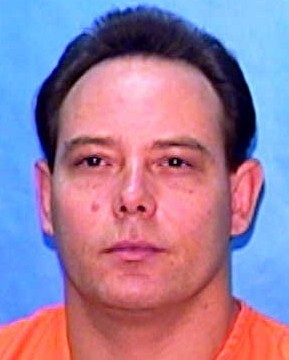 Kenneth Allen Stewart
Murderer · USA · 1984
Kenneth Allen Stewart was sentenced to death on October 3, 1986, and was resent…
2 victims
Kenneth Allen Stewart
Murderer · USA · 1984
Kenneth Allen Stewart was sentenced to death on October 3, 1986, and was resent…
2 victims
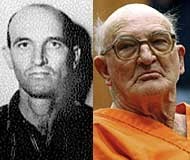 Edgar Ray Killen
Murderer · USA · 1964
Edgar Ray “Preacher” Killen (born 17 January 1925) was an American former Ku Kl…
3 victims
Edgar Ray Killen
Murderer · USA · 1964
Edgar Ray “Preacher” Killen (born 17 January 1925) was an American former Ku Kl…
3 victims
 Latonia Bellamy
Murderer · USA · 2010
Latonia Bellamy was sentenced to life plus 30 years in prison on February 8, 20…
2 victims
Latonia Bellamy
Murderer · USA · 2010
Latonia Bellamy was sentenced to life plus 30 years in prison on February 8, 20…
2 victims
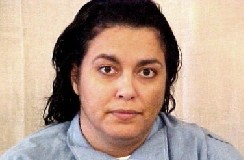 Angelina Rodriguez
Murderer · USA · 2000
Angelina Rodriguez was a Latina. She was 32 years old at the time of the crime.…
1 victim
Angelina Rodriguez
Murderer · USA · 2000
Angelina Rodriguez was a Latina. She was 32 years old at the time of the crime.…
1 victim
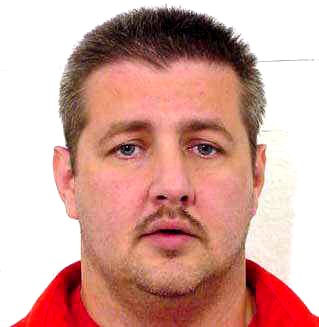 Marco Chapman
Murderer · USA · 2002
Marco Allen Chapman was executed by lethal injection in Kentucky on November 21…
2 victims
Marco Chapman
Murderer · USA · 2002
Marco Allen Chapman was executed by lethal injection in Kentucky on November 21…
2 victims
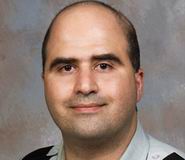 Nidal Hasan
Mass murderer · USA · 2009
Nidal Malik Hasan (born September 8, 1970) was a former United States Army Medi…
13 victims
Nidal Hasan
Mass murderer · USA · 2009
Nidal Malik Hasan (born September 8, 1970) was a former United States Army Medi…
13 victims
- Gender
- male
- Country
- USA
- Location
- Harris County, Texas, USA
- Date of birth
- October 3, 1959
- Age at first offence
- 21
- Characteristics
- bank robbery, rape
- Victim profile
- Madeline Peters, 21 (bank teller)
- Method of murder
- Shooting ( .357-caliber Magnum revolver)
- Date(s) of murder
- March 17, 1980
- Years active
- 1980
- Date of arrest
- 3 months after
- Status
-
Executed
Executed by lethal injection on August 10, 1999 in Texas
Overview
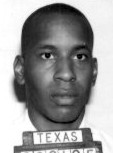
Kenneth Dwayne Dunn, a Texas death row inmate, was executed by lethal injection in Texas on August 10, 1999.
Timeline
- March 17, 1980 — Kenneth Dwayne Dunn walked into a Houston-area bank where he had been seen before as a customer and robbed each teller while armed with a .357-caliber Magnum revolver; 21-year-old Madeline Peters was shot once to the head and died.
- March 1980 (3 months later) — Dunn surrendered to the FBI in St. Louis with less than $30 left.
- 1985 — Dunn’s malpractice suit against Hunt and Guerrero was dismissed as frivolous.
- November 1980 — Dunn was tried, convicted and sentenced to death in a trial marked by repeated outbursts that required his removal from the courtroom.
- April 1987 — The Texas Court of Criminal Appeals reversed Dunn’s conviction for the first trial because the record on appeal lacked a complete statement of facts.
- July 1988 — Dunn began a second trial; Dunn represented himself with Hunt and Guerrero as standby counsel.
- July 23, 1988 — Charles Peters, the victim’s father, said he was afraid the trial would be turned over due to Dunn’s self-representation.
- December 2, 1998 — The United States Court of Appeals for the Fifth Circuit affirmed the denial of Dunn’s 28 U.S.C. § 2254 petition for habeas corpus.
- December 1992 — Doctors Richard G. Dudley, J. Randall Price, and Jon Morton Aase procured affidavits in connection with Dunn’s state habeas proceeding.
- August 10, 1999 — Dunn was pronounced dead at 8:30 p.m., six minutes after the flow of lethal drugs began.
Background
Kenneth Dwayne Dunn was 39 years old at the time of execution and had completed 9th grade. Dunn was described as a 9th-grade dropout. Dunn declined to make a last statement at execution.
Prior to the first trial, a psychiatric examination was ordered. Dunn was examined by Dr. Charles Covert, who concluded that Dunn was sane at the time of the offense and competent to stand trial. Dunn was also described as having mental illness throughout his life by Mandy Welch, who said Dunn was “seriously mentally ill.”
The offence
Kenneth Dwayne Dunn murdered bank teller Madeline Peters, 21, during a robbery at the south Houston bank where she worked on March 17, 1980.
On March 17, 1980, Dunn walked into a Houston-area bank where he had been seen before as a customer. On that occasion, he was armed with a .357-caliber Magnum revolver and demanded money from each teller.
Witnesses said Peters was on the phone and unaware of the robbery when Dunn reached her window and ordered her to put cash in a bag. Peters responded, “What?” Dunn fired and killed her with one shot to her head.
Dunn then warned other bank workers and customers not to follow him as he fled with almost $12,000. The prosecutor Joe Magliolo recalled that Peters’s wedding dress was in a box open behind her and described the scene after the shooting. Magliolo said:
“Her wedding dress was in a box open behind her. I guess she had been showing it to all her girlfriends. When she got popped, it blows her brains and blood all over the wedding dress. It was such a needless killing...I remember the picture of that wedding dress behind the girl.”
Investigation and surrender
Three months later, with less than $30 left, Dunn surrendered to the FBI in St. Louis. Dunn had been traveling the country.
After arriving in California, Dunn left a note on a San Francisco to San Diego bus stating that he was guilty of the murder and that he would be a bank robber for the rest of his life.
Arrest and custody incidents
While in prison, Dunn attacked guards numerous times and set fire to his cell. He also was stabbed by another inmate in a fight. State prison employees said that while Dunn was in jail he started fires, assaulted inmates and broke a jailer’s hand.
Trial
First trial (capital murder and sentencing)
Before the first trial, the court ordered Dunn to undergo a psychiatric examination conducted by Dr. Charles Covert.
Robert Hunt and Reuben Guerrero were appointed to represent Dunn.
During the course of his two trials, both before Judge Charles Hearn, Dunn’s behavior was disruptive, and the court had him removed from the courtroom several times.
Dunn was tried, convicted and sentenced to death in a November 1980 trial. At sentencing, the jury returned a guilty verdict after deliberating 6 minutes, and decided on the death sentence after 20 minutes.
The prosecutor presented a letter Dunn wrote before turning himself in. The letter confessed to the robbery and promised to live the rest of his life as a bank robber.
Dunn argued he did not mean to shoot anybody and did not deny holding the pistol that fired the fatal shot.
Dunn served as his own counsel in the second trial, but he did not deny holding the pistol in the first trial description and the details provided described his arguments during the second trial.
Reversal of first conviction
Seven years after Dunn’s conviction, his conviction was overturned by the Texas Court of Criminal Appeals because a few pages of notes from the trial were lost by the court reporter. The United States Court of Appeals for the Fifth Circuit also stated that on April 8, 1987, Dunn’s conviction was reversed because the record on appeal lacked a complete statement of facts. (The reversal was described as occurring in 1987.)
Second trial (self-representation)
The second trial began in July 1988. Dunn requested that he proceed pro se after the court informed him he had no right to hybrid representation. After a lengthy colloquy, the court granted Dunn’s motion for self-representation and appointed Hunt and Guerrero as standby counsel. The district court later reappointed Hunt and Guerrero after Dunn asked to have counsel appointed ten days later.
Dunn objected to standby counsel, claiming that Hunt and Guerrero had refused to argue the insanity defense at his first trial. He also objected to their appointment on grounds that he did not trust that Hunt had his best interests in mind because of an argument in which Hunt said “to hell with you” and picked up an umbrella and ashtray as if to strike Dunn. Dunn also pointed to his malpractice suit against Hunt and Guerrero after the first trial. The court overruled Dunn’s objection to standby counsel at that stage and denied Dunn’s requests to dismiss Hunt and Guerrero and appoint Jack Zimmerman and Percy Foreman in their place.
After approximately six months, Dunn filed another motion for self-representation. Following a hearing, the court granted the motion and reminded Dunn of the dangers and disadvantages of self-representation.
In court documents during the appeal, Dunn contended that Michael Jackson had a videotape of the fatal shooting that would exonerate him. Prosecutors argued that no tape existed and that Dunn was trying to feign a mental illness so his execution would be delayed.
At the second trial, Dunn tried to convince the jury that his pistol might not have been pointed directly at Peters when she was shot, meaning he did not deliberately commit the crime. Dunn told the jurors:
“There wasn't a mad dog in there looking for somebody to shoot. I ask that you consider that as reasonable doubt.”
Witnesses described Dunn as having acted calmly.
The jury convicted Dunn of capital murder after deliberating for six minutes, and the next day sentenced him to death after 20 minutes.
Appeals and federal habeas corpus
After the second trial, Dunn petitioned for a writ of habeas corpus in state court. The trial court entered factual findings and legal conclusions recommending that relief be denied, and the Texas Court of Criminal Appeals denied the writ based on those findings.
Dunn then filed a federal habeas petition under 28 U.S.C. § 2254. The district court granted the state’s motion for summary judgment and denied habeas relief. Dunn appealed, and the United States Court of Appeals for the Fifth Circuit affirmed.
Fifth Circuit proceedings
The Fifth Circuit case was styled:
- KENNETH DWAYNE DUNN, Petitioner-Appellant, v. GARY L. JOHNSON, DIRECTOR, TEXAS DEPARTMENT OF CRIMINAL JUSTICE, INSTITUTIONAL DIVISION, Respondent-Appellee.
The Fifth Circuit panel included POLITZ, Chief Judge, KING and JONES, Circuit Judges. The Fifth Circuit decision stated that it affirmed the denial of Dunn’s habeas corpus petition.
Dunn raised eight grounds for relief relating to competency to stand trial, validity of waiver of counsel, and refusal to appoint a psychiatric expert to assist in preparing his case.
Mental competency claim
Dunn asserted that he was mentally incompetent to stand trial and that the trial court failed to conduct an adequate inquiry. The Fifth Circuit stated that, to obtain habeas relief based on incompetency in fact, Dunn had to show facts sufficient to positively, unequivocally and clearly generate a real, substantial and legitimate doubt as to mental competency at the time of trial.
Dunn’s evidence included affidavits of Doctors Richard G. Dudley, J. Randall Price, and Jon Morton Aase. Based on clinical interviews, psychological testing and review of Dr. Covert’s 1980 evaluation, Doctors Dudley and Price stated that Dunn suffered from “paranoid delusional disorder” and “borderline personality disorder” during both trials, making him chronically paranoid, suspicious, and incapable of trust. Dr. Dudley concluded that Dunn’s “Paranoid Delusional Disorder, with its persistent persecutory delusions, rendered [him] incompetent to stand trial in 1988.” Dr. Price concluded that Dunn’s mental illnesses “rendered him incapable of consulting with an attorney.” Dr. Aase concluded that gestational alcohol exposure “resulted in significant and irreversible damage to [Dunn's] central nervous system” and concluded that Dunn’s fetal alcohol effects and psychiatric disorder substantially impaired his ability to consult with his attorneys.
The state habeas court found the affidavits offered by Dunn were not credible, including because they failed to acknowledge the difficulty of retrospective evaluation across several years, were not based on an actual interview or did not recite the date of that interview, and conflicted with findings by Texas Correctional Officials who observed and examined Dunn between 1980 and 1988. The Fifth Circuit stated Dunn failed to offer evidence rebutting the state habeas findings of fact.
Waiver of counsel claim
Dunn asserted that his waiver of assistance of counsel was not knowing, intelligent, and voluntary, and that his election to proceed pro se was not voluntary due to a conflict of interest with his attorneys. The Fifth Circuit concluded those allegations did not provide a basis for habeas relief.
The Fifth Circuit stated that the record established that, before the second trial, Dunn was informed of his right to counsel and warned of dangers and disadvantages of self-representation. The Fifth Circuit also stated that Dunn’s responses reflected general knowledge of the order of proceedings, voir dire, legal research, and trial preparation, and added experience from both guilt/innocence and punishment phases of his first trial.
The Fifth Circuit addressed Dunn’s claim that he faced a “constitutionally repugnant choice” between disqualified court-appointed counsel and self-representation. The Fifth Circuit stated that Dunn’s malpractice suit had been dismissed as frivolous three years before the second trial and that the pretrial record included instances of Dunn conferring with counsel, leading to the conclusion that the trial court did not have a duty to inquire further.
The Fifth Circuit also stated that the level of competence required to waive the right to counsel was the same as that required to stand trial, and since Dunn had been found competent to stand trial, he was competent to waive the right to counsel.
Psychiatric expert claim
Dunn’s final claim alleged that the trial court violated his right to a fair trial by refusing to appoint a psychiatrist to assist in preparing his case. The Fifth Circuit discussed the due process requirement that the state assure access to a competent psychiatrist if the defendant makes a preliminary showing that sanity at the time of the offense was likely to be a significant factor at trial.
Prior to Dunn’s first trial, the trial court appointed Dr. Covert to evaluate whether Dunn was sane at the time of the offense, and Dr. Covert concluded that Dunn was criminally responsible at the time of the robbery at the Alameda Bank during which he killed a young woman. Dunn withdrew his notice of intent to claim insanity prior to his second trial. The state habeas court found Dunn failed to make a preliminary showing that sanity would be a significant factor at his second trial. The trial court was not constitutionally required to appoint another psychiatrist to assist Dunn.
Sentencing and execution
Dunn was sentenced to death after the second trial.
On August 10, 1999, Dunn selected entertainers Michael Jackson and Janet Jackson as witnesses for his execution. Asked what he would tell Dunn if he could speak with him, Charles Peters replied:
“Rot in hell.”
Charles Peters said he would attend the execution but was frustrated by the slow pace of Dunn’s case through the appeals process. Peters said:
“It's just absolutely unbelievable...We waited and waited and waited and nothing was happening. I bugged the courts, bugged everybody...The families (of victims) are stuck.”
Peters also said:
“It doesn't change anything. It just ends another worry about him getting out and doing this to somebody else...It is not going to bring my daughter back.”
Peters further said:
“When you lose half your kids, it's like losing half your life. We think about her all the time.”
Dunn declined to make a final statement. When the warden asked whether he would like to say anything, Dunn shook his head.
Dunn was pronounced dead at 8:30 p.m., six minutes after the flow of lethal drugs began. The execution procedure described Dunn’s eyes fluttering, gasping twice, muscles in his arms tightening, and then no further movement.
Other details
- In a letter to prison officials shortly before the execution, Dunn delivered a 65-page handwritten appeal to be faxed to the Texas Court of Criminal Appeals. The appeal was rejected and the death warrant remained in effect until midnight.
- The United States Supreme Court refused to delay an execution scheduled for Wednesday evening for James Otto Earhart, described as a Bryan-area junk dealer, who was set to die for the abduction and fatal shooting of a 9-year-old girl in 1987.
- Dunn was described as the first person in a capital murder case to serve as his own counsel.
- The prosecutor Joe Magliolo recalled the wedding dress scene and described it as a needless killing.
- The bank employee Madeline Peters was described as being known to friends and co-workers as “Smiley” and as planning her upcoming wedding.
- Dunn’s mother financed the getaway car through Alameda Bank.
- Peters was described as the first bank or savings and loan employee to die in a robbery in eight years in the United States.
- The United States Court of Appeals for the Fifth Circuit stated that the judgment appealed was AFFIRMED.

Spotted an error, or have more information about this case?