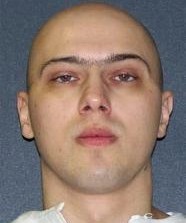
Justin Lee May
Spree killer Paul John Knowles
Spree killer · USA · 1974
Paul John Knowles (April 17, 1946 – November 18, 1974) was an American spree ki…
35 victims
Paul John Knowles
Spree killer · USA · 1974
Paul John Knowles (April 17, 1946 – November 18, 1974) was an American spree ki…
35 victims
 Bobby Joe Maxwell
Spree killer · USA · 1978
Name: Bobby Joe Maxwell Sex: M Race: B Type: T Motive: PC-nonspecific Method of…
11 victims
Bobby Joe Maxwell
Spree killer · USA · 1978
Name: Bobby Joe Maxwell Sex: M Race: B Type: T Motive: PC-nonspecific Method of…
11 victims
 Manuel Pardo
Spree killer · USA · 1986
Manuel Pardo, Jr. was a former police officer who was convicted of nine counts…
9 victims
Manuel Pardo
Spree killer · USA · 1986
Manuel Pardo, Jr. was a former police officer who was convicted of nine counts…
9 victims
 Mark Essex
Spree killer · USA · 1973
Mark James Robert Essex was a Navy veteran who engaged in a shooting and arson…
9 victims
Mark Essex
Spree killer · USA · 1973
Mark James Robert Essex was a Navy veteran who engaged in a shooting and arson…
9 victims
 Michael Alan Silka
Spree killer · USA · 1984
Michael Alan Silka was killed during a shoot-out with the police on May 19, 198…
9 victims
Michael Alan Silka
Spree killer · USA · 1984
Michael Alan Silka was killed during a shoot-out with the police on May 19, 198…
9 victims
 Allen Ward Cox
Murderer · USA · 1998
12/21/98 — Allen Ward Cox attacked Thomas Baker at Lake Correctional Institute,…
1 victim
Allen Ward Cox
Murderer · USA · 1998
12/21/98 — Allen Ward Cox attacked Thomas Baker at Lake Correctional Institute,…
1 victim
 Steven Oken
Spree killer · USA · 1987
Steven Oken (defendant) Steven Oken was adopted at birth and was raised in a st…
3 victims
Steven Oken
Spree killer · USA · 1987
Steven Oken (defendant) Steven Oken was adopted at birth and was raised in a st…
3 victims
 Yahya Hussein Al-Raghwah
Murderer · Yemen · 2008
This is criminal justice, Yemen style. A man accused of raping and murdering an…
1 victim
Yahya Hussein Al-Raghwah
Murderer · Yemen · 2008
This is criminal justice, Yemen style. A man accused of raping and murdering an…
1 victim
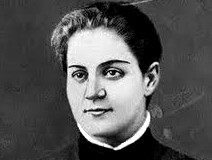 Jane Toppan
Serial killer · USA · 1887
Jane Toppan (1880-1901) was a nurse from Boston, Massachusetts. Another record…
31 victims
Jane Toppan
Serial killer · USA · 1887
Jane Toppan (1880-1901) was a nurse from Boston, Massachusetts. Another record…
31 victims
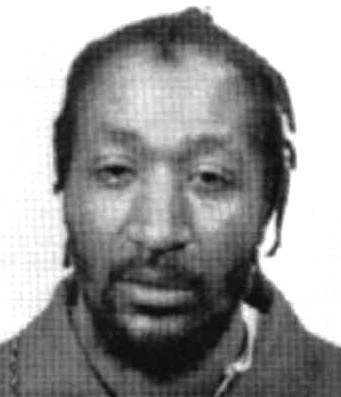 Gary Burris
Murderer · USA · 1980
Gary Burris was convicted of felony murder and was sentenced to death in Marion…
1 victim
Gary Burris
Murderer · USA · 1980
Gary Burris was convicted of felony murder and was sentenced to death in Marion…
1 victim
- Gender
- male
- Country
- USA
- Location
- Brazoria County, Texas, USA
- Date of birth
- April 26, 1946
- Age at first offence
- 32
- Characteristics
- robbery, alcohol, child abuse
- Victim profile
- Men and women
- Method of murder
- Shooting
- Date(s) of murder
- June 1978
- Years active
- 1978
- Date of arrest
- —
- Status
-
Executed
Executed by lethal injection in Texas on May 7, 1992
Case record: Justin Lee May
STATUS
Justin Lee May was executed by lethal injection in Texas on May 7, 1992. His last statement thanked his family.
Timeline
- June 27, 1978 — Frank and Jeanetta Murdaugh were murdered while working at their Western Auto store in Freeport, Texas.
- Spring 1984 — Justin Lee May and Richard Miles were indicted for both murders.
- February 1985 — Justin Lee May was convicted of capital murder and sentenced to death.
- 1987 — The Texas Court of Criminal Appeals affirmed May’s conviction and sentence; the United States Supreme Court denied certiorari.
- May 10, 1988 — After the warrant of execution was withdrawn, the trial court recommended denial of habeas relief and rescheduled the execution for June 15, 1988.
- June 3, 1988 — The Texas Court of Criminal Appeals denied habeas relief and May’s request for a stay of execution.
- June 9, 1988 — May filed a petition for federal habeas relief and a stay of execution.
- August 21, 1989 — The district court issued a Memorandum Opinion and Order denying all habeas relief.
- Nov. 23, 1991 — A later federal filing sought a certificate of probable cause and a stay of execution.
- Jan. 13, 1992 — Certiorari was denied on application for a certificate of probable cause and for a stay of execution.
- May 7, 1992 — Justin Lee May was executed by lethal injection in Texas.
Background
Frank and Jeanetta Murdaugh were murdered on June 27, 1978 while working at their Western Auto store in Freeport, Texas. The murders went unsolved for over five years.
The offence
Justin Lee May was tried solely for the murder of Jeanetta Murdaugh. At trial, May was convicted of capital murder for intentionally causing the death of Jeanetta Murdaugh during the course of a robbery. The record also described that the 1978 murder conviction was the result of a guilty plea and that the original indictment involved three capital charges of murder in the course of robbery, referred to as the “Yale Street murders.”
During the offence, Miles testified that on June 26, 1978 he and May drove from Houston to Freeport. Miles carried a .32 caliber pistol in his glove compartment. After they registered at a hotel under an assumed name, Miles went to visit a friend. Upon returning, May outlined plans to rob the Western Auto store the next day.
Miles’ testimony described a plan in which Miles would enter the store first, posing as a relative, and May would follow armed with Miles’ pistol. Miles was to select a shotgun and load it for additional security. On June 27, Miles drove past the store and let May out at a corner. Miles parked the car and went into the store with May following just behind him.
Jeanetta Murdaugh was behind the counter and Frank was arranging inventory on a shelf. Miles selected a shotgun, which Frank handed to him. Miles then picked up some shells and began loading the gun. Frank told Miles that loading was prohibited on the premises; when Frank reached for the gun, May shot him with the .32 revolver.
Miles testified that he was startled by the shot, fired the shotgun into the ceiling, dropped the weapon, and then ran to the front door. Miles then heard numerous shots and saw May shoot at Jeanetta Murdaugh. Miles went to his car and drove it into an alley behind the store. May later ran out of the store with an armload of guns, dropping one in the alley. May put the rest of the guns into the car, got in, and returned the .32 revolver to Miles.
Miles’ testimony was described as materially corroborated by other witnesses and by physical evidence at the store.
Miles also testified that May told him several months later that his mother had disposed of a rifle and that a friend, Jerry Barmore, would dispose of the rest of the guns. Additionally, Retha May, May’s mother, identified a letter from her son directing her to dispose of a .308 rifle, and a detective indicated that a .308 rifle stolen from the store had not been recovered.
Investigation and charging
A spring 1984 indictment charged Justin Lee May and Richard Miles for both murders.
Miles was offered a plea bargain allowing him to plead guilty to nonaggravated, noncapital murder after he testified against May.
May ultimately was tried solely for the murder of Jeanetta Murdaugh.
Trial
Conviction
At the close of trial, May was convicted of capital murder for intentionally causing the death of Jeanetta Murdaugh during the course of a robbery.
Punishment phase
In the punishment phase, the State introduced evidence of May’s six prior convictions:
- a 1969 conviction for robbery by assault
- two 1976 convictions for unlawfully passing forged instruments
- a 1976 conviction for aggravated assault
- a 1978 conviction for aggravated assault
- a 1978 conviction for first degree murder
The 1978 murder conviction followed a guilty plea, and the original indictment was for three capital charges of murder in the course of robbery, the “Yale Street murders.”
The 1978 aggravated assault charge involved a .38 caliber pistol, which was later shown to have fired some of the fatal shots in the Yale Street murders. Miles was described as also being a prime suspect in those killings.
Mitigating evidence
Ralph Price testified as a work supervisor during a prior incarceration. Price testified that May’s work attendance was good, that May was a good welder and followed instructions, and that no disciplinary violations kept him from working.
Betty Bevel, May’s sister, testified that in January 1984 she and her two children traveled to Houston to spend a week with May while he was on furlough from prison. According to Bevel, during that week May played Atari, watched television, and visited with her children. Bevel testified that during this week May did not get into any altercations, did nothing violent, and displayed no flashes of temper.
Jury findings and sentence
The jury returned affirmative answers to the Texas special issues on deliberateness and future dangerousness. The jury accordingly sentenced May to death.
Direct appeal and Supreme Court
The Texas Court of Criminal Appeals affirmed the conviction and the sentence, May v. State, 738 S.W.2d 261, 274 (Tex.Crim.App.1987). The United States Supreme Court denied certiorari, May v. Texas, 484 U.S. 872, 108 S.Ct. 206, 98 L.Ed.2d 158 (1987).
After the execution date was set for February 10, 1988, May sought state habeas corpus relief. The warrant of execution was withdrawn, and on May 10, 1988 the trial court recommended denial of the writ and rescheduled the execution for June 15, 1988.
The Texas Court of Criminal Appeals subsequently denied habeas relief and May’s request for a stay of execution, Ex parte May, Writ No. 17,992-01 (Tex.Crim.App. June 3, 1988).
Federal habeas proceedings (first round)
Filing and district court decision
On June 9, 1988 May filed a petition for federal habeas relief and a stay of execution before the district court. The district court granted the stay of execution. Cross-motions for summary judgment were filed, and May moved for discovery and appointment of experts.
On August 21, 1989 the district court issued a Memorandum Opinion and Order denying all habeas relief.
Claims raised on appeal
May raised six claims in his appeal:
- The State violated May’s rights to a fair trial and due process by presenting a co-defendant’s coached testimony and by interfering with cross-examination of that witness through intimidation.
- May was improperly denied an instruction on the law governing parole.
- May’s jury was selected in a manner that led to an underrepresentation of minorities in violation of Sixth and Fourteenth Amendment rights.
- May was improperly denied a jury instruction on the lesser included offense of robbery.
- The State withheld material exculpatory evidence in violation of Brady v. Maryland.
- May’s Eighth Amendment rights were violated because Texas sentencing procedures prevented full consideration of the mitigating value of May’s good character evidence and inhibited the presentation of evidence regarding May’s mental impairment and long history of child abuse.
The appellate court stated it was in substantial agreement with the district court’s analysis on points one through four and affirmed the denial of relief on those grounds. It also concluded May was not entitled to relief on points five and six, while providing additional discussion.
Brady issue
May requested discovery eight months prior to trial of all exculpatory evidence, including Yale Street and Murdaugh offense report files. The Yale Street file was not produced until requested by the federal district court. Although the district court found the Yale Street file did not contain Brady material, it did not consider one piece of evidence: the rifle May asked his mother to retrieve.
In closing argument, the State emphasized that May had written his mother and asked her to retrieve a rifle of the same caliber as the one taken from the Western Auto store, claiming it was additional evidence connecting May to the crime.
The Yale Street file contained a statement by Bob Burns describing the .308 caliber rifle Retha May retrieved as a Montgomery Ward brand, while the rifle stolen from the Western Auto store was a Revelation brand rifle. May claimed that if he had the information he could have rebutted a crucial aspect of the State’s case and exposed as irrelevant the only incriminating evidence in his own handwriting.
The appellate court regarded the discrepancy as peripheral and harmless. It also stated the government was not obligated to furnish information fully available to the defendant or obtainable through reasonable diligence, and it characterized the rifle discrepancy as not subject to due process disclosure requirements. The court stated May could reasonably have anticipated the gun would become an issue because it was mentioned in Miles’ pretrial statement.
It further stated May had pawned the rifle to Burns and knew its brand, or how to ascertain the brand, if they were two different guns. The court referenced that May raised the issue during rebuttal.
Sentencing scheme and Penry-related discussion (Eighth Amendment claim)
May submitted an affidavit of Dr. James Merikangas, a neurologist and psychiatrist, who examined May on December 16, 1987.
Dr. Merikangas’ affidavit described information provided through discussions with May, his mother, and his sister, including:
- complicated pregnancy in which May’s mother was extremely ill and medicated for approximately six weeks
- frequent child abuse by May’s now-deceased father
- being beaten with coat hangers, belts, and extension cords from when May was three or four years old
- at least one occasion on which May was beaten to unconsciousness
- head injuries including a concussion sustained during a car accident
- hospitalization in 1975 for confusion and unexplained loss of consciousness
- being an alcoholic and suffering numerous alcoholic blackouts
Dr. Merikangas found:
- “demonstrable and significant neurological brain damage”
- probably resulted from head injuries, malnutrition and other fetal damage, and other medical problems
- that May’s “impulse control is substantially impaired by neurological brain damage”
- that “[t]he trauma and injuries Mr. May suffered as a physically abused child may have caused impairment in his social functioning and emotional development, and have substantially impaired his ability to reflect on the appropriateness of his actions before manifesting them.”
Dr. Merikangas also stated that May had the ability to function well socially and occupationally in a structured setting. He further stated that May was not currently psychotic and was not dangerous when alcohol was not available to him, and therefore did not pose a significant threat of violence in prison.
May’s trial counsel submitted an affidavit stating that counsel neither developed nor presented this evidence because it would only serve to bolster the State’s case with respect to future dangerousness. May argued that he was effectively precluded from presenting evidence of his disadvantaged background and mental impairments because he was given no assurance an instruction regarding the effect of mitigating evidence would be given.
The appellate court stated it could not agree with the district court’s conclusion that May’s Penry claims were procedurally barred because federal review was barred only if the last state court to consider the claim expressly and unambiguously based its denial on procedural default. The appellate court discussed that the Texas Court of Criminal Appeals denied relief on the merits rather than citing procedural error.
The appellate court concluded, however, that May’s Penry claim must fail. It stated that under Texas law, evidence of abusive childhood and resultant neurological damage would have been admissible. It also stated May made a tactical decision to neither develop nor present this evidence at trial and cited the principle that a defendant’s deliberate failure to introduce mitigating evidence as a tactical decision did not come within the requirements announced in Penry.
Special concurrence and further discussion
A special concurring opinion joined in the court’s affirmance of May’s death sentence but expressed disagreement about injustice produced through the Texas sentencing scheme and contradictory federal law that upheld that scheme. The concurrence traced arguments through Jurek and Penry and discussed the ability of a capital sentencing jury to consider the circumstances of the crime as well as the background and character of the defendant before choosing between life and death. It discussed the Texas statute’s special questions on deliberateness, future dangerousness, and reasonableness of a response to provocation by the deceased, and how the statute had been upheld based on interpretation permitting consideration of particularized mitigating factors.
The concurrence also argued that application of the Texas sentencing statute could be unconstitutional without additional instruction with respect to some mitigating evidence, especially in relation to evidence of mental retardation and child abuse, and it stated that tactical dilemmas left defense counsel with a decision to present mitigating evidence or withhold it.
The concurrence discussed that counsel’s tactical decision at the time of trial might be considered imprudent due to later legal changes, and it concluded that jurors were prevented from hearing extremely probative evidence about May’s moral culpability and the appropriateness of a death sentence.
Federal habeas proceedings (second petition) and certificate of probable cause
Application and denial
A later federal petition sought a certificate of probable cause to appeal and a stay of execution. The appellate court characterized May’s claim as an attempt to relitigate an issue already decided against him and denied the application for a certificate of probable cause to appeal and denied a stay of execution.
The panel noted that May was scheduled to be executed before dawn on November 26, 1991, and that his second federal habeas petition contended that the Texas capital sentencing statute, as applied at the time of his trial, deprived him of his Sixth Amendment right to counsel by forcing his counsel to make a tactical decision to withhold mitigating evidence of brain damage, mental impairment, and physical abuse as a child.
The appellate court stated it agreed with the district court that the claim amounted to reargument of the Eighth Amendment issue considered and rejected in May’s first federal habeas petition. Because the district court denied a certificate of probable cause, the appellate court stated it lacked jurisdiction unless a certificate was first granted, referencing Fed. R. App. P. 22(b).
Late-filed alternative petition and affidavit by Richard A. Miles
The court also addressed an emergency motion for appropriate relief or, alternatively, an original petition for writ of habeas corpus to allow consideration of newly discovered evidence showing that May was innocent and that execution would constitute a miscarriage of justice. The motion included an affidavit of Richard A. Miles.
The court summarized Miles’ affidavit as follows: Miles confirmed he was present at the offence and participated in it but stated he did not shoot anyone. Miles stated that his testimony at trial concerning May’s involvement was not true. He claimed he was induced to testify falsely due to improper pressure from police and alleged May “was not present, nor did he participate in the offense in any manner.”
The appellate court stated that the alleged constitutional violation underlying the late-filed motion was not the subject of any petition for habeas relief presently pending in state courts or before the federal district court. It also stated the claim had not been exhausted and was not a proper subject for appellate jurisdiction.
The court dismissed May’s original petition for a writ of habeas corpus without prejudice, allowing May to pursue the course of action proposed for state trial court.
Aftermath
Justin Lee May’s execution was carried out by lethal injection in Texas on May 7, 1992.
Spotted an error, or have more information about this case?